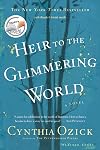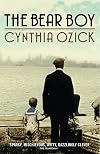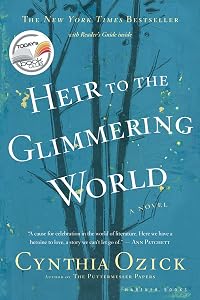
Heir to the Glimmering World
by Cynthia Ozick
On This Page
Description
Cynthia Ozick is an American master at the height of her powers in Heir to the Glimmering World, a grand romantic novel of desire, fame, fanaticism, and unimaginable reversals of fortune. Ozick takes us to the outskirts of the Bronx in the 1930s, as New York fills with Europe's ousted dreamers, turned overnight into refugees.Rose Meadows unknowingly enters this world when she answers an ambiguous want ad for an "assistant" to a Herr Mitwisser, the patriarch of a large, chaotic household. show more Rosie, orphaned at eighteen, has been living with her distant relative Bertram, who sparks her first erotic desires. But just as he begins to return her affection, his lover, a radical socialist named Ninel (Lenin spelled backward), turns her out.
And so Rosie takes refuge from love among refugees of world upheaval. Cast out from Berlin's elite, the Mitwissers live at the whim of a mysterious benefactor, James A'Bair. Professor Mitwisser is a terrifying figure, obsessed with his arcane research. His distraught wife, Elsa, once a prominent physicist, is becoming unhinged. Their willful sixteen-year-old daughter runs the household: the exquisite, enigmatic Anneliese. Rosie's place here is uncertain, and she finds her fate hanging on the arrival of James. Inspired by the real Christopher Robin, James is the Bear Boy, the son of a famous children's author who recreated James as the fanciful subject of his books. Also a kind of refugee, James runs from his own fame, a boy adored by the world but grown into a bitter man. It is Anneliese's fierce longing that draws James back to this troubled house, and it is Rosie who must help them all resist James's reckless orbit.
Ozick lovingly evokes these perpetual outsiders thrown together by surprising chance. The hard times they inherit still hold glimmers of past hopes and future dreams. Heir to the Glimmering World is a generous delight.
. show less
Tags
Recommendations






Member Reviews
"Heir to the Glimmering World" tells the story of a young American woman with few roots or prospects becomes involved -- as a babysitter, typist, and confidant -- with a peculiar family of refugee academics fleeing from Nazi Germany in the mid-thirties. There's a wealthy Christopher Robin-type figure, a gender-bending committed Communist, and a wayward pharmacist somewhere in here, too. For a lot of readers, the book will seem a bit twee, a too-cute take on one of the most tumultuous, most anxious, and most miserable periods of the bloody twentieth century. They're not wrong, though the sheer dexterity of Ozick's writing makes it both more readable more convincing than it might have otherwise been. Her style's heavily ornamented and the show more vocabulary much more obscure than it strictly needs to be, but she's skilled enough to use a five-syllable monster or a back-of-the-thesaurus find without tripping over herself. Her sentences flow beautifully and her prose, though hardly realistic, never comes off as cluttered. Still, charges that "Heir to the Glimmering World" an exercise in surfaces and nostalgic style, that it sounds like it was composed in a too-hip Brooklyn coffee bar, and that it might not exist had the Neutral Milk Hotel's "In the Aeroplane Over the Sea" had not been released might not be off the mark, either.
The best defense of the book I can make is that Ozick, intentionally or otherwise, gives us a kind of playful American Gothic here: it features a bucolic, woodsy setting in the middle of the Bronx, communists who burn with love and ambition, a haunted, depressed atomic theorist, and scholar of religious history who's austere as any mystic. It's not a bad analogy for the world in the mid-twentieth century, really: some unsettling contradictions lie just under this book's sometimes too-neat surfaces. The novel's central character is also appealing, and it's no accident that she is probably also it's most clear-eyed and forthright. For long stretches, "Heir to the Glimmering World" can be pretty seductive, and not just because of the way that its author displays her obvious talent. But whether you'll call it a "serious work" or even a good novel is really another question entirely. Probably not for readers over forty-five or so. Otherwise, the mileage on your old-timey Ford Model A may vary. show less
The best defense of the book I can make is that Ozick, intentionally or otherwise, gives us a kind of playful American Gothic here: it features a bucolic, woodsy setting in the middle of the Bronx, communists who burn with love and ambition, a haunted, depressed atomic theorist, and scholar of religious history who's austere as any mystic. It's not a bad analogy for the world in the mid-twentieth century, really: some unsettling contradictions lie just under this book's sometimes too-neat surfaces. The novel's central character is also appealing, and it's no accident that she is probably also it's most clear-eyed and forthright. For long stretches, "Heir to the Glimmering World" can be pretty seductive, and not just because of the way that its author displays her obvious talent. But whether you'll call it a "serious work" or even a good novel is really another question entirely. Probably not for readers over forty-five or so. Otherwise, the mileage on your old-timey Ford Model A may vary. show less
There’s a lot to like here. Ozick tells her story of displacement, obsession and failed families, set in 1930s New York, as a grim but still somehow exuberant fairy tale. It never gets cloying, nor is it gratuitously bleak; the language is consistently interesting; the characters engage immediately; their claustrophobic, haunted, “glimmering world” is vivid and has depth. It’s definitely not a story you feel you’ve already heard a million times, full of characters you’ve met before. That’s all to the good. The main shortcoming is that in her refusal to treat the period as more than backdrop, she loses a chance at making a good novel a great one. The upheavals of the 1930s create the key situation of the book, the Mitwisser show more family’s exile from Europe, but that’s apparently all they are useful for: a distant, fading roar. Her treatment of one key character who is an American Jew and communist is downright caricature—she is a perverse and bizarre force of malevolence; her behavior, including a passing, confused mention of the fight in Spain, is utterly inexplicable, like Iago’s in Shakespeare. It’s useless to take a fiction writer to task for the personalities he or she creates, I know—but in a book where every other character possesses some degree of pathos, no matter how disturbingly they behave, this just reads like a vendetta. But it also seems reflective of the greater problem: a refusal to engage as an artist, as a storyteller, with the larger forces--beyond private obsessions, beyond the family--that make people what they are. You have to go to E. L. Doctorow for that, I guess. Too bad for Ozick, though. She admires George Eliot but doesn’t dare for her mantle. show less
This is a claustrophobic read that, once settled there, rarely leaves the confines of the Mitwisser home. We meet Rose as a young child with her cruel or careless father and see the childhood that she endured. We follow Rose to her cousin Bertram's home and then on to work for the Mitwisser's. It is here that the novel settles in to a state of enclosure, with most of the action taking place in the house that is too small for the Mitwisser family of five children, Rose and later James, the heir to the fortune acquired from the Bear Boy series of children's books. The front cover promised wit but I only found misery in this novel, the life was grey and tough and everyone seemed broken and unattached, there seemed little real joy here. It show more is a difficult read that I struggled to complete but got there. show less
This book is an interesting but challenging read -- not one to pick up unless you're in the mood for a character-driven novel. It's dense, and it's filled with symbolism and parallels. Ozick loves five dollar words, too, which makes it satisfyingly chewy, but again, only if you're in the right mood.
I was about a third of the way through Heir when I became aware that I'd been waiting for something to happen. Then I realized the error of my ways. Heir is about the political and economic circumstances which arrested free will at the end of the 1930's, the family dynamics that mess us all up one way or another, and the characters, who are disoriented and alienated by their circumstances. Some make choices – deliberate, unconscious, and show more frequently poor or misguided. Others are completely immobilized, or little more than observers. The plot trickles slowly but organically out of this miasma.
I tend to agree with other reviewers who suggest that the characters in this novel aren't especially likeable. I think they're all 2 year old motherless Waltrauts – unloved and unlovely. While they are complex and well developed, the fact that it’s hard to root for any of them isn’t helping to win this novel a wider fan base.
Don't consider this book a light summer read, and don't expect to read it quickly! But don't shy away either. It's unique and well written. show less
I was about a third of the way through Heir when I became aware that I'd been waiting for something to happen. Then I realized the error of my ways. Heir is about the political and economic circumstances which arrested free will at the end of the 1930's, the family dynamics that mess us all up one way or another, and the characters, who are disoriented and alienated by their circumstances. Some make choices – deliberate, unconscious, and show more frequently poor or misguided. Others are completely immobilized, or little more than observers. The plot trickles slowly but organically out of this miasma.
I tend to agree with other reviewers who suggest that the characters in this novel aren't especially likeable. I think they're all 2 year old motherless Waltrauts – unloved and unlovely. While they are complex and well developed, the fact that it’s hard to root for any of them isn’t helping to win this novel a wider fan base.
Don't consider this book a light summer read, and don't expect to read it quickly! But don't shy away either. It's unique and well written. show less
An ambitious work exploring complex themes of radicalism, isolation and exile, obsession and belief, family, indebtedness, the emptiness of scholarship in isolation, perception. Set in the years before the outbreak of WWII, it chronicles a few years in the life of young Rose, a throwaway kid who becomes the amanuensis for a refugee scholar enmeshed in the study of a breakaway sect of Judaism called karaites, who appear to defy longstanding traditions of interpretation in Judaism to hold with fundamentalism—the primacy and absolutism of the text itself. The scholar’s wife, Mrs. Mitwisser, has become unhinged as she & her family have been exiled from their former life of privilege in Germany to (eventually) a ramshackle house in the show more Bronx. She was a scientist; there are hints of an affair with Erwin Schroedinger. The family’s benefactor is James, the ignored, misunderstood child of a father who used him as the model and subject of a very successful series of children’s books, the “Bear Boy” [read Winnie-the-Pooh]. It is a subversion of the Victorian novel, implicitly comparing ideas of European culture, history and blindness with American commercialism and lack of history and freedom. The sentences are rich, dense, poetic. show less
Heir To The Glimmering World is mainly character driven, though the plot is sound. The real gem is the writer. Her deft character development makes one actually care what happens to these unnerving people. I can't say that I ever 'liked' them, but I did want to know what happened to them.
Rose, a smart young woman with little hope of opportunity, finds employment with a family of well-educated Jewish Germans, the Mittwissers, who have traveled to New York evading Nazi persecution. Mr. Mittwisser is harsh & obstinate, finding no scholarly interest for his research. The only time Mr. Mittwisser yields is in the presence of a massively famous children's book heir, James A'Bair, who intermittently showers the family with trivial gifts and show more funding for Mr. Mittwisser's research. Mrs. Mittwisser is driven to madness by their plight. Once a prominent German physicist and colleague of the famous German physicist Erwin Schrödinger, Mrs. Mittwisser believes she's entitled to his Nobel Prize. The Mittwisser children are arrogant and unruly despite the fact that they have nothing. James A' Bair never seems able to rise above his inheritance & unwanted fame. Rose, only needing a little money to begin her young life, keeps getting sidetracked by others' interference.
I'd recommend this book for those who enjoy historical fiction or well written models of character development.
Review first published on Many A Quaint & Curious Volume
show less
Rose, a smart young woman with little hope of opportunity, finds employment with a family of well-educated Jewish Germans, the Mittwissers, who have traveled to New York evading Nazi persecution. Mr. Mittwisser is harsh & obstinate, finding no scholarly interest for his research. The only time Mr. Mittwisser yields is in the presence of a massively famous children's book heir, James A'Bair, who intermittently showers the family with trivial gifts and show more funding for Mr. Mittwisser's research. Mrs. Mittwisser is driven to madness by their plight. Once a prominent German physicist and colleague of the famous German physicist Erwin Schrödinger, Mrs. Mittwisser believes she's entitled to his Nobel Prize. The Mittwisser children are arrogant and unruly despite the fact that they have nothing. James A' Bair never seems able to rise above his inheritance & unwanted fame. Rose, only needing a little money to begin her young life, keeps getting sidetracked by others' interference.
I'd recommend this book for those who enjoy historical fiction or well written models of character development.
Review first published on Many A Quaint & Curious Volume
show less
Heir to the Glimmering World by Cynthia Ozick is absorbing, interesting but somewhat academic and dry at the same time. The story follows Rose Meadows, an orphan who winds up working for and living with the Mitwissers. Set in the 1930s, the Mitwissers flee Germany, find their way to New York and survive solely on the generosity of a bitter and capricious heir to a popular children’s book franchise.
There’s a lot to like in Heir to the Glimmering World. Ozick captures time and place perfectly, richly describing upstate New York and the Bronx in the run-up to World War II. In addition, the relationships between Rose and her emotionally crippled father, family friend Bertram, and Professor Rudolf Mitwisser are finely crafted, revealing show more a central father-daughter theme that runs throughout the novel.
My full review can be read on the Used Books Blog:
http://usedbooksblog.com/blog/heir-to-the-glimmering-world-by-cynthia-ozick/ show less
There’s a lot to like in Heir to the Glimmering World. Ozick captures time and place perfectly, richly describing upstate New York and the Bronx in the run-up to World War II. In addition, the relationships between Rose and her emotionally crippled father, family friend Bertram, and Professor Rudolf Mitwisser are finely crafted, revealing show more a central father-daughter theme that runs throughout the novel.
My full review can be read on the Used Books Blog:
http://usedbooksblog.com/blog/heir-to-the-glimmering-world-by-cynthia-ozick/ show less
Members
- Recently Added By
Lists

Jewish Books
367 works; 24 members

Llibres que he llegit el 2007
24 works; 1 member
Author Information

51+ Works 6,091 Members
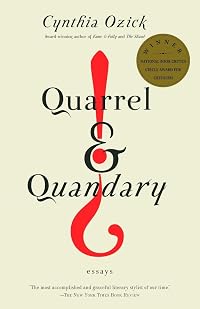
Writer Cynthia Ozick was born on April 17, 1928. She grew up in the Bronx and attended New York University, where she earned a B. A., and The Ohio State University, where she completed her master's degree in English literature with a specific focus on Henry James's works. Ozick wrote the novel Trust, and the short stories "The Sense of Europe", show more which was published in Prairie Schooner, and "The Shawl", which was included in The World of the Short Story. Her work has also appeared in The New Yorker, Harper's, Partisan Review, and Esquire. Ozick has received a Guggenheim Fellowship and a Harold Straus Living Award from the American Academy and National Institute of Arts and Letters. Three of her stories won first prize in the O. Henry competition. In 1986, she was selected as the first winner of the Rea Award for the Short Story. In 2000, she won the National Book Critics Circle Award for Quarrel & Quandary. Her novel Heir to the Glimmering World (2004) won high literary praise. Ozick was on the shortlist for the 2005 Man Booker International Prize, and in 2008 she was awarded the PEN/Nabokov Award and the PEN/Malamud Award, which was established by Bernard Malamud¿s family to honor excellence in the art of the short story. Her novel Foreign Bodies was shortlisted for the Orange Prize (2012). (Bowker Author Biography) show less
Some Editions
Awards and Honors
Awards
Distinctions
Notable Lists
Common Knowledge
- Canonical title*
- Erfgenamen van een glinsterende wereld
- Original title
- Heir to the Glimmering World
- Alternate titles
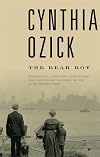
- The Bear Boy
- Original publication date
- 2004
- People/Characters*
- Rudolf Mitwisser; Elsa Mitwisser; Rose Meadows; Berenjongen
- Important places
- The Bronx, New York, New York, USA
- Epigraph
- The absence of imagination had
Itself to be imagined.
--Wallace Stevens,
The Plain Sense of Things
Yet the world is full of interpreters...
So the question arises, why would we
rather interpret than not?
--Frank Kermode,
The Man in the Macintosh - First words
- In 1935, when I was just eighteen, I entered the household of Rudolf Mitwisser, the scholar of Karaism.
- Quotations*
- De afwezigheid van verbeelding moest zelf worden verbeeld. (Wallace Stevens, The plain sense of things)
Toch is de wereld vol interpretatoren... Dus rijst de vraag: waarom willen we liever interpreteren dan niet? (Frank Kermode, The man in the Macintosh) - Last words
- (Click to show. Warning: May contain spoilers.)"Mrs. Tandoori! Mrs. Tandoori!"
- Blurbers
- Munro, Alice; Patchett, Ann
- Original language*
- Engels
*Some information comes from Common Knowledge in other languages. Click "Edit" for more information.
Classifications
Statistics
- Members
- 797
- Popularity
- 35,047
- Reviews
- 16
- Rating
- (3.32)
- Languages
- 8 — Dutch, English, French, German, Hungarian, Italian, Portuguese (Portugal), Spanish
- Media
- Paper, Audiobook, Ebook
- ISBNs
- 27
- UPCs
- 2
- ASINs
- 6