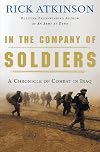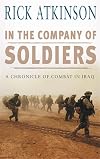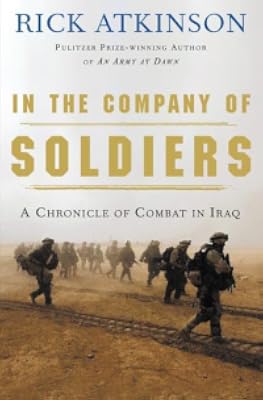
In the Company of Soldiers: A Chronicle of Combat
by Rick Atkinson
On This Page
Description
An account of the 101st Airborne Division during the 2003 Iraq War, from preparations in Kuwait to the occupation of Baghdad.Tags
Recommendations










Member Reviews
This book is exceedingly well written, by a Pulitzer Prize winning author. I love books that send me to the dictionary to look up words. It's a straightforward account of a journalist embedded with General Petraeus during the Iraq war. Fascinating, both for those who've never been to war and those who have. For me, this wasn't a book I couldn't put down. It's not a novel; it's an account of what happened, and a very good one. It brings new understanding of the problems and logistics encountered during war. If you sit home watching the war on TV and ask yourself why this and why that, why is this taking so long or why didn't they do that, you need to read this book. If you've been a soldier, this account is from a different perspective show more and will also give you insight. show less
I agree with the reviewer who said this is more aptly titled, "In the Company of Generals," though I would add "and Colonels." Unlike Thunder Run or The March Up, few battles are narrated from the perspective of the soldier actually doing the fighting. This is not a criticism of the book, just a notice to the prospective reader. What Atkinson does well is write about the Commanders of the 101st Airborne, and their travels, travels, and accomplishments from preparing for war through the Gulf War itself.
The sheer logistical nightmare of preparing for a war thousands of miles from one's base is captured in the big picture and through anecdotes, such as the vigorous disagreement about whether to tape or paint helicopter blades to protect show more them from the sand. After heated discussion and much agonizing, it was discovered there was no tape. Paint would have to suffice. By spending time with the Commanding General of the 101, as well as his logistics and other officers, Atkinson does an excellent job of conveying the size of the logistical challenge faced by the 101st (and, no doubt, other U.S. divisions) and the magnitude of the accomplishment in meeting it.
As the war itself unfolds, Atkinson does a decent job of helping us understand how the 101st' mission changes to meet the realities of combat. The reader may be (as I was) distracted by continuous petty attacks on President Bush, Secretary Rumsfeld, and even Fox News. They are so ancillary to his point that they serve no purpose other to offend, or at the very least distract. Though Atkinson may try to place them in a bigger context, it's pretty transparent he is searching for his own voice among the facts at his disposal (like when he singles out a negative comment written in a bathroom stall about President Bush as somehow representative of troop morale and opinions on the war).
Overall, an excellent discussion about preparing for war, a good discussion of the 101st' role in that war as seen from its Commanders, but distracting and petty political potshots taken throughout. show less
The sheer logistical nightmare of preparing for a war thousands of miles from one's base is captured in the big picture and through anecdotes, such as the vigorous disagreement about whether to tape or paint helicopter blades to protect show more them from the sand. After heated discussion and much agonizing, it was discovered there was no tape. Paint would have to suffice. By spending time with the Commanding General of the 101, as well as his logistics and other officers, Atkinson does an excellent job of conveying the size of the logistical challenge faced by the 101st (and, no doubt, other U.S. divisions) and the magnitude of the accomplishment in meeting it.
As the war itself unfolds, Atkinson does a decent job of helping us understand how the 101st' mission changes to meet the realities of combat. The reader may be (as I was) distracted by continuous petty attacks on President Bush, Secretary Rumsfeld, and even Fox News. They are so ancillary to his point that they serve no purpose other to offend, or at the very least distract. Though Atkinson may try to place them in a bigger context, it's pretty transparent he is searching for his own voice among the facts at his disposal (like when he singles out a negative comment written in a bathroom stall about President Bush as somehow representative of troop morale and opinions on the war).
Overall, an excellent discussion about preparing for war, a good discussion of the 101st' role in that war as seen from its Commanders, but distracting and petty political potshots taken throughout. show less
This is a gripping account by a first-rate war correspondent. He demonstrates the futility and thrills of war and the swift decline of American efforts in Iraq. In context, he reminds us of the chilling first bloody incident of soldiers killed by one of their own. An Islamist fragged officers and his brother soldiers as an American soldier who had converted to Islam. Rather than remaining an isolated incident the Fort Hood killings were to continue the despicable story of Islamism.
In The Company of Soldiers is a great story about Rick Atkinson`s experience with men during battle.He is side by side with General Paetrus throughout the whole book witch gives it a interesting twist.Rick Atkinson does a good job of explaining what is going on in the story and keeps you involved.I did not finish the book because I lost interest.It takes 100 pages for any fighting or really interesting things to happen.I read 150 pages of the book and it bored me so it was not the book for me.While for someone who likes very descriptive chronicals of military history this is the book for you.A boring but well written book just not for readers like me
In my humble opinion Rick Atkinsons book is in the same league as Max Hastings' 'Going to wars'
This account is vivid and I felt enlightened in many levels after reading it.
This account is vivid and I felt enlightened in many levels after reading it.
The book called: In The Company Of Soldiers, was however very interesting. It had very cool facts about how they survived through out the night, and even what they eat and drink in the harsh environmental seasons of the war. However, the reason i had dropped this book was because it was way above my reading level. Another reason why i had dropped: In The Company Of Soldiers was because it got very confusing at times. The reason why i chose this book was because i had read other books from the author (Rick Atkinson) and were a very good read for me. Another reason why i had chose the book to read was because i love reading about the army and combat fighting.
If you like reading combat fighting books with facts about the army, then you show more might like this book. Also, you do however, need a very good higher type of reading level. Another reason why you really have to get into this book to like it is if you understand chronicle books. That however, is another reason why i had to drop this book because i do not read those types of books and i do however get really confused at times on how they jump from people to people. show less
If you like reading combat fighting books with facts about the army, then you show more might like this book. Also, you do however, need a very good higher type of reading level. Another reason why you really have to get into this book to like it is if you understand chronicle books. That however, is another reason why i had to drop this book because i do not read those types of books and i do however get really confused at times on how they jump from people to people. show less
He makes the details interesting.
Members
- Recently Added By
Author Information

23+ Works 11,503 Members
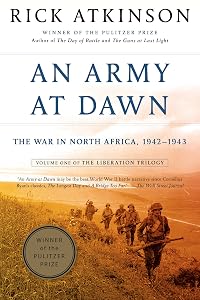
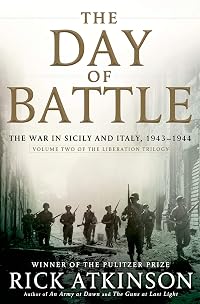
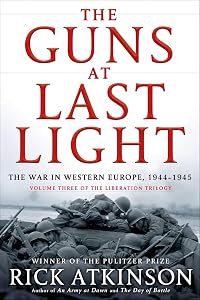
Rick Atkinson holds a master of arts degree in English literature from the University of Chicago and is a Pulitzer-Prize winning author and military historian Atkinson is the author of the highly-acclaimed Liberation Trilogy, The Long Gray Line, In the Company of Soldiers and Crusade. Atkinson received the Pulitzer Prize for the first volume of show more the Liberation Trilogy, An Army at Dawn: The War in North Africa, 1942-1943. The second volume, The Day of Battle: The War in Sicily and Italy, 1943-1944, drew praise as well. Atkinson also received the 1982 Pulitzer Prize for national reporting; and the 1999 Pulitzer Prize for public service, awarded to the Washington Post for a series of investigative articles directed and edited by Atkinson on shootings by the District of Columbia police department. He is winner of the 1989 George Polk Award for national reporting, the 2003 Society for Military History Distinguished Book Award, the 2007 Gerald R. Ford Award for Distinguished Reporting on National Defense, and the 2010 Pritzker Military Library Literature Award for Lifetime Achievement in Military Writing. Atkinson has served as the Gen. Omar N. Bradley Chair of Strategic Leadership at the U.S. Army War College. In 2014 his title The Guns at Last Light made The New York Times Best Seller List. (Bowker Author Biography) show less
Awards and Honors
Distinctions
Common Knowledge
Classifications
Statistics
- Members
- 631
- Popularity
- 46,045
- Reviews
- 8
- Rating
- (3.51)
- Languages
- English
- Media
- Paper, Audiobook, Ebook
- ISBNs
- 15
- ASINs
- 3