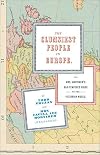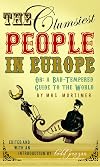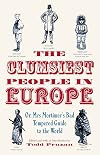
The Clumsiest People in Europe; or, Mrs. Mortimer's Bad-Tempered Guide to the Victorian World
by Favell Lee Mortimer
On This Page
Description
A caustic, cranky, and inadvertently hilarious look at foreign countries and their customs by a Victorian woman who rarely left the house. No matter who your ancestors were, and where they had the misfortune of living, Victorian children's book writer Mrs. Favell Lee Mortimer had something nasty to say about them. Their faults, according to Mrs. Mortimer, might have amounted to just about anything. The Irish "are very kind and good-natured when pleased, but if affronted, are filled with show more rage." In Italy, "the people are ignorant and wicked." In Sweden, "Nothing useful is well done...The carpenters and the blacksmiths are very clumsy in their work." Remarkably, all of these assertions come from a woman who only twice set foot outside of her native England. But lack of personal experience never kept Mrs. Mortimer from dispensing her horrifying wisdom about the evils of just about every nation on earth. Whether describing Europe ("It is dreadful to think what a number of murders are committed in Italy"), Asia ("The religion of Taou teaches men to act like madmen"), Africa ("The worst quality in any character is hypocrisy, and this is to be found in the Egyptian"), or America ("New Orleans is a dangerous place to live in, both for the body and the soul"), Mrs. Mortimer's views are consistently appalling. One hundred fifty years later, three of her forgotten classics have been compiled into one volume, The Clumsiest People in Europe, reviving the comically misinformed and startling prejudices of this unique Victorian eccentric. show lessTags
Recommendations
























Member Recommendations
Member Reviews
When Mortimer sat down to write about the world in the mid-nineteenth century she refreshingly believed she didn't have to leave England to do so. You also have to be impressed with Mortimer's determination to find fault with every group of people, every country and every major city in the world.
You begin reading every entry in "The Clumsiest People in Europe" wondering what insult Mortimer will hurl at the subject, and you don't have to wonder long. Whether it's declaring that the Greeks sing badly or scream like babies when unhappy, stating that the Kurds have "a fierce and malicious look", that Buddhists "are full of tricks by which to get presents out of people", that it is common to stumble over baby corpses in Chinese streets show more because the Chinese murder babies by the truckload or that the Siamese are deceitful, cowardly and cruel. I could go on and note that Mortimer believed the Australian Aboriginals to be flat out ugly or that Egyptians were famous for lying but you get the point. Indeed, the closest Mortimer gets to praise is describing Bostonians as being serious.
It's almost a shock then to find Mortimer railing against the injustices of slavery. She hides it at the back of her book though. show less
You begin reading every entry in "The Clumsiest People in Europe" wondering what insult Mortimer will hurl at the subject, and you don't have to wonder long. Whether it's declaring that the Greeks sing badly or scream like babies when unhappy, stating that the Kurds have "a fierce and malicious look", that Buddhists "are full of tricks by which to get presents out of people", that it is common to stumble over baby corpses in Chinese streets show more because the Chinese murder babies by the truckload or that the Siamese are deceitful, cowardly and cruel. I could go on and note that Mortimer believed the Australian Aboriginals to be flat out ugly or that Egyptians were famous for lying but you get the point. Indeed, the closest Mortimer gets to praise is describing Bostonians as being serious.
It's almost a shock then to find Mortimer railing against the injustices of slavery. She hides it at the back of her book though. show less
維多利亞時代的英國童書作家Mrs Mortimer一生只去過布魯塞爾、巴黎、愛丁堡三處旅遊,卻寫了三本介紹世界各國風土民情的地理書。這些書絕版多年後,被 Todd Pruzan 發現,稍微編輯和加入插圖及簡單說明後重新出版,變成了這本書。相隔了150年,原先嚴肅、no-nonsense的地理書現在讀起來不可思議地好笑。
"The Greeks do not bear their troubles well; when they are unhappy, the scream like babies."
"The religion of Budha teaches men to act like idiots."
"The worst quality in any character is hypocrisy, and this is to be found in the Egyptian."
嘲笑Mrs show more Mortimer的無知時,她的傲慢與偏見也同時令人嘖嘖稱奇;每個國家、每個地區似乎都有令她唾棄之處,她的用詞又是如此直接且不留情面。
儘管如此,這樣不多見的"奇文" 還是值得欣賞一下。也可以警惕自己:是否也曾像Mrs Mortimer 這樣,在其實不了解或只是基於刻板印象的狀況下,就任意批評別人呢? show less
"The Greeks do not bear their troubles well; when they are unhappy, the scream like babies."
"The religion of Budha teaches men to act like idiots."
"The worst quality in any character is hypocrisy, and this is to be found in the Egyptian."
嘲笑Mrs show more Mortimer的無知時,她的傲慢與偏見也同時令人嘖嘖稱奇;每個國家、每個地區似乎都有令她唾棄之處,她的用詞又是如此直接且不留情面。
儘管如此,這樣不多見的"奇文" 還是值得欣賞一下。也可以警惕自己:是否也曾像Mrs Mortimer 這樣,在其實不了解或只是基於刻板印象的狀況下,就任意批評別人呢? show less
In the middle of the 19th century, an Englishwoman named Favell Lee Mortimer anonymously wrote a series of books for children about many of the countries of the world. Today her comments, excerpted by Todd Pruzan in "The Clumsiest People in Europe," are both amusing and shocking. She had hardly a kind word to say about anyone:
Portugal: "No people in Europe are as clumsy and awkward with their hands as the Portuguese. It is curious to see how badly the carpenters make boxes, and the smiths make keys."
Italy: "... the people are ignorant and wicked."
Iceland: "Sometimes the Icelanders do bathe in the warm basins -- not as often as they should, for they are dirty people -- even their hands are so dirty that you would not like them to touch show more you or to help you off with your things."
Greece: "They do not bear their troubles well; when they are unhappy, they scream like babies."
South Africa: "There are also many Hottentots, but they no longer look like savages, and they are useful as servants."
As awful as Mrs. Mortimer's view of the non-English world is -- and I have not quoted the worst of her comments -- most people today are not necessarily more enlightened in their opinions of people unlike themselves, as Pruzan observes in his introduction to the book. If you were to collect in a book the things many Americans say about the French or Mexicans -- or what the French and Mexicans say about Americans -- the result would not necessarily be any more civil than Mrs. Mortimer's books.
Mrs. Mortimer left England just twice in her life, once in a trip to Scotland and another time in a short tour of Europe. The anthropologist Ruth Benedict wrote a highly respected book ("The Chrysanthemum and the Sword") about the Japanese people without ever visiting Japan, so Mrs. Mortimer's lack of travel may be less to blame for her ill-tempered viewpoints than her reliance on books written by her contemporaries who had visited these countries, That her books were published and widely read suggests that her attitudes were widely accepted at the time, as are, unfortunately, so many of the biases and false generalizations of our own time. show less
Portugal: "No people in Europe are as clumsy and awkward with their hands as the Portuguese. It is curious to see how badly the carpenters make boxes, and the smiths make keys."
Italy: "... the people are ignorant and wicked."
Iceland: "Sometimes the Icelanders do bathe in the warm basins -- not as often as they should, for they are dirty people -- even their hands are so dirty that you would not like them to touch show more you or to help you off with your things."
Greece: "They do not bear their troubles well; when they are unhappy, they scream like babies."
South Africa: "There are also many Hottentots, but they no longer look like savages, and they are useful as servants."
As awful as Mrs. Mortimer's view of the non-English world is -- and I have not quoted the worst of her comments -- most people today are not necessarily more enlightened in their opinions of people unlike themselves, as Pruzan observes in his introduction to the book. If you were to collect in a book the things many Americans say about the French or Mexicans -- or what the French and Mexicans say about Americans -- the result would not necessarily be any more civil than Mrs. Mortimer's books.
Mrs. Mortimer left England just twice in her life, once in a trip to Scotland and another time in a short tour of Europe. The anthropologist Ruth Benedict wrote a highly respected book ("The Chrysanthemum and the Sword") about the Japanese people without ever visiting Japan, so Mrs. Mortimer's lack of travel may be less to blame for her ill-tempered viewpoints than her reliance on books written by her contemporaries who had visited these countries, That her books were published and widely read suggests that her attitudes were widely accepted at the time, as are, unfortunately, so many of the biases and false generalizations of our own time. show less
Absolutely hilarious, because it's true (not that people are clumsy, but that someone actually wrote this god-awful book in all seriousness). It's not mediocre and bland bad writing, it's truly jaw-dropping I-can't-believe-it demented prose.
A good illustration of the old adage "if you can't say anything nice, write a travel guide."
A good illustration of the old adage "if you can't say anything nice, write a travel guide."
As Pruzan says in his introduction, "No matter where your ancestors had the misfortune of living--no doubt smoking too much, or taking snuff, or reading useless novels--Mrs. Favell Lee Mortimer had something nasty to say about them." Mrs. Mortimer had a successful, forty-year career writing Victorian children's books. Here's an example of her style from her bestselling [b:The Peep of Day or a Series of the Earliest Religious Instruction the Infant Mind is Capable of Receiving]:
"God has covered your bones with flesh. Your flesh is soft and warm...How easy it would be to hurt your poor little body! If it were to fall into a fire, it would be burned up. If a great knife were run through your body, the blood would come out. If a great box show more were to fall out of a window, your neck would be broken. If you were not to eat some food for a few days, your little body would be very sick, your breath would stop, and you would grow cold, and you would soon be dead." Children's books were written just a tad differently, back in the day.
Mrs.Mortimer wrote a number of books about other countries, despite having only been outside England twice--once to Brussels and Paris, and once to Edinburgh. Hardly a world traveler, and yet she churned out chapter after chapter. To no reader's surprise, her descriptions of other nations are wildly inaccurate and viciously prejudiced. Pruzan has collected some of his favorite chapters and pulled them together with a little preface of what was actually going on in that region. I enjoyed this book a great deal, but it's hard to read in one sitting. This would make an excellent bathroom book, or joke present. show less
"God has covered your bones with flesh. Your flesh is soft and warm...How easy it would be to hurt your poor little body! If it were to fall into a fire, it would be burned up. If a great knife were run through your body, the blood would come out. If a great box show more were to fall out of a window, your neck would be broken. If you were not to eat some food for a few days, your little body would be very sick, your breath would stop, and you would grow cold, and you would soon be dead." Children's books were written just a tad differently, back in the day.
Mrs.Mortimer wrote a number of books about other countries, despite having only been outside England twice--once to Brussels and Paris, and once to Edinburgh. Hardly a world traveler, and yet she churned out chapter after chapter. To no reader's surprise, her descriptions of other nations are wildly inaccurate and viciously prejudiced. Pruzan has collected some of his favorite chapters and pulled them together with a little preface of what was actually going on in that region. I enjoyed this book a great deal, but it's hard to read in one sitting. This would make an excellent bathroom book, or joke present. show less
One can only guess that Favell Lee Mortimer must have been a joy to be around. A noted mid-19th century author of children’s books, she also published a series of travel books. Compared to our familiar and trusty Frommer’s or Lonely Planet guides, though, Mortimer’s works are, one could say, less jovial. Mortimer shows unusual creativity in finding something wicked to say about everyone, everywhere. Germans read too much useless literature, she feels, while thieves lurk behind bushes throughout Spain. She struggles to write enough bad things to satisfy her dislike for anywhere so misguided as to be predominantly Catholic. Her writing reveals a peculiar sadism as she imagines all the unfortunate mishaps that might befall a traveler show more to, well, anywhere. Viewed through her writing, even her native England seems particularly unpleasant. According to this book’s editor, Todd Pruzan, who admits he didn’t know quite what to make of Mortimer’s books when he stumbled across copies in an old barn, Mortimer only twice strayed from home. She went to Paris once, and another time ventured as far as Wales. While these selections from her writings are wickedly funny, Pruzan’s helpful historical backgrounds that precede each entry add a strange sobriety to the work. The mid-19th century world was not all roses. Civil wars, rampant imperialism, famine and disease spilled over huge swaths of the Victorian map. Whatever one makes of Mortimer’s invective, this offbeat mash of history, humor and commentary make for a wonderfully engaging read. show less
First thing to know about this book - it was written in the mid 19th century by a woman who never left the UK. She was a someone famous children's author, and everyone assumed that these travel diaries were authentic, until her niece exposed her after her death.
Knowing that she made all of this up is the only thing that keeps this book even remotely worth printing today because it is so far past politically incorrect, it sits firmly in the xenophobic/racist/anti-semitic realm. But because it's fake, hopefully you can look past it and read the humor.
Virtually every country is described in a negative light, calling citizens, lazy, dirty, ugly, murderous, wicked, drunks, etc. Her favorite criticism is waging against non-christians not show more keeping the sabbath holy.
Unfortunately, the novelty runs far too long, so it became a little repetitive at the end. Too bad, since she saves the United States for the end where New Orleans is described as a dangerous place to live for both the body and the soul.
The redeeming values come into play simply as a snapshot of history - real or imagined - as she describes countries which no longer exist and cultural events and mores which seem very current. Her comments on slavery seem very modern at the time (from a US view), but considering slavery was abolished in the UK prior to her writings, those views seem very relevant.
So not a wholehearted recommendation, but definitely worth a skim if you come across a copy. show less
Knowing that she made all of this up is the only thing that keeps this book even remotely worth printing today because it is so far past politically incorrect, it sits firmly in the xenophobic/racist/anti-semitic realm. But because it's fake, hopefully you can look past it and read the humor.
Virtually every country is described in a negative light, calling citizens, lazy, dirty, ugly, murderous, wicked, drunks, etc. Her favorite criticism is waging against non-christians not show more keeping the sabbath holy.
Unfortunately, the novelty runs far too long, so it became a little repetitive at the end. Too bad, since she saves the United States for the end where New Orleans is described as a dangerous place to live for both the body and the soul.
The redeeming values come into play simply as a snapshot of history - real or imagined - as she describes countries which no longer exist and cultural events and mores which seem very current. Her comments on slavery seem very modern at the time (from a US view), but considering slavery was abolished in the UK prior to her writings, those views seem very relevant.
So not a wholehearted recommendation, but definitely worth a skim if you come across a copy. show less
Members
- Recently Added By
Author Information

19 Works 469 Members
Some Editions
Common Knowledge
- Canonical title
- The Clumsiest People in Europe; or, Mrs. Mortimer's Bad-Tempered Guide to the Victorian World
- Original publication date
- 2005
- People/Characters
- Mrs. Favell Lee Mortimer
- Important places
- England, UK
- First words
- It's 1855. Do you know where your great-great-great-great-grandparents are?
- Last words
- (Click to show. Warning: May contain spoilers.)Before the missionary comes they build his house, and when he arrives, they receive him as an angel of God; but if the priest comes first, they will receive him, and learn to trust in things that cannot save.
- Blurbers
- Ames, Jonathan; Julavits, Heidi; Andersen, Kurt
- Original language
- English
Classifications
- Genres
- Travel, Nonfiction, General Nonfiction
- DDC/MDS
- 910.202 — History & geography Geography & travel modified standard subdivisions of Geography and travel Miscellany; world travel guides World travel guides
- LCC
- D919 .M877 — History of Europe, Asia, Africa and Oceania History (General) Europe (General) Description and travel
- BISAC
Statistics
- Members
- 343
- Popularity
- 92,159
- Reviews
- 11
- Rating
- (3.45)
- Languages
- English, German
- Media
- Paper, Ebook
- ISBNs
- 9
- ASINs
- 4