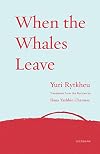
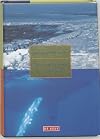
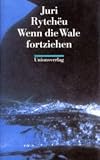
When the Whales Leave
by Yuri Rytkheu
On This Page
Description
"Nau cannot remember a time when she was not one with the world around her: with the fast breeze, the green grass, the high clouds, and the endless blue sky above the Shingled Spit. But her greatest joy is to visit the sea, where whales gather every morning to gaily spout rainbows. Then, one day, she finds a man in the mist where a whale should be: Reu, who has taken human form out of his Great Love for her. Together these first humans become parents to two whales, and then to mankind. Even show more after Reu dies, Nau continues on, sharing her story of brotherhood between the two species. But as these origins grow more distant, the old woman's tales are subsumed into myth-and her descendants turn increasingly bent on parading their dominance over the natural world. Buoyantly translated into English for the first time by Ilona Yazhbin Chavasse, this new entry in the Seedbank series is at once a vibrant retelling of the origin story of the Chukchi, a timely parable about the destructive power of human ego-and another unforgettable work of fiction from Yuri Rytkheu, "arguably the foremost writer to emerge from the minority peoples of Russia's far north" (New York Review of Books)"-- show lessTags
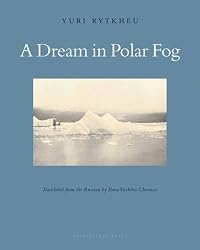
Recommendations




















Member Reviews
What an AMAZING book. When the Whales Leave is a Chukchi creation story set in Uelen, Siberia that reflects the time period that the author, Yuri Rytkheu, lived through, when his people's traditions were being thrown aside and replaced. From the introduction, "He follows the downward spiral from respect for the power of the natural world, modesty in front of the weather, and group effort, to the general shift that produced, finally, a vain bully and gloating brute…" and "the novel stands as a renewal of faith in his Chukotka homeland. It is a song that celebrates, illuminates, warns, and finally exposes what were once the moral principles of village life that were traded down for the furious power-mongering and 'me-ism' of today." show more (Gretel Ehrlich)
Yuri's creation story is a multigenerational novel beginning with the woman, Nau, who lives during the "ancestor times," when "animal-human transformations were common; when time and lifespans were elastic…" She falls in love with a whale who becomes human. There are four points of view: the first follows Nau; the second is her son Enu, who eventually leaves to find a land without winter; the third is Kliau's, a hunter who goes with Enu; and the last follows Givu, Enu's grandson.
This small story is so thoughtful, so insightful, that I almost don't want to get into everything that's discussed to let people discover it for themselves. This story was decades and decades before it's time. It's written in a gorgeous folktale-like style that's captivating and spare in equal parts.
Absolutely stunning.
content warnings for rape (not shown), and EXTREME animal cruelty (with purpose) show less
Yuri's creation story is a multigenerational novel beginning with the woman, Nau, who lives during the "ancestor times," when "animal-human transformations were common; when time and lifespans were elastic…" She falls in love with a whale who becomes human. There are four points of view: the first follows Nau; the second is her son Enu, who eventually leaves to find a land without winter; the third is Kliau's, a hunter who goes with Enu; and the last follows Givu, Enu's grandson.
This small story is so thoughtful, so insightful, that I almost don't want to get into everything that's discussed to let people discover it for themselves. This story was decades and decades before it's time. It's written in a gorgeous folktale-like style that's captivating and spare in equal parts.
Absolutely stunning.
content warnings for rape (not shown), and EXTREME animal cruelty (with purpose) show less
This book seems sort of metamythic because part 1 is a creation myth and then the rest of the book is about how people engage with that myth (while its subject is still living!) and eventually become myths themselves. It makes you wonder, in reading this, will it make you part of the story? Probably, because of how universally applicable this story is, and considering how this predates the “Tragedy of the Commons” by a few millennia. Instead of the typical Western hopelessness, When the Whales Leave is a cautionary tale that has hope for humanity even though the ending is quite bleak. That being said, it doesn’t feel like it was written for a white audience, it’ll meet you halfway but won’t spoon feed you or guide you through show more understanding.
Rytkeu talks a lot about the difference between ancestor worship and the gods, with Nau being the living embodiment humanity’s earliest ancestors (she’s a really old lady who lives through like at least 5 generations). The escalation from the first few generations doubting her story to the last guy who just totally starts fucking up everything seems really drastic, but maybe that slippery slope is realistic. At first the misogyny was bothering me but I dont think that depiction of something is necessarily an avowal of it, and that perhaps the patriarchal society that develops is just another symptom of human hubris. But that’s the thing, this book is so deceptively simple but it won’t give you a straight answer on anything and will linger with you for a lot longer than it takes to actually read it.
The translator's note and introduction are definitely interesting, but read them after you read the story because both spoil it and it's a lot better to go in with no idea of what's coming next. I thought the prose in this was so easy to read and yet so flowery, in the translator's note Rytkheu says, "Write it like a song. Like you could sing it if you wanted to." which is honestly the best way anyone could put it. show less
Rytkeu talks a lot about the difference between ancestor worship and the gods, with Nau being the living embodiment humanity’s earliest ancestors (she’s a really old lady who lives through like at least 5 generations). The escalation from the first few generations doubting her story to the last guy who just totally starts fucking up everything seems really drastic, but maybe that slippery slope is realistic. At first the misogyny was bothering me but I dont think that depiction of something is necessarily an avowal of it, and that perhaps the patriarchal society that develops is just another symptom of human hubris. But that’s the thing, this book is so deceptively simple but it won’t give you a straight answer on anything and will linger with you for a lot longer than it takes to actually read it.
The translator's note and introduction are definitely interesting, but read them after you read the story because both spoil it and it's a lot better to go in with no idea of what's coming next. I thought the prose in this was so easy to read and yet so flowery, in the translator's note Rytkheu says, "Write it like a song. Like you could sing it if you wanted to." which is honestly the best way anyone could put it. show less
I was not prepared for how heartbreaking this book is. I was lulled into false hope by phrases on the back cover like "buoyantly translated" and "vibrant retelling." Was not prepared for the second half of the book to be all red flags. (CW for graphic animal cruelty, brief mention of sexual assault).
I never know how to rate a book like this. It was wildly effective, vivid, beautiful. But acutely painful.
I never know how to rate a book like this. It was wildly effective, vivid, beautiful. But acutely painful.
A beautiful and sad book, a condensed history of the human downfall into greed and ego told through the Chukchi origin story.
"Beauty lies in that which is beside you"
Ratings
Members
- Recently Added By
Author Information

30+ Works 601 Members
Some Editions
Awards and Honors
Awards
Series
Belongs to Publisher Series
Common Knowledge
- Canonical title
- When the Whales Leave
- Original title
- Kogda kity uchodjat; Когда киты уходят
- Original publication date
- 1975
- Important places*
- Sibirien, Russland; Arktis
- First words*
- Nau suchte mit den Augen diesen überraschenden Glanz, der sich zum Ufer hin immer deutlicher abhob - die Fontäne schoss hoch auf, und das Sonnenlicht liess in ihr einen vielfarbigen Regenbogen funkeln.
- Last words*
- (Click to show. Warning: May contain spoilers.)Die Wale waren fortgezogen.
- Original language
- Russian
*Some information comes from Common Knowledge in other languages. Click "Edit" for more information.
Classifications
- Genres
- Fiction and Literature, General Fiction
- DDC/MDS
- 891.73 — Literature & rhetoric Asian Literature East Indo-European and Celtic literatures Russian and East Slavic languages Russian fiction
- LCC
- PG3476 .R965 .K613 — Language and Literature Slavic languages and literatures. Baltic languages. Albanian language Slavic. Baltic. Albanian Russian literature Individual authors and works 1917-1960
- BISAC
Statistics
- Members
- 81
- Popularity
- 391,137
- Reviews
- 5
- Rating
- (4.23)
- Languages
- Dutch, English, German, Japanese
- Media
- Paper, Audiobook, Ebook
- ISBNs
- 11
- ASINs
- 3