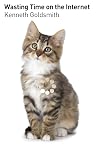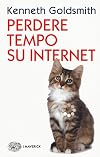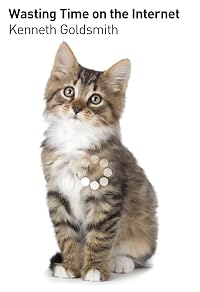
Wasting Time on the Internet
by Kenneth Goldsmith
On This Page
Description
Using clear, readable prose, conceptual artist and poet Kenneth Goldsmith's manifesto shows how our time on the internet is not really wasted but is quite productive and creative as he puts the experience in its proper theoretical and philosophical context. Kenneth Goldsmith wants you to rethink the internet. Many people feel guilty after spending hours watching cat videos or clicking link after link after link. But Goldsmith sees that "wasted" time differently. Unlike old media, the show more internet demands active engagement--and it's actually making us more social, more creative, even more productive. When Goldsmith, a renowned conceptual artist and poet, introduced a class at the University of Pennsylvania called "Wasting Time on the Internet," he nearly broke the internet. The New Yorker, the Atlantic, the Washington Post, Slate, Vice, Time, CNN, the Telegraph, and many more, ran articles expressing their shock, dismay, and, ultimately, their curiosity. Goldsmith's ideas struck a nerve, because they are brilliantly subversive--and endlessly shareable. In Wasting Time on the Internet, Goldsmith expands upon his provocative insights, contending that our digital lives are remaking human experience. When we're "wasting time," we're actually creating a culture of collaboration. We''re reading and writing more--and quite differently. And we're turning concepts of authority and authenticity upside--down. The internet puts us in a state between deep focus and subconscious flow, a state that Goldsmith argues is ideal for creativity. Where that creativity takes us will be one of the stories of the twenty-first century. Wide-ranging, counterintuitive, engrossing, unpredictable--like the internet itself--Wasting Time on the Internet is the manifesto you didn't know you needed -- Provided by publisher. show lessTags
Recommendations

Member Recommendations
Member Reviews
I saw a cover shot and a short blurb review for this in a magazine and thought it seemed like it should be an amusing bit of fluff, so I picked it up the next time I went to the library. I should have remembered the old adage about books and their covers.
The introduction and first chapter are fun, especially when the author writes about the actual college course he presented called "Wasting Time on the Internet." It's a pretty interesting study in group dynamics and modern tech habits. There's probably a pretty cool documentary to be made there.
But then Goldsmith stops being anecdotal and gets academic. The rest of the chapters basically outline how decades or even centuries ago various writers, painters, photographers and other artists show more were doing the same things being done now on the internet or roughly predicted how we would behave when something like the internet came to be. His comparison of art history and the internet seems to point to the conclusions that everything old is new again (or "All this has happened before, and all this will happen again") and that the democratization effect of the internet makes us all artists in our own right if we so choose to declare our time wasting as such. All this is not as fun as the first chunks, but tolerably interesting.
I had to grit my teeth while reading the back-of-the-book list of 101 suggestions of how to waste time on the internet as so many of them depend on pranking, annoying, inconveniencing or disrespecting other people. "How to be an asshole on the internet" may have been a better title, says the uptight control freak in me. show less
The introduction and first chapter are fun, especially when the author writes about the actual college course he presented called "Wasting Time on the Internet." It's a pretty interesting study in group dynamics and modern tech habits. There's probably a pretty cool documentary to be made there.
But then Goldsmith stops being anecdotal and gets academic. The rest of the chapters basically outline how decades or even centuries ago various writers, painters, photographers and other artists show more were doing the same things being done now on the internet or roughly predicted how we would behave when something like the internet came to be. His comparison of art history and the internet seems to point to the conclusions that everything old is new again (or "All this has happened before, and all this will happen again") and that the democratization effect of the internet makes us all artists in our own right if we so choose to declare our time wasting as such. All this is not as fun as the first chunks, but tolerably interesting.
I had to grit my teeth while reading the back-of-the-book list of 101 suggestions of how to waste time on the internet as so many of them depend on pranking, annoying, inconveniencing or disrespecting other people. "How to be an asshole on the internet" may have been a better title, says the uptight control freak in me. show less
This book presents a scholarly defense of the validity and art of human interaction online, an extended academic rephrasing of the argument made time and again on Tumblr and other vibrant online communities: conversation, dialogue, and communication through the internet are genuine, innovative, and do not indicate the downfall of humanity.
The aspects of Goldsmith's argument that made it more effective were his comparison to the surrealist movement, his classroom experiments in the application of these ideas, and most significantly, his comparison with various modern art exhibits. Goldsmith venerates internet culture as art, inevitable from his background as a poet, a professor, and poet laureate for the Museum of Modern Art. This leads show more to a pervasive sense of wonder throughout, which is largely charming but occasionally nauseating. Goldsmith also adopts a rather narrow perspective, that of someone with the means for constant connection to the internet and the art education to look at it without much thought to access problems, or the limits of practicality.
Goldsmith asserts that we should look at the internet as a massive arena for creativity, innovative in its technology but not its basic motivations for interaction. The reasoning that brings him to this conclusion, although from the lofty perspective of a self-proclaimed intellectual, are nonetheless interesting and worthwhile. show less
The aspects of Goldsmith's argument that made it more effective were his comparison to the surrealist movement, his classroom experiments in the application of these ideas, and most significantly, his comparison with various modern art exhibits. Goldsmith venerates internet culture as art, inevitable from his background as a poet, a professor, and poet laureate for the Museum of Modern Art. This leads show more to a pervasive sense of wonder throughout, which is largely charming but occasionally nauseating. Goldsmith also adopts a rather narrow perspective, that of someone with the means for constant connection to the internet and the art education to look at it without much thought to access problems, or the limits of practicality.
Goldsmith asserts that we should look at the internet as a massive arena for creativity, innovative in its technology but not its basic motivations for interaction. The reasoning that brings him to this conclusion, although from the lofty perspective of a self-proclaimed intellectual, are nonetheless interesting and worthwhile. show less
Haphazardly stumbles through a whistle-stop of oblique philosophical concepts, which steer it toward a clinical academic visage increasingly uninteresting to read, consistently failing to elaborate on any grounding argument or compelling synthesis. Instead, it appears more akin to a surface-level literature review or seminar ramble, probably impenetrable (certainly in many cases for me) if you're not largely familiar with the niche pop culture artefacts or theories he summons throughout. Not to suggest this is a fault of the author, although in the times I felt engaged, he quickly progresses toward another analogy without any worthwhile prodding or grounding argument. Above all, his central ethos is defending the internet from its show more stereotypical lambasting as a "zombie" tool dissociating humans from the physical, instead proposing it acts as a modern 'library of babel' allowing us to become more intimately invested in our passions & self-identity than any medium preceding it. One element I found fascinating was the "digital flaneur", and how commercial aspects derive the internet of its ability to thrive as a democratised resource. Curation is an interesting field to me, and in this context allows me to justify my daunting .mp3 collection, as our constant curation is a mode of engagement immutable from the internet -- it appears increasingly how content itself is subordinated to the action of acquiring as a conceptual gesture. Especially amidst megaleaks & breathtaking data dumps; the joy of liberating information & artwork cannot be subdued. show less
A very good book full of witty observations and new ways to frame our usage of the internet and smart phones. The author presents some very interesting connections to the art world. I learned about some new artists that I want to look at. Well written and full of ideas that make me stop and question basic assumptions about what it means to spend time on the internet!
After 100 pages oozing with pretension I had to quit. It read like a graduate philosophy student was trying to persuade his professor that it was okay to stay glued to his phone during class. Also, the ways to waste time on the internet in the back were a joke. Seriously, what on earth is the point of these exercises?
Maybe things are different in New York City and people constantly being glued to their devices when in the presence of others is considered to be acceptable and not rude. Maybe Goldsmith wants to live his life absorbed in cyberspace with people he will most likely never meet, collection information he will hardly remember tomorrow. I certainly do not.
Maybe things are different in New York City and people constantly being glued to their devices when in the presence of others is considered to be acceptable and not rude. Maybe Goldsmith wants to live his life absorbed in cyberspace with people he will most likely never meet, collection information he will hardly remember tomorrow. I certainly do not.
Ratings
Members
- Recently Added By
Author Information

30+ Works 695 Members
Kenneth Goldsmith teaches writing at the University of Pennsylvania and is the founder of UbuWeb. His books include Uncreative Writing: Managing Language in the Digital Age (Columbia, 2011) and Wasting Time on the Internet (2016).
Series
Belongs to Publisher Series
Common Knowledge
- Canonical title*
- Perdere tempo su Internet
- Original publication date
- 2016-08-23
*Some information comes from Common Knowledge in other languages. Click "Edit" for more information.
Classifications
- Genres
- Nonfiction, Technology, General Nonfiction, Art & Design, Philosophy
- DDC/MDS
- 302.23 — Society, government, & culture Social sciences, sociology & anthropology Mass Communication & Media Communication Media (Means of communication)
- LCC
- HM851 .G653 — Social sciences Sociology (General) Sociology Social change
- BISAC
Statistics
- Members
- 98
- Popularity
- 320,589
- Reviews
- 5
- Rating
- (3.35)
- Languages
- English, Italian
- Media
- Paper, Ebook
- ISBNs
- 5
- ASINs
- 1