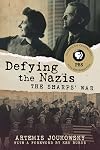
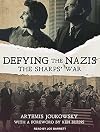
Defying the Nazis: The Sharps' War
by Artemis Joukowsky
On This Page
Description
"Official companion to the Ken Burns film premiering September 20, 2016, on PBS tells the little-known story of the Sharps, an otherwise ordinary couple whose faith and commitment to social justice inspired them to undertake dangerous rescue and relief missions across war-torn Europe, saving the lives of countless refugees, political dissidents, and Jews on the eve of World War II."--Amazon.com. Official companion to the Ken Burns film premiering September 20, 2016, on PBS tells the show more little-known story of the Sharps, an otherwise ordinary couple whose faith and commitment to social justice inspired them to undertake dangerous rescue and relief missions across war-torn Europe, saving the lives of countless refugees, political dissidents, and Jews on the eve of World War II. In 1939, the Reverend Waitstill Sharp, a young Unitarian minister, and his wife, Martha, a social worker, accepted a mission from the American Unitarian Association: they were to leave their home and young children in Wellesley, Massachusetts, and travel to Prague, Czechoslovakia, to help address the mounting refugee crisis. Seventeen ministers had been asked to undertake this mission and had declined; Rev. Sharp was the first to accept the call for volunteers in Europe. Armed with only $40,000, Waitstill and Martha quickly learned the art of spy craft and undertook dangerous rescue and relief missions across war-torn Europe, saving refugees, political dissidents, and Jews on the eve of World War II. After narrowly avoiding the Gestapo themselves, the Sharps returned to Europe in 1940 as representatives of the newly formed Unitarian Service Committee and continued their relief efforts in Vichy France. A fascinating portrait of resistance as told through the story of one courageous couple, Defying the Nazis offers a rare glimpse at high-stakes international relief efforts during WWII and tells the remarkable true story of a couple whose faith and commitment to social justice inspired them to risk their lives to save countless others. -- Provided by publisher. show lessTags
Recommendations






















Member Recommendations
Nicholas Winton and the Rescued Generation: Save One Life, Save the World (The Library of Holocaust Testimonies) by Muriel Emanuel
StreedsReads Coverage of Kindertransport (rescue missions of Jewish minors) conceived of by Nicholas Winton.
Member Reviews
Following any of the horrific events that have become all-too-common in modern society, someone on social media inevitably shares Mr. Rogers’s advice to “’Look for the helpers. You will always find people who are helping’… I am always comforted by realizing that there are still so many helpers – so many caring people in this world.” These words are true, but after so many tragedies and so many Facebook posts, it becomes easy to dismiss or forget about them. Artemis Joukowsky’s Defying the Nazis: The Sharps’ War provides clear proof of the veracity of this sentiment. The book tells the true story of Waitstill and Martha Sharp, who took on the enormous task of helping refugees in Europe as the Nazis were coming to power show more and World War II was starting.
While the Sharps seemed like an ordinary couple, they had an extraordinary sense of duty that led them to accept the mission put forth by the American Unitarian Association to go to Prague, Czechoslovakia on the eve of the Nazi invasion. Despite having two young children, Waitstill and Martha go to Prague, learn ways of circumventing the obstacles in their way, outwit the Gestapo, and work to help those who are being oppressed and hunted by the Nazis. After leaving Prague and having a short sojourn at home, they return to Europe during World War II to continue helping those they can.
In many ways, this story seems too fantastic to be true, but Joukowsky, who is the Sharps’ grandson, does an excellent job providing research and facts as support. In some instances, the number of names, dates, and references can weigh down the narrative, but the text’s focus never wavers for long. Joukowsky’s writing style also does not veer far away from the facts. If it is not verified in Martha and Waitstill’s correspondence, excerpts of which are included, or through his interviews with him, the text takes pains not to dramatize the events. This helps further establish Joukowsky as a trustworthy author, but it also can make the narrative a little dry, which is surprising given the suspense that is built into the story. However, despite these minor issues, the book moves quickly and leaves the reader wanting to find out what happened to the Sharps.
Another aspect that reinforces the book’s reliability is that Joukowsky examines some of the more everyday facets of the Sharps’ lives. A prime example of this is the tension that exists between the good that Martha wanted to do by helping refugee children and the fact that she did this at the expense of spending time with her own children. Also, rather than closing with the Sharps’ second mission to Europe, Joukowsky follows them post-World War II, as they grow further apart both literally (Martha did a lot of travelling on the lecture circuit, while Waitstill returned to Prague to work for the American Committee for Relief in Czechoslovakia) and figuratively and after their marriage ends. In a perfect world, their bond would have been galvanized by the shared experiences in Europe and would have remained strong. Joulowsky’s exploration of its disintegration reinforces the reality of this story; it is not a fairy tale or fable but the story of two seemingly ordinary people who were able to accomplish extraordinary things under great duress and in the face of seemingly insurmountable obstacles. show less
While the Sharps seemed like an ordinary couple, they had an extraordinary sense of duty that led them to accept the mission put forth by the American Unitarian Association to go to Prague, Czechoslovakia on the eve of the Nazi invasion. Despite having two young children, Waitstill and Martha go to Prague, learn ways of circumventing the obstacles in their way, outwit the Gestapo, and work to help those who are being oppressed and hunted by the Nazis. After leaving Prague and having a short sojourn at home, they return to Europe during World War II to continue helping those they can.
In many ways, this story seems too fantastic to be true, but Joukowsky, who is the Sharps’ grandson, does an excellent job providing research and facts as support. In some instances, the number of names, dates, and references can weigh down the narrative, but the text’s focus never wavers for long. Joukowsky’s writing style also does not veer far away from the facts. If it is not verified in Martha and Waitstill’s correspondence, excerpts of which are included, or through his interviews with him, the text takes pains not to dramatize the events. This helps further establish Joukowsky as a trustworthy author, but it also can make the narrative a little dry, which is surprising given the suspense that is built into the story. However, despite these minor issues, the book moves quickly and leaves the reader wanting to find out what happened to the Sharps.
Another aspect that reinforces the book’s reliability is that Joukowsky examines some of the more everyday facets of the Sharps’ lives. A prime example of this is the tension that exists between the good that Martha wanted to do by helping refugee children and the fact that she did this at the expense of spending time with her own children. Also, rather than closing with the Sharps’ second mission to Europe, Joukowsky follows them post-World War II, as they grow further apart both literally (Martha did a lot of travelling on the lecture circuit, while Waitstill returned to Prague to work for the American Committee for Relief in Czechoslovakia) and figuratively and after their marriage ends. In a perfect world, their bond would have been galvanized by the shared experiences in Europe and would have remained strong. Joulowsky’s exploration of its disintegration reinforces the reality of this story; it is not a fairy tale or fable but the story of two seemingly ordinary people who were able to accomplish extraordinary things under great duress and in the face of seemingly insurmountable obstacles. show less
 This review was written for LibraryThing Early Reviewers.
A gripping read, recounting not only the heroic acts of Waitsill and Martha Sharp, but the costs of such heroism in the lives of real people and real families. Hugely inspirational for our current troubled time which is eerily reminiscent of the events recounted here (hostility toward immigrants, prejudice, fear, and injustice). Also points out that the work of compassion and justice does not happen in a vacuum, but amid real-world complications that make it hard to know THE RIGHT THING to do and can lead to intense disagreement among well-intentioned people. Looking forward to the PBS presentation tomorrow!
Here it is 77 years later and stories of heroism in World War II still stir emotion and great interest in the extraordinary lives of ordinary people. This is a story of The Sharps, an amazing couple serving in Czechoslovakia in 1939 and beyond: he, a Unitarian minister with a Wellesley, Massachusetts flock and she a social worker. They are called to serve in Europe as the Nazis grab for land and power. Other Unitarian ministers had declined requests to serve and surely a couple with two small children would be excused if they chose a similar path. However, their convictions, sense of morality and responsibility impelled them to try and save the children and intellectuals of Czechoslovakia. They were focused, creative, ingenious and show more committed to their work which provided extraordinary results. This is a great story and well worth sharing.
I am grateful to publisher, Beacon Press and Goodreads First Reads for having provided a free copy of this book. Their generosity, however, did not influence this review - the words of which are mine alone. show less
I am grateful to publisher, Beacon Press and Goodreads First Reads for having provided a free copy of this book. Their generosity, however, did not influence this review - the words of which are mine alone. show less
In Defying the Nazis – The Sharps’ War, Artemis Joukowsky presents the story of his grandparents’ work to aid refugees in Czechoslovakia and France during 1939 – 1940. Waitstill and Martha Sharp began their work as Unitarian missionaries, but quickly learned how to pass coded notes, evade Gestapo agents that were tailing them, launder money, smooth talk border agents, and form relationships with embassy and consul staff from Britain, France, and the U.S. in order to help people escape the oncoming tide of persecution under the Nazi’s territorial expansion. The story would sound too amazing to be true, but Joukowsky bases everything on the primary sources that his grandparents left behind along with other surviving records from show more their work during World War II and beyond. Following the war’s conclusion, Martha ran for Congress, worked as a lecturer for the new nation of Israel, and continued to aid refugee children. Waitstill worked with other relief organizations and tried to combat Chicago’s housing discrimination. To quote Joukowsky, though they could not help everyone, “perhaps what matters most in not the number they were able to help, but that they chose to help at all. With little more to guide them than innate decency, a keen sense of fairness, and a deep love for each other, the Sharps stood up to unspeakable evil and made a difference” (p. 226). Defying the Nazis is an amazing story made all the more meaningful for the quiet bravery of the Sharps. This book, which will appear on bookshelves on 6 September 2016, is a companion to the PBS documentary Joukowsky co-directed with Ken Burns and that airs on 20 September. show less
This review was written for LibraryThing Early Reviewers.In 1976 Joukowsky is stunned to learn that his mother’s parents played a vital role in the Unitarian Church’s first mission to help various groups of people in Czechoslovakia, France and elsewhere during WWII. He visits and interviews them for a school report. Since their deaths, Artemis realizes just how remarkable the story of their bold efforts on behalf of Czechs and others, non-Jewish and Jewish is. Investigating, researching, interviewing the people the Sharps met, worked with and saved, and writing about them becomes Joukowsky’s life mission.
He writes Defying the Nazis: The Sharps’ War, a fascinating, moving and detailed account of two regular people; a minister and his wife, asked to undertake a number of dangerous show more trips to aid and rescue refugees. In the 1930’s, the Unitarians were more knowledgeable of European events than most Americans. They were concerned about a population of German speaking co-religionists in Sudentenland, a region in northern Czechoslovakia, ceded to Hitler through Prime Minister Neville Chamberlain’s Munich Agreement as an offering of appeasement. Robert Dexter, Director of the American Unitarian Association, (AUA) visits Czechoslovakia and reports that Unitarian refugees have relocated to other parts of Czechoslovakia and need help. Many Jews fled as well and now the Nazis were hunting intellectuals, writers, artists, labor leaders, etc. among them. Soon the Nazis take over all Czechoslovakia; so much for appeasement!
The AUA raises funds for the Sharps’ missions. Briefed in London and Paris, taught “spycraft” and given lists of contacts and names of refugees needing to escape they arrive in Prague, “a plucky little democracy” trying its best to house, feed, and find jobs for the refugees. The Sharps quickly learn what needed doing; and connected people who needed help with those who could help. They were stunned to learn that many Czechs, Americans and others did not feel as they did and would not lift a finger to aid Jews, i.e. US Ambassador Wilbur Carr. He could have saved lives but would not increase the number of visa allotments to the US. Thankfully, his replacement, Irving Linnel did that and more!
The Sharps prioritized by helping get ‘kulturtragers’ (intellectuals), Jews and children out. Waitstill brilliantly coordinates a bizarre plan to move refugees’ money to banks in other countries for safe keeping, avoiding the Nazis helping themselves. He funded the Salvation Army’s kitchen to feed the hungry, set up summer camps for children to get them out of Prague for a few weeks, built an orphan home, helped churches buy a supply of food for winter, rescued students by having them pretend to be miners allowing them to go underground where they reached Poland, and the Resistance put them on British subs. Martha helps her Jewish staff, as well as relatives of friends get food, jobs or visas. She ensures approx. 800 French babies and children get milk, and tries getting as many Jewish children out of the country as possible. She tried, unsuccessfully, to get Alaska to agree to take 10,000 refugees!
The work was challenging and stressful, of course. Martha missed her children terribly and was often sick but would continue working, knowing the dangers innocent people were facing. Joukowsky doesn’t shy away from documenting how much his grandparents’ experiences changed their lives especially Martha’s. And how after they returned from Europe the two remained committed to serving and supporting a number of organizations representing people in need. With Defying the Nazis, Joukowsky succeeds in creating a beautiful, honest memorial to not only his grandparents but to the many others who performed miracles every day to help and save as many people as possible. show less
He writes Defying the Nazis: The Sharps’ War, a fascinating, moving and detailed account of two regular people; a minister and his wife, asked to undertake a number of dangerous show more trips to aid and rescue refugees. In the 1930’s, the Unitarians were more knowledgeable of European events than most Americans. They were concerned about a population of German speaking co-religionists in Sudentenland, a region in northern Czechoslovakia, ceded to Hitler through Prime Minister Neville Chamberlain’s Munich Agreement as an offering of appeasement. Robert Dexter, Director of the American Unitarian Association, (AUA) visits Czechoslovakia and reports that Unitarian refugees have relocated to other parts of Czechoslovakia and need help. Many Jews fled as well and now the Nazis were hunting intellectuals, writers, artists, labor leaders, etc. among them. Soon the Nazis take over all Czechoslovakia; so much for appeasement!
The AUA raises funds for the Sharps’ missions. Briefed in London and Paris, taught “spycraft” and given lists of contacts and names of refugees needing to escape they arrive in Prague, “a plucky little democracy” trying its best to house, feed, and find jobs for the refugees. The Sharps quickly learn what needed doing; and connected people who needed help with those who could help. They were stunned to learn that many Czechs, Americans and others did not feel as they did and would not lift a finger to aid Jews, i.e. US Ambassador Wilbur Carr. He could have saved lives but would not increase the number of visa allotments to the US. Thankfully, his replacement, Irving Linnel did that and more!
The Sharps prioritized by helping get ‘kulturtragers’ (intellectuals), Jews and children out. Waitstill brilliantly coordinates a bizarre plan to move refugees’ money to banks in other countries for safe keeping, avoiding the Nazis helping themselves. He funded the Salvation Army’s kitchen to feed the hungry, set up summer camps for children to get them out of Prague for a few weeks, built an orphan home, helped churches buy a supply of food for winter, rescued students by having them pretend to be miners allowing them to go underground where they reached Poland, and the Resistance put them on British subs. Martha helps her Jewish staff, as well as relatives of friends get food, jobs or visas. She ensures approx. 800 French babies and children get milk, and tries getting as many Jewish children out of the country as possible. She tried, unsuccessfully, to get Alaska to agree to take 10,000 refugees!
The work was challenging and stressful, of course. Martha missed her children terribly and was often sick but would continue working, knowing the dangers innocent people were facing. Joukowsky doesn’t shy away from documenting how much his grandparents’ experiences changed their lives especially Martha’s. And how after they returned from Europe the two remained committed to serving and supporting a number of organizations representing people in need. With Defying the Nazis, Joukowsky succeeds in creating a beautiful, honest memorial to not only his grandparents but to the many others who performed miracles every day to help and save as many people as possible. show less
This review was written for LibraryThing Early Reviewers.This book is a well-written portrait of a minister and his wife who left their two young children in the US to work for refugee and relief causes in World War II Europe. Their work was noble and no doubt dangerous but it raised difficult ethical questions for me about parental responsibilities and choices. Should the Sharps have put themselves in harm's way? Months after reading this book, I still can't answer that question. A thought-provoking contribution to the canon of World War II biography and memoir. I received this book free of charge through the Early Reviewer program.
This review was written for LibraryThing Early Reviewers.A fascinating read about parts of WWII history with which I was unfamiliar. The Sharps are an amazing couple and the book detailing their time abroad and back in the US was made the more interesting because of the author's intimate knowledge of their family life and the consequences of their time trying to intervene in the lives of those most affected by the war. While I found myself disagreeing with some of their approaches and causes later in their lives, it was hard not to support what they stood for and what they were willing to sacrifice even if it could only save one life.
This review was written for LibraryThing Early Reviewers.Members
- Recently Added By
Lists

History: Holocaust
106 works; 1 member

History: War & Terrorism
64 works; 1 member
Author Information

2 Works 137 Members
All Editions
Series
Belongs to Publisher Series
Common Knowledge
- Original publication date
- 2016
- People/Characters
- Reverend Waitstill Sharp; Martha Sharp; Nicholas Winton; Trevor Chadwick; Adolf Hitler; Neville Chamberlain
- Important places
- Prague, Czechoslovakia; Europe; Czechoslovakia; Germany; Berlin, Germany
- Important events
- World War II; Holocaust; Slovakia Secession (March 3 ∙ 1939); Kindertransport; Second Italo-Ethiopian War; Anschluss (show all 8); Munich Agreement; Sudetenland
- Related movies
- Defying the Nazis: The Sharps' War
- First words
- (Foreword) Many people approach me to collaborate on films with them.
(Preface) I remember the moment with absolute clarity.
On a frigid Sunday evening in the winter of 1939, the Reverend Waitstill Sharp had just wearily arranged himself in front of his fireplace when the parsonage telephone rang. - Last words
- (Click to show. Warning: May contain spoilers.)Hastings died in 2012.
(Click to show. Warning: May contain spoilers.)(Epilogue) By any measure, Martha and Waitsfield Sharp were heroes. - Blurbers
- Burns, Ken; Schulz, William F.
- Original language
- English US
- Disambiguation notice
- This is the book version.
Classifications
Statistics
- Members
- 119
- Popularity
- 269,599
- Reviews
- 21
- Rating
- (3.95)
- Languages
- English
- Media
- Paper, Audiobook, Ebook
- ISBNs
- 7
- ASINs
- 2