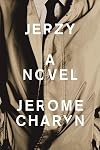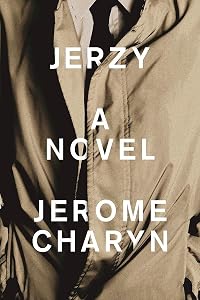
Jerzy: A Novel
by Jerome Charyn
On This Page
Description
"Jerzy Kosinski was a great enigma of post-World War II literature. When he exploded onto the American literary scene in 1965 with his best-selling novel The Painted Bird, he was revered as a Holocaust survivor and refugee from the world hidden behind the Soviet Iron Curtain. He won major literary awards, befriended actor Peter Sellers (who appeared in the screen adaptation of his novel Being There), and was a guest on talk shows and at the Oscars. But soon the facade began to crack, and show more behind the public persona emerged a ruthless social climber, sexual libertine, and pathological liar who may have plagiarized his greatest works. Jerome Charyn lends his unmistakable style to this most American story of personal disintegration, told through the voices of multiple narrators--a homicidal actor, a dominatrix, and Joseph Stalin's daughter--who each provide insights into the shifting facets of Kosinski's personality. The story unfolds like a Russian nesting doll, eventually revealing the lost child beneath layers of trauma, while touching on the nature of authenticity, the atrocities of WWII, the allure of sadomasochism, and the fickleness of celebrity."-- Page [4] of cover. show lessTags
Recommendations


Member Reviews
I'm not sure what I was expecting, but this wasn't it. Jerzy is funny, curious, soft, endearing, and strange, and I enjoyed it immensely. The first narrator was my favorite, but the other narrators helped fill in the details of a very complex, indefinable protagonist. It's odd to me that I'm left with a feeling of softness, since so much of the story was harsh and damaged, but the depth of character in this book is incredible.
 This review was written for LibraryThing Early Reviewers.
Because his persona was so strange and illusive, understanding Jerzy Kozinski was challenging for his biographer, James Park Sloan. In the final analysis, Sloan speculated that Kozinski suffered from alexithymia, a regression of feeling that "makes the affects useless in the processing of information." An alternative approach to the Kozinski story might be to imagine him in a work of historical fiction. This is what Jerome Charyn does in JERZY. In an interview, Charyn described Kozinski as “a shadow within a shadow within a shadow.” He never mastered the English language, a fact that lead to his eventual downfall because of his extensive use of “editors.” What he did master, however, was something he learned in Nazi-occupied show more Poland—the art of lying and dissembling. Charyn captures this quality admirably in his novel, but also portrays Kozinski as a gifted storyteller. Ultimately Kozinski used stories to once again survive. Only this time, it was not the Nazis, but a language and culture where he was never completely comfortable.
Charyn uses multiple narrators, some based on real people and others imagined, to tell Jerzy’s story. His approach is to start at the end and work backward through his colorful life to the time when Kozinski’s strange persona may have formed. He begins in the period of Kozinski’s peak fame, when he derived much satisfaction from social climbing and hobnobbing with celebrities, including Princess Margaret and Lord Snowden. Ian worked for Peter Sellers at the time and relates the story of Sellers’ intense interest in portraying Chauncey Gardner in a movie version of “Being There.” Kozinski loved playing hard to get with Sellers, but eventually relented. Because Sellers comes across as just about a weird as Kozinski, this part of the novel is quite amusing. One of the more humorous anecdotes in this section tells of a meeting between Sellers and Stan Laurel, who is now living in a retirement home and missing his longtime partner, Oliver Hardy. Sellers manages to convince Stan that he is Hardy with delightful results.
Svetlana Alliluyeva was briefly Jerzy’s neighbor on the faculty at Princeton. Jersy admired Stalin and was completely taken with Svetlana.
As the novel progresses backward, Charyn introduces Kozinski’s alcoholic ex-wife. As a consummate social climber, Jerzy saw the obvious advantages in being married to the heir to the petroleum jelly fortune. However, he demonstrates little real affection for or loyalty to this bizarre woman.
Next up is Anna Karenina, a dominatrix who Kozinski meets while patronizing her sex club. Caryn uses this relationship to introduce his problems with eclectic storytelling encumbered by awkward writing in English. Anna provides Jerzy with an extremely talented and sexy young editor who manages to re-write his prose using Stalin’s much loved green pencil.
The most revealing chapter deals with Jerzy’s early life in Poland. He often told the story, related in “The Painted Bird”, of abandonment by his parents during the war and being left to wander the countryside. Charyn sets that record straight by depicting Jerzy, surviving as a Jew in Nazi-occupied Poland, not by abandonment, but by dissembling. His father managed to hide him and his family right under the noses of the Germans by masquerading as Catholics.
The narrative deftly travels backward by carefully pealing away the layers of Kozinski’s bizarre life, much like an archeologist would, to reveal a few shards of truth. We discover a traumatized boy who learned to survive and even succeed by his wits and imagination.
Charyn approaches his subject with a clear eye. At the height of his career, Kozinski did enjoy many successes. He was a major literary figure, winning prestigious awards. He made the acquaintance of famous and powerful people and was a darling of the talk show circuit. Charyn also gives us a ruthless social climber, sexual libertine, pathological liar and strange exhibitionist. On balance, he returns to where he started. “There is no meaning. He was a shadow within a shadow within a shadow.” show less
Charyn uses multiple narrators, some based on real people and others imagined, to tell Jerzy’s story. His approach is to start at the end and work backward through his colorful life to the time when Kozinski’s strange persona may have formed. He begins in the period of Kozinski’s peak fame, when he derived much satisfaction from social climbing and hobnobbing with celebrities, including Princess Margaret and Lord Snowden. Ian worked for Peter Sellers at the time and relates the story of Sellers’ intense interest in portraying Chauncey Gardner in a movie version of “Being There.” Kozinski loved playing hard to get with Sellers, but eventually relented. Because Sellers comes across as just about a weird as Kozinski, this part of the novel is quite amusing. One of the more humorous anecdotes in this section tells of a meeting between Sellers and Stan Laurel, who is now living in a retirement home and missing his longtime partner, Oliver Hardy. Sellers manages to convince Stan that he is Hardy with delightful results.
Svetlana Alliluyeva was briefly Jerzy’s neighbor on the faculty at Princeton. Jersy admired Stalin and was completely taken with Svetlana.
As the novel progresses backward, Charyn introduces Kozinski’s alcoholic ex-wife. As a consummate social climber, Jerzy saw the obvious advantages in being married to the heir to the petroleum jelly fortune. However, he demonstrates little real affection for or loyalty to this bizarre woman.
Next up is Anna Karenina, a dominatrix who Kozinski meets while patronizing her sex club. Caryn uses this relationship to introduce his problems with eclectic storytelling encumbered by awkward writing in English. Anna provides Jerzy with an extremely talented and sexy young editor who manages to re-write his prose using Stalin’s much loved green pencil.
The most revealing chapter deals with Jerzy’s early life in Poland. He often told the story, related in “The Painted Bird”, of abandonment by his parents during the war and being left to wander the countryside. Charyn sets that record straight by depicting Jerzy, surviving as a Jew in Nazi-occupied Poland, not by abandonment, but by dissembling. His father managed to hide him and his family right under the noses of the Germans by masquerading as Catholics.
The narrative deftly travels backward by carefully pealing away the layers of Kozinski’s bizarre life, much like an archeologist would, to reveal a few shards of truth. We discover a traumatized boy who learned to survive and even succeed by his wits and imagination.
Charyn approaches his subject with a clear eye. At the height of his career, Kozinski did enjoy many successes. He was a major literary figure, winning prestigious awards. He made the acquaintance of famous and powerful people and was a darling of the talk show circuit. Charyn also gives us a ruthless social climber, sexual libertine, pathological liar and strange exhibitionist. On balance, he returns to where he started. “There is no meaning. He was a shadow within a shadow within a shadow.” show less
This review was written for LibraryThing Early Reviewers.A fictional biography of Jerzy Kosinski sounded most intriguing, and Jerome Charyn's novel, JERZY, does not disappoint. In fact I found it to be a very compelling read. And it was made even more so with its various narrators, from 'Little Ian' Diggers, a literate bodyguard for Peter Sellers; to Svetlana Allilueva, Stalin's daughter who was in fact a neighbor to Kosinski in Princeton for a time; to a pornographer dominatrix who went by the name Anna Karenina; to ... well, maybe you get the idea by now. This is a story with many voices and faces, all turned toward the enigma that was Jerzy Kosinski
I read Kosinski's THE PAINTED BIRD back in the late 60s while I was still in college, and was mesmerized by its story and grotesque characters, show more so much so that I used it in a college English course I taught a few years later. This was decades ago, so, while I can't remember my methods in teaching the book, I do remember that my students were equally fascinated by it. It was the kind of text you couldn't spoil, not even by making it 'assigned reading.' Years later I read BEING THERE - and saw the film too, with Sellers as Chance the gardener (aka Chauncey Gardiner).
Kosinski's star flamed brightly for years, making him a dark darling of the New York literary scene - until it was tarnished and blighted by allegations of plagiarism and fraud. These accusations and scandals may have driven Kosinski to his death by suicide in 1991.
Charyn's in-depth imagining of Kosinski's personal life, from his childhood in war-torn Poland to the height of his literary fame and eventual downfall is almost as mesmerizing as that celebrated first novel of Kosinski's, THE PAINTED BIRD. He covers Kosinski's marriage to the widowed heiress, Martha Will, as well as his notorious sexual deviance and dalliances with various mistresses. His many masks are also examined. Was he Catholic or Jewish? What could actually be believed from all the fantastic stories he told about his early life? Was THE PAINTED BIRD actually written by Kosinski, or was it a product of so many ghost writers and editors that it was impossible to know its real authorship? Charyn touches too on Kosinski's other books, especially BEING THERE, and the close relationship that developed between Kosinski and Peter Sellers in the making of the film. Sellers' own childhood as a lone Jew in a boys' school gave them a mutual point of understanding.
If you were - are - a fan of Jerzy Kosinski's fiction, then I guarantee you will like JERZY. It's a book which reads like a phantasmagorical fairy tale that burnishes ever brighter the literary lights of the enigmatic writer. Very highly recommended.
- Tim Bazzett, author of the memoir, BOOKLOVER show less
I read Kosinski's THE PAINTED BIRD back in the late 60s while I was still in college, and was mesmerized by its story and grotesque characters, show more so much so that I used it in a college English course I taught a few years later. This was decades ago, so, while I can't remember my methods in teaching the book, I do remember that my students were equally fascinated by it. It was the kind of text you couldn't spoil, not even by making it 'assigned reading.' Years later I read BEING THERE - and saw the film too, with Sellers as Chance the gardener (aka Chauncey Gardiner).
Kosinski's star flamed brightly for years, making him a dark darling of the New York literary scene - until it was tarnished and blighted by allegations of plagiarism and fraud. These accusations and scandals may have driven Kosinski to his death by suicide in 1991.
Charyn's in-depth imagining of Kosinski's personal life, from his childhood in war-torn Poland to the height of his literary fame and eventual downfall is almost as mesmerizing as that celebrated first novel of Kosinski's, THE PAINTED BIRD. He covers Kosinski's marriage to the widowed heiress, Martha Will, as well as his notorious sexual deviance and dalliances with various mistresses. His many masks are also examined. Was he Catholic or Jewish? What could actually be believed from all the fantastic stories he told about his early life? Was THE PAINTED BIRD actually written by Kosinski, or was it a product of so many ghost writers and editors that it was impossible to know its real authorship? Charyn touches too on Kosinski's other books, especially BEING THERE, and the close relationship that developed between Kosinski and Peter Sellers in the making of the film. Sellers' own childhood as a lone Jew in a boys' school gave them a mutual point of understanding.
If you were - are - a fan of Jerzy Kosinski's fiction, then I guarantee you will like JERZY. It's a book which reads like a phantasmagorical fairy tale that burnishes ever brighter the literary lights of the enigmatic writer. Very highly recommended.
- Tim Bazzett, author of the memoir, BOOKLOVER show less
This review was written for LibraryThing Early Reviewers.An extraordinary fictionalized account of the life of Polish-American writer Jerzy Kosinski, who enthralled readers and party guests with tales of surviving WWII by roaming Europe as a young Jewish boy masquerading as Catholic. Jerome Charyn addresses this phase of Kosinski’s life in the final chapter of the book. Other chapters are narrated by several characters: Little Ian, a bodyguard, sex club bouncer, literary maven, bookseller and companion to Peter Sellers; Josef Stalin’s exiled daughter, who says she and Kosinski were “lovers in every other way” except sex; Martha Will, a wealthy widow who married Kosinski; and Anya, who claimed to be Kosinski’s literary muse.
Kosinski, “a master of mixing up kindness and cruelty,” show more wove a spell during his time in America, and is in fact referred to as a sorcerer in the book. Charyn deftly weaves an intriguing story from the disparate views of Kosinski’s life. show less
Kosinski, “a master of mixing up kindness and cruelty,” show more wove a spell during his time in America, and is in fact referred to as a sorcerer in the book. Charyn deftly weaves an intriguing story from the disparate views of Kosinski’s life. show less
This review was written for LibraryThing Early Reviewers.I received this as a free ARC through Librarything from the publisher, Bellevue Literary Press, in exchange for an honest review.
If I'm being 100% honest, I had no idea who [a:Jerzy Kosiński|11121|Jerzy Kosiński|http://images.gr-assets.com/authors/1342908489p2/11121.jpg] was prior to my reading this and, despite frequent references to his writing, I think, in the long run, it was better that way. It allowed me to go in without any preconceived notion of the man and let [a:Jerome Charyn|53408|Jerome Charyn|http://images.gr-assets.com/authors/1299339792p2/53408.jpg] paint a picture of him in front of me, even if this is only a fictitious recreation of what may or may not have happened. In a way, it made him as mysterious to me as it did show more the people around him, telling the story.
That threw me for a loop at first, if I'm to be frank. Upon initially reading the description on Librarything, I thought the book would be from Kosiński's perspective, perhaps with him as an unreliable narrator, but it wasn't. Instead, it's broken up into sections and each voice is someone closer and closer to this mysterious man until, finally, we arrive at the segment pertaining to one of his beloved characters. Each acquaintance and confidant up to that point shed a different light on this mysterious man, but the final two sections are, possibly, the most telling.
The section, just before the end, entitled "Little Red" is from the perspective of a woman whom allegedly helped him write his novels as well as aided in finding him ghostwriters to round them out. This woman was also gives us an idea of what was going on as Kosiński's purported charade began to unravel. The final section takes the reader into an entirely new realm and allows a glimpse into the origin of Kosiński's stories. We finally meet Kosiński's father, his mother, and his idol and arguably his most popular character, Gavrila. I have a feeling this section would make a lot more sense after reading [b:The Painted Bird|18452|The Painted Bird|Jerzy Kosiński|http://images.gr-assets.com/books/1348130740s/18452.jpg|825359], which I intend to do, once I find a copy.
Overall, I'd definitely recommend this novel, though I really can't pinpoint an exact audience. show less
If I'm being 100% honest, I had no idea who [a:Jerzy Kosiński|11121|Jerzy Kosiński|http://images.gr-assets.com/authors/1342908489p2/11121.jpg] was prior to my reading this and, despite frequent references to his writing, I think, in the long run, it was better that way. It allowed me to go in without any preconceived notion of the man and let [a:Jerome Charyn|53408|Jerome Charyn|http://images.gr-assets.com/authors/1299339792p2/53408.jpg] paint a picture of him in front of me, even if this is only a fictitious recreation of what may or may not have happened. In a way, it made him as mysterious to me as it did show more the people around him, telling the story.
That threw me for a loop at first, if I'm to be frank. Upon initially reading the description on Librarything, I thought the book would be from Kosiński's perspective, perhaps with him as an unreliable narrator, but it wasn't. Instead, it's broken up into sections and each voice is someone closer and closer to this mysterious man until, finally, we arrive at the segment pertaining to one of his beloved characters. Each acquaintance and confidant up to that point shed a different light on this mysterious man, but the final two sections are, possibly, the most telling.
The section, just before the end, entitled "Little Red" is from the perspective of a woman whom allegedly helped him write his novels as well as aided in finding him ghostwriters to round them out. This woman was also gives us an idea of what was going on as Kosiński's purported charade began to unravel. The final section takes the reader into an entirely new realm and allows a glimpse into the origin of Kosiński's stories. We finally meet Kosiński's father, his mother, and his idol and arguably his most popular character, Gavrila. I have a feeling this section would make a lot more sense after reading [b:The Painted Bird|18452|The Painted Bird|Jerzy Kosiński|http://images.gr-assets.com/books/1348130740s/18452.jpg|825359], which I intend to do, once I find a copy.
Overall, I'd definitely recommend this novel, though I really can't pinpoint an exact audience. show less
I loved some of this -- the depiction of Peter Sellers was fascinating, and I happily tore through the first narrative. The language was vivid and idiosyncratic, and the characters surprising. But I always have trouble with novels that get you to the end (in this case Jerzy's suicide) early on and then start again from another point of view -- in this case 4 more, each covering different parts of his life. There are two mysteries here -- what parts of Jerzy's endless inventions are true, and whether he was really the unassisted author of The Painted Bird -- but they did little to give this fractured structure any strong forward momentum, and I found my interest flagging, till I finally put it down unfinished. I think I would have show more enjoyed it much more if the different stories had been interwoven with each other, which would have created more suspense and sharpened the juxtapositions. show less
This review was written for LibraryThing Early Reviewers.I received this as a free ARC through Librarything from the publisher, Bellevue Literary Press, in exchange for an honest review.
If I'm being 100% honest, I had no idea who [a:Jerzy Kosiński|11121|Jerzy Kosiński|http://images.gr-assets.com/authors/1342908489p2/11121.jpg] was prior to my reading this and, despite frequent references to his writing, I think, in the long run, it was better that way. It allowed me to go in without any preconceived notion of the man and let [a:Jerome Charyn|53408|Jerome Charyn|http://images.gr-assets.com/authors/1299339792p2/53408.jpg] paint a picture of him in front of me, even if this is only a fictitious recreation of what may or may not have happened. In a way, it made him as mysterious to me as it did show more the people around him, telling the story.
That threw me for a loop at first, if I'm to be frank. Upon initially reading the description on Librarything, I thought the book would be from Kosiński's perspective, perhaps with him as an unreliable narrator, but it wasn't. Instead, it's broken up into sections and each voice is someone closer and closer to this mysterious man until, finally, we arrive at the segment pertaining to one of his beloved characters. Each acquaintance and confidant up to that point shed a different light on this mysterious man, but the final two sections are, possibly, the most telling.
The section, just before the end, entitled "Little Red" is from the perspective of a woman whom allegedly helped him write his novels as well as aided in finding him ghostwriters to round them out. This woman was also gives us an idea of what was going on as Kosiński's purported charade began to unravel. The final section takes the reader into an entirely new realm and allows a glimpse into the origin of Kosiński's stories. We finally meet Kosiński's father, his mother, and his idol and arguably his most popular character, Gavrila. I have a feeling this section would make a lot more sense after reading [b:The Painted Bird|18452|The Painted Bird|Jerzy Kosiński|http://images.gr-assets.com/books/1348130740s/18452.jpg|825359], which I intend to do, once I find a copy.
Overall, I'd definitely recommend this novel, though I really can't pinpoint an exact audience. show less
If I'm being 100% honest, I had no idea who [a:Jerzy Kosiński|11121|Jerzy Kosiński|http://images.gr-assets.com/authors/1342908489p2/11121.jpg] was prior to my reading this and, despite frequent references to his writing, I think, in the long run, it was better that way. It allowed me to go in without any preconceived notion of the man and let [a:Jerome Charyn|53408|Jerome Charyn|http://images.gr-assets.com/authors/1299339792p2/53408.jpg] paint a picture of him in front of me, even if this is only a fictitious recreation of what may or may not have happened. In a way, it made him as mysterious to me as it did show more the people around him, telling the story.
That threw me for a loop at first, if I'm to be frank. Upon initially reading the description on Librarything, I thought the book would be from Kosiński's perspective, perhaps with him as an unreliable narrator, but it wasn't. Instead, it's broken up into sections and each voice is someone closer and closer to this mysterious man until, finally, we arrive at the segment pertaining to one of his beloved characters. Each acquaintance and confidant up to that point shed a different light on this mysterious man, but the final two sections are, possibly, the most telling.
The section, just before the end, entitled "Little Red" is from the perspective of a woman whom allegedly helped him write his novels as well as aided in finding him ghostwriters to round them out. This woman was also gives us an idea of what was going on as Kosiński's purported charade began to unravel. The final section takes the reader into an entirely new realm and allows a glimpse into the origin of Kosiński's stories. We finally meet Kosiński's father, his mother, and his idol and arguably his most popular character, Gavrila. I have a feeling this section would make a lot more sense after reading [b:The Painted Bird|18452|The Painted Bird|Jerzy Kosiński|http://images.gr-assets.com/books/1348130740s/18452.jpg|825359], which I intend to do, once I find a copy.
Overall, I'd definitely recommend this novel, though I really can't pinpoint an exact audience. show less
This review was written for LibraryThing Early Reviewers.Members
- Recently Added By
Lists

Kirkus Starred Fiction Reviews of Books Published in 2017
412 works; 7 members
Author Information

110+ Works 2,728 Members
Jerome Charyn was born in the Bronx, New York, in 1937. An author who primarily writes detective stories, Charyn's novels contain a wide array of characters ranging form a gorgeous, headstrong double agent to a greedy, corrupt lawyer. Charyn chronicles the life of Isaac Sidel El Caballo, the Mayor of New York City, in over half a dozen books, show more including El Bronx, Little Angel Street, Marilyn the Wild, and The Good Policeman. Among his latest novels is The Secret Life of emily Dickinson. The story is told from her point of view and incorporates both historical and fictional characters to tell what she may have been like. His next work was entitled Under the Eye of God. Widely translated, Charyn's novels have broad readership in France, Germany, Italy, Spain, Greece and Japan, as well as the United States. Charyn lives in Paris where he teaches cinema at the American University of Paris. (Bowker Author Biography) show less
Some Editions
Common Knowledge
- Original publication date
- 2017
Classifications
Statistics
- Members
- 58
- Popularity
- 530,542
- Reviews
- 11
- Rating
- (3.60)
- Languages
- English, French, Polish
- Media
- Paper, Ebook
- ISBNs
- 4
- ASINs
- 1