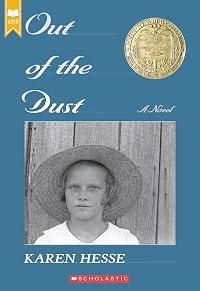
Out of the Dust
by Karen Hesse
On This Page
Description
In a series of poems, fifteen-year-old Billie Jo relates the hardships of living on her family's wheat farm in Oklahoma during the dust bowl years of the Depression.Tags
Recommendations


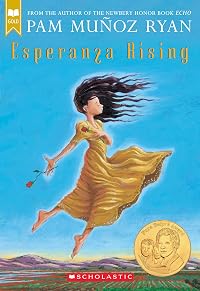
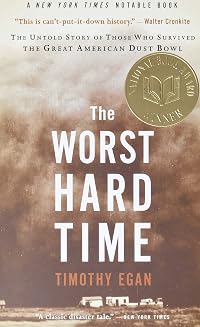


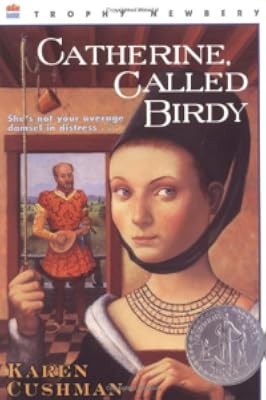
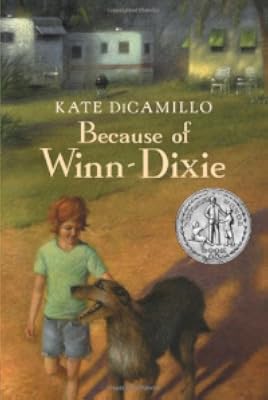
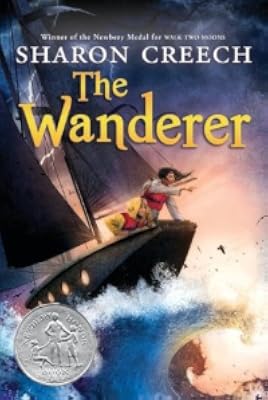
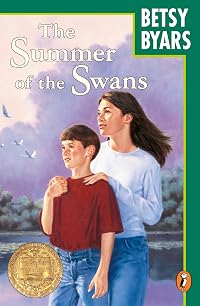
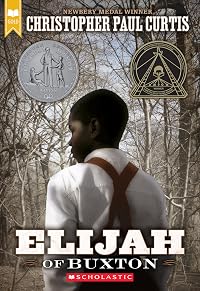
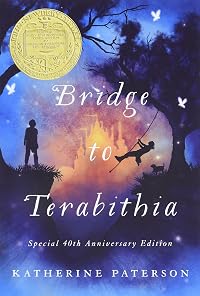
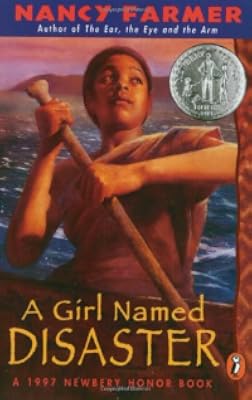
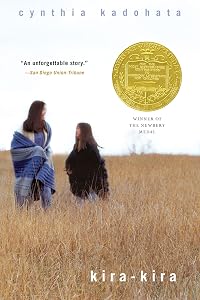
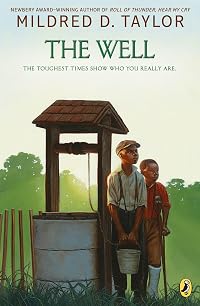
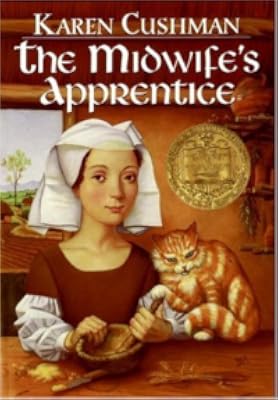
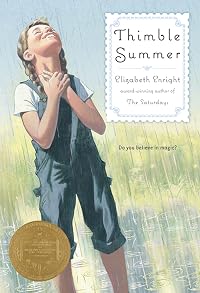
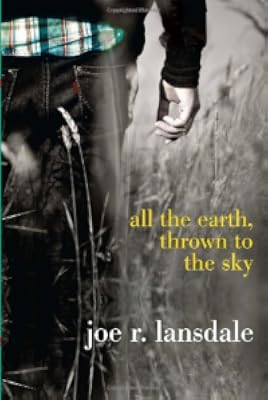
Member Recommendations

Member Reviews
The grim realities of hardship and poverty during the Great Depression and dust bowl era are reflected in this novel narrated by 14 year old Billie Jo Kelby. Her journal entries reveal that she is, at first, largely content and her family is making the best of harsh living situations while looking forward to welcoming a new baby. However a terrible accident upends her world, leaving Billie Jo motherless, without her long-awaited sibling and deeply scarred, both internally and externally. Her father becomes reclusive and despondent while Billie Jo deals with guilt and grief of her own. Playing the piano might be the one thing that will bring her and her father solace, but her wounded hands make that nearly impossible. Making matters show more worse are the overwhelming dust storms that continue to rampage her family's property and that of her Oklahoma neighbors.
Billie Jo prepares to escape it all, but being 'robbed' while she sleeps on a train car during her attempt to run away forces Billie Jo to return home, make peace with her father and to ultimately forgive herself as she discovers love is rekindled by optimism and hope. show less
Billie Jo prepares to escape it all, but being 'robbed' while she sleeps on a train car during her attempt to run away forces Billie Jo to return home, make peace with her father and to ultimately forgive herself as she discovers love is rekindled by optimism and hope. show less
In my opinion, this is an extremely powerful book. First off, I love the setting of the story: the Dust Bowl in Oklahoma during 1934-1935. It is an event that I was not aware about as I'm sure, many other readers would not be aware of it either. However, Karen Hessen did an excellent job setting a tone for the setting and helping us visualize what it was really like to go through that. In the chapter "Fields of Flashing Light", Hessen perfectly explains the struggles it was for her family to keep their farm in tact with the constant dust storms. When I think of dust storms I think of just sand blowing but the way Hessen described it in this chapter opened my eyes and made me realize it was so much more. Aside from the setting, I really show more enjoyed the plot. It was emotionally difficult to read at times, however I think the plot was really believable and well-developed. I loved that the entire book was written in poetry-style/form and it was almost like reading Billie Jo's journal or diary entries. We were able to follow along with the story month by month, and read the important events of her life. The way that Hesse was able to write with fewer words than an actual novel and still get her story across with plenty of details is brilliant to me. The writing flowed well and the way that she wrote in stanzas rather kept it engaging. Especially in the chapter "On Stage" where she would have one stanza on the left of the page, and the next stanza to right of the page. It kept my eyes shifting back and forth which was enjoyable to read. Overall, I believe that the big idea of the story is that once we can come to terms with our tough times, we will be able to stay positive and become happier. Billie Jo wanted to run away from her tough situation but realized that her life wasn't getting better by running away, it was "just different and lonely". I think Hesse is trying to tell a story of facing whatever obstacles that are thrown. show less
This is Billie Jo's story. She lives on a farm in Oklahoma during the Depression, doing her best to deal with the constant dust and the hard times that have befallen her entire community. Her dream is to become a pianist, but a tragic mistake puts that future in jeopardy and changes her family forever.
It's hard to sell a book of poetry about a girl growing up during the Dust Bowl. Historical fiction and free verse just don't seem to pique the interest of most kids, probably because those genres are often considered either boring or difficult (or both). But, believe me, this book is amazing. It's more than compelling. It's gorgeously written and heart-wrenching. Highly, highly recommended, especially for kids who may have lost a family show more member. show less
It's hard to sell a book of poetry about a girl growing up during the Dust Bowl. Historical fiction and free verse just don't seem to pique the interest of most kids, probably because those genres are often considered either boring or difficult (or both). But, believe me, this book is amazing. It's more than compelling. It's gorgeously written and heart-wrenching. Highly, highly recommended, especially for kids who may have lost a family show more member. show less
I had never read a novel in verse before. That made quite a powerful way of telling the story of a family during the Dust Bowl. The author has brought to life the hopelessness, the utter desperation, of watching the farm blow away… again. I’ve never been in Oklahoma, but by reading this book I can feel like I was there during those years. More tragedies struck Billy Jo’s family than the dust storms, though, and she couldn’t imagine life ever being good again. However, Billie Jo learned that she had incredible strength within herself. Would it be enough to bring her through to better times? This book is for preteens and early teens who are mature enough to understand tragedy.
14-year-old Billie Jo lives with her parents on a struggling farm on the Oklahoma panhandle in 1934. She's a bit of a tomboy, plain and angular, with a love for playing the piano, but not the gentle and sweet music that her mother plays -- "fierce piano," Billie Jo calls it. Dust is a constant in their lives, getting into every crevice, smothering the wheat crop, choking the livestock. When she sees neighbors leaving for California, she wishes she could go along, get out of the dust. When tragedy strikes her family, will she get her chance to do just that?
This Newbery winner is a verse novel, with writing that sometimes feels like poetry, but often could have been rendered in prose. The emotional impact is definitely the most striking show more part of the book, with a tragic twist in the first third of the novel that Billie must reckon with for the rest of the story. I was unaware, going in, of any details of the plot beyond the general setting, so the story really grabbed me at that point. I generally don't seek out books about the Great Depression or the Dust Bowl, and probably wouldn't have gravitated to this one except for its status as an award winner. I'm glad that I read it, and can see its quality. I'd recommend it to adults with an interest in historical fiction, as well as to middle- and high-school students. show less
This Newbery winner is a verse novel, with writing that sometimes feels like poetry, but often could have been rendered in prose. The emotional impact is definitely the most striking show more part of the book, with a tragic twist in the first third of the novel that Billie must reckon with for the rest of the story. I was unaware, going in, of any details of the plot beyond the general setting, so the story really grabbed me at that point. I generally don't seek out books about the Great Depression or the Dust Bowl, and probably wouldn't have gravitated to this one except for its status as an award winner. I'm glad that I read it, and can see its quality. I'd recommend it to adults with an interest in historical fiction, as well as to middle- and high-school students. show less
I read "The Worst Hard Times" a year ago or so and this would be the perfect companion piece to that heartbreaking look at the Dust Bowl of the 30's. Billie Jo tells her story in poems and the story she tells is torturous. Only daughter of wheat farmers, she endures the years of no rain, giant dust storms, and worst of all, the death of her mother following a horrible accident. There is hope at the end of the book, which makes it less difficult to read. Although written for younger readers, I'd be hesitant to recommend it to anyone under 12 without some major preparation.
The story of Billie Joe and her family during the Dust Bowl/Great Depression. A beautiful piece of writing; it truly makes you feel as though you are experiencing what is happening right next to the protagonist's side. However, at the same time, this is extremely depressing. Things seem incredibly bleak for the family, and then something happens that changes everything. Her father leaves a bucket of kerosene next to the stove, which Billie Joe's mother mistakes for water. When her mother runs to get her father to help put out the fire, Billie Joe doesn't realize she is coming back to the house and when she throws the bucket out the door, it catches her pregnant mother on fire. Eventually, badly burned by the fire, her mother dies while show more giving birth to her brother who also dies.
After feeling alone and isolated for too long, especially after noticing that her father has "spots" on his face that remind Billie Joe of her grandfather's cancer, she leaves, hitching a ride West on a boxcar. However, after an encounter with a man who has left his family, Billie Joe realizes that she needs to return home. When she returns, she talks with her father about the things that are weighing on her and they begin to forgive each other for everything that has happened. Eventually, they find a new "normal" alongside Louise, a woman who understands and loves them both.
Newbery Medal and Scott O'Dell Award show less
After feeling alone and isolated for too long, especially after noticing that her father has "spots" on his face that remind Billie Joe of her grandfather's cancer, she leaves, hitching a ride West on a boxcar. However, after an encounter with a man who has left his family, Billie Joe realizes that she needs to return home. When she returns, she talks with her father about the things that are weighing on her and they begin to forgive each other for everything that has happened. Eventually, they find a new "normal" alongside Louise, a woman who understands and loves them both.
Newbery Medal and Scott O'Dell Award show less
Members
- Recently Added By
Published Reviews
ThingScore 100
Could you imagine being in the great depression and being in dust! I read “Out of the Dust” by Karen Hesse. The narrator is Billie Jo Kelby. Her name sounds like a boy name because Billie Jo’s dad wanted a boy. This book is historical fiction written in poetry. The protagonist (Billie Jo) learns that she’s never going to get “Out of the Dust.”
This story takes place in Oklahoma from show more January 1934 to December 1935. The protagonist is Billie Jo and Billie Jo is a “long-legged girl with a wide mouth and cheekbones like bicycle handles. She has red hair and freckles. She loves to play piano.”The secondary characters are Ma, Pa, Arley, and Maddog. The quote that she was long-legged was important because it describes Billie Jo. The page number was page 3 if you want to look at the quote when you get the book.
In “Out of the Dust” the main conflict is Billie Jo’s ma died. Billie Jo accidently killed her ma by throwing a pail of kerosene on her that pa put next to the stove. After this event Pa and Billie Jo feel self-pity. The characters who are involved in this main conflict is Billie Jo, Pa, Ma. The quote to support the conflict is, “Daddy put a pail of kerosene next to the stove. Ma was fixing breakfast thinking the pail was full of water and she lifted it to makes daddy’s coffee and poured it, but instead of making coffee ma made a rope of fire.” This quote shows that the fire starts from the pail of kerosene. This quote was on page 60.
The resolution was that later in the book pa married this girl named Louise. This solved the problem because Billie Jo doesn’t need to feel lonely anymore. The protagonist (Billie Jo) learns that no matter what, she will always have family by her side. The reader learned that living in the 1930’s in Oklahoma is hard.
This book was really boring because it goes all over the place in the book. For example, it went from “A tent of pain” to “Drinking.”One connection from this book “Out of the Dust” is dust connects to “Esperanza rising.” It connects because dust storms are in each book. I think this book was humorous. For example they had a rabbit war, they shot rabbits. I think the weakness is that there is not enough action. For example the only action was when ma got burned. I didn’t like that it was written in poetry form either. Overall I think this book is humorous and not enough action so I would rate this book a 3/5 stars.
3/5 stars show less
This story takes place in Oklahoma from show more January 1934 to December 1935. The protagonist is Billie Jo and Billie Jo is a “long-legged girl with a wide mouth and cheekbones like bicycle handles. She has red hair and freckles. She loves to play piano.”The secondary characters are Ma, Pa, Arley, and Maddog. The quote that she was long-legged was important because it describes Billie Jo. The page number was page 3 if you want to look at the quote when you get the book.
In “Out of the Dust” the main conflict is Billie Jo’s ma died. Billie Jo accidently killed her ma by throwing a pail of kerosene on her that pa put next to the stove. After this event Pa and Billie Jo feel self-pity. The characters who are involved in this main conflict is Billie Jo, Pa, Ma. The quote to support the conflict is, “Daddy put a pail of kerosene next to the stove. Ma was fixing breakfast thinking the pail was full of water and she lifted it to makes daddy’s coffee and poured it, but instead of making coffee ma made a rope of fire.” This quote shows that the fire starts from the pail of kerosene. This quote was on page 60.
The resolution was that later in the book pa married this girl named Louise. This solved the problem because Billie Jo doesn’t need to feel lonely anymore. The protagonist (Billie Jo) learns that no matter what, she will always have family by her side. The reader learned that living in the 1930’s in Oklahoma is hard.
This book was really boring because it goes all over the place in the book. For example, it went from “A tent of pain” to “Drinking.”One connection from this book “Out of the Dust” is dust connects to “Esperanza rising.” It connects because dust storms are in each book. I think this book was humorous. For example they had a rabbit war, they shot rabbits. I think the weakness is that there is not enough action. For example the only action was when ma got burned. I didn’t like that it was written in poetry form either. Overall I think this book is humorous and not enough action so I would rate this book a 3/5 stars.
3/5 stars show less
added by Allisen
Could you imagine being in the great depression when the dust bowls were going on? When you are only 14 and having your mom and baby brother die. The main character of “Out of the Dust” a historical fiction poetry story written by Karen Hesse is Billie Jo. The narrator of this story Billie Jo because it is written in first person. In this story Billie Jo (the protagonist) learns to live show more with the changes in her life.
“Out of the dust” takes place in 1934-1935 in Oklahoma. The protagonist is Billie Jo she is very good at piano and she is “long legged and wide mouthed”. She is also very happy at times but then again depressed at times. She is also very smart. Some of the other characters are Ma, Pa, Arley and Maddog. The quote in the story that proves she is smart is that “she scored top in the eighth grade on state tests. I found this on page 30
In “Out of the Dust” Billie Jo faces the problem of Ma dying. Billie Jo accidently killed her Ma by throwing a pail of kerosene on her that Pa put next to the stove. The characters that were involved in the problem were Ma, Pa and Billie Jo. It said in the story “ Daddy put a pail of kerosene to the stove and Ma fixing breakfast thinking it was filled with water, lifted it, to make Daddy’s coffee but instead she made a rope of fire”. This quote was on page 60.
Although the problem was solved! It was solved by another girl named Louise coming into Pa’s and Billie Jo’s life. This solved the problem because Louise took Ma’s spot in the family. For example she started to cook and clean for them. The protagonist (Billie Jo) she will always have family by her side. The reader can learn that living in Oklahoma in the 1930’s can be hard.
This book was boring almost all the time in my opinion because it didn’t really have any action or exciting moments. It did have one suspenseful moment When Ma died but that was it. I made a connection to the book “Number the Star’s” when I read this because they both won Newberry awards medals, they both are written in first person by two 14 year old girls. They both took place during the 1930’s. The strengths of this book is that it creates a picture in your mind while you’re reading. For example when the fire happened you could picture it. The weaknesses are that it didn’t have enough excitement and the format was not good. It was just boring overall. I would give this book a 2/5 stars. show less
“Out of the dust” takes place in 1934-1935 in Oklahoma. The protagonist is Billie Jo she is very good at piano and she is “long legged and wide mouthed”. She is also very happy at times but then again depressed at times. She is also very smart. Some of the other characters are Ma, Pa, Arley and Maddog. The quote in the story that proves she is smart is that “she scored top in the eighth grade on state tests. I found this on page 30
In “Out of the Dust” Billie Jo faces the problem of Ma dying. Billie Jo accidently killed her Ma by throwing a pail of kerosene on her that Pa put next to the stove. The characters that were involved in the problem were Ma, Pa and Billie Jo. It said in the story “ Daddy put a pail of kerosene to the stove and Ma fixing breakfast thinking it was filled with water, lifted it, to make Daddy’s coffee but instead she made a rope of fire”. This quote was on page 60.
Although the problem was solved! It was solved by another girl named Louise coming into Pa’s and Billie Jo’s life. This solved the problem because Louise took Ma’s spot in the family. For example she started to cook and clean for them. The protagonist (Billie Jo) she will always have family by her side. The reader can learn that living in Oklahoma in the 1930’s can be hard.
This book was boring almost all the time in my opinion because it didn’t really have any action or exciting moments. It did have one suspenseful moment When Ma died but that was it. I made a connection to the book “Number the Star’s” when I read this because they both won Newberry awards medals, they both are written in first person by two 14 year old girls. They both took place during the 1930’s. The strengths of this book is that it creates a picture in your mind while you’re reading. For example when the fire happened you could picture it. The weaknesses are that it didn’t have enough excitement and the format was not good. It was just boring overall. I would give this book a 2/5 stars. show less
added by Allisen
Has something bad happened to you like your getting covered in dust, you killed your own mom and the baby she was having? How about burning your own hands and your talent is gone? One more thing all of this happened and you and your dad feel like strangers? Probably not. Well a 14 year old girl named Billie-Jo did all of this. Billie-Jo is from the book “Out Of The Dust” by Karen Hesse. show more The main character is Billie-Jo and the protagonist is also Billie-Jo.
Billie-Jo lives in the 1930s in the great depression or (dust bowl). No one wanted to be there at that time. Everybody during that time was sad ad really depressed. In the story the protagonist is the main character in this case its Billie-Jo. She is the protagonist because she’s good she try her best at things even though there were a few accidents. Another character is Billie-Jos ma and dad but ma doesn’t last very long. Billie-Jos dad tries his best, but didn’t really bother with her till the end again. Something that Billie-Jo always says is that “dads digging his own grave not a pond. That’s important because it seems dad can’t take the pressure that ma is gone.
The main problem in this story is that ma dies and its dad and Billie-Jos fault. When Billie-Jo says dads digging his own grave not a pond, he’s doing that because to much stuff is going on it was easier with ma. That’s a big problem because that turns into little problems like Billie-Jo runs away.
The solution to that is when Billie-Jo runs away and she learns where she had to be and where she belongs and where she belongs is home with her dad. So Billie-Jo called her dad and went back home. That’s also what Billie-Jo learned. What I learned from the book is that people belong with their family even if it’s a terrible time. People belong where they were bon where the people that love them are.
My personal opinion about this book is PICK IT UP AND READ IT! It’s a great book its depressing but amazing. I give this book a 4/5. Another book I can connect it to is Esperanza Rising. I say that bok because some events happen like in both books there are dust storms and a lot of people are are depressed. What I liked was that there’s a really high climate and what I don’t like is that its kinda predictable so I give “out of the dust” a 4/5.
show less
Billie-Jo lives in the 1930s in the great depression or (dust bowl). No one wanted to be there at that time. Everybody during that time was sad ad really depressed. In the story the protagonist is the main character in this case its Billie-Jo. She is the protagonist because she’s good she try her best at things even though there were a few accidents. Another character is Billie-Jos ma and dad but ma doesn’t last very long. Billie-Jos dad tries his best, but didn’t really bother with her till the end again. Something that Billie-Jo always says is that “dads digging his own grave not a pond. That’s important because it seems dad can’t take the pressure that ma is gone.
The main problem in this story is that ma dies and its dad and Billie-Jos fault. When Billie-Jo says dads digging his own grave not a pond, he’s doing that because to much stuff is going on it was easier with ma. That’s a big problem because that turns into little problems like Billie-Jo runs away.
The solution to that is when Billie-Jo runs away and she learns where she had to be and where she belongs and where she belongs is home with her dad. So Billie-Jo called her dad and went back home. That’s also what Billie-Jo learned. What I learned from the book is that people belong with their family even if it’s a terrible time. People belong where they were bon where the people that love them are.
My personal opinion about this book is PICK IT UP AND READ IT! It’s a great book its depressing but amazing. I give this book a 4/5. Another book I can connect it to is Esperanza Rising. I say that bok because some events happen like in both books there are dust storms and a lot of people are are depressed. What I liked was that there’s a really high climate and what I don’t like is that its kinda predictable so I give “out of the dust” a 4/5.
show less
added by Allisen
Lists

Best Newbery Medal Winners
94 works; 54 members

1001 Children's Books You Must Read Before You Grow Up
774 works; 101 members

my children books reading list-from 100 great books
101 works; 7 members

Kids' Tour of the US in Books
50 works; 5 members

Sonlight Books
1,487 works; 25 members

Newbery Medal Winners - By Year
105 works; 7 members
Honey For a Child's Heart
1,152 works; 25 members

Satori Smiles Children's Book List
262 works; 7 members

Female Protagonist
1,056 works; 57 members

Novels in verse -- children's/young adult fiction
28 works; 7 members

Read on.... from Kwame Alexander's book \ BOOKED
31 works; 1 member

Historical Fiction
889 works; 89 members
GCS 6th grade summer reading list
171 works; 4 members
Books Mentioned in The Wedding Planner's Daughter series
107 works; 2 members

Main Character is aged 10-19
361 works; 6 members

Narrative verse for pleasure
75 works; 8 members

Books Read in 2021
5,361 works; 113 members

BOOKS READ IN 1980's and 1990's
52 works; 4 members
Author Information

38+ Works 28,876 Members
Karen Hesse (born on August 29, 1952 Baltimore, Maryland) is an American author of children's literature and literature for young adults. She studied theatre at Towson State College, and finished her undergraduate degree at the University of Maryland in English, Psychology, and Anthropology. In 1998 she won the Newbery Medal for her young adult show more novel, Out of the Dust. Hesse lives in Vermont with her husband and two teen-aged daughters. (Bowker Author Biography) show less
Awards and Honors
Awards
Distinctions
Notable Lists
Work Relationships
Is contained in
Has as a student's study guide
Has as a teacher's guide
Common Knowledge
- Canonical title
- Out of the Dust
- Original publication date
- 1997
- People/Characters
- Billie Joe Kelby; Ma; Daddy; Louise
- Important places
- Oklahoma, USA; Flagstaff, Arizona, USA; Arizona, USA
- Important events
- The Great Depression ; Dust Bowl Era (1931 ∙ 1939)
- Dedication
- To Brenda Bowen, who is so much more than an editor.
I extend heartfelt thanks to Eileen Christelow, Kate, Rachel, and Randy Hesse, Liza Ketchum, Jeffrey and Bernice Millman, Maryann Sparks, and the Oklahoma Historical... (show all) Society. - First words
- As summer wheat came ripe, so did I, born at home, on the kitchen floor.
- Quotations
- They didn't talk
about my father leaving kerosene by the stove.
They didn't say a word about my father
drinking himself
into a stupor
while Ma writhed, begging for water.
They only said,
Billie Jo threw t... (show all)he pail of kerosene.
She went to college for two years
and studied and worked,
and didn't notice how lonely she was
until she met Daddy and fell into the
big hurt of his eyes.
And I'm learning, watching Daddy, that you can stay in one place and still grow.
When I rode the train west, I went looking for something, but I didn't see anything wonderful. I didn't see anything better than what I already had. Home. - Last words
- (Click to show. Warning: May contain spoilers.)Sometimes, while I'm at the piano,
I catch her reflection in the mirror,
standing in the kitchen, soft-eyed, while Daddy
finishes chores,
and I stretch my fingers over the keys,
and I play.
December, 1935 - Original language
- English
- Canonical LCC
- PZ7.5.H49 Ou
- Disambiguation notice
- 1997 edition: Out of the dust / Karen Hesse
Classifications
- Genres
- Poetry, Fiction and Literature, Kids, Children's Books
- DDC/MDS
- 813.54 — Literature & rhetoric American literature in English American fiction in English 1900-1999 1945-1999
- LCC
- PZ7.5 .H49 .O — Language and Literature Fiction and juvenile belles lettres Fiction and juvenile belles lettres Juvenile belles lettres
- BISAC
Statistics
- Members
- 8,849
- Popularity
- 1,220
- Reviews
- 365
- Rating
- (3.93)
- Languages
- 5 — Dutch, English, Italian, Korean, Spanish
- Media
- Paper, Audiobook, Ebook
- ISBNs
- 39
- ASINs
- 19