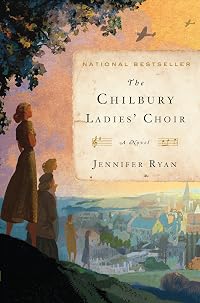
The Chilbury Ladies' Choir
by Jennifer Ryan
On This Page
Description
NATIONAL BESTSELLER • “A delightful debut.”—PeopleFor readers of Lilac Girls and The Nightingale, The Chilbury Ladies' Choir unfolds the struggles, affairs, deceptions, and triumphs of a village choir during World War II.
As England becomes enmeshed in the early days of World War II and the men are away fighting, the women of Chilbury village forge an uncommon bond. They defy the Vicar’s stuffy edict to close the choir and instead “carry on singing,” resurrecting show more themselves as the Chilbury Ladies’ Choir. We come to know the home-front struggles of five unforgettable choir members: a timid widow devastated when her only son goes to fight; the older daughter of a local scion drawn to a mysterious artist; her younger sister pining over an impossible crush; a Jewish refugee from Czechoslovakia hiding a family secret; and a conniving midwife plotting to outrun her seedy past.
An enchanting ensemble story that shuttles from village intrigue to romance to the heartbreaking matters of life and death, Jennifer Ryan’s debut novel thrillingly illuminates the true strength of the women on the home front in a village of indomitable spirit. show less
Tags
Recommendations

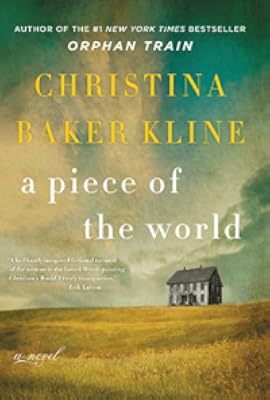
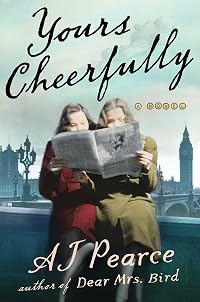
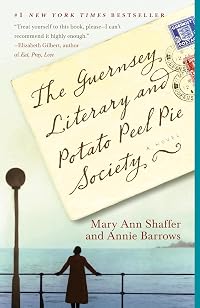
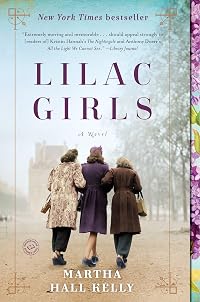



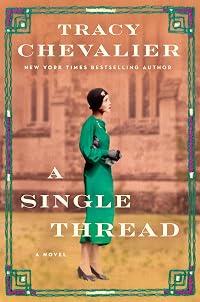
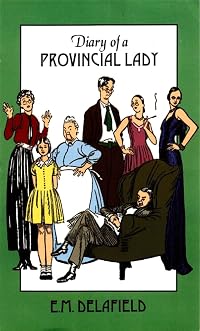

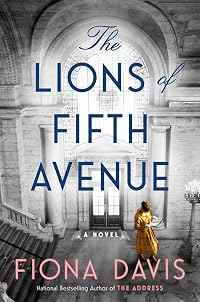
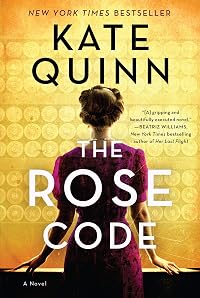

Member Recommendations

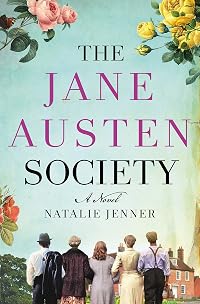
joriestory I love small townes and villages being showcased in historical fiction and these two stories are equally enjoyable due to their settings! You get a firm glimpse into village life but also, how the lives of those in the village can be affected by events happening outside of their setting, too.
Member Reviews
Jennifer Ryan managed to include plenty of humor, thorough character development, detailed research and a well-structured plot line in one book. It often felt like I was reading a British soap opera.
Ryan really gathered some interesting personalities together to entertain her readers. You have a widow, whose only child is fighting in the war so she’s trying to funnel her energy into learning to be a midwife and help find residences for those in need. Her initial instincts demand she be a proper British woman but she has an independent streak demanding to be set free. There’s another character who has been a midwife for a while and has a decidedly darker moral code as she ran off with all of her sister’s money and boyfriend only show more for him to steal everything from her and run off, karma is a bitch! Apparently even the universe’s almighty punch to her life didn’t take as she’s been known to blackmail and hurt others over their secrets about everything from unplanned pregnancies to STDs. When you think she can’t sink any lower, she decides to expand her repertoire of crime to an extremely heinous act. There’s a teenager who wants to be a famous singer and travel. An abusive father and husband who treats his family like they’re animals to the point he raised a son who was following in his footsteps. That son was in the military and got blown up during the war much to the relief of the village who hated him. A young woman believes love is nothing more than a tool to use against men but she just might find herself on the losing end of that deal. A mysterious artist who has questionable ethics in a time of war.
There’s underlying humor that you won’t see coming as it seems like such a ‘prim and proper’ historical novel but it’s impossible to remain stoic when Ryan provides an image of a stuffy vicar suddenly scampering away from a female parishioner because he’d rather tuck tail and run than face a woman who scares him.
I also love the great moral lessons. There’s a part where the women start arguing among themselves about what they can or can’t do due to social conventions (remember this is pre-1970s feminism). One of them points out that they’ve started to believe that they can’t do things because they’ve been told that they can’t for such a long time they stopped questioning the validity of it. They began believing in themselves because they were already filling in jobs vacated by men who had gone off to fight in the war – just like in America. That belief in themselves created a winning future.
The historical background of WWII and Jewish oppression were used in a respectful manner which added a deeper layer to the motivations and actions of the characters. Ryan deftly created an entertaining story that shows the highs and lows of humanity. show less
Ryan really gathered some interesting personalities together to entertain her readers. You have a widow, whose only child is fighting in the war so she’s trying to funnel her energy into learning to be a midwife and help find residences for those in need. Her initial instincts demand she be a proper British woman but she has an independent streak demanding to be set free. There’s another character who has been a midwife for a while and has a decidedly darker moral code as she ran off with all of her sister’s money and boyfriend only show more for him to steal everything from her and run off, karma is a bitch! Apparently even the universe’s almighty punch to her life didn’t take as she’s been known to blackmail and hurt others over their secrets about everything from unplanned pregnancies to STDs. When you think she can’t sink any lower, she decides to expand her repertoire of crime to an extremely heinous act. There’s a teenager who wants to be a famous singer and travel. An abusive father and husband who treats his family like they’re animals to the point he raised a son who was following in his footsteps. That son was in the military and got blown up during the war much to the relief of the village who hated him. A young woman believes love is nothing more than a tool to use against men but she just might find herself on the losing end of that deal. A mysterious artist who has questionable ethics in a time of war.
There’s underlying humor that you won’t see coming as it seems like such a ‘prim and proper’ historical novel but it’s impossible to remain stoic when Ryan provides an image of a stuffy vicar suddenly scampering away from a female parishioner because he’d rather tuck tail and run than face a woman who scares him.
I also love the great moral lessons. There’s a part where the women start arguing among themselves about what they can or can’t do due to social conventions (remember this is pre-1970s feminism). One of them points out that they’ve started to believe that they can’t do things because they’ve been told that they can’t for such a long time they stopped questioning the validity of it. They began believing in themselves because they were already filling in jobs vacated by men who had gone off to fight in the war – just like in America. That belief in themselves created a winning future.
The historical background of WWII and Jewish oppression were used in a respectful manner which added a deeper layer to the motivations and actions of the characters. Ryan deftly created an entertaining story that shows the highs and lows of humanity. show less
This was an enjoyable read that lived up to its reputation of being inspiring and uplifting. It is told from the perspective of many people in the village, through a medium of journals and letters and announcements. I quite liked that the author chose to do it this way rather than having a single narrator; it produced such a well-rounded story with a great deal of depth and charm. The author introduces us to a whole host of characters, each unique and equipped with different skills to deal with the changes that are happening in their lives because of the war. Each character was beautifully created with a perfect balance of skills and imperfections; it was a delight to watch them grow and change throughout the course of the novel and its show more events. Spoiled children mature and become selfless, righteous women learn to let go of prejudices, and ugly personalities reveal themselves. Each character has their own little subplot going on, and yet the author manages to tie everything together beautifully - and I can imagine that this must have been a very difficult task to orchestrate! The effect was wonderful, with a poignant, cohesive, charming story emerging. If my previous remarks haven't been obvious enough, this novel is a character-driven story and it is done remarkably well. At various different time points, I felt a kinship with almost all of the characters. This is definitely one of my favorite books on WWII, and it shows the strength that women can have in uniting a community, facing their own internal fears, and being a source of comfort to those around them during times of distress.
Thank you to NetGalley, Blogging for Books, and Crown Publishing for this ARC in exchange for an honest review.
For more reviews, visit: www.veereading.wordpress.com show less
Thank you to NetGalley, Blogging for Books, and Crown Publishing for this ARC in exchange for an honest review.
For more reviews, visit: www.veereading.wordpress.com show less
It seems odd to say that a book set during WWII, one that addresses death, bombings, child refugees, and so forth is lovely but Jennifer Ryan's The Chilbury Ladies' Choir is just that. Lovely. It doesn't shirk the sorrows and the tragedies that happen in wartime but it does so in a way that celebrates indomitable spirit and the way that life continues despite the raging war.
Chilbury is a small English village not far from the coast. Almost all of the men have left the village to fight, leaving behind a village of women and children. When the local vicar disbands the church choir effective immediately after the funeral of the Winthrop's only heir due to the absence of male voices, the women of the village push back. Prim, the new music show more tutor, transforms the choir into a ladies' choir and the women of the village come together, outside of the usual gossip, rivalries, and other concerns large and small, through the music they sing. They draw together as a caring community, being comforted in their uncertain everyday lives and when faced with the terrors that war inflicts on them, through the beautiful harmonies and the powerful feelings that they stir.
The village and the people in it are not without their intrigues, scheming, and drama and the novel captures these charmingly through letters and diaries. There is an ensemble cast of characters, just as the women form an ensemble choir, who tell the majority of the story. Kitty Winthrop is thirteen going on fourteen, and she chronicles life as a girl on the cusp of young womanhood. She is observant and notices more than many but she is also blinded by a naive lack of understanding in the ways of the human heart, confiding in her diary what her family life is like, her adoration of one of the village sons, and the goings on of those around her. Venetia Winthrop, Kitty's older sister and a flirtatious young woman fully cognizant of her own power, writes letters to an old friend who has moved to London to work for the war effort. At least to start, Venetia is selfish and concerned with bending circumstances to her will, including making the enigmatic artist who has moved into their midst and claims to be exempt from the war by virtue of flat feet fall in love with her. Mrs. Tilling is the local nurse and a timid widow whose only son is leaving for the war, leaving her alone so that she must learn to fend for herself. Her journal entries are those of a frightened mother who must find a way to banish the fear and uncertainty, recognize her own inherent strength, and step up in whatever way the war will require. Edwina Paltry is the village midwife whose methods bring her into opposition with Mrs. Tilling's medical training. Edwina is a fairly unscrupulous opportunist and her letters to her sister detailing her schemes and filled with disdain for those around her are entertaining. These four women's writings tell the bulk of the story although an occasional piece from another character sneaks into the narrative as well.
The novel has a quiet dignity to it. It shows the women (and remaining men) as they face the war with determination even as their smaller, but no less personally important, domestic dramas continue to pull at them. The large cast of characters is people with characters who are all vibrant and alive, some good, some bad, and some still growing. The various plot threads and the four main narrators are all evenly balanced so that the reader is happy no matter which letter, or diary she is reading at any given time. And the novel has everything: love and death, heartbreak and friendship, community, service, and rivalries. Taking place over a mere 6 months in 1940, the story is a touching encapsulation of the daily life, the sacrifices, and the character, courage, and mettle of the country in a time of great strife and danger and fear. Readers who enjoy cozy stories or epistolary novels, those who are attracted to tales of the home front during WWII, and those who want to read touching stories, full of heart, will thrill to this delightful novel. show less
Chilbury is a small English village not far from the coast. Almost all of the men have left the village to fight, leaving behind a village of women and children. When the local vicar disbands the church choir effective immediately after the funeral of the Winthrop's only heir due to the absence of male voices, the women of the village push back. Prim, the new music show more tutor, transforms the choir into a ladies' choir and the women of the village come together, outside of the usual gossip, rivalries, and other concerns large and small, through the music they sing. They draw together as a caring community, being comforted in their uncertain everyday lives and when faced with the terrors that war inflicts on them, through the beautiful harmonies and the powerful feelings that they stir.
The village and the people in it are not without their intrigues, scheming, and drama and the novel captures these charmingly through letters and diaries. There is an ensemble cast of characters, just as the women form an ensemble choir, who tell the majority of the story. Kitty Winthrop is thirteen going on fourteen, and she chronicles life as a girl on the cusp of young womanhood. She is observant and notices more than many but she is also blinded by a naive lack of understanding in the ways of the human heart, confiding in her diary what her family life is like, her adoration of one of the village sons, and the goings on of those around her. Venetia Winthrop, Kitty's older sister and a flirtatious young woman fully cognizant of her own power, writes letters to an old friend who has moved to London to work for the war effort. At least to start, Venetia is selfish and concerned with bending circumstances to her will, including making the enigmatic artist who has moved into their midst and claims to be exempt from the war by virtue of flat feet fall in love with her. Mrs. Tilling is the local nurse and a timid widow whose only son is leaving for the war, leaving her alone so that she must learn to fend for herself. Her journal entries are those of a frightened mother who must find a way to banish the fear and uncertainty, recognize her own inherent strength, and step up in whatever way the war will require. Edwina Paltry is the village midwife whose methods bring her into opposition with Mrs. Tilling's medical training. Edwina is a fairly unscrupulous opportunist and her letters to her sister detailing her schemes and filled with disdain for those around her are entertaining. These four women's writings tell the bulk of the story although an occasional piece from another character sneaks into the narrative as well.
The novel has a quiet dignity to it. It shows the women (and remaining men) as they face the war with determination even as their smaller, but no less personally important, domestic dramas continue to pull at them. The large cast of characters is people with characters who are all vibrant and alive, some good, some bad, and some still growing. The various plot threads and the four main narrators are all evenly balanced so that the reader is happy no matter which letter, or diary she is reading at any given time. And the novel has everything: love and death, heartbreak and friendship, community, service, and rivalries. Taking place over a mere 6 months in 1940, the story is a touching encapsulation of the daily life, the sacrifices, and the character, courage, and mettle of the country in a time of great strife and danger and fear. Readers who enjoy cozy stories or epistolary novels, those who are attracted to tales of the home front during WWII, and those who want to read touching stories, full of heart, will thrill to this delightful novel. show less
A fairy tale, really, with wicked villains and a princess who needs to be taught a lesson and a saint (good witch?) and a case of mistaken identity... and redemption for all at the end, except for the ones who die. But no tidy wrapped up HEA for everyone....
Anyway, a little too earnest, and a little too fantastic, to be a true 4-star read. But it hit the spot last night, and I couldn't sleep until I'd finished it. I needed a story that isn't the same as everything else, & that is inspirational without being schmaltzy, and this was it for me. So, yes, rounded up to four stars.
And if you're interested, especially if you know music and can accept all the Christian references, I do recommend this to you.
Anyway, a little too earnest, and a little too fantastic, to be a true 4-star read. But it hit the spot last night, and I couldn't sleep until I'd finished it. I needed a story that isn't the same as everything else, & that is inspirational without being schmaltzy, and this was it for me. So, yes, rounded up to four stars.
And if you're interested, especially if you know music and can accept all the Christian references, I do recommend this to you.
I really enjoyed The Chilbury Ladies Choir by Jennifer Ryan. Composed entirely of letters and diary entries, we are pulled into the day to day affairs of Chilbury, a village in Kent. The time is the summer of 1940, the Battle of Britain is underway and Chilbury is on the flight path of the Nazis coming to bomb London. The village consists of mainly women as the men are off fighting, and we particularly follow the women who have gotten together and formed a ladies only choir.
The choir binds both the women and the story together, but between practices and performances we also read of bombings, a baby-swapping scheme, love affairs, spies and black market operators. I found the characters, from the village nurse to a plucky thirteen year show more old both varied and interesting. The war has affected everyone in the village with shortages, rationing, blackouts, air-raid drills, worry over their men and the ever present fear of England being invaded.
The Chilbury Ladies Choir is well written and moves along at a good pace. Absorbing the story through letters and diaries made the emotions seems very real to me and this will be a book that I remember for some time. show less
The choir binds both the women and the story together, but between practices and performances we also read of bombings, a baby-swapping scheme, love affairs, spies and black market operators. I found the characters, from the village nurse to a plucky thirteen year show more old both varied and interesting. The war has affected everyone in the village with shortages, rationing, blackouts, air-raid drills, worry over their men and the ever present fear of England being invaded.
The Chilbury Ladies Choir is well written and moves along at a good pace. Absorbing the story through letters and diaries made the emotions seems very real to me and this will be a book that I remember for some time. show less
Despite being Jennifer Ryan’s debut novel, The Chilbury Ladies’ Choir is a self-assured, wonderful book. A gentle read, it nonetheless tackles some difficult issues, and gives the reader great insight into a small village in Kent, Great Britain during World War II.
When many of the men of the village are called away to serve their country, the local vicar decides the church choir can no longer continue. Undaunted, the women of the village decide to continue the choir, and the friendships (and rivalries) made through this collaboration form the various plots of this book. The story itself is told through the diary entries and letters of many of the women in the village, and this gives the book an intimate feel. Family secrets, the show more possibility of spies in the community, female gender roles, homosexuality, the home front and the constant pressure of living in a war situation are all subjects that are tackled in this novel, and Ryan does so with aplomb. I look forward to reading more of her work!
The characters in this book are memorable: from the flighty Venetia to the reliable, kind Mrs. Tilling, to the glamorous and mysterious Prim who leads the choir, to Kitty Winthrop, who reminded me so much of the equally charming Flavia de Luce in Alan Bradley’s mystery series. It’s a perfect Sunday afternoon novel, to be devoured with a cup of tea and something sweet close to hand. show less
When many of the men of the village are called away to serve their country, the local vicar decides the church choir can no longer continue. Undaunted, the women of the village decide to continue the choir, and the friendships (and rivalries) made through this collaboration form the various plots of this book. The story itself is told through the diary entries and letters of many of the women in the village, and this gives the book an intimate feel. Family secrets, the show more possibility of spies in the community, female gender roles, homosexuality, the home front and the constant pressure of living in a war situation are all subjects that are tackled in this novel, and Ryan does so with aplomb. I look forward to reading more of her work!
The characters in this book are memorable: from the flighty Venetia to the reliable, kind Mrs. Tilling, to the glamorous and mysterious Prim who leads the choir, to Kitty Winthrop, who reminded me so much of the equally charming Flavia de Luce in Alan Bradley’s mystery series. It’s a perfect Sunday afternoon novel, to be devoured with a cup of tea and something sweet close to hand. show less
 This review was written for LibraryThing Early Reviewers.
THE CHILBURY LADIES CHOIR by Jennifer Ryan
This was much better than I expected! I was expecting a syrupy sweet little tale and got a sprawling story of people: interesting people, who lived and changed and grew larger with each page. It is also a story of war – how fear and loss change people and places. Of course, there are also secrets, spies, skullduggery, lies, love, friendship, betrayal, kindness, faith, redemption, and the joy of music. Music and its ability to heal wounds, cross barriers and sooth hurting souls is the component that binds all the elements of the book into a pleasing and wondrous whole.
Book groups will love this book. It offers a myriad of topics for discussion as well as enough plot elements to make every show more reader happy.
5 of 5 stars show less
This was much better than I expected! I was expecting a syrupy sweet little tale and got a sprawling story of people: interesting people, who lived and changed and grew larger with each page. It is also a story of war – how fear and loss change people and places. Of course, there are also secrets, spies, skullduggery, lies, love, friendship, betrayal, kindness, faith, redemption, and the joy of music. Music and its ability to heal wounds, cross barriers and sooth hurting souls is the component that binds all the elements of the book into a pleasing and wondrous whole.
Book groups will love this book. It offers a myriad of topics for discussion as well as enough plot elements to make every show more reader happy.
5 of 5 stars show less
Members
- Recently Added By
Lists

Top Five Books of 2021
604 works; 181 members

Books about World War II
241 works; 22 members

Books Read in 2017
4,249 works; 130 members

Books Set in Small Towns and Villages
278 works; 16 members

Favorite Epistolary Fiction
143 works; 144 members
Best Audiobooks
240 works; 114 members
Author Information

5 Works 3,276 Members
Some Editions
Awards and Honors
Notable Lists
Common Knowledge
- Canonical title
- The Chilbury Ladies' Choir
- Original title
- The Chilbury Ladies' Choir
- Alternate titles
- Het dameskoor van Chilbury; Damkören i Chilbury
- Original publication date
- 2017-02-14
- People/Characters
- Margaret Tilling; Venetia Winthrop; Kitty Winthrop; Colonel Anthony Mallard; Edwina Paltry; Brigadier Winthrop (show all 14); Hattie Lovell; Alastair Slater; David Tilling; Rupert Carrington; Elsie Cocker; Henry Brampton-Boyd; Silvie; Mrs. Brampton-Boyd "Mrs. B."
- Important places
- Chilbury, England, UK; Litchfield, Kent, England, UK
- Dedication
- To my grandmother, Mrs. Eileen Beckley, and the women of the Home Front.
- First words
- First funeral of the war, and our little village choir simply couldn't sing in tune.
- Quotations
- But if we don't think about our death until we die, how can we decide how we want to live?
- Last words
- (Click to show. Warning: May contain spoilers.)"Thou burning sun with golden beam,
Thou silver moon with softer gleam." - Blurbers
- Kelly, Martha Hall; Williams, Beatriz; Todd, Charles; Henry, Veronica
Classifications
Statistics
- Members
- 1,432
- Popularity
- 16,462
- Reviews
- 203
- Rating
- (3.93)
- Languages
- 12 — Chinese, Czech, Dutch, English, English (Middle), French, German, Italian, Korean, Portuguese, Spanish, Swedish
- Media
- Paper, Audiobook, Ebook
- ISBNs
- 42
- ASINs
- 5
