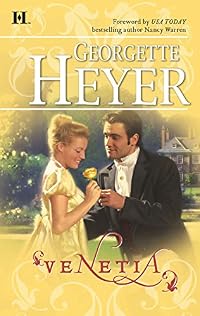
Venetia
by Georgette Heyer
On This Page
Description
Reading Georgette Heyer is the next best thing to reading Jane Austen."—Publishers WeeklyBeautiful, capable, and independent minded, Venetia Lanyon's life on her family's estate in the country side is somewhat restricted. But her neighbor, the infamous Lord Damerel, a charming rake shunned by polite society, is about to shake things up.
Lord Damerel has built his life on his dangerous reputation, and when he meets Venetia, he has nothing to offer and everything to regret. Though his show more scandalous past and deepest secrets give Venetia reason to mistrust him, a rogue always gets what he wants.
As Venetia's well-meaning family steps in to protect her from potential ruin, Venetia must find the wherewithal to take charge of her own destiny, or lose her chance at happiness.
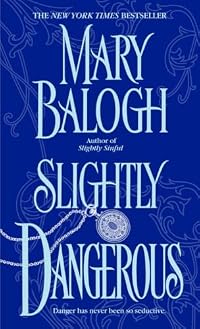
Charming characters and flawless prose make Venetia a fan favorite from the Queen of Regency Romance. Fans of Mary Balogh, Elizabeth Hoyt and Jane Ashford will be delighted by this story about finding love, redemption, and the courage to follow your heart.
Other Regency Romances from Georgette Heyer:
Frederica
Sylvester
Cotillion
What reviewers are saying about Venetia
"A wonderful story whose characters, settings and, most importantly, dialogue combine to create such a well-crafted story."—Bags, Books, and Bon Jovi
"Wonderful characters, elegant, witty writing, perfect period detail, and rapturously romantic"—Katie Fforde
"Wonderful and lovely and perfect! Venetia is one of the most charming characters EVER."—Once Upon a Bookshelf
"An absolutely rollicking Regency romp. I loved it from the first page."—Library Queue
What everyone has to say about the Queen of Regency Romance Georgette Heyer
"Georgette Heyer was one of the great protagonists of the historical novel in the post-war golden age of the form. Her regency romances are delightful light reading..."—Philippa Gregory
"[Heyer's] characters are witty and beyond charming, her prose is flawless and lighthearted, and her historical detail is immaculate."—Read All Over Reviews
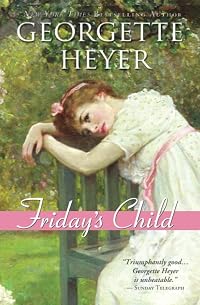
"Georgette Heyer is unbeatable." —Sunday Telegraph
. show less
Tags
Recommendations












Member Reviews
One of the better Heyers. Although I found the initial meeting between hero and heroine to be even more infuriating than Heyer's norm in terms of gender politics/interactions, I did appreciate it that she was so careful to set Venetia and Damerel up as friends first, who were compatible in their interests and personalities, before a more romantic relationship began to develop between them. I did like that Venetia increasingly took matters into her own hands and was willing to play along with—and against—social rules and expectations if it would get her what she wanted. Some nicely sketched characters too, particularly Edward and Mrs Scorrier, who were perfect horrors.
No one who has had the pleasure of reading the work of the incomparable Georgette Heyer, whose many novels are universally charming and well-crafted, would deny that she is a stylist par excellence. Her language sparkles, her characters amuse and entertain, and her romantic narratives are so adroitly resolved that the reader comes away with a delightful sense of effortless and graceful ease. Indeed, her prose is so seamless, that it sometimes gives the impression of having come, fully formed, and with no need of any editing or revision, from its author's pen.
But despite these many and undeniable virtues, even Ms. Heyer's most devoted readers will no doubt admit that her work is generally quite lighthearted, and there is rarely anything show more in it to spark deep reflection, or to ignite deep emotion. These are books meant to comfort and reaffirm, and they generally uphold a very conventional notion of love and romance, in which the heroine (or hero) finds the "right" mate, all difficulties are happily resolved, and the unworthy get their just deserts.
Every rule must have its exception of course, and having just finished re-reading Venetia for the umpteenth time, it has suddenly occurred to me that its status as my favorite Heyer novel is owing in large part to the fact that it does not entirely fit into the pattern described above. The story of innocent Yorkshire beauty Venetia Lanyon, and her love for her notorious neighbor, the rakish Lord Damerel, has all the outward trappings of the stereotypical "innocent beauty redeems worldly sinner" plotline, which has proved such a perennial favorite among more romantic readers.
But unlike so many Heyer characters I could name, Venetia and Damerel are too complex to be reduced to "types," and are capable both of hurting and being hurt. The scene in which Venetia believes that Damerel no longer cares for her stands out as one of the most poignant in all of Heyer's work, and provided one of the few moments of true emotional connection that I have felt to her characters.
I do not, of course, want to overstate the case. This is still Georgette Heyer, with all the witty dialogue, delightful narrative, and lighthearted fun that anyone could desire. But the deeper emotional undercurrents make Venetia arguably the author's most satisfying novel of all... show less
But despite these many and undeniable virtues, even Ms. Heyer's most devoted readers will no doubt admit that her work is generally quite lighthearted, and there is rarely anything show more in it to spark deep reflection, or to ignite deep emotion. These are books meant to comfort and reaffirm, and they generally uphold a very conventional notion of love and romance, in which the heroine (or hero) finds the "right" mate, all difficulties are happily resolved, and the unworthy get their just deserts.
Every rule must have its exception of course, and having just finished re-reading Venetia for the umpteenth time, it has suddenly occurred to me that its status as my favorite Heyer novel is owing in large part to the fact that it does not entirely fit into the pattern described above. The story of innocent Yorkshire beauty Venetia Lanyon, and her love for her notorious neighbor, the rakish Lord Damerel, has all the outward trappings of the stereotypical "innocent beauty redeems worldly sinner" plotline, which has proved such a perennial favorite among more romantic readers.
But unlike so many Heyer characters I could name, Venetia and Damerel are too complex to be reduced to "types," and are capable both of hurting and being hurt. The scene in which Venetia believes that Damerel no longer cares for her stands out as one of the most poignant in all of Heyer's work, and provided one of the few moments of true emotional connection that I have felt to her characters.
I do not, of course, want to overstate the case. This is still Georgette Heyer, with all the witty dialogue, delightful narrative, and lighthearted fun that anyone could desire. But the deeper emotional undercurrents make Venetia arguably the author's most satisfying novel of all... show less
First the negatives: I have trouble with two dynamics here--1) the zero-consent forceful kissing that I guess is like the meet-cute here? but not cute to me? and definitely not cuter when he's like "oh, well, I thought you were poor, so ..." and 2) the general assumption that the way to go into a successful marriage with a dude is to assume that dudes are going to cheat on you and you should just cheerfully ignore it because dudes will be dudes and really they love YOU (with no corresponding sense that lady persons also have sexual desires and are / should be free to cheat without comment).
And yet in every other way this is a delightful Heyer, a delightful romance, featuring an EXCELLENT heroine who gives no shits and her great show more book-nerd little brother, as well as a truly dreadful brother's-wife's-mother and various other neat folks. It's one of my partner’s two favorite Heyers (with Cotillion) so far, in part because of the degree to which the heroine grabs hold of agency and DOES STUFF here, though I like Frederica better. show less
And yet in every other way this is a delightful Heyer, a delightful romance, featuring an EXCELLENT heroine who gives no shits and her great show more book-nerd little brother, as well as a truly dreadful brother's-wife's-mother and various other neat folks. It's one of my partner’s two favorite Heyers (with Cotillion) so far, in part because of the degree to which the heroine grabs hold of agency and DOES STUFF here, though I like Frederica better. show less
Venetia Lanyon is an orphaned eldest daughter who has spent most of her twenty-five years living a small and isolated life in a small community in Yorkshire. With only her younger brother, Aubrey, for company, Venetia's life is not as adventure-filled as she'd like and her two local suitors are more irritating than in anyway suitable to her personality. However, when her notorious rake neighbour, Lord Damerel arrives at his country estate he turns her quiet country life upside down.
An utter delight from start to finish, this is an excellent example of Heyer at her writing peak. The characters are fantastically well-drawn and while I was briefly concerned at Damerel's introduction that I was going to have to deal with an obnoxious alpha show more male, his character very quickly reveals far more depths. Venetia is bright, funny, and genuine and remains a delight throughout even in the midst of all the craziness that comes from her various family members and her two ridiculous suitors. An excellent point for sampling if you've never tried Heyer's Regency romances. show less
An utter delight from start to finish, this is an excellent example of Heyer at her writing peak. The characters are fantastically well-drawn and while I was briefly concerned at Damerel's introduction that I was going to have to deal with an obnoxious alpha show more male, his character very quickly reveals far more depths. Venetia is bright, funny, and genuine and remains a delight throughout even in the midst of all the craziness that comes from her various family members and her two ridiculous suitors. An excellent point for sampling if you've never tried Heyer's Regency romances. show less
Aspects of this Heyer romance are great, with intriguing characterisations. Venetia, her brother, Aubrey, and their childhood Nurse were wonderfully filled out characters. Unfortunately, plot idiocy occasionally overwhelmed the story such as the unexpected arrival of Conway's bride and her extremely unpleasant mother . Venetia was well-suited to have depressed the visitor's pretensions.
Later, another revelation develops unexpectedly, regarding a family member, and provides the reader with some amusement. However, the twist in the story felt like a weak gambit to influence Venetia's romance. As a ploy for strengthening Lord Damerel's commitment to marriage, I was less than convinced. Altogether, while not one of my favourite Heyer show more re-reads, Venetia is a wonderfully amusing story for a relaxing laugh. show less
Later, another revelation develops unexpectedly, regarding a family member, and provides the reader with some amusement. However, the twist in the story felt like a weak gambit to influence Venetia's romance. As a ploy for strengthening Lord Damerel's commitment to marriage, I was less than convinced. Altogether, while not one of my favourite Heyer show more re-reads, Venetia is a wonderfully amusing story for a relaxing laugh. show less
Will I never learn? There should be an automatic warning on Amazon that pops up whenever I blindly deposit another Heyer romance in my shopping basket: 'You do not like Georgette Heyer. Please remove this item'. In fact, buying Venetia on Kindle was even worse than that, because I remembered - too late - that I had already borrowed the same novel from the library, and then returned the book unread because I couldn't get past this instructive, nauseating description of the Heyeroine: 'But Venetia had been born with a zest for life which was unknown to him, and a high courage that enabled her to look hazards in the face, and not shrink from encountering them.'
And that, in a nutshell, is my first problem with Heyer: there is absolutely no show more subtlety, depth or insight in any of her Regency romances. The heroes and heroines are entirely straightforward and safe, and the plots are formulaic. There is absolutely no comparison with Austen, and this from a reader who only discovered the genius of Jane's writing last year! My excuse for buying Venetia is that one online review likened the eponymous Heyeroine to Jane Austen's Emma, a tenuous recommendation that nevertheless drew me in. However, the similarities are purely superficial: despite Venetia Lanyon's secluded upbringing (in Yorkshire - another lure), her independent status, and an older love interest who resides in a neighbouring estate, she is a mere pretender to Emma Woodhouse. Austen created timeless personalities in her own time, but Heyer seems so concerned with researching the Regency era that she forgets to craft believable - or even varied - characters. Venetia is twenty-five, stunningly beautiful (with 'large, brilliant eyes' and 'guinea-gold hair'), intelligent, charming and loved by all. Not even one pretend-flaw. Damerel, the 'Wicked Baron', is a watered-down Rochester, all swarthy features with a reputation that exceeds him. They meet, he kisses her 'ruthlessly', thinking her a servant girl, and a very tepid romance develops - slowly - over three hundred pages. He's not even allowed to be a proper rake, only a misunderstood Byronic hero transformed by the love of a good woman! Secondary characters are introduced to stretch out the story, take up a chapter or two, then vanish without a trace. Is there a sequel - what happens to Venetia's pregnant sister-in-law and her domineering mother? Does Conway ever return home? Will Edward marry Clara? Not a clue.
He repeated very creditably: '"Idiotish"!' A laugh shook him. 'I thought I should never hear you say that again!'
'Do I say it a great deal?' she asked, and then, as he nodded: 'Oh dear, how very tiresome of me! I must take care!'
My second gripe is with Heyer's excessive use of Regency slang, or 'flash talk', but not because I find her doublespeak hard to decipher - most of her expressions make sense in context (bar 'antidotes', which I think are old maids, and how 'eating Hull cheese' can possibly mean getting drunk). I am not 'stoopid', or illiterate, but Heyer's constant, indiscriminate swapping of plain English for Woosterish terms, irrespective of character or situation, drives me up the wall! Venetia and her scholarly brother Aubrey have been sequestered in remotest Yorkshire since they were born, and yet they bandy slang terms like the 'Pinkest' dandies in London. Historical detail is all very well, but some brave editor should have told Heyer to put down the 1811 Dictionary of Vulgar Tongue and step away. Without constant references to York and Thirsk, I never would have known that the Lanyon family are supposed to live in North Yorkshire, because they speak exactly like the haut ton in the fashionable south, and sound just as idiotic (or should that be 'idiotish'?) The only clever riposte in the whole story - 'More hair than wit' - actually comes from Shakespeare!
Georgette Heyer had the best intentions - painstaking research, inoffensive characters, entertaining plots - and thousands of readers still love her Regency romances, but I cannot balance her fluffy, girls' own frolics with Austen's sharp eye and skilful narratives. I keep trying, for some reason, but have yet to find the Heyer novel that breaks the mold. show less
And that, in a nutshell, is my first problem with Heyer: there is absolutely no show more subtlety, depth or insight in any of her Regency romances. The heroes and heroines are entirely straightforward and safe, and the plots are formulaic. There is absolutely no comparison with Austen, and this from a reader who only discovered the genius of Jane's writing last year! My excuse for buying Venetia is that one online review likened the eponymous Heyeroine to Jane Austen's Emma, a tenuous recommendation that nevertheless drew me in. However, the similarities are purely superficial: despite Venetia Lanyon's secluded upbringing (in Yorkshire - another lure), her independent status, and an older love interest who resides in a neighbouring estate, she is a mere pretender to Emma Woodhouse. Austen created timeless personalities in her own time, but Heyer seems so concerned with researching the Regency era that she forgets to craft believable - or even varied - characters. Venetia is twenty-five, stunningly beautiful (with 'large, brilliant eyes' and 'guinea-gold hair'), intelligent, charming and loved by all. Not even one pretend-flaw. Damerel, the 'Wicked Baron', is a watered-down Rochester, all swarthy features with a reputation that exceeds him. They meet, he kisses her 'ruthlessly', thinking her a servant girl, and a very tepid romance develops - slowly - over three hundred pages. He's not even allowed to be a proper rake, only a misunderstood Byronic hero transformed by the love of a good woman! Secondary characters are introduced to stretch out the story, take up a chapter or two, then vanish without a trace. Is there a sequel - what happens to Venetia's pregnant sister-in-law and her domineering mother? Does Conway ever return home? Will Edward marry Clara? Not a clue.
He repeated very creditably: '"Idiotish"!' A laugh shook him. 'I thought I should never hear you say that again!'
'Do I say it a great deal?' she asked, and then, as he nodded: 'Oh dear, how very tiresome of me! I must take care!'
My second gripe is with Heyer's excessive use of Regency slang, or 'flash talk', but not because I find her doublespeak hard to decipher - most of her expressions make sense in context (bar 'antidotes', which I think are old maids, and how 'eating Hull cheese' can possibly mean getting drunk). I am not 'stoopid', or illiterate, but Heyer's constant, indiscriminate swapping of plain English for Woosterish terms, irrespective of character or situation, drives me up the wall! Venetia and her scholarly brother Aubrey have been sequestered in remotest Yorkshire since they were born, and yet they bandy slang terms like the 'Pinkest' dandies in London. Historical detail is all very well, but some brave editor should have told Heyer to put down the 1811 Dictionary of Vulgar Tongue and step away. Without constant references to York and Thirsk, I never would have known that the Lanyon family are supposed to live in North Yorkshire, because they speak exactly like the haut ton in the fashionable south, and sound just as idiotic (or should that be 'idiotish'?) The only clever riposte in the whole story - 'More hair than wit' - actually comes from Shakespeare!
Georgette Heyer had the best intentions - painstaking research, inoffensive characters, entertaining plots - and thousands of readers still love her Regency romances, but I cannot balance her fluffy, girls' own frolics with Austen's sharp eye and skilful narratives. I keep trying, for some reason, but have yet to find the Heyer novel that breaks the mold. show less
One of the few bad things about having friends on book sites who's opinions I tend to agree with and who write great reviews is that I often have nothing to little to add. In this case, though it worked out great, because I couldn't really figure out what I thought about this book, and Murder by Death pretty much got up inside my head and wrote out all my thoughts. Like seriously, that review is spookily close to all the things I would have written if I had written a review, so you could probably just go read that one!
In any case, this one tanked for me pretty early with a very unpleasant introduction between the "hero" and heroine, but since it was a buddy read project I stuck with it, and overall I'm glad I did, because I came to show more really like them both, and to like them as a couple.
I think the high point is Heyer's characters, they are so very vivid, even most of the side characters. Despite the fairly dense language, when it comes to drawing a character portrait she actual does so quite economically - it's entertaining to look at just how clear a picture we all had of Clara for instance, when she appears only very briefly in the book. Aunt Hendred is another example, she's really not described in great detail and really isn't in the book for very long, but from her dialogue and her behaviour I feel like I know her intimately. And the language, once you get into a rhythm with it, isn't so hard.
More to the point I think I discovered why everyone likes Heyer so much. I've picked up a few "just like Heyer" regency romances over the years, and more or less hated them all, so I always figured I'd probably dislike the original Queen of regency herself. Actually, it's a case of the typical "just like..." falling very far short of the mark. I'm definitely going to try some more of her books. I am thinking of picking up The Grand Sophy, as that's another that was mentioned as pretty universally loved.
In the end, this went from a bare 2 after the blackberries at the start, to an easy 4, and there are very very few books I have ever read that have turned my opinion like that. Like MbD though, I thought the ending wrapped up just a little two quickly - unlike modern books which could often stand to lose 50 or 100 pages, I actually thought this one could have done with another 20 pages or so in the final chapters.
And really finally: I think this book wins any prizes going for "most uses of the word orgy" in a book without any actual sex. It's impressive.
Review originally published at Booklikes show less
Members
- Recently Added By
Lists

Favorite Georgette Heyer Novels, Ranked
49 works; 29 members

Best Historical Fiction
620 works; 261 members

Books I've Read More Than Once
602 works; 49 members
Comfort Reads
221 works; 41 members
Favorite Literary Love Stories
182 works; 100 members

Books Set in Great Britain
191 works; 13 members

Female Author
1,235 works; 66 members
Female Protagonist
1,056 works; 56 members

Favourite Books
1,817 works; 316 members
Favourite books by Female Authors
43 works; 4 members

Backlisted
109 works; 9 members
Books with a Character's Name as the Title
129 works; 9 members
Favorite Romance Fiction
247 works; 115 members

Books Read in 2022
5,164 works; 113 members

Books Read in 2020
4,379 works; 124 members

Recommend the 20 best books you've read in the last five years
2,168 works; 606 members
Backlisted Podcast
65 works; 3 members

One Book, Many Authors
441 works; 40 members
Five star books
1,755 works; 107 members

Books Read in 2016
4,666 works; 197 members

1950s
340 works; 22 members
Books tagged favorites
390 works; 30 members

Books Read in 2025
4,090 works; 97 members
Author Information

127+ Works 78,013 Members
Georgette Heyer was born on August 16, 1902 at Wimbledon, London. She wrote The Black Moth as a story for her brother Boris. Her father, impressed with his daughter's imagination, suggested that she prepare it to be published, which it was by Constable in 1921. Having scored an instant success with The Black Moth at the age of nineteen under her show more own name, Georgette Heyer, she experimented with a pseudonym, Stella Martin, for her third book, published by Mills & Boon. She continued writing and in 1925 she married Ronald Rougier, a mining engineer. After reasonable but not spectacular sales from her first few books the instant success of These Old Shades in 1926 brought her a solid source of income which was very necessary at the time since the family relied to a large extent on the income from Georgette Heyer's writing. She wrote over fifty books during her lifetime and created the Regency England genre of romance novels. She died on July 4, 1974 at the age of 71. (Bowker Author Biography) show less
Some Editions
Awards and Honors
Series
Belongs to Publisher Series
rororo (728 ; 2003)
Work Relationships
Common Knowledge
- Canonical title*
- Venetia
- Original title
- Venetia
- Original publication date
- 1958
- People/Characters
- Venetia Lanyon; Lord Jasper Damerel; Aubrey Lanyon; Edward Yardley; Lady Denny; Oswald Denny (show all 12); Mrs Scorrier; Charlotte Lanyon; Philip Hendred; Lady Aurelia Steeple; Sir Lambert Steeple; Sir John Denny
- Important places
- England, UK; London, England, UK; Undershaw, Yorkshire, England, UK; Ebbersley, Yorkshire, England, UK; Elliston Priory, Yorkshire, England, UK
- Important events
- Regency Era
- First words
- 'A fox got in amongst the hens last night, and ravished our best layer,' remarked Miss Lanyon.
- Quotations
- "Beyond my gates I make you no promises: don't trust me! Within them...I'll remember that I was bred a gentleman."
- Last words
- (Click to show. Warning: May contain spoilers.)'And now, my love,' he said, returning to Venetia, 'for the fourth time . . .!'
- Original language
- English
*Some information comes from Common Knowledge in other languages. Click "Edit" for more information.
Classifications
Statistics
- Members
- 2,329
- Popularity
- 8,438
- Reviews
- 98
- Rating
- (4.14)
- Languages
- 9 — English, Estonian, Finnish, French, German, Italian, Polish, Portuguese, Spanish
- Media
- Paper, Audiobook, Ebook
- ISBNs
- 54
- UPCs
- 1
- ASINs
- 37