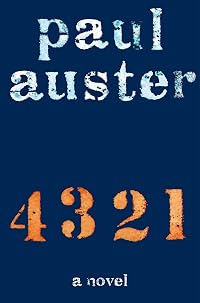
4 3 2 1
by Paul Auster
On This Page
Description
"Paul Auster's greatest, most heartbreaking and satisfying novel -- a sweeping and surprising story of birthright and possibility, of love and of life itself: a masterpiece. Nearly two weeks early, on March 3, 1947, in the maternity ward of Beth Israel Hospital in Newark, New Jersey, Archibald Isaac Ferguson, the one and only child of Rose and Stanley Ferguson, is born. From that single beginning, Ferguson's life will take four simultaneous and independent fictional paths. Four identical show more Fergusons made of the same DNA, four boys who are the same boy, go on to lead four parallel and entirely different lives. Family fortunes diverge. Athletic skills and sex lives and friendships and intellectual passions contrast. Each Ferguson falls under the spell of the magnificent Amy Schneiderman, yet each Amy and each Ferguson have a relationship like no other. Meanwhile, readers will take in each Ferguson's pleasures and ache from each Ferguson's pains, as the mortal plot of each Ferguson's life rushes on. As inventive and dexterously constructed as anything Paul Auster has ever written, yet with a passion for realism and a great tenderness and fierce attachment to history and to life itself that readers have never seen from Auster before. 4 3 2 1 is a marvelous and unforgettably affecting tour de force."-- "A sweeping family saga (with a bit of a twist) about the life and loves of Archie Ferguson, a Jewish boy born to second-generation immigrants in the United States just after World War II"-- show lessTags
Recommendations










Member Recommendations
Member Reviews
"One swing of a man's bat, and another man's life was in ruins."
"Such an interesting thought, Ferguson said to himself: to imagine how things could be different for him even though he was the same. The same boy in a different house with a different tree. The same boy with different parents. The same boy with the same parents who didn't do the same things they did now."
This is the story of the life (or lives) of Archie Ferguson, from his birth in 1947 until he "comes of age" in his early 20's. After a prologue which relates the story of Archie's parents Rose and Stanley and their families, the novel is divided into 7 chapters, and each chapter has 4 parts. Each part tells one version of Archie's life. So for example the story of Archie show more as a young child in Chapter 1, Part 1 carries forward chronologically to the story of that same Archie in Chapter 2 Part 1; the story of a second Archie begins in Chapter 1 Part 2, and continues in Chapter 2 Part 2, and so forth. As I got into the book, I began to regret that I hadn't been keeping notes on what happened to each version of Archie, so that I was finding it hard to keep what happened to which of the various versions of Archie straight.
For in each of the 4 Archies there are varying events, large and small, resulting in divergencies in the stories of his life. Do Rose and Stanley stay married or do they divorce? Does one or the other of them die? Does the survivor remarry? Does Archie have siblings, or step-siblings or half-siblings? Is Archie's family rich or poor? Does Archie play sports? Is he good at sports? What sport?Is he a good student or poor student? What are Archie's early sexual experiences? Is he heterosexual or homosexual or bi? Does Archie go to college? Where? What jobs does Archie have? Does Archie sustain any injuries or major illnesses? Or even something as basic as does Archie survive to adulthood? And so on and so on.
What makes the book especially interesting is that although Auster is presenting this as Archie's story and its variations, it all plays out against the backdrop of unchanging historical events of the second half of the 20th century. One Archie as a small child is traumatized by hearing of the execution of the Rosenbergs. One Archie loses an uncle in the Korean War. And of course by the time the Archies are teenagers, the Vietnam War and the draft looms over their lives. The Civil Rights Movement plays an important role, and one Archie has first hand experiences in the 1967 Newark riots. Some of the Archies play a role in the student takeover of Columbia University and/or the student SDS movement.
I've read that there are a lot of autobiographical elements from Auster's life in the stories of the Archies, and one of the Archies in his early 20's contemplates or plans to write a book similar to this one. 4321 was published late in Auster's life, but I can't help but wonder if parts of it were written when he was a young man.
Another thing I liked about the book is that it contains many discussions and descriptions of the creative processes involved in writing.As various of the Archies contemplate becoming a writer, we are treated to samples of or descriptions of their early writing efforts. So for example, as a child one Archie wrote a short story called "Sole Mates" in which 2 shoes, Hank and Frank, brown brogans, first meet when they are placed side by side in a dark shoe box. When they are finally bought they become best friends for life. The story was very clever, and for me was illustrative of Auster's brilliant imagination, along with other examples of writings by the fictional Archies. There are also exhaustive lists and descriptions of books the Archies read which influenced them, of movies they saw, of art work. You could develop a whole curriculum from these lists. (Maybe someone should go through the book and pull out the literary references to put on the Just Lists Thread).
There were a couple of things that bothered me about the book. I think it went on a wee bit too long (but who am I to tell Paul Auster how long to make his books?). I did find that some of the descriptions of the various sports played by Archie were a bit repetitious for me. I also felt that some of the descriptions of the awkward teenage makeout sessions with various girls were repetitious. Because of this there were occasionally times when I wasn't overly eager to pick the book up. Nevertheless, overall, the book is so brilliant and wonderfully written, that I highly recommend it.
4 stars show less
"Such an interesting thought, Ferguson said to himself: to imagine how things could be different for him even though he was the same. The same boy in a different house with a different tree. The same boy with different parents. The same boy with the same parents who didn't do the same things they did now."
This is the story of the life (or lives) of Archie Ferguson, from his birth in 1947 until he "comes of age" in his early 20's. After a prologue which relates the story of Archie's parents Rose and Stanley and their families, the novel is divided into 7 chapters, and each chapter has 4 parts. Each part tells one version of Archie's life. So for example the story of Archie show more as a young child in Chapter 1, Part 1 carries forward chronologically to the story of that same Archie in Chapter 2 Part 1; the story of a second Archie begins in Chapter 1 Part 2, and continues in Chapter 2 Part 2, and so forth. As I got into the book, I began to regret that I hadn't been keeping notes on what happened to each version of Archie, so that I was finding it hard to keep what happened to which of the various versions of Archie straight.
For in each of the 4 Archies there are varying events, large and small, resulting in divergencies in the stories of his life. Do Rose and Stanley stay married or do they divorce? Does one or the other of them die? Does the survivor remarry? Does Archie have siblings, or step-siblings or half-siblings? Is Archie's family rich or poor? Does Archie play sports? Is he good at sports? What sport?Is he a good student or poor student? What are Archie's early sexual experiences? Is he heterosexual or homosexual or bi? Does Archie go to college? Where? What jobs does Archie have? Does Archie sustain any injuries or major illnesses? Or even something as basic as does Archie survive to adulthood? And so on and so on.
What makes the book especially interesting is that although Auster is presenting this as Archie's story and its variations, it all plays out against the backdrop of unchanging historical events of the second half of the 20th century. One Archie as a small child is traumatized by hearing of the execution of the Rosenbergs. One Archie loses an uncle in the Korean War. And of course by the time the Archies are teenagers, the Vietnam War and the draft looms over their lives. The Civil Rights Movement plays an important role, and one Archie has first hand experiences in the 1967 Newark riots. Some of the Archies play a role in the student takeover of Columbia University and/or the student SDS movement.
I've read that there are a lot of autobiographical elements from Auster's life in the stories of the Archies, and one of the Archies in his early 20's contemplates or plans to write a book similar to this one. 4321 was published late in Auster's life, but I can't help but wonder if parts of it were written when he was a young man.
Another thing I liked about the book is that it contains many discussions and descriptions of the creative processes involved in writing.As various of the Archies contemplate becoming a writer, we are treated to samples of or descriptions of their early writing efforts. So for example, as a child one Archie wrote a short story called "Sole Mates" in which 2 shoes, Hank and Frank, brown brogans, first meet when they are placed side by side in a dark shoe box. When they are finally bought they become best friends for life. The story was very clever, and for me was illustrative of Auster's brilliant imagination, along with other examples of writings by the fictional Archies. There are also exhaustive lists and descriptions of books the Archies read which influenced them, of movies they saw, of art work. You could develop a whole curriculum from these lists. (Maybe someone should go through the book and pull out the literary references to put on the Just Lists Thread).
There were a couple of things that bothered me about the book. I think it went on a wee bit too long (but who am I to tell Paul Auster how long to make his books?). I did find that some of the descriptions of the various sports played by Archie were a bit repetitious for me. I also felt that some of the descriptions of the awkward teenage makeout sessions with various girls were repetitious. Because of this there were occasionally times when I wasn't overly eager to pick the book up. Nevertheless, overall, the book is so brilliant and wonderfully written, that I highly recommend it.
4 stars show less
Hurts my heart to give Auster two stars--I am a big fan and have read (I think) all of his novels and a couple memoirs--but I was disappointed by this one. It seemed less like a novel than a biography: this happened and then this happened and then...The details included (how did that book get published? why did you pick that school? where did you live at that time?) are appropriate for a biography, when one's interest in the subject leads to curiosity about these particulars, but it does not a novel make. I expect a different sort of engagement with a novel. When Auster writes that two women that Ferguson pursues "shall remain nameless because they are not worth the effort of naming," I thought, "Really? I didn't think--after some 800 show more pages--you were leaving anything out. Am I to assume that all of the other names that come and go throughout this massive tome are worth it?" Paul, if this is your autobiography, just tell me the real scoop. As it is, I felt like none of the characters came alive and that, alas, I didn't catch any of the magic that permeates Auster's other books.
Here's one of my favorite passages from this book, describing (in one of the versions of the main character, Ferguson's life) the kind of writing to which he aspires:
To combine the strange with the familiar...to observe the world as closely as the most dedicated realist and yet to create a way of seeing the world through a different, slightly distoring lens, for reading books that dwelled only on the strange taught you things you already knew, and reading books that dwelled only on the strange taught you things you didn't need to know, and what Ferguson wanted above all else was to write stories that would make room not only for the visible world of sentient beings and inanimate things but also for the vast and mysterious unseen forces that were hidden within the seen.
That describes Auster's best work beautifully. That is not this particular book.
I highly recommend Auster's work. Just not this one. show less
Here's one of my favorite passages from this book, describing (in one of the versions of the main character, Ferguson's life) the kind of writing to which he aspires:
To combine the strange with the familiar...to observe the world as closely as the most dedicated realist and yet to create a way of seeing the world through a different, slightly distoring lens, for reading books that dwelled only on the strange taught you things you already knew, and reading books that dwelled only on the strange taught you things you didn't need to know, and what Ferguson wanted above all else was to write stories that would make room not only for the visible world of sentient beings and inanimate things but also for the vast and mysterious unseen forces that were hidden within the seen.
That describes Auster's best work beautifully. That is not this particular book.
I highly recommend Auster's work. Just not this one. show less
Somehow Paul Auster has slipped past me until this year. Well, no more!
I LOVED this book. Haruki Murakami is quoted on the back cover saying, "Paul Auster is definitely a genius." The need to use definitely made me laugh, but that quote continued to stick with me as I read on and now I really don't know how else to describe how I feel about this astonishing piece of work. Paul Auster is definitely a genius; there's no doubt about it.
I was drawn to this book because of its premise and because a very excited contributor from Book Riot wrote about its impending publication. The idea of tracking the four different paths a man's life could take was intriguing enough, but what I was not prepared for was the total love letter to literature show more and poetry, writing, translation and the beautiful nuances of languages, and what it is like to become a general member of the arts community, what I was not prepared for was the vivid recreation of the atmosphere and political climate of real-life 1960s New York (with references to real people!), and what I was not prepared for was the depth of this creative voice exploring how even the smallest events and decisions might impact a life in the biggest kind of way.
I started reading a library copy of 4 3 2 1 on my Kobo, but when time inevitably ran out on my loan (at 866 dense pages, I knew I wouldn't get through it all in time), I decided to buy a print copy, thinking I would probably end up wanting to keep it in my personal library the way things were going. I was right. Even though the hardcover is not much smaller than the Chicago Manual of Style, which made lugging it around on the subway and bus a bit of a challenge, and even though there were a couple of moments where I wasn't sure that I agreed with the way certain ideas and subjects were presented, this book was entirely worth it.
This is the longest Goodreads review I've ever written. So maybe that says something. I told you I would gush, so I am gushing. Thank you, Paul Auster. show less
I LOVED this book. Haruki Murakami is quoted on the back cover saying, "Paul Auster is definitely a genius." The need to use definitely made me laugh, but that quote continued to stick with me as I read on and now I really don't know how else to describe how I feel about this astonishing piece of work. Paul Auster is definitely a genius; there's no doubt about it.
I was drawn to this book because of its premise and because a very excited contributor from Book Riot wrote about its impending publication. The idea of tracking the four different paths a man's life could take was intriguing enough, but what I was not prepared for was the total love letter to literature show more and poetry, writing, translation and the beautiful nuances of languages, and what it is like to become a general member of the arts community, what I was not prepared for was the vivid recreation of the atmosphere and political climate of real-life 1960s New York (with references to real people!), and what I was not prepared for was the depth of this creative voice exploring how even the smallest events and decisions might impact a life in the biggest kind of way.
I started reading a library copy of 4 3 2 1 on my Kobo, but when time inevitably ran out on my loan (at 866 dense pages, I knew I wouldn't get through it all in time), I decided to buy a print copy, thinking I would probably end up wanting to keep it in my personal library the way things were going. I was right. Even though the hardcover is not much smaller than the Chicago Manual of Style, which made lugging it around on the subway and bus a bit of a challenge, and even though there were a couple of moments where I wasn't sure that I agreed with the way certain ideas and subjects were presented, this book was entirely worth it.
This is the longest Goodreads review I've ever written. So maybe that says something. I told you I would gush, so I am gushing. Thank you, Paul Auster. show less
What would happen if things had gone a different way, if you’d made another choice or if events had played out slightly differently? That’s the premise of this novel, which sounds far more intriguing than it turns out to be. You have four somewhat different, mostly mundane lives, even if you get a clever little metafictional twist at the end. The Guardian’s review, which is far more favorable than my own, says, “the sheer weight of historical detail acts as a defence against solipsism.” I’d happily have taken the solipsism, which would probably have been more interesting from a philosophical point of view, over “the sheer weight of historical detail” that bogs down the narrative. I listened to this as an audiobook, read show more by the author, or else I’d probably have given up on it after the first cycle of Fergusons. show less
I finished reading Paul Auster’s 4 3 2 1 a couple of days ago and I thoroughly miss reading about the various Fergusons. It was unusual for an Auster book in that it was not unusual. The original idea was, but the various lives themselves were very realistic, painted against a background of real mid-20th century American history.
It was released just before his 70th birthday (Ferguson’s birthday is exactly one month after Auster’s). His first novel in seven years is an autobiography that is not an autobiography at all (he says he only shares his geography and chronology with the Fergusons – and some major life events, as it turns out). With expected and totally unexpected turns. With and without explanations. Countless show more references, to other works of his own and to world literature, movies and songs. A comprehensive reading list of a classical education. The what ifs we all wonder about sometimes. It is a great novel. It’s monumental, sophisticated and elaborate.
I realized on the first pages what a great pleasure it is to read these beautiful sentences, these perfectly chosen words. I stopped and thought about the many mediocre or even bad works I’ve been reading lately realizing this is what an extraordinary work looks (sounds, reads) like. My words are not even doing him any justice.
At first, I was thinking about making notes to be able to follow which story is currently unfolding but then decided to let Auster guide me, to see if he can do that. Of course he could. The recaps are done very subtly and in time, the transitions are brilliant at times. It was very lifelike but sometimes a character stood up from a chair and I was agitated to find out what will happen next. I loved how some characters returned in more than one versions of Ferguson’s life, playing somewhat similar, somewhat different parts. I loved how narration followed all the various stages of Ferguson’s life – childhood, early school years, teens and young adulthood, becoming more and more complex as the protagonist developed.
It’s been quite a while since I last read Auster before 4 3 2 1 but I remember worlds based on reality but not entirely real. Something like what he himself describes in this book:
In that, this is not a typical Auster book, not in its length either. But it is brilliant, elaborate, witty, surprising, inspiring and even disturbing at times. Good luck to the translators, it’s going to be quite a challenge.
-------------------------------------------
Már az első oldalon azt vettem észre, hogy nagyon élvezem olvasni ezt a könyvet. Most döbbentem rá, mennyi rossz és közepes könyvvel találkoztam, és micsoda hatalmas különbség van egy csupán érdekes történet és egy igazán jó írás között. Ez a regény óriási, minden értelemben. Szellemes, választékos, érdekes, inspiráló, néha egészen sokkoló, máskor zavarba ejtő. Zseniális.
Sokkal valóságosabb, mint amit Austertől megszokhattunk. Nagyon önéletrajzi, miközben mégsem az (legalábbis azt mondja, de… még a születésnapjaik közt is pontosan egy hónap van, hogy a fontos életesemények egyezőségéről ne is beszéljünk). Megmagyaráz és nem magyaráz. Kiszámítható és megdöbbentő. Nekem az utolsó fejezetig tudott meglepetést okozni. Az egyes Ferguson-változatok közti átkötések helyenként mesteriek (el ne olvasd az egyik szereplő halálát egy fejezet végén egy másik szereplő gyászolása követi a következő fejezet elején, pédául -t, ha a könyvet tervezed! Nem, nem fogod elfelejteni, mire megjelenik magyarul – egyébként innen kívánok sok sikert a fordítónak, brutális meló lesz.).
Felmerült bennem, hogy elkezdek jegyzetelni, mert másképp elvesznék a különböző Fergusonok között, de aztán úgy döntöttem, Austerre bízom magam. Kiderítem, mennyire sikeresen kalauzol a váltásoknál. Nem csak az átkötések zseniálisak, hanem a tényleg finoman elrejtett emlékeztetők is, amelyek az első oldalakon helyrezökkentik, melyik valóságban vagyunk éppen.
Mind elgondolkozunk néha, mi lett volna ha… Auster írt belőle 880 oldalt. Egy pillanat alatt megváltozhat minden. Ezt annyira megtanulja az olvasó, hogy előfordult, hogy egy szereplő felállt a székről, és lélegzetvisszafojtva vártam, mi fog történni. (Semmi. Ez is benne van a pakliban.) A főszereplő négy különböző fiktív élete mellett végig ott van a 20. századi amerikai történelem valósága is. Valahogy eddig nem raktam össze, hogy Auster generációja még átélte a polgárjogi mozgalmat és a zavargásokat, Vietnam valódi fenyegetésként lebegett az iskolából kikerülők feje felett, és nagyon messze volt az, hogy fekete elnöke legyen Amerikának. (Mondjuk most megint elég távolinak tűnik.)
(Leendő olvasó továbbra sem olvasAhogy a rádióban az egy másodpercnyi csend fülsiketítő, egy 880 oldalas regényben az üres oldal hatalmasat üt. Minimum péklapáttal, és nem is csak elsőre. -t!)
Rengeteg utalás van benne, saját műveire és világirodalomra (naná, hogy az Ulysses-re is), filmekre, zenére. A sajátokat élmény volt felfedezni, a többi nagy része elég explicit, inkább útmutatónak használható. Az alapműveltséghez nélkülözhetetlen minimum olvasmánylistájából lehet, még kihívás is lesz itt előbb-utóbb. show less
It was released just before his 70th birthday (Ferguson’s birthday is exactly one month after Auster’s). His first novel in seven years is an autobiography that is not an autobiography at all (he says he only shares his geography and chronology with the Fergusons – and some major life events, as it turns out). With expected and totally unexpected turns. With and without explanations. Countless show more references, to other works of his own and to world literature, movies and songs. A comprehensive reading list of a classical education. The what ifs we all wonder about sometimes. It is a great novel. It’s monumental, sophisticated and elaborate.
I realized on the first pages what a great pleasure it is to read these beautiful sentences, these perfectly chosen words. I stopped and thought about the many mediocre or even bad works I’ve been reading lately realizing this is what an extraordinary work looks (sounds, reads) like. My words are not even doing him any justice.
At first, I was thinking about making notes to be able to follow which story is currently unfolding but then decided to let Auster guide me, to see if he can do that. Of course he could. The recaps are done very subtly and in time, the transitions are brilliant at times. It was very lifelike but sometimes a character stood up from a chair and I was agitated to find out what will happen next. I loved how some characters returned in more than one versions of Ferguson’s life, playing somewhat similar, somewhat different parts. I loved how narration followed all the various stages of Ferguson’s life – childhood, early school years, teens and young adulthood, becoming more and more complex as the protagonist developed.
It’s been quite a while since I last read Auster before 4 3 2 1 but I remember worlds based on reality but not entirely real. Something like what he himself describes in this book:
To combine the strange with the familiar: that was what Ferguson aspired to, to observe the world as closely as the most dedicated realist and yet to create a way of seeing the world through a different, slightly distorting lens, for reading books that dwelled only on the familiar inevitably taught you things you already knew, and reading books that dwelled only on the strange taught you things you didn’t need to know […] (loc7775)
In that, this is not a typical Auster book, not in its length either. But it is brilliant, elaborate, witty, surprising, inspiring and even disturbing at times. Good luck to the translators, it’s going to be quite a challenge.
-------------------------------------------
Már az első oldalon azt vettem észre, hogy nagyon élvezem olvasni ezt a könyvet. Most döbbentem rá, mennyi rossz és közepes könyvvel találkoztam, és micsoda hatalmas különbség van egy csupán érdekes történet és egy igazán jó írás között. Ez a regény óriási, minden értelemben. Szellemes, választékos, érdekes, inspiráló, néha egészen sokkoló, máskor zavarba ejtő. Zseniális.
Sokkal valóságosabb, mint amit Austertől megszokhattunk. Nagyon önéletrajzi, miközben mégsem az (legalábbis azt mondja, de… még a születésnapjaik közt is pontosan egy hónap van, hogy a fontos életesemények egyezőségéről ne is beszéljünk). Megmagyaráz és nem magyaráz. Kiszámítható és megdöbbentő. Nekem az utolsó fejezetig tudott meglepetést okozni. Az egyes Ferguson-változatok közti átkötések helyenként mesteriek (el ne olvasd a
Felmerült bennem, hogy elkezdek jegyzetelni, mert másképp elvesznék a különböző Fergusonok között, de aztán úgy döntöttem, Austerre bízom magam. Kiderítem, mennyire sikeresen kalauzol a váltásoknál. Nem csak az átkötések zseniálisak, hanem a tényleg finoman elrejtett emlékeztetők is, amelyek az első oldalakon helyrezökkentik, melyik valóságban vagyunk éppen.
Mind elgondolkozunk néha, mi lett volna ha… Auster írt belőle 880 oldalt. Egy pillanat alatt megváltozhat minden. Ezt annyira megtanulja az olvasó, hogy előfordult, hogy egy szereplő felállt a székről, és lélegzetvisszafojtva vártam, mi fog történni. (Semmi. Ez is benne van a pakliban.) A főszereplő négy különböző fiktív élete mellett végig ott van a 20. századi amerikai történelem valósága is. Valahogy eddig nem raktam össze, hogy Auster generációja még átélte a polgárjogi mozgalmat és a zavargásokat, Vietnam valódi fenyegetésként lebegett az iskolából kikerülők feje felett, és nagyon messze volt az, hogy fekete elnöke legyen Amerikának. (Mondjuk most megint elég távolinak tűnik.)
(Leendő olvasó továbbra sem olvas
Rengeteg utalás van benne, saját műveire és világirodalomra (naná, hogy az Ulysses-re is), filmekre, zenére. A sajátokat élmény volt felfedezni, a többi nagy része elég explicit, inkább útmutatónak használható. Az alapműveltséghez nélkülözhetetlen minimum olvasmánylistájából lehet, még kihívás is lesz itt előbb-utóbb. show less
Ha létezik egyáltalán olyan kategória, hogy Nagy Amerikai Regény, akkor a 4 3 2 1 tutira odatartozik. Auster asztalrogyasztó mesterműve egyszerre himnusz New Yorkhoz, nagyregény a felnőtté válásról, és az USA két végtelenül meghatározó évtizedének, az ötvenes, de főleg a hatvanas éveknek (tudjuk, Vietnam, polgárjogi mozgalmak, Kennedy, Martin Luther King, Nixon, meg a satöbbi) egyik legpontosabb ábrázolása. Mindez az amerikai epikus-realista írásművészet folttalan köntösében: áradó történetmeséléssel, és tűpontosan érzékeltetve (hogy a karunk libabőrös lesz) a kudarc keserűségét éppúgy, mint a test szexuális öntudatra ébredését. Már csak a szöveg szintjén is páratlanul gazdag show more élményt kapunk, és akkor még ott van az, amit nevezzünk mondjuk A TRÜKK-nek. Olyan trükk ez, ami nem pusztán azért van, hogy a tükörben gyönyörködjön önmagában, hanem hatványozza az olvasatokat, megsokszorozza mindazt az eleve sokat, amit Auster el akar nekünk mondani az emberi kapcsolatokról és a korszak Amerikájáról. A végeredmény pedig egy olyan regény, amelynek a szélei a végtelenbe nyúlnak.
Vannak ugye azok a filmek, amelyeknek kapcsán az ember már a stáblistánál tudja, ez bizony Oscarra van ítélve. No most én nem tudom, egy ilyen impozáns életmű tetején egy ilyen csilli-villi korona elég-e ahhoz, hogy ennyi év után amerikai író újra Nobelt* kapjon, de ha nem, akkor tényleg lövésem sincs, mit kéne csinálniuk hozzá… talán el kéne foglalniuk Svédországot… Szóval senki se mondja, hogy ez a könyv drága. Ennyi pénzért ennyi regényt ritkán kap az ember.
* Már ha lesz egyáltalán Nobel, ugye. De ha Auster nem kapja meg – nem ezért a könyvért, hanem ezért a könyvért is –, akkor őszintén szólva nem is biztos, hogy kell lennie**. (Megjegyzem, Nabokov se kapott, már ezért is pipa vagyok. Ne feszítsék tovább a húrt.)
** Jó, hát meglehet, ez pirinyót erős állítás. A lelkesedés súgja. De az értékelés ilyen lelkes műfaj. show less
Vannak ugye azok a filmek, amelyeknek kapcsán az ember már a stáblistánál tudja, ez bizony Oscarra van ítélve. No most én nem tudom, egy ilyen impozáns életmű tetején egy ilyen csilli-villi korona elég-e ahhoz, hogy ennyi év után amerikai író újra Nobelt* kapjon, de ha nem, akkor tényleg lövésem sincs, mit kéne csinálniuk hozzá… talán el kéne foglalniuk Svédországot… Szóval senki se mondja, hogy ez a könyv drága. Ennyi pénzért ennyi regényt ritkán kap az ember.
* Már ha lesz egyáltalán Nobel, ugye. De ha Auster nem kapja meg – nem ezért a könyvért, hanem ezért a könyvért is –, akkor őszintén szólva nem is biztos, hogy kell lennie**. (Megjegyzem, Nabokov se kapott, már ezért is pipa vagyok. Ne feszítsék tovább a húrt.)
** Jó, hát meglehet, ez pirinyót erős állítás. A lelkesedés súgja. De az értékelés ilyen lelkes műfaj. show less
It is fitting that 4321 is one of those books that you need to read more than once in order to understand it properly. At the very least, you need to read it more than one just to get the four different stories straight - I was already lost by the time Auster got to 2.1, and instead of fretting about it, as some other readers have done, I decided that I would just go with it.
The reason 4321 is so hard to follow is that its narrative threads follow four different permutations of the life of one Archibald Ferguson who, through the interventions of fate and circumstance, meanders through his various lives in ways that look suspiciously like different versions of Paul Auster's own upbringing.
Auster's novel does two main things. First, it is show more a reflection on the period of American history in which he grew up: like Auster, Ferguson is born in 1947 (although not on the exact same date), and his life is interwoven with the key events of the 1950s and 1960s, such as the JFK assassination, the civil rights movement, and the Vietnam War, with the novel effectively ending with the advent of the 1970s. In this respect it bore a strong resemblance to Philip Roth's American Pastoral - no bad thing - which focuses on similar themes: both novels meditate extensively on the 1967 Newark riots, for instance. 4321 is a very American novel.
The second aspect it works with is the question of possibility, which Auster considers less from the scientific point of view of say, chaos theory or the multiverse theory, than through the perspective of other literary texts on this theme. While Auster points to Borges (whose story "The Garden of Forking Paths" would be an obvious influence), his main touchstone is Voltaire's Candide, with his characters making numerous references to the foolishness (or wisdom) of seeing this version of their lives as the best of all possible worlds.
I enjoyed the novel very much, but I might not have given it five stars but for the brilliant way in which Auster frames Ferguson's story. You see, the name "Ferguson" was adopted by accident by the protagonist's grandfather who, upon emigrating to America, had been advised to change his long Jewish name to "Rockefeller." After waiting for two hours to see the immigration official, however, the grandfather can't remember this new name, and so replies to the request for his name with the words: "Ikh hob fargessen" ("I have forgotten"). Hence, the grandfather is given the new name "Ichabod Ferguson" (the "Ichabod" being Auster's nod to Ichabod Crane, the protagonist of Washington's Irving's "The Legend of Sleepy Hollow").
At the novel's end, the narrator ponders what the outcome of his grandfather's life, and thus his own, might have been if the family had indeed been called "Rockefeller." This is not only a general question that Auster is asking - he pointedly compares the four Fergusons he has created to the real-life Nelson Rockefeller, a politician who started as a liberal figure but sold out to Nixon's regime. Auster highlights, in particular, Rockefeller's cold-blooded attitude toward the Attica Prison Riot in 1971, in which forty people died.
Auster's point, of course, is that the four permutations of Ferguson he presents in 4321 are only the tip of the iceberg. If he had not had a forgetful grandfather, he might have been Rockefeller, and not just any Rockefeller: he might have been Nelson Rockefeller, 41st Vice-President of the United States, outwardly a success, but inwardly an immoral and corrupt politician. This superb twist is, I suspect, a take on Borges's "Three Versions of Judas" (as well as "The Garden of Forking Paths"), in which the variations of life might lead one version of a person to turn out to be a friend, another to be an enemy. show less
The reason 4321 is so hard to follow is that its narrative threads follow four different permutations of the life of one Archibald Ferguson who, through the interventions of fate and circumstance, meanders through his various lives in ways that look suspiciously like different versions of Paul Auster's own upbringing.
Auster's novel does two main things. First, it is show more a reflection on the period of American history in which he grew up: like Auster, Ferguson is born in 1947 (although not on the exact same date), and his life is interwoven with the key events of the 1950s and 1960s, such as the JFK assassination, the civil rights movement, and the Vietnam War, with the novel effectively ending with the advent of the 1970s. In this respect it bore a strong resemblance to Philip Roth's American Pastoral - no bad thing - which focuses on similar themes: both novels meditate extensively on the 1967 Newark riots, for instance. 4321 is a very American novel.
The second aspect it works with is the question of possibility, which Auster considers less from the scientific point of view of say, chaos theory or the multiverse theory, than through the perspective of other literary texts on this theme. While Auster points to Borges (whose story "The Garden of Forking Paths" would be an obvious influence), his main touchstone is Voltaire's Candide, with his characters making numerous references to the foolishness (or wisdom) of seeing this version of their lives as the best of all possible worlds.
I enjoyed the novel very much, but I might not have given it five stars but for the brilliant way in which Auster frames Ferguson's story. You see, the name "Ferguson" was adopted by accident by the protagonist's grandfather who, upon emigrating to America, had been advised to change his long Jewish name to "Rockefeller." After waiting for two hours to see the immigration official, however, the grandfather can't remember this new name, and so replies to the request for his name with the words: "Ikh hob fargessen" ("I have forgotten"). Hence, the grandfather is given the new name "Ichabod Ferguson" (the "Ichabod" being Auster's nod to Ichabod Crane, the protagonist of Washington's Irving's "The Legend of Sleepy Hollow").
At the novel's end, the narrator ponders what the outcome of his grandfather's life, and thus his own, might have been if the family had indeed been called "Rockefeller." This is not only a general question that Auster is asking - he pointedly compares the four Fergusons he has created to the real-life Nelson Rockefeller, a politician who started as a liberal figure but sold out to Nixon's regime. Auster highlights, in particular, Rockefeller's cold-blooded attitude toward the Attica Prison Riot in 1971, in which forty people died.
Auster's point, of course, is that the four permutations of Ferguson he presents in 4321 are only the tip of the iceberg. If he had not had a forgetful grandfather, he might have been Rockefeller, and not just any Rockefeller: he might have been Nelson Rockefeller, 41st Vice-President of the United States, outwardly a success, but inwardly an immoral and corrupt politician. This superb twist is, I suspect, a take on Borges's "Three Versions of Judas" (as well as "The Garden of Forking Paths"), in which the variations of life might lead one version of a person to turn out to be a friend, another to be an enemy. show less
Members
- Recently Added By
Published Reviews
ThingScore 100
Tot ongeveer pagina 850 kon ik geen genoeg krijgen van dit boek. Het is het verhaal van Ferguson’s leven, maar dan vier keer opgeschreven, met kleine variaties. Door toevalligheden worden de verschillen groter naarmate hij ouder wordt. In alle versies is hij verliefd op Amy. Hij scheelt maar drie maanden met Amy en zij zit daardoor een klas hoger. In het ene verhaal is het zijn stiefzus en show more in de andere versie een nichtje. Hij gaat naar verschillende universiteiten of hij gaat naar Parijs. Aan het eind wordt het verhaal erg gedetailleerd met lijsten van films over zelfmoord. Maar ook over de top 100 van boeken om te lezen, die zijn stiefvader Gil hem meegeeft naar Parijs. Of de redenen waarom Celia Federman hem zal verlaten...lees verder > show less
added by Jordaan
4 3 2 1 follows four Fergusons from their births to a Jewish family on March 3, 1947, in Newark, N.J. Each chapter is divided into four numbered sections, corresponding with each different version of Ferguson. They're the same person, in a way, but their lives follow dramatically different paths. One dies at 13, struck by a falling tree limb during a thunderstorm; his sections after that are show more left blank.... it's a stunningly ambitious novel, and a pleasure to read. Auster's writing is joyful, even in the book's darkest moments, and never ponderous or showy. "Time moved in two directions because every step into the future carried a memory of the past," one of the Fergusons muses, "... and while all people were bound together by the common space they shared, their journeys through time were all different, which meant that each person lived in a slightly different world from everyone else." Auster proves himself a master of navigating these worlds, and even though all might not happen for the best in any of them, it's an incredibly moving, true journey. show less
added by Lemeritus
Auster gives us four parallel versions of Archie. Each pursues a passage all his own, although there are some striking continuities, beginning with a common ancestor: a grandfather who, when asked his name at Ellis Island, "blurted out in Yiddish, Ikh hob fargessen (I've forgotten)! And so it was that Isaac Reznikoff began his new life in America as Ichabod Ferguson." ...Archie is an aesthete, show more although this means different things to different variants. In one story line, he is a fiction writer and in another a journalist. It’s a game to a certain extent, in which the structure of the book reminds us of its own conditionality, the mutability of narrative, the notion that stories, like lives, are only fixed when they are done.... what’s most striking about the novel is the way its different narratives reflect, rather than diverge from, one another, what they share rather than what sets them apart.... "4321" is a long book, and it can meander through the details and detritus of a life — or quartet of lives. Still, what's compelling always is its sense that the most important time exists within us, the time of memory and imagination, out of which identity is forged. show less
added by Lemeritus
Lists

Booker Prize
491 works; 62 members

Man Booker Prize Longlist 2017
13 works; 4 members

Kirkus Starred Fiction Reviews of Books Published in 2017
412 works; 7 members

Top Five Books of 2017
757 works; 231 members

Books Read in 2017
4,249 works; 130 members

Stories that turns out to be "written" by a character within the story
5 works; 3 members

Stories featuring characters who are mathematicians
42 works; 5 members

Books With Numbers in the Title
308 works; 13 members

Llibres que he llegit el 2019
42 works; 1 member

Judaism & Israel
104 works; 2 members

To Read
617 works; 7 members
Talk Discussions
Past Discussions
Found: main character henry in Name that Book (April 2024)
Author Information

102+ Works 64,936 Members
Paul Auster was born on February 3, 1947, in Newark, New Jersey. He received a B.A. and a M.A. in English and Comparative Literature from Columbia University. In addition to his career as a writer, Auster has been a census taker, tutor, merchant seaman, little-league baseball coach, and a telephone operator. He started his writing career as a show more translator. He soon gained popularity for the detective novels that make up his New York Trilogy. His other works include The Invention of Solitude; Leviathan; Moon Palace; Facing the Music; In the Country of Last Things; The Music of Chance; Mr. Vertigo; and The Brooklyn Follies. His latest novels are entitled, Invisible and Sunset Park. In addition to his novels, Auster has written screenplays and directed several films. He is the recipient of a fellowship from the National Endowment for the Arts and a French Prix Medicis for Foreign Literature. (Bowker Author Biography) show less
Awards and Honors
Awards
Distinctions
Notable Lists
Series
Belongs to Publisher Series
El balancí [Edicions 62] (778)
Keltainen kirjasto (483)
Common Knowledge
- Canonical title
- 4 3 2 1
- Original title
- 4 3 2 1
- Original publication date
- 2017-01-31
- People/Characters
- Archie Ferguson; Amy Schneidermann
- Important places
- New York, New York, USA; Vietnam; Columbia University, New York, New York, USA; Princeton University, Princeton, New Jersey, USA; Paris, France
- Important events
- Vietnam War
- Dedication
- for Siri Hustvedt
- First words
- According to family legend, Ferguson's grandfather departed on foot from his native city of Minsk with one hundred rubles sewn into the lining of his jacket, traveled west to Hamburg through Warsaw and Berlin, and then booked... (show all) passage on a ship called the Empress of China, which crossed the Atlantic in rough winter storms and sailed into New York harbour on the first day of the twentieth century.
Según la leyenda familiar, el abuelo de Ferguson salió a pie deMinsk, su ciudad natal, con cien rublos cosidos en el forro de la chaqueta, y pasando por Varsovia y Berlín viajó en dirección oeste hasta Hamburgo, donde sa... (show all)có billete en un buque llamado The Empress of China, que cruzó el Atlantico entre agitadas tormentas invernales y entró en el puerto de Nueva York el primer día del siglo XX. - Quotations*
- E così nacque Ferguson, e per diversi secondi, una volta uscito dal corpo di sua madre, fu l'essere umano più giovane sulla faccia della terra.
… capì che la musica era il cuore, l'espressione più piena del cuore umano, e ora che aveva udito ciò che aveva udito, cominciava a udire meglio, e meglio udiva, più profondamente sentiva – a volte così profondamente... (show all) che il suo corpo tremava.
… il nonno di Ferguson andò da Didi sulla Sessantatreesima Est, si infilò a letto con lei e subì l'immenso infarto coronarico che lo uccise proprio mentre eiaculava per l'ultima volta nella sua vita movimentata, pasticci... (show all)ona e in gran parte piacevole. "La petite mort" e "la grande mort" a dieci secondi di distanza una dall'altra – venire e andare nell'arco di tre brevi respiri.
… lo stesso "spazio vuoto" di cui aveva parlato Vivian quando aveva descritto come si era sentita dopo aver finito il suo libro. Non vuoto nel senso di trovarsi sola in una stanza senza mobili, ma nel senso di sentirsi svuo... (show all)tata. Sì, esatto, svuotata come può esserlo una donna dopo aver partorito. Ma in questo caso era un bambino senza vita, un neonato che non sarebbe mai cambiato né cresciuto e non avrebbe imparato a camminare, perché i libri vivevano dentro di te solo finché li scrivevi, ma una volta usciti, erano consumati e morti.
… il telegramma azzurro con la notizia nera che sua madre era inciampata e caduta per le scale di casa a Montréal ed era morta a sessant'anni.
… se Dickens gli aveva insegnato una cosa, era che le nuvole nel cielo di Londra scendevano spesso a far visita alla gente, e quel giorno sembrava proprio si fossero portate lo spazzolino da denti con l'intenzione di pernot... (show all)tare.
… poi Ferguson giunse all'apice della sua parabola e iniziò a scendere, e quando arrivò in fondo atterrò con la testa sul bordo del marciapiede e si spaccò il cranio, e da qul momento in poi ogni pensiero, parola e sent... (show all)imento futuri nati all'interno di quel cranio furono cancellati. Gli dèi guardarono dall'alto della loro montagna e scrolalrono le spalle.
I ricordi non sono ininterrotti. Saltano da un posto all'altro e scavalcano enormi spazi temporali con molti vuoti nel mezzo, e a causa di quello che il mio fratellastro chiama "effetto quantico", le storie multiple e spesso ... (show all)contraddittorie che si trovano nel taccuino scarlatto non formano un racconto ininterrotto. Tendono piuttosto a svolgersi come i sogni, vale a dire con una logica non sempre manifesta.
Mancavano otto giorni al processo quando finì la guerra di Newark, un'altra guerra dei sei giorni che accompagnò la Guerra dei sei giorni di Dana in Israele, e anche se i combattenti non lo capivano, entrambe le parti di en... (show all)trambe le guerre avevano perso, …
«Vi è solamente un problema filosofico veramente serio: quello del suicidio. Giudicare se la vita valga o non valga la pena di essere vissuta, è rispondere al quesito fondamentale della filosofia» [Albert Camus, "Il mito ... (show all)di Sisifo"]. - Last words
- (Click to show. Warning: May contain spoilers.)He was married to a woman named Happy.
(Click to show. Warning: May contain spoilers.)Estaba casado con una mujer llamada Happy. - Original language
- English
- Canonical DDC/MDS
- 813.54
- Canonical LCC
- PS3551.U77
*Some information comes from Common Knowledge in other languages. Click "Edit" for more information.
Classifications
Statistics
- Members
- 2,296
- Popularity
- 8,663
- Reviews
- 81
- Rating
- (3.82)
- Languages
- 18 — Arabic, Catalan, Chinese, Danish, Dutch, English, Finnish, French, German, Hungarian, Italian, Polish, Portuguese, Romanian, Russian, Spanish, Swedish, Turkish
- Media
- Paper, Audiobook, Ebook
- ISBNs
- 67
- ASINs
- 16