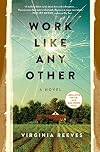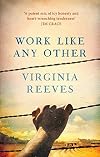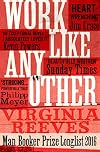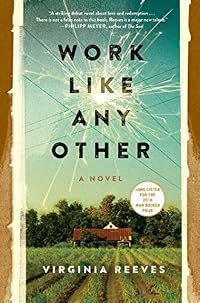
Work Like Any Other
by Virginia Reeves
On This Page
Description
"In this astonishingly accomplished, morally complicated, "exceptional and starkly beautiful debut" (Kevin Powers, National Book Award-nominated author of The Yellow Birds), a prideful electrician in 1920s rural Alabama struggles to overcome past sins and find peace after being sent to prison for manslaughter. Roscoe T Martin set his sights on a new type of power spreading at the start of the twentieth century: electricity. It became his training, his life's work. But when his wife, Marie, show more inherits her father's failing farm, Roscoe has to give up his livelihood, with great cost to his sense of self, his marriage, and his family. Realizing he might lose them all if he doesn't do something, he begins to use his skills as an electrician to siphon energy from the state, ushering in a period of bounty and happiness. Even the love of Marie and their child seem back within Roscoe's grasp. Then a young man working for the state power company stumbles on Roscoe's illegal lines and is electrocuted, and everything changes: Roscoe is arrested; the farm once more starts to deteriorate; and Marie abandons her husband, leaving him to face his twenty-year sentence alone. Now an unmoored Roscoe must carve out a place at Kilby Prison. Climbing the ranks of the incarcerated from dairy hand to librarian to "dog boy," an inmate who helps the guards track down escapees, he is ultimately forced to ask himself once more if his work is just that, or if the price of his crimes--for him and his family--is greater than he ever let himself believe. Gorgeously spare and brilliantly insightful, Work Like Any Other is "a striking debut about love and redemption, the heavy burdens of family and guilt, and learning how to escape them ... Virginia Reeves is a major new talent" (Philipp Meyer, New York Times bestselling author of The Son)"-- "A starkly beautiful, morally complicated and astonishingly accomplished debut set in 1920s rural Alabama following Roscoe T. Martin, a prideful electrician sent to prison after his illegal siphoning of electrical state power for his wife's family's farm leads to an innocent man's death"-- show lessTags
Recommendations























Member Recommendations
Member Reviews
Work Like Any Other by Virginia Reeves is a highly recommended story of pride, bitterness, resentment, and guilt set in the 1920s.
Roscoe T Martin is at heart an electrician, a line man. He was working for the Alabama Power Company when he met and married Marie, who was a teacher. When Marie inherits her father's farm, Roscoe has to give up the job he loves to do a job he detests - farming. We know from the opening sentence that all will not go well, that a man will die. We also know that resentment is already deeply rooted in both Roscoe and Marie.
Roscoe sees the power lines running near the farm and decides that, with the help of Wilson, a black man whose family manages the farm, he can set up his own lines and siphon off a little show more electricity to the farm. Roscoe knows that this will help with the farming and ultimately help the farm prosper. And his scheme works for a time. The farm does prosper and the tension in his relationship with Marie and their son, Gerald, eases.
But then the sheriff comes to their door one night and Roscoe is arrested for the death of a man who was electrocuted when checking out Roscoe's illegal lines and for the theft of the power. Wilson is also arrested. At this point Marie completely abandons her husband, blaming him for anything and everything that pops into her mind, past and present. She supports Wilson. Both men are convicted in separate trials and Roscoe is sent to Kilby prison to serve a twenty year sentence.
The narrative alternates between Roscoe's experiences in prison and those of life with Marie in the past and on the farm. Roscoe is clinging to the idea that Marie still loves him. He writes to her, even though she does not write now and did not attend or support him during his trial. His life in prison is brutal and violent, but he has his work in the dairy, at the prison library, and as a "dog boy." There are times when he dreams he is talking to a younger Marie while in prison.
Just as Roscoe was bitter about moving to the farm, Marie has a load of resentment and bitterness that she has been nurturing and building for years. Her bitterness overtakes her and she spreads it to her son. Roscoe did not intend to harm anyone - and the electricity did help the farm prosper - but once Roscoe is imprisoned, Marie is back to struggling and is unable to see beyond her pain. There is a world of pain in these people and much of the suffering is almost self-inflicted, although much is also brought to bear on Roscoe by others.
The writing is incredible in this novel. Reeves has a beautiful way with some of her descriptions which are almost too elegant for some of the harsh realities in her novel. Work Like Any Other sits firmly on the literary historical fiction shelf. (There is also quite a bit about electricity contained in Roscoe's musings.) The redemption in the description is found at the end, but perhaps not what you'd be expecting. It was a satisfying end for me, but this is still a deeply sad story that leaves a feeling of melancholy after you've read it.
Disclosure: My Kindle edition was courtesy of Scribner for review purposes.
http://shetreadssoftly.blogspot.com/2016/02/work-like-any-other.html show less
Roscoe T Martin is at heart an electrician, a line man. He was working for the Alabama Power Company when he met and married Marie, who was a teacher. When Marie inherits her father's farm, Roscoe has to give up the job he loves to do a job he detests - farming. We know from the opening sentence that all will not go well, that a man will die. We also know that resentment is already deeply rooted in both Roscoe and Marie.
Roscoe sees the power lines running near the farm and decides that, with the help of Wilson, a black man whose family manages the farm, he can set up his own lines and siphon off a little show more electricity to the farm. Roscoe knows that this will help with the farming and ultimately help the farm prosper. And his scheme works for a time. The farm does prosper and the tension in his relationship with Marie and their son, Gerald, eases.
But then the sheriff comes to their door one night and Roscoe is arrested for the death of a man who was electrocuted when checking out Roscoe's illegal lines and for the theft of the power. Wilson is also arrested. At this point Marie completely abandons her husband, blaming him for anything and everything that pops into her mind, past and present. She supports Wilson. Both men are convicted in separate trials and Roscoe is sent to Kilby prison to serve a twenty year sentence.
The narrative alternates between Roscoe's experiences in prison and those of life with Marie in the past and on the farm. Roscoe is clinging to the idea that Marie still loves him. He writes to her, even though she does not write now and did not attend or support him during his trial. His life in prison is brutal and violent, but he has his work in the dairy, at the prison library, and as a "dog boy." There are times when he dreams he is talking to a younger Marie while in prison.
Just as Roscoe was bitter about moving to the farm, Marie has a load of resentment and bitterness that she has been nurturing and building for years. Her bitterness overtakes her and she spreads it to her son. Roscoe did not intend to harm anyone - and the electricity did help the farm prosper - but once Roscoe is imprisoned, Marie is back to struggling and is unable to see beyond her pain. There is a world of pain in these people and much of the suffering is almost self-inflicted, although much is also brought to bear on Roscoe by others.
The writing is incredible in this novel. Reeves has a beautiful way with some of her descriptions which are almost too elegant for some of the harsh realities in her novel. Work Like Any Other sits firmly on the literary historical fiction shelf. (There is also quite a bit about electricity contained in Roscoe's musings.) The redemption in the description is found at the end, but perhaps not what you'd be expecting. It was a satisfying end for me, but this is still a deeply sad story that leaves a feeling of melancholy after you've read it.
Disclosure: My Kindle edition was courtesy of Scribner for review purposes.
http://shetreadssoftly.blogspot.com/2016/02/work-like-any-other.html show less
This historical novel set in rural central Alabama in the 1920s and 1930s begins with tragedy, as the reader learns that a man has been killed close to a farm where Roscoe Martin lives with his wife Marie, who inherited the land after the death of her father, and their son Gerald. The farm is struggling, as the meager profits from the crops aren't enough to pay for farmhands to harvest it, and Roscoe, a trained electrician who dislikes farmwork, is embittered about the seemingly hopeless situation he finds himself in, and the relationship between he and Marie and Gerald becomes progressively more distant, although he loves her dearly.
Electricity had not yet come to homes and most businesses in rural Alabama in the early 1920s, and show more farming techniques have not changed much since the years preceding the Civil War. However, high voltage power lines were starting to be run through these areas by Alabama Power, and Roscoe comes up with a plan to provide the farm with electricity, which will allow the crops to be harvested more quickly and less costly. He enlists the help of Wilson Grice, the African American manager of the farm, who lives on the property in a shack with his family and has worked there since he was a boy, who reluctantly agrees to help Roscoe. The plan is initially successful, as the farm becomes very profitable and the relationship between Roscoe and Marie is reinvigorated, but tragedy results several years later, resulting in the arrest, conviction and imprisonment of Roscoe and Wilson.
The novel alternates between the past and shifting present, with Roscoe's first person accounts of his life before and during his sentence in Kilby Prison near the state capital of Montgomery interspersed between the third person stories about Marie, Gerald, and Wilson's wife Moa. Roscoe is disheartened by his fate, and to a lesser extent by what has happened to Wilson, who was a less than willing accomplice to the crime but, as a black man in 1920s Alabama, is certain to face a much more severe sentence in prison.
Roscoe's personal reflections and experiences form the backbone of the novel, which is supported by the stories and viewpoints of its main characters. Although he is vilified by Marie, Moa and their children, Roscoe is neither a fully despicable nor a heroic character, and the book's author likewise portrays the other characters as complex, flawed, and all too human.
Tension progressively builds throughout the book, as each character's secrets are uncovered and their fates are revealed, and I found the ending to be surprising and shattering.
Work Like Any Other is a remarkable novel, especially since it is Virginia Reeves' debut. I was completely engrossed in the story and its characters, who will stay with me for a long time to come. This book is the first one I've read so far that is completely worthy of inclusion in this year's Booker Prize longlist, and is one of the best American novels I've read this decade. I look forward to hearing more from this sensitive and talented author. show less
Electricity had not yet come to homes and most businesses in rural Alabama in the early 1920s, and show more farming techniques have not changed much since the years preceding the Civil War. However, high voltage power lines were starting to be run through these areas by Alabama Power, and Roscoe comes up with a plan to provide the farm with electricity, which will allow the crops to be harvested more quickly and less costly. He enlists the help of Wilson Grice, the African American manager of the farm, who lives on the property in a shack with his family and has worked there since he was a boy, who reluctantly agrees to help Roscoe. The plan is initially successful, as the farm becomes very profitable and the relationship between Roscoe and Marie is reinvigorated, but tragedy results several years later, resulting in the arrest, conviction and imprisonment of Roscoe and Wilson.
The novel alternates between the past and shifting present, with Roscoe's first person accounts of his life before and during his sentence in Kilby Prison near the state capital of Montgomery interspersed between the third person stories about Marie, Gerald, and Wilson's wife Moa. Roscoe is disheartened by his fate, and to a lesser extent by what has happened to Wilson, who was a less than willing accomplice to the crime but, as a black man in 1920s Alabama, is certain to face a much more severe sentence in prison.
Roscoe's personal reflections and experiences form the backbone of the novel, which is supported by the stories and viewpoints of its main characters. Although he is vilified by Marie, Moa and their children, Roscoe is neither a fully despicable nor a heroic character, and the book's author likewise portrays the other characters as complex, flawed, and all too human.
Tension progressively builds throughout the book, as each character's secrets are uncovered and their fates are revealed, and I found the ending to be surprising and shattering.
Work Like Any Other is a remarkable novel, especially since it is Virginia Reeves' debut. I was completely engrossed in the story and its characters, who will stay with me for a long time to come. This book is the first one I've read so far that is completely worthy of inclusion in this year's Booker Prize longlist, and is one of the best American novels I've read this decade. I look forward to hearing more from this sensitive and talented author. show less
It is the 1920s in Alabama and Roscoe T. Martin loves working for the power company, stringing lines to bring electricity into homes and factories. However, when his father-in-law dies, his wife, Marie, convinces him to give this up and take over her family’s farm. Things are not going well until he decides to illegally hook the farm up to electricity with the aid of Wilson, the farm’s African American manager. As a result, the farm thrives but when a power company worker discovers their theft and dies investigating, both Martin and Wilson are arrested and sentenced, Martin to prison and Wilson, because he is black, to the mines, a fate even worse. Marie blames Roscoe, not only for the crime but for Wilson’s fate and she refuses show more to write or visit nor will she allow their son to have any contact. The narrative is divided between Roscoe in the first person and the third person with other characters. The story also alternates between past and present.
In prison, Roscoe has several jobs including in the dairy and working with the tracker dogs. But it is his work in the library that brings him the most satisfaction helping prisoners learn to read and is the greatest cause of problems and pain as many prisoners and guards resent what they see as his sense of superiority. This leads to some severe consequences for him.
Work Like Any Other is by author Virginia Reeves. I didn’t find out until after I had read it that this was her debut novel – this would have been an impressive novel under any circumstances but as a debut, it is astonishing. Reeves brings the south of the 1920s to life with all its racism, violence, and hardships. The writing is beautiful, the story is extremely well-written and compelling, and the characters are fully drawn as real people with strengths and flaws who the reader can recognize and empathize with. Reeves clearly cares about them and so the reader does as well. This novel is haunting and heartbreaking and will leave you wanting more.
This is a story of guilt and redemption, a subject that could easily cross the line to melodrama with a lesser writer. Yet, Reeves never loses sight of the story or its intent. It is the kind of book that will engage you from beginning to end and remain with you long after. If this is a debut novel, I can’t wait to see what Reeves does next show less
In prison, Roscoe has several jobs including in the dairy and working with the tracker dogs. But it is his work in the library that brings him the most satisfaction helping prisoners learn to read and is the greatest cause of problems and pain as many prisoners and guards resent what they see as his sense of superiority. This leads to some severe consequences for him.
Work Like Any Other is by author Virginia Reeves. I didn’t find out until after I had read it that this was her debut novel – this would have been an impressive novel under any circumstances but as a debut, it is astonishing. Reeves brings the south of the 1920s to life with all its racism, violence, and hardships. The writing is beautiful, the story is extremely well-written and compelling, and the characters are fully drawn as real people with strengths and flaws who the reader can recognize and empathize with. Reeves clearly cares about them and so the reader does as well. This novel is haunting and heartbreaking and will leave you wanting more.
This is a story of guilt and redemption, a subject that could easily cross the line to melodrama with a lesser writer. Yet, Reeves never loses sight of the story or its intent. It is the kind of book that will engage you from beginning to end and remain with you long after. If this is a debut novel, I can’t wait to see what Reeves does next show less
I spent my recent unenviable week off not only in New York, not only in my house, but sequestered in my un-air-conditioned living room with piles of furniture and five cabin-feverish animals while my kitchen floor was replaced. I couldn’t get much of anything constructive done, but I could at least read, and what I read, I loved: this book. Set in 1920s Alabama, it tracks a decade in the life of Roscoe T Martin, an electrician who accidentally electrocutes a man in his efforts to bring power to his wife’s family farm and ends up serving time for manslaughter in Kilby Correctional Facility. Reeves touches on serious subjects without ever being heavy-handed: race—Roscoe’s crime also implicates his farmhand Wilson, who is leased to show more work the mines rather than being sent to prison—the differences between guilt and conscience; forgiveness; how a marriage goes bad; and, most important, work: the degrees and compromises between loving the work you choose and accepting the work that is chosen for you.
Her portraits of complex characters are subtle and compassionate, and she gets bonus DTDD (does the dog die) points for not inflicting hardship on a good, good hound dog, which would have been a lesser writer’s easy catharsis—I was nervous for the last 25 pages thinking that was surely going to happen. The book is up for a Center for Fiction First Novel Prize and on the Man Booker long list, and actually reminded me a bit of Paul Harding’s Tinkers, another lovely exploration of the kindness of good work (which also ran off with some big honors—the Pulitzer Prize for fiction in 2010, as well as the PEN/Robert W. Bingham Prize). This one is highly recommended, and it turned out better (so far) than my kitchen floor. show less
Her portraits of complex characters are subtle and compassionate, and she gets bonus DTDD (does the dog die) points for not inflicting hardship on a good, good hound dog, which would have been a lesser writer’s easy catharsis—I was nervous for the last 25 pages thinking that was surely going to happen. The book is up for a Center for Fiction First Novel Prize and on the Man Booker long list, and actually reminded me a bit of Paul Harding’s Tinkers, another lovely exploration of the kindness of good work (which also ran off with some big honors—the Pulitzer Prize for fiction in 2010, as well as the PEN/Robert W. Bingham Prize). This one is highly recommended, and it turned out better (so far) than my kitchen floor. show less
Roscoe T Martin is an electrician who feels lost working on his wife's inherited farm. It's Alabama in the 1920s and Roscoe comes up with the brilliant idea of bringing electricity to the farm from the wires that Alabama Power has passing right along the edge of one of their fields. It will be his contribution to the farm, his way of bringing is professional passion to the way of life that he has begrudgingly accepted. He hopes that it will bring him closer again to his wife and young son, from whose intimacy he feels excluded and alone. And for a couple of years, the increased production provided by the newly installed electricity does transform this small family's fortunes and feelings.
To say that a tragic accident changes everything show more may seem self-evident but the beauty of this novel is that it takes that time-honored plot path and uses it to tremendous emotional effect. Told alternately in Roscoe's first-person voice and in that of a third-person narrator focusing primarily on his wife, Marie, the novel moves quickly up to the tragedy and then slowly through the ensuing decade. Roscoe spends that decade in prison and the ways in which this experience transforms him are neither sugar-coated nor unnecessarily dire. His wife and son cope with this unexpected turn in their fortunes in their own ways, only some of which are disclosed to the witnessing reader.
I loved this novel. I had a hard time putting it down and it led me to feel deeply. The emotional impact isn't saved for the ending as with so many good novels; reading this novel is an emotional experience almost from the very beginning. This is an impressive debut novel and my favorite (so far) of the 2016 Booker nominees. show less
To say that a tragic accident changes everything show more may seem self-evident but the beauty of this novel is that it takes that time-honored plot path and uses it to tremendous emotional effect. Told alternately in Roscoe's first-person voice and in that of a third-person narrator focusing primarily on his wife, Marie, the novel moves quickly up to the tragedy and then slowly through the ensuing decade. Roscoe spends that decade in prison and the ways in which this experience transforms him are neither sugar-coated nor unnecessarily dire. His wife and son cope with this unexpected turn in their fortunes in their own ways, only some of which are disclosed to the witnessing reader.
I loved this novel. I had a hard time putting it down and it led me to feel deeply. The emotional impact isn't saved for the ending as with so many good novels; reading this novel is an emotional experience almost from the very beginning. This is an impressive debut novel and my favorite (so far) of the 2016 Booker nominees. show less
Virginia Reeves has certainly set the bar very high for whatever novels follow Work Like Any Other. Not only has Reeves’s debut novel received widespread critical acclaim, it has even been included on the Man Booker Prize Longlist. The novel, set in 1920s rural Alabama, tells of an electricity visionary whose dream of electrifying the family farm his wife inherited inadvertently destroys two families, one of them his own.
Roscoe Martin is reluctant to move from the city to his wife’s farm because the move forces him to give up the thing he loves most: hands-on work with electricity, the new power source that promises to change the face of America for the better. Roscoe knows he is no farmer, and he plans to leave all the farm work up show more to his wife and the Wilsons, a black family that lives on the property and worked it for his father-in-law before the man died and passed the farm down to his daughter.
Soon enough it becomes obvious to Roscoe that neither his marriage nor the farm is likely to survive his decision to sit back and let things on the farm take their natural course. He might never be a farmer, but Roscoe is already an expert when it comes to electricity – but that skill will prove to be both a blessing and a curse to him and everyone around him when he uses it to save the farm. With his caretaker’s help, Roscoe taps into nearby state-owned electrical lines and brings electrical power to the farmhouse and, more importantly, to the farm’s thresher - all it takes to turn the farm into a thriving business. And until an employee of the state power company electrocutes himself in the process of investigating Roscoe’s illegal line taps, life is very, very good for Roscoe, Marie, and the Wilson family.
Suddenly Roscoe and Wilson face long prison sentences and their wives and children are left with the bleak prospect of taking care of themselves on the now powerless farm. Roscoe soon learns that his wife no longer wants anything to do with him, and on top of that, he knows that he will be lucky to survive his twenty-year sentence because Kilby Prison is a prison in which the guards are just as dangerous as the most psychopathic prisoner he might encounter there. But Roscoe, as it turns out, is the lucky one. Wilson, a young, able-bodied black man, rather than being held behind prison walls, is sold to a regional coal mining operation where the owners have every intention of working him until he drops dead.
Work Like Any Other is a study of guilt, the emotion most constantly felt by Roscoe Martin in prison – and Roscoe has plenty to feel guilty about since he destroyed his marriage and left his young son without a father. Perhaps even worse, however, Roscoe pulled an innocent black man into his naive scheme, ruining that man’s family in the process, and sentencing him to years of the kind of brutal labor that will mark him forever if he even manages to survive it.
The novel is filled with haunting characters that suffer greatly because of the actions of one man. None of them is perfect - far from it - but they need each other if they are to survive what has happened to them. The ultimate question they all have to answer now is how willing they are to forgive Roscoe Martin – and themselves – for what happened. Is that much forgiveness even possible? Can Roscoe ever learn to forgive himself for what he did?
Work Like Any Other is one of those novels that readers will feel compelled to hand off to their best friends as soon as they finish it. It is that good. show less
Roscoe Martin is reluctant to move from the city to his wife’s farm because the move forces him to give up the thing he loves most: hands-on work with electricity, the new power source that promises to change the face of America for the better. Roscoe knows he is no farmer, and he plans to leave all the farm work up show more to his wife and the Wilsons, a black family that lives on the property and worked it for his father-in-law before the man died and passed the farm down to his daughter.
Soon enough it becomes obvious to Roscoe that neither his marriage nor the farm is likely to survive his decision to sit back and let things on the farm take their natural course. He might never be a farmer, but Roscoe is already an expert when it comes to electricity – but that skill will prove to be both a blessing and a curse to him and everyone around him when he uses it to save the farm. With his caretaker’s help, Roscoe taps into nearby state-owned electrical lines and brings electrical power to the farmhouse and, more importantly, to the farm’s thresher - all it takes to turn the farm into a thriving business. And until an employee of the state power company electrocutes himself in the process of investigating Roscoe’s illegal line taps, life is very, very good for Roscoe, Marie, and the Wilson family.
Suddenly Roscoe and Wilson face long prison sentences and their wives and children are left with the bleak prospect of taking care of themselves on the now powerless farm. Roscoe soon learns that his wife no longer wants anything to do with him, and on top of that, he knows that he will be lucky to survive his twenty-year sentence because Kilby Prison is a prison in which the guards are just as dangerous as the most psychopathic prisoner he might encounter there. But Roscoe, as it turns out, is the lucky one. Wilson, a young, able-bodied black man, rather than being held behind prison walls, is sold to a regional coal mining operation where the owners have every intention of working him until he drops dead.
Work Like Any Other is a study of guilt, the emotion most constantly felt by Roscoe Martin in prison – and Roscoe has plenty to feel guilty about since he destroyed his marriage and left his young son without a father. Perhaps even worse, however, Roscoe pulled an innocent black man into his naive scheme, ruining that man’s family in the process, and sentencing him to years of the kind of brutal labor that will mark him forever if he even manages to survive it.
The novel is filled with haunting characters that suffer greatly because of the actions of one man. None of them is perfect - far from it - but they need each other if they are to survive what has happened to them. The ultimate question they all have to answer now is how willing they are to forgive Roscoe Martin – and themselves – for what happened. Is that much forgiveness even possible? Can Roscoe ever learn to forgive himself for what he did?
Work Like Any Other is one of those novels that readers will feel compelled to hand off to their best friends as soon as they finish it. It is that good. show less
1920s Alabama: Roscoe T Martin’s life work, training, and passion is electricity. But when his wife Marie inherits the family farm from her late father, he gives up his livelihood – at great cost to himself, his marriage, and his family. Roscoe is not a farmer – in fact, he resents the farm and all that has come with it. In an effort to improve their rural lives, Roscoe concocts and carries out a plan to siphon off state electrical power to bring electricity to the farm. And the plan works – the farm prospers, and life gets better. That is, until a young man employed by Alabama Power is electrocuted and Roscoe is arrested and incarcerated at Kilby Prison. What’s worse, their loyal and long-employed black farm hand, Wilson show more Grice, is charged, too. Needless to say, the penal system in early 1900s rural Alabama deals with the two men very differently. Marie, strong and reasonable and disciplined – and cold – abandons Roscoe, who must learn to carve out a place for himself in Kilby Prison.
Work Like Any Other is a stunning debut novel: rich with gorgeous, spare writing, insight, and imagery. Reeves explores primarily love, redemption, family, and guilt. There is a scene in which Marie is canning peaches with Moa, Wilson Grice’s wife, which is set in my mind – and which Reeves uses brilliantly to illustrate Marie’s relationship with both her farm and her husband:
“The stone of the peach had always pleased Marie, its wrinkles like furrows in a newly plowed pasture or the deeply created forehead of an old woman – like things soft to the touch. The stone was rough, though, nearly to scratching, and hard. Only a sick peach showed a weak stone, splitting with the flesh when cut, exposing the soft, flat seed inside. The fruit of those peaches clung to the sides of their stones, forcing her to hack away at the flesh in sloppy chunks. When the farm had been at is most prosperous, she’d allowed herself to throw those peaches out.” (157)
Highly, highly recommended! show less
Work Like Any Other is a stunning debut novel: rich with gorgeous, spare writing, insight, and imagery. Reeves explores primarily love, redemption, family, and guilt. There is a scene in which Marie is canning peaches with Moa, Wilson Grice’s wife, which is set in my mind – and which Reeves uses brilliantly to illustrate Marie’s relationship with both her farm and her husband:
“The stone of the peach had always pleased Marie, its wrinkles like furrows in a newly plowed pasture or the deeply created forehead of an old woman – like things soft to the touch. The stone was rough, though, nearly to scratching, and hard. Only a sick peach showed a weak stone, splitting with the flesh when cut, exposing the soft, flat seed inside. The fruit of those peaches clung to the sides of their stones, forcing her to hack away at the flesh in sloppy chunks. When the farm had been at is most prosperous, she’d allowed herself to throw those peaches out.” (157)
Highly, highly recommended! show less
Members
- Recently Added By
Published Reviews
ThingScore 75
Reeves is a fine wrangler of words, able to snake sentences of slithery charisma in and around each other. This is especially true in her depictions of time and place: her settings and the people in them stand firm and vivid in the mind’s eye — a room in the farmhouse will surround you, the clanks and cries of the jail will reverberate clearly. In its finest moments you are learning from show more the inside out, not just the outside in. show less
added by kidzdoc
A tale of guilt and redemption set in 1920s Alabama.
This is the story of Roscoe T Martin and the death that transforms his life. An electrician by trade, Roscoe is frustrated by life on the failing farm his wife inherited from her father. Roscoe decides that he can save the farm—and himself—by running power lines to his family’s property and its machinery. The farm does prosper for a show more time, but the reader knows from the novel’s opening line that this scheme will end in tragedy.
Elegant to a fault. Lacking in heart. show less
This is the story of Roscoe T Martin and the death that transforms his life. An electrician by trade, Roscoe is frustrated by life on the failing farm his wife inherited from her father. Roscoe decides that he can save the farm—and himself—by running power lines to his family’s property and its machinery. The farm does prosper for a show more time, but the reader knows from the novel’s opening line that this scheme will end in tragedy.
Elegant to a fault. Lacking in heart. show less
added by kidzdoc
When you’re on the last few pages of a book and find yourself longing for more, then you know that it is a very powerful read. Such is the case with Work Like Any Other. Author Virginia Reeves has delivered a commanding, dramatic novel of life in 1920s Alabama, inside a family torn apart by anger, resentment, shame, guilt, and desire.
This is a deeply gripping portrayal of Americana in the show more Deep South, replete with racism, violence, and heartbreak. It is astonishingly well-written, particularly for a debut novel. Reeves delivers powerful heartrending scenes of despair and hope. The reader is immersed within a family torn apart by guilt, yet connected by an undercurrent of love. Reeves paints magnificent scenes with expressive and direct language. Her characters are well thought out and deeply permeated with emotion. show less
This is a deeply gripping portrayal of Americana in the show more Deep South, replete with racism, violence, and heartbreak. It is astonishingly well-written, particularly for a debut novel. Reeves delivers powerful heartrending scenes of despair and hope. The reader is immersed within a family torn apart by guilt, yet connected by an undercurrent of love. Reeves paints magnificent scenes with expressive and direct language. Her characters are well thought out and deeply permeated with emotion. show less
added by kidzdoc
Lists

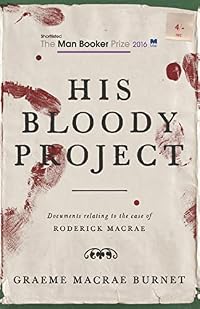
Man Booker Prize Longlist 2016
13 works; 2 members

Historical Fiction
8 works; 1 member

Books Read in 2018
4,360 works; 110 members
Author Information
5 Works 288 Members
Awards and Honors
Common Knowledge
- Canonical title
- Work Like Any Other
- Original publication date
- 2016-03-01
- People/Characters
- Roscoe T. Martin; Marie Martin; Gerald Martin; Moa Grice; Wilson Grice
- Important places
- Kilby Prison, Mount Meigs, Alabama, USA
- Epigraph
- Alabama does not mean "Here we rest." It never did.
— Mrs L.B. Bush, from "A Decade of Progress in Alabama," 1924
Kilby Prison marks the impending transfer of the State of Alabama from the rear ranks of prison management to the front ranks. Alabama is following the example of the State of New York and the State of Virginia in establishin... (show all)g a central distributing prison to which prisoners will be sent immediately upon their conviction, and where they will receive: first, a thorough study of their history; second, a most thorough examination, mental and physical, by trained experts; third, a thorough course of treatment to remove any remedial defects; fourth, assignment to that prison and employment for which the convict is best adapted; and fifth, a systematic course of reformatory treatment and training, in order that the prisoner may be restored to society, if possible, a self-respecting, upright, useful and productive citizen.
— Hastings H. Hart, from Social Progress of Alabama, 1922 - Dedication
- For my grandmother, Theresa Reeves
- First words
- The electrical transformers that would one day kill George Haskin sat high on a pole about ten yards off the northeast corner of the farm where Roscoe T Martin lived with his family.
- Blurbers
- Meyer, Philipp; Powers, Kevin; Livesey, Margot; McFarlane, Fiona; Crace, Jim
Classifications
Statistics
- Members
- 235
- Popularity
- 137,985
- Reviews
- 29
- Rating
- (3.97)
- Languages
- English, French, German
- Media
- Paper, Audiobook, Ebook
- ISBNs
- 27
- ASINs
- 8