On This Page
Description
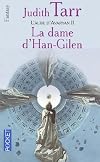
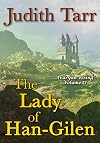
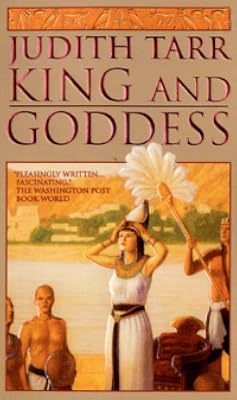
"Book Two of Avaryan Rising Elian of Han-Gilen is the pride and scandal of her father's princedom. She has out-ridden, out-hunted, and out-shot every suitor. Now comes one whom she could bring herself to love: no lesser man than the throne prince of the Golden Empire. But Elian swore an oath as a child to a foster brother who is now a warrior king. Consort to an imperial heir or squire at arms to a conqueror: Elian must choose, and in choosing, decide the fate of two empires."Tags
Recommendations

















Member Reviews
Judith Tarr’s prose is a delight, but this particular installment in the Avaryan series is a rather trite romance at its heart, with a fickle-minded, headstrong princess alternately loving, hating, and trying to choose between two emperors-to-be. Too many pages assigned to the waffling thoughts of Elian and not enough to the political machinations of a few of the princes of the Hundred Realms and the sorcery of the Exile. Still, a good story overall and an important piece in the Avaryan series.
Elian is princess of a mighty kingdom, with many royal suitors. But she will not consent to marry any of them, and when she begins to fall in love with one, she flees. Her foster-brother has raised an army and begun creating an empire, and she goes to serve him. Even as she and Mirain (son of the Sun-god, a mortal man sent by his father to bring all to the light) conquer kingdoms, she battles with her tangled feelings of love, loyalty, and a fierce desire to be free above all other considerations.
I could have done with fewer reminders of how red Elian's hair is (it's so red guys, so very very red), but the way she's described fits with the overall style of the novel. These books are told in manner similar to old epics, complete with show more archaic sentence construction and reiterated descriptions. Sometimes this rankled as a little too old-fashioned and expected, but most of the time it worked very well in creating the sense that this tale is that of an oft-told legend. The only place the style really annoyed me was during descriptions of the magical battles: there, the elliptical, flowery style made the action difficult to follow.
I was frustrated with Elian a good deal, because she seems incapable of figuring out what or who she wants for most of the novel. She changes her mind about who she loves and what she wants to do so fast I nearly got whiplash. I think her fellow soldiers and family put up with her mood swings and changing priorities far too often. When she does know her own mind, though, she's nigh unstoppable, and I liked that. She truly is fierce and implacable--she'd tear herself apart struggling against bonds. The end was an interesting turn on her perpetual struggle for personal freedom, because to save Mirain she melds minds with him and his half-uncle. She'll never again be truly alone, or able to forget others' concerns. show less
I could have done with fewer reminders of how red Elian's hair is (it's so red guys, so very very red), but the way she's described fits with the overall style of the novel. These books are told in manner similar to old epics, complete with show more archaic sentence construction and reiterated descriptions. Sometimes this rankled as a little too old-fashioned and expected, but most of the time it worked very well in creating the sense that this tale is that of an oft-told legend. The only place the style really annoyed me was during descriptions of the magical battles: there, the elliptical, flowery style made the action difficult to follow.
I was frustrated with Elian a good deal, because she seems incapable of figuring out what or who she wants for most of the novel. She changes her mind about who she loves and what she wants to do so fast I nearly got whiplash. I think her fellow soldiers and family put up with her mood swings and changing priorities far too often. When she does know her own mind, though, she's nigh unstoppable, and I liked that. She truly is fierce and implacable--she'd tear herself apart struggling against bonds. The end was an interesting turn on her perpetual struggle for personal freedom, because
Ratings
Members
- Recently Added By
Author Information

Judith Tarr was born in Augusta, Maine on January 30, 1955. She received a B.A. in Latin and English from Mount Holyoke College, an M.A. in Classics from Cambridge University, and an M.A. and a Ph.D. in Medieval studies from Yale University. She is the author of more than twenty novels including The Golden Horn, The Hound and the Falcon, Avaryan show more Rising, Alamut, The Daggar and the Cross, The Lord of Two Lands, Pillar of Fire, The Throne of Isis, White Mare's Daughter, Queen of Swords, Arrows of the Sun, and Spear of Heaven. She also wrote a juvenile book entitled His Majesty's Elephant. (Bowker Author Biography) show less
Some Editions
Series


Work Relationships
Is contained in
Common Knowledge
Classifications
Statistics
- Members
- 162
- Popularity
- 203,293
- Reviews
- 3
- Rating
- (3.83)
- Languages
- English, French, German
- Media
- Paper, Ebook
- ISBNs
- 6
- UPCs
- 1
- ASINs
- 3