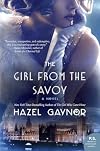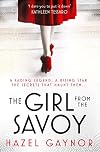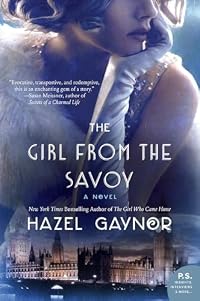
The Girl from the Savoy
by Hazel Gaynor
On This Page
Description
Presenting a dazzling new historical novel … The Girl From The Savoy is as sparkling as champagne and as thrilling as the era itself. 'Sometimes life gives you cotton stockings. Sometimes it gives you a Chanel gown …' Dolly Lane is a dreamer; a downtrodden maid who longs to dance on the London stage, but her life has been fractured by the Great War. Memories of the soldier she loved, of secret shame and profound loss, by turns pull her back and spur her on to make a better life. When she show more finds employment as a chambermaid at London's grandest hotel, The Savoy, Dolly takes a step closer to the glittering lives of the Bright Young Things who thrive on champagne, jazz and rebellion. Right now, she must exist on the fringes of power, wealth and glamor-she must remain invisible and unimportant. But her fortunes take an unexpected turn when she responds to a struggling songwriter's advertisement for a 'muse' and finds herself thrust into London's exhilarating theatre scene and into the lives of celebrated actress, Loretta May, and her brother, Perry. Loretta and Perry may have the life Dolly aspires to, but they too are searching for something. Now, at the precipice of the life she has and the one she longs for, the girl from The Savoy must make difficult choices: between two men; between two classes, between everything she knows and everything she dreams of. A brighter future is tantalizingly close-but can a girl like Dolly ever truly leave her past behind? show lessTags
Recommendations





Member Reviews
The Girl from the Savoy is one of those books that reads like a cozy blanket when you want to indulge in a cry and finish off feeling determined. It has melodrama in spades, and plot points that are telegraphed rather than foreshadowed, and it's set in a gloriously rich historical place featuring a starry-eyed young woman who will make it in the world despite her tragic past.
Unfortunately, I was not in the right mood for this book in the several months it took me to slog through. I should have stopped reading early on and passed it to the next reader, but I wanted to confirm my predictions about the plot (I was right), and I was a little morbidly curious about exactly how tepid the story could be.
While the setting itself appeals to me - show more early 1920s Upstairs/downstairs in London! - there was something a bit off for my tastes. It was all highly detailed, but perhaps in the wrong ways. I don't tend to enjoy highly specific pop culture call outs in historical novels, although I know other people do.
There is a lot going on in the plot, but it all felt rather like the covers this genre gets: sort of indistinctly romantic with soft edges and incongruous elements smushed together to seem like one. The first World War is five years in the past, but is practically a fourth main character - themes of shell shock or life on the homefront or the high mortality of the war are hugely relevant and often immediate concerns for the plot, but somehow without any urgency or emotion, because of that gauzey romantic history filter. Likewise, Dolly's and Loretta's tragic backstories of lost loves and lost children are sort of vaguely sad unless the intensity of emotion is suddenly ramped up to 11 for plot reasons - except that those plot reasons were so expected that the effect of the increase in tension after so much of the exact opposite was more laughable than anything. Too often, the telegraphed plot points came through by the luckiest of coincidences, which made the increase in tension even less appropriate. Unlikely coincidences are a dime a dozen in fiction, else where would the stories come from?, but I can't think of anything that moved or resolved the plot of this book that didn't have some kind of coincidence involved.
The melodrama of Loretta May was my least favorite part of the book. While she's an important character and her story is a mirror to Dolly's, her POV had the same voice as you might expect from an ancient Gloria Swanson in Sunset Boulevard, and it was just so hard to take her seriously with all the brooding and woe-is-me. The book would have been much stronger to ditch the extra perspectives and just stick to Dolly's POV or slightly less limited third person.
On the whole, I don't think The Girl from the Savoy is a bad book. It just didn't work for me and especially didn't match the reading mood I have had the last few months. While I have great appreciation for the overall arc of the plot (especially the way the curtain closed on Dolly, before the epilogue), it never seemed to have any significance or weight. But I believe this will appeal to readers who want historical fiction and love the "A Star is Born" narrative and are in the mood for the cozy blanket type of novel. I am not that reader, not this summer. show less
Unfortunately, I was not in the right mood for this book in the several months it took me to slog through. I should have stopped reading early on and passed it to the next reader, but I wanted to confirm my predictions about the plot (I was right), and I was a little morbidly curious about exactly how tepid the story could be.
While the setting itself appeals to me - show more early 1920s Upstairs/downstairs in London! - there was something a bit off for my tastes. It was all highly detailed, but perhaps in the wrong ways. I don't tend to enjoy highly specific pop culture call outs in historical novels, although I know other people do.
There is a lot going on in the plot, but it all felt rather like the covers this genre gets: sort of indistinctly romantic with soft edges and incongruous elements smushed together to seem like one. The first World War is five years in the past, but is practically a fourth main character - themes of shell shock or life on the homefront or the high mortality of the war are hugely relevant and often immediate concerns for the plot, but somehow without any urgency or emotion, because of that gauzey romantic history filter. Likewise, Dolly's and Loretta's tragic backstories of lost loves and lost children are sort of vaguely sad unless the intensity of emotion is suddenly ramped up to 11 for plot reasons - except that those plot reasons were so expected that the effect of the increase in tension after so much of the exact opposite was more laughable than anything. Too often, the telegraphed plot points came through by the luckiest of coincidences, which made the increase in tension even less appropriate. Unlikely coincidences are a dime a dozen in fiction, else where would the stories come from?, but I can't think of anything that moved or resolved the plot of this book that didn't have some kind of coincidence involved.
The melodrama of Loretta May was my least favorite part of the book. While she's an important character and her story is a mirror to Dolly's, her POV had the same voice as you might expect from an ancient Gloria Swanson in Sunset Boulevard, and it was just so hard to take her seriously with all the brooding and woe-is-me. The book would have been much stronger to ditch the extra perspectives and just stick to Dolly's POV or slightly less limited third person.
On the whole, I don't think The Girl from the Savoy is a bad book. It just didn't work for me and especially didn't match the reading mood I have had the last few months. While I have great appreciation for the overall arc of the plot (especially the way the curtain closed on Dolly, before the epilogue), it never seemed to have any significance or weight. But I believe this will appeal to readers who want historical fiction and love the "A Star is Born" narrative and are in the mood for the cozy blanket type of novel. I am not that reader, not this summer. show less
 This review was written for LibraryThing Early Reviewers.
How many people chase their dreams? I mean really chase their dreams? We always tell our kids that if they don't shoot for the stars, there's no way they can reach them. Throwing yourself body and soul into the life you want to lead is the only way you'll ever achieve it. But sometimes chasing dreams means leaving things behind that you care about, turning away from one thing to pursue another, making choices that aren't easy but are right. For Dolly Lane, in Hazel Gaynor's touching new novel, The Girl From the Savoy, chasing dreams comes with a cost, one that she will always carry in her heart.
Dolly has always wanted to be a dancer and actress. But she also always expected to marry Teddy Cooper, the boy she's loved since she was 8 show more years old, and live out her life in the comfort of her small town. But when Teddy went off to war and came back suffering from severe shell shock, everything changed. The novel opens with Dolly rushing to start a new job as a maid at the Savoy hotel in London. She's dripping wet and splattered with mud on her drooping cotton stockings when she crashes into an attractive man just before she makes it to the hotel and although both are a little bit intrigued by each other, they go their own ways. But this is not the last time Dolly will cross paths with Peregrine Clements, a struggling composer who needs a muse to help him write music again. And through Perry, Dolly will also meet Loretta May, the darling of the West End and Perry's sister. With such friends, how could this little maid not realize her dream of making it on the stage?
Told in first person chapters from Dolly, Loretta, and Teddy's perspectives, the novel deals with both WWI and the years afterwards. Although the war is over in the present of the novel, all of the characters are still touched by it. Each of them paid a terrible price thanks to "the war to end all wars" and that terrible cost threads through even the most glamorous years of the war's aftermath. Dolly's humble origins and her ideally invisible service as a maid at the hotel give quite a contrast to the gay, partying, upper class life that the guests live. But Dolly doesn't intend to be a maid forever and she vows to lead the life she sees in the suites she cleans every day. The first half of the novel is rather drawn out, as Dolly tries so very hard to chase her dream and let go of her heartbreaking past, as the beautiful and celebrated Loretta triumphs professionally even as her private life crumbles beneath her own secret tragedies, and as Teddy struggles to swim back up from the horror that has him in its grip. The last third of the novel moves much faster with each of these three and Perry faced with the decisions that will drive the direction of their futures. The writing is very visual, making it easy to imagine both the alluring glitter of the theater world and the Bright Young Things, and the simple pleasures as well as the drudgeries of the working class. The stories of each of the characters, even those who appear to have it all, are poignant and layered and their sorrows are forever imprinted on them. This is a well-researched and tender historical novel that looks at the soul deep damage caused by war, personal cost, the pull of dreams, and what it takes to achieve them, especially amidst a world remade in the wake of a terrible war. show less
Dolly has always wanted to be a dancer and actress. But she also always expected to marry Teddy Cooper, the boy she's loved since she was 8 show more years old, and live out her life in the comfort of her small town. But when Teddy went off to war and came back suffering from severe shell shock, everything changed. The novel opens with Dolly rushing to start a new job as a maid at the Savoy hotel in London. She's dripping wet and splattered with mud on her drooping cotton stockings when she crashes into an attractive man just before she makes it to the hotel and although both are a little bit intrigued by each other, they go their own ways. But this is not the last time Dolly will cross paths with Peregrine Clements, a struggling composer who needs a muse to help him write music again. And through Perry, Dolly will also meet Loretta May, the darling of the West End and Perry's sister. With such friends, how could this little maid not realize her dream of making it on the stage?
Told in first person chapters from Dolly, Loretta, and Teddy's perspectives, the novel deals with both WWI and the years afterwards. Although the war is over in the present of the novel, all of the characters are still touched by it. Each of them paid a terrible price thanks to "the war to end all wars" and that terrible cost threads through even the most glamorous years of the war's aftermath. Dolly's humble origins and her ideally invisible service as a maid at the hotel give quite a contrast to the gay, partying, upper class life that the guests live. But Dolly doesn't intend to be a maid forever and she vows to lead the life she sees in the suites she cleans every day. The first half of the novel is rather drawn out, as Dolly tries so very hard to chase her dream and let go of her heartbreaking past, as the beautiful and celebrated Loretta triumphs professionally even as her private life crumbles beneath her own secret tragedies, and as Teddy struggles to swim back up from the horror that has him in its grip. The last third of the novel moves much faster with each of these three and Perry faced with the decisions that will drive the direction of their futures. The writing is very visual, making it easy to imagine both the alluring glitter of the theater world and the Bright Young Things, and the simple pleasures as well as the drudgeries of the working class. The stories of each of the characters, even those who appear to have it all, are poignant and layered and their sorrows are forever imprinted on them. This is a well-researched and tender historical novel that looks at the soul deep damage caused by war, personal cost, the pull of dreams, and what it takes to achieve them, especially amidst a world remade in the wake of a terrible war. show less
I found this novel a little frustrating. It caught my interest enough to want to finish it but it took an awfully long time to get going for a light historical romance. As other reviewers mentioned, the writing is at times trite and cliched. Still, the characters are lovable and I genuinely cared what happened to them. Gaynor also does a good job of placing you in 1920s London (a fun place to be!). I can't say I will seek out Gaynor's writing in the future but I don't regret reading this one.
Dorothy Lane, Dolly to her friends, has always dreamed of more for herself than to be a maid. However, as World War I approaches, her love, Teddy is sent off and things change drastically for them both. Teddy returns with shell shock and Dolly has endured much in his absence. Now, Dolly chases adventure in London where she finds employment as a maid to the stars at the Savoy. While at the Savoy, Dolly takes up an advertisement for a musician looking for a muse. Perry Clements is a struggling composer, his sister Loretta May is a starlet of the stage. Dolly agrees to inspire Perry while Loretta teaches her to stand out in a crowd and brings Dolly closer to the life she has dreamed about.
A tantalizing story about love, loss, recovery and show more ambition that spans World War I through the Jazz Age in London. Switching points of view between Dolly, Loretta and Teddy there is a very full view of the damaging effects of the war from every angle. Dolly's was the most intriguing for me as her secrets kept during the war unravel and she begins to finally realize her dreams. Dolly is a true dreamer and adventurer. I admired her resilience and ability to chase her fantasy life. Teddy's point of view was also crucial for me, even though it didn't quite fit in with the Dolly and Loretta's shared experiences. His struggle with shell shock and remembering what he could have had was very delicately done and drew me into his experience. Finally, what drew me into the book was the setting and time period, the glamour of the Savoy was brilliantly described and the mood of the time could be imagined through the descriptions of music, theatre, dance and dress. show less
A tantalizing story about love, loss, recovery and show more ambition that spans World War I through the Jazz Age in London. Switching points of view between Dolly, Loretta and Teddy there is a very full view of the damaging effects of the war from every angle. Dolly's was the most intriguing for me as her secrets kept during the war unravel and she begins to finally realize her dreams. Dolly is a true dreamer and adventurer. I admired her resilience and ability to chase her fantasy life. Teddy's point of view was also crucial for me, even though it didn't quite fit in with the Dolly and Loretta's shared experiences. His struggle with shell shock and remembering what he could have had was very delicately done and drew me into his experience. Finally, what drew me into the book was the setting and time period, the glamour of the Savoy was brilliantly described and the mood of the time could be imagined through the descriptions of music, theatre, dance and dress. show less
Historical fiction set in the 1920’s, this book tells the story of Dolly Lane, a girl from the English countryside, who has found employment at The Savoy, an iconic hotel and focal point of London’s social scene. While working as a maid and cleaning the rooms of the stars, Dolly dreams of an adventurous life on the stage. When she literally runs into Perry Clements, a musician with a famous sister, her life takes an unexpected turn. Each of the four main characters has been impacted by the aftermath of WWI and each is harboring a secret.
The author excels at period descriptions. Gaynor’s rhythmic prose is punctuated with pithy sayings (e.g., “Wonderful adventures await for those who dare to find them.”) Her descriptions of the show more manner of dress, speech, and conduct ring true to the era. It is light-hearted and optimistic in tone, though it contains elements of sadness, mental and physical health issues, and ongoing recovery from the Great War. Gaynor inserts elements that show this period as a time when the lives of women were changing dramatically from the lives of their mothers and grandmothers. The storyline alternates among three of the four main characters, and each is told from first person perspective in present tense. The narrative includes a long build-up to get to the point at which the main characters interact, there are a few too many convenient coincidences, and I thought the epilogue unnecessary. It filled the bill for an entertaining and light read after a couple of intense experiences. show less
The author excels at period descriptions. Gaynor’s rhythmic prose is punctuated with pithy sayings (e.g., “Wonderful adventures await for those who dare to find them.”) Her descriptions of the show more manner of dress, speech, and conduct ring true to the era. It is light-hearted and optimistic in tone, though it contains elements of sadness, mental and physical health issues, and ongoing recovery from the Great War. Gaynor inserts elements that show this period as a time when the lives of women were changing dramatically from the lives of their mothers and grandmothers. The storyline alternates among three of the four main characters, and each is told from first person perspective in present tense. The narrative includes a long build-up to get to the point at which the main characters interact, there are a few too many convenient coincidences, and I thought the epilogue unnecessary. It filled the bill for an entertaining and light read after a couple of intense experiences. show less
Well, I made it halfway through the book and realized that I had yet to connect to either of the main characters, so I skipped to the last few chapters to see if I cared enough about the book to read about how the characters got there. No sir, I did not. So that's the end of this book for me.
The writing style itself is fine, although a little bit overly descriptive at times. But my main problem was that it felt like NOTHING happened. I had read two hundred pages and yet I still felt as if nothing of consequence had really occurred on the pages yet. This made the story feel like it was dragging to me, and it just wasn't enjoyable for me.
I hate the ending. In theory, I like the idea of Dolly going off to America with no romantic show more entanglements, but I really loved the character of Teddy and found myself wanting them to get back together SO BADLY. And they don't. They become "old friends" in the end, but that's it. And there's precious little information about what happened in Dolly's life after she left for America. I wanted more.
My verdict: meh.
Thank you, library system, for saving me the money that I would have spent on this book. show less
The writing style itself is fine, although a little bit overly descriptive at times. But my main problem was that it felt like NOTHING happened. I had read two hundred pages and yet I still felt as if nothing of consequence had really occurred on the pages yet. This made the story feel like it was dragging to me, and it just wasn't enjoyable for me.
My verdict: meh.
Thank you, library system, for saving me the money that I would have spent on this book. show less
I decided to listen to the audio version of this book and I'm glad to say that I spend some happy hours working and listening to The Girl from the Savoy. I've wanted for a while to read it and I'm pleased to say that the book made the hours fly by...
There are two points of views in this book that of Dolly, who dreams of becoming a star on stage and Loretta May, who is a star, but whose dreams were destroyed in the war. I found both women's stories fascinating and tragic. Both have gone through much and I enjoyed their interaction (when they finally met).
One thing I really liked was that the blurb states that Dolly has to choose between two men, but that is to simplify the story quite a lot. Yes, there are two men in Dolly's life, Teddy show more who she loved, but came home a shell of a man after the war and Perry that quite literary fell into her life. However, this is not an ordinary triangle drama with Dolly not being able to choose between Teddy and Perry, there is so much more to the story than that, which you will discover if you read the book.
As for Loretta, she may be a star, but she is one classy woman and I really liked her. I liked that she is the one that sees potentials in Dolly. Also, her past in the war is so heartbreaking.
The Girl from the Savoy is a great novel, there are sad moments in the book, but also joyous ones. And I loved that the book did not have the tradition HEA ending. Although I wish to know what happened to the other man in the book... show less
There are two points of views in this book that of Dolly, who dreams of becoming a star on stage and Loretta May, who is a star, but whose dreams were destroyed in the war. I found both women's stories fascinating and tragic. Both have gone through much and I enjoyed their interaction (when they finally met).
One thing I really liked was that the blurb states that Dolly has to choose between two men, but that is to simplify the story quite a lot. Yes, there are two men in Dolly's life, Teddy show more who she loved, but came home a shell of a man after the war and Perry that quite literary fell into her life. However, this is not an ordinary triangle drama with Dolly not being able to choose between Teddy and Perry, there is so much more to the story than that, which you will discover if you read the book.
As for Loretta, she may be a star, but she is one classy woman and I really liked her. I liked that she is the one that sees potentials in Dolly. Also, her past in the war is so heartbreaking.
The Girl from the Savoy is a great novel, there are sad moments in the book, but also joyous ones. And I loved that the book did not have the tradition HEA ending. Although I wish to know what happened to the other man in the book... show less
Members
- Recently Added By
Author Information

16+ Works 4,443 Members
Hazel Gaynor's debut novel, The Girl Who Came Home: A Novel of the Titanic, was a New York Times and USA Today bestseller. A Memory of Violets is her second novel. In addition to historical fiction, she writes a popular guest blog, Carry on Writing, for national Irish writing website writing.ie. She shares thoughts and experiences of the writing show more process and has interviewed a number of popular authors, including; Philippa Gregory, Sebastian Faulks, John Boyne and Cheryl Strayed. Hazel received the 2012 Cecil Day Lewis award for Emerging Writers and was selected by Library Journal as one of Ten Big Breakout Authors for 2015. (Bowker Author Biography) show less
Some Editions
Awards and Honors
Awards
Common Knowledge
- Canonical title
- The Girl from the Savoy
- Original publication date
- 2016-06-07
- People/Characters
- Dolly Lane; Loretta May; Teddy Cooper; Perry Clements; Clover Parker
- Important places
- London, England, UK; The Savoy Hotel, London, England, UK
- Epigraph
- ...men and girls came and went like moths
among the whisperings and the champagne
and the stars.
--F. Scott Fitzgerald, The Great Gatsby - Dedication
- For my sister, Helen.
With love, and a large G & T. - First words
- In my heart, I always knew he would go; that they would all go, in the end.
- Last words
- (Click to show. Warning: May contain spoilers.)Like our greatest hopes and dreams, they will be a part of us.
Always.
Classifications
Statistics
- Members
- 271
- Popularity
- 118,737
- Reviews
- 32
- Rating
- (3.68)
- Languages
- English, German, Romanian
- Media
- Paper, Audiobook, Ebook
- ISBNs
- 19
- ASINs
- 4