What Paul Meant
by Garry Wills
On This Page
Description
All through history, Christians have debated Paul's influence on the church. Though revered, Paul has also been a stone on which many stumble. Unlike the Gospel writers, who carefully shaped their narratives many decades after Jesus' life, Paul wrote in the heat of the moment, managing controversy, and sometimes contradicting himself, but at the same time offering the best reflection of those early times. This interpretation of Paul's writing examines his tremendous influence on the first show more explosion of Christian belief and chronicles the controversy surrounding Paul through the centuries.--From publisher description. show lessTags
Recommendations




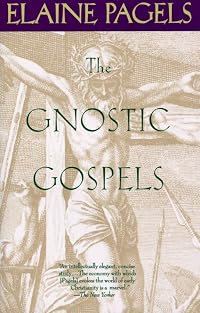
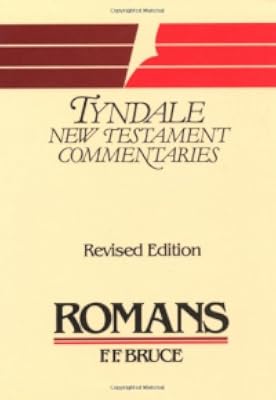

Member Recommendations
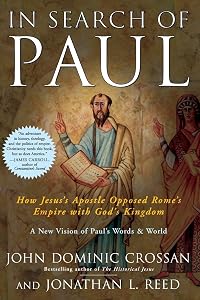
MarthaJeanne Both books aim at a popular audience. They give quite different pictures of Paul, particularly of the relationship between the Pauline letters and Acts.
Member Reviews
This clear and easy read has helped to 'save' Paul for me. The real and apparent contradictions in Paul's writings are far less disturbing and easier to accept as truth when the letters that are believed to be Paul's own by the majority of scholars are then examined in chronological order and in light of what else we know about Paul's conversion and ministry. These letters are the earliest known writings about Jesus, and this informed and honest reading can make you think twice (or at least think more) about things you've been taking for granted.
It is an understatement to say that Paul is controversial.
Paul has often gotten a bad rap. As one of the first New Testament writers, instrumental in transforming a universal message, stifled by a provincial culture, into a worldwide faith.. We are told he traveled more than 10,000 miles establishing and encouraging the spread of Jesus’ message.
His letters were occasional writings. They were dashed off to deal with local crises. Today, we read his raised voice without knowing or hearing the other side’s shouts. His words are heated. They tumble out in self-defense and urgent guidance. Where Jesus taught and guided using simple parables, Paul relied on complex theology.
Paul may not have written much of what is attributed to him, show more Wills tells us. Of the 13 letters he is often thought of having written; only seven are now believed to be his. They are 1 Thessalonians, Galatians, Philippians, Philemon, 1 Corinthians, 2 Corinthians, and Romans. All were written before 55 CE, long before the first Gospels and Acts of the Apostles were penned.
Although he is not a biblical scholar, as a voracious reader and a gifted writer, Wills uses recent scholarship to separate fact from fiction.
As in “Lincoln at Gettysburg” and “Nixon Agonistes” (my two favorite Wills books) the author looks at a familiar set of facts and draws startling insights. In this book I was fascinated by Wills’- a former Greek professor at Johns Hopkins University - ability to draw insightful and nuanced meaning from his personal translations of familiar New Testament verses.
With characteristic clarity, Wills frees Paul from the misconceptions that distort his significance.
Penned by the Pointed Pundit
February 15, 2007
12:59:13 PM show less
Paul has often gotten a bad rap. As one of the first New Testament writers, instrumental in transforming a universal message, stifled by a provincial culture, into a worldwide faith.. We are told he traveled more than 10,000 miles establishing and encouraging the spread of Jesus’ message.
His letters were occasional writings. They were dashed off to deal with local crises. Today, we read his raised voice without knowing or hearing the other side’s shouts. His words are heated. They tumble out in self-defense and urgent guidance. Where Jesus taught and guided using simple parables, Paul relied on complex theology.
Paul may not have written much of what is attributed to him, show more Wills tells us. Of the 13 letters he is often thought of having written; only seven are now believed to be his. They are 1 Thessalonians, Galatians, Philippians, Philemon, 1 Corinthians, 2 Corinthians, and Romans. All were written before 55 CE, long before the first Gospels and Acts of the Apostles were penned.
Although he is not a biblical scholar, as a voracious reader and a gifted writer, Wills uses recent scholarship to separate fact from fiction.
As in “Lincoln at Gettysburg” and “Nixon Agonistes” (my two favorite Wills books) the author looks at a familiar set of facts and draws startling insights. In this book I was fascinated by Wills’- a former Greek professor at Johns Hopkins University - ability to draw insightful and nuanced meaning from his personal translations of familiar New Testament verses.
With characteristic clarity, Wills frees Paul from the misconceptions that distort his significance.
Penned by the Pointed Pundit
February 15, 2007
12:59:13 PM show less
Interesting perspective on the most unique of Jesus' "emissaries". Historic and factual insights are good though some of his conclusions are suspect.
I listened to this book in audio - and found that I kept wanting to re-read that last sentence -
Also, Garry Wills is working with what he calls "market place Greek" - he says this is the Greek the Jews used and the language of the new testament. I kept wanting to compare his translation with the translations I am more familiar with.
Also, Garry Wills is working with what he calls "market place Greek" - he says this is the Greek the Jews used and the language of the new testament. I kept wanting to compare his translation with the translations I am more familiar with.
Ratings
Members
- Recently Added By
Published Reviews
ThingScore 75
Wills wants to dislodge the myths and prejudices encrusting Paul’s epistles and restore his spiritual message to the language and setting of his own time before applying it to our own. This is a deflationary exercise, and Paul emerges from it a more ordinary figure in the early Christian world.
added by danielx
With this bracing book, Wills, who continues to call himself a Catholic, further cements his reputation as one of the most intellectually interesting and doctrinally heterodox Christians writing today.
added by timspalding
As always in a work by Garry Wills, one enjoys a string of arresting insights and original formulations, magnified here, as in What Jesus Meant, by his own beautiful translations from the Greek, the language of the New Testament. What Paul Meant offers a tour-de-force revision of what we thought we knew about the apostle who helped give the Christian faith its distinctive shape.
added by timspalding
Lists

Mike's Theology Books
74 works; 2 members

Books That Changed Our Perspective
423 works; 168 members
Author Information

69+ Works 13,279 Members
Garry Wills, 1934 - Garry Wills was born in Atlanta, Georgia in 1934. Wills received a B.A. from St. Louis University in 1957, an M.A. from Xavier University of Cincinnati in 1958, an M.A. (1959) and a Ph.D. (1961) in classics from Yale. Wills was a junior fellow of the Center for Hellenic Studies from 1961-62, an associate professor of classics show more and adjunct professor of humanities at Johns Hopkins University from 1962-80. Wills was the first Washington Irving Professor of Modern American History and Literature at Union College, and was also a Regents Professor at the University of California in Santa Barbara, Silliman Seminarist at Yale, Christian Gauss Lecturer at Princeton, W.W. Cook Lecturer at the University of Michigan Law School, Hubert Humphrey Seminarist at Macalester College, Welch Professor of American Studies at Notre Dame University and Henry R. Luce Professor of American Culture and Public Policy at Northwestern University (1980-88). Wills is also a member of the American Academy of Arts and Sciences and the American Academy of Arts and Letters, and his articles appear frequently in The New York Review of Books. Wills is the author of "Lincoln at Gettysburg," which won the Pulitzer Prize for General Nonfiction in 1993 and the NEH Presidential Medal, "John Wayne's America," "A Necessary Evil: A History of American Distrust of Government" and "The Kennedy Imprisonment." Other awards received by Wills include the National Book Critics Award, the Merle Curti Award of the organization of American Historians, the Wilbur Cross Medal from Yale Graduate School, the Harold Washington Book Award and the Peabody Award for excellence in broadcasting, which was for writing and narrating the 1988 "Frontline" documentary "The Candidates." (Bowker Author Biography) Garry Wills is a Pulitzer-prize winning historian and cultural critic. A former professor of Greek at Yale University, his many books include Lincoln at Gettysburg, Reagan's America, Witches and Jesuits, and a biography of Saint Augustine. He lives in Evanston, Indiana. (Publisher Provided) Garry Wills is a frequent contributor to The New York Times Magazine and The New York Review of Books. He lives in Evanston, Illinois. (Publisher Provided) show less
Common Knowledge
- People/Characters
- Saint Paul
Classifications
- Genres
- Religion & Spirituality, Nonfiction, General Nonfiction, History
- DDC/MDS
- 225.92 — Religion The Bible New Testament Biblical geography and history Biography
- LCC
- BS2651 .W49 — Philosophy, Psychology and Religion The Bible The Bible New Testament Special parts of the New Testament Epistles of Paul
- BISAC
Statistics
- Members
- 669
- Popularity
- 43,007
- Reviews
- 4
- Rating
- (3.59)
- Languages
- English
- Media
- Paper, Audiobook, Ebook
- ISBNs
- 15
- ASINs
- 5