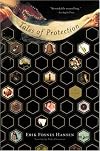
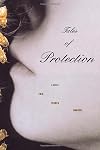
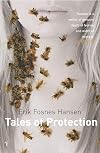
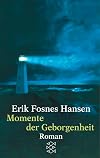
Tales of Protection
by Erik Fosnes Hansen
On This Page
Description
Tales of Protection is a novel about people in different places in different epochs -contemporary Norway, nineteenth-century Sweden, and Renaissance Italy -whose stories are bound together by the author's original and searching enquiry into why things happen the way they do.As the book opens, a dead man lies in his coffin reflecting on the past. Bolt was an eccentric scientist who devoted his old age to a vast research undertaking -collecting random incidents from the history of the species show more and finding the underlying pattern that connects them. This kind of hindsight, after all, must be a kind of heaven -or a kind of hell.His reveries lead him to tell two other tales -one of a doomed lighthouse keeper on a Swedish island and another of rivalry among Renassiance artists -and finally to tell a startling tale from his own early manhood. All of the tales, in his exquisitely suspenseful narration, demonstrate his theory of 'seriality', which is the opposite of causality.Erik Fosnes Hansen's Psalm at Journey's End was acclaimed as one of the most original works yet about the sinking of the Titanic. In Norway, Tales of Protection has been called a 'Blixenesque' masterpiece; it is a major new work of world literature, and a great leap forward for this gifted young writer. show lessTags
Recommendations
















Member Recommendations

Member Reviews
A magnificent read. Wonderfully articulate and fabulous prose and descriptions. I forced myself to read it thoroughly and luxuriate in the wonderful descriptive paragraphs. However, to say the least, an enigmatic book. Three main disconnected stories with a short ending that ties clearly into one of the 3 stories. But I didn't get it! But no matter.
The novel contains two long separate narratives within a framing narrative. These three stories occur in very different times and places (contemporary Norway, late C19 Sweden and late C15 Italy), and there is little surface connection between them, so it is a credit to the quality of the writing that one is drawn in and suffers little from the fairly abrupt endings of the narratives.
A theme is "seriality" -- concerned with the tendency of events to recur separated by time or space. This can be drawn out from the different threads to some extent, but the reader will lose little by just reading it through and not worrying about this. What stands out for me is intellectual content which is lively and readable, just what I'd hope for in a show more good novel. show less
A theme is "seriality" -- concerned with the tendency of events to recur separated by time or space. This can be drawn out from the different threads to some extent, but the reader will lose little by just reading it through and not worrying about this. What stands out for me is intellectual content which is lively and readable, just what I'd hope for in a show more good novel. show less
I'm a sucker for interlocking narratives, particularly if the transitions are either thought-provoking or clever, or finally fall into place with a resounding thunk. i'm 97% sure that this novels fits that category. The connections have to be discovered, for lack of a better word, it's not a novel that just tells you what it's about in the first couple pages and then goes on to elaborate. But maybe it does, since one of the things in the first story is the idea of circumstance and connection and coincidence and how one event can shape everything after it.
It's rare that i want to re-read a book immediately after finishing it, just to be able to concentrate on some other aspect of it, and I'm not going to do so, for fear of not enjoying show more it as much, but instead wait a bit. Cleanse the palate, as it were. The book has a weird sort of delicate mustiness to the language and I wonder if that stems from the translated nature of the text, if the flow was different in the original language, or if the original language possesses some flavor i'm entirely unaware of. show less
It's rare that i want to re-read a book immediately after finishing it, just to be able to concentrate on some other aspect of it, and I'm not going to do so, for fear of not enjoying show more it as much, but instead wait a bit. Cleanse the palate, as it were. The book has a weird sort of delicate mustiness to the language and I wonder if that stems from the translated nature of the text, if the flow was different in the original language, or if the original language possesses some flavor i'm entirely unaware of. show less
Masterful writing . Contains a long and to me riveting sequence on the preparation of a wood panel for painting inmedieval Italy
Fire beretninger der er bundet sammen af en egen, indre logik, selvom de udspilles henholdsvis i Norge i dag og for en menneskealder siden, i Italien i senmiddelalderen og på en svensk skærgårdsø i forrige århundrede
Sorry. I just didn't get it.
2005 Dolors / 2018 Santi
Oct 20, 2021Catalan
Members
- Recently Added By
Published Reviews
ThingScore 88
To make a multiplicity of coincidences at once startling and cohesive is an extraordinarily difficult task. In narrow terms, I do not think Hansen quite succeeds. The binding story, of Lea and her great-uncle, is too strange to possess the representative qualities that would justify the stories that follow. Both the supporting evidence for the book's theory, and the evocation of its different show more worlds, are accorded such a wealth of detail as to give the reader an often fatiguing sense of satiation.
These, however, are faults of presentation rather than imagination. Hansen is a writer of genuine depth of feeling and width of interest. show less
These, however, are faults of presentation rather than imagination. Hansen is a writer of genuine depth of feeling and width of interest. show less
added by SandraArdnas
The craft of 19th-century fiction and the complexity of 20th-century thought make this a gloriously rewarding novel.
added by SandraArdnas
Lists

BingoDOG - Scientists in Fiction
111 works; 17 members
Author Information

22+ Works 1,123 Members
Erik Fosnes Hansen, born in 1965, is the author of Psalm at Journey's End, a bestseller in Norway. He lives in Oslo
Some Editions
Awards and Honors
Awards
Series
Belongs to Publisher Series
Common Knowledge
- Canonical title*
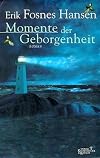
- Momente der Geborgenheit
- Original title
- Beretninger om beskyttelse
- Original publication date
- 1998
- Dedication*
- Für meine Mutter
- First words
- Life is a bird.
- Quotations
- For that is the nature of art, it can show both what is and is visible, and what is not and is invisible, along with all that will be but does not yet exist. For art requires imagination and inventiveness, in addition to a ... (show all)skilled hand and a sharp eye, and its task is to find new things hidden in Nature’s forms, grasp them firmly and explain them in such a way that one believes what one previously did not believe existed. And therefore it has as high a status as science, which deals with everything that is and is visible, but art goes beyond science.
- Last words
- (Click to show. Warning: May contain spoilers.)Life is a bird. And you are the branch that sways back and forth.
- Original language
- Norwegian
- Canonical DDC/MDS
- 839.82374
*Some information comes from Common Knowledge in other languages. Click "Edit" for more information.
Classifications
- Genres
- General Fiction, Fiction and Literature, Historical Fiction
- DDC/MDS
- 839.82374 — Literature & rhetoric German & related literatures Other Germanic literatures Danish and Norwegian literatures Norwegian literature Norwegian Bokmål fiction 1900–2000 Late 20th century 1945–2000
- LCC
- PT8951.18 .A569 .B4713 — Language and Literature German, Dutch and Scandinavian literatures Norwegian literature Individual authors or works 1961-2000
- BISAC
Statistics
- Members
- 302
- Popularity
- 106,238
- Reviews
- 7
- Rating
- (4.07)
- Languages
- 10 — Danish, Dutch, English, Finnish, German, Italian, Norwegian (Bokmål), Norwegian, Spanish, Swedish
- Media
- Paper, Ebook
- ISBNs
- 23
- ASINs
- 3