Pax Romana: War, Peace and Conquest in the Roman World
by Adrian Goldsworthy
On This Page
Description
Best-selling author Adrian Goldsworthy turns his attention to the Pax Romana, the famous peace and prosperity brought by the Roman Empire at its height in the first and second centuries AD. Yet the Romans were conquerors, imperialists who took by force a vast empire stretching from the Euphrates to the Atlantic coast. Ruthless, Romans won peace not through coexistence but through dominance; millions died and were enslaved during the creation of their empire. Pax Romana examines how the show more Romans came to control so much of the world and asks whether traditionally favorable images of the Roman peace are true. Goldsworthy vividly recounts the rebellions of the conquered, examining why they broke out, why most failed, and how they became exceedingly rare. He reveals that hostility was just one reaction to the arrival of Rome and that from the outset, conquered peoples collaborated, formed alliances, and joined invaders, causing resistance movements to fade away. show lessTags
Recommendations
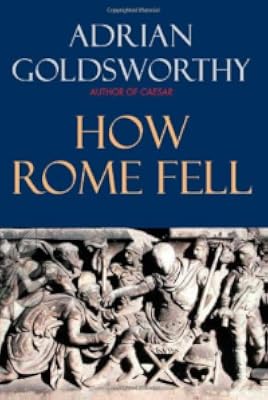
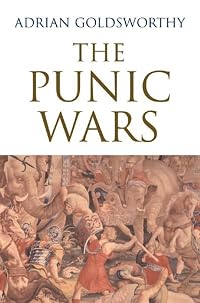
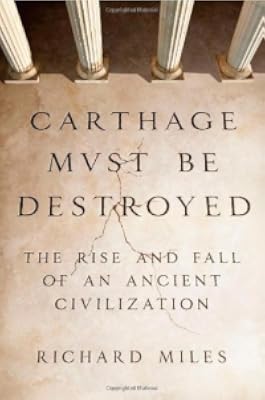
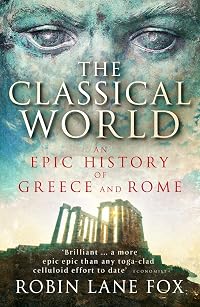







Member Recommendations
Member Reviews
3.5 stars for this well written, sprawling account of the Roman Peace through the centuries. I took my time with it, as this is not the sort of book you read cover to cover in one sitting. But as always with Goldsworthy, if you want to sit down and let him teach and show you things about Roman history, you'll come away with a better understanding. Recommended for Roman history nerds. We know who we are.
My kind of history book. Discussing the history of Romans running their empire in the context of their relationships with conquered people. Well structured, no pointless dates or minutiae.
The one annoying bit are the constant apologies on behalf of Romans and people in the past in general. Why does the author have to explain that violence is bad and he doesn't condone it? It's really sad that historians nowadays have to so afraid writing books about history. Being a historian in the west today is almost like being a historian in China. You have to be very careful writing about the past. Especially about the facts - these are most dangerous.
The one annoying bit are the constant apologies on behalf of Romans and people in the past in general. Why does the author have to explain that violence is bad and he doesn't condone it? It's really sad that historians nowadays have to so afraid writing books about history. Being a historian in the west today is almost like being a historian in China. You have to be very careful writing about the past. Especially about the facts - these are most dangerous.
Pax Romana is a comprehensive study of the Roman imperium through its phases of expansion and stability. Rome forms the model for our current understanding of imperial power, and the Romans were masters of both hard and soft power, going from one Iron Age city-state among many to unquestioned masters of the known world.
Roman expansion was driven by several related factors. The simplest was strength of arms. Roman legions were better drilled, better supplied, and had higher morale than comparable Mediterranean heavy infantry forces, leading to victories over their Italian neighbors, Gallic and Celtic tribes to the north, Seleucid Greeks to the east, and finally the Carthaginians.
Hard power achieved victories, but Roman soft power made show more them durable. Roman citizenship was surprisingly flexible and expansive, and granted to conquered peoples and allies. Latin, Roman dress and items, and Roman religion were prestigious, capturing local aristocratic cultures.
The third factor in expansion was the very idiosyncratic Roman republican political system, which in the words of a contemporary chronicler combined the best features of democracy, despotism, and aristocracy. Consuls and governors had the entire weight of the state behind them, but typically only a year in office, encouraging aggressive action by leaders posted to the frontier to demonstrate their accomplishments. Until the chaos of the civil war, this ambition was mostly directed outwards. Once the Republic was replaced by the Augustan principate, the borders became relatively fixed, and new provinces were rarely added.
Roman administration on the ground was surprisingly light. Senatorial governors and later Imperial legates travelled with small staffs, bolstered by friends and the ability to request support from the legions, who also served in variety of non-military roles. Cities were mostly governed under local laws, with Romans working with local magistrates. Cultural integration was a process of centuries.
Another aspect of this book is revolt and invasion. Many provinces experienced a revolt a generation or so after incorporation, which was invariably bloodily suppressed. Only Germany east of the Rhine was successful in breaking away. The province of Palestine was remarkable in revolting multiple times and being highly documented in doing so, given the relationship between Roman Jews and later Christianity, and conflicts between ardent monotheism and usually flexible imperial cult.
And finally, while the Roman border was very real, it was not exactly a rigid line as we might expect from modern borders. A military province, such as Germany, would have a line of forts and supporting settlements, a natural barrier such as a river, a depopulated zone, and then layers of allied tribes and kinds external to the border. The primary role of the border was to deter raiding, which was destructive to lives, property, and prestige. Even the imperial army had difficulty preventing all raids, but killing raiders as they retreated with their loot and organizing retaliatory raids was within the capabilities of distributed frontier forces. There was no strategic reserve in a modern sense. Romans expected that the time taken to gather up a major invading force would allow time for the legions to form up and meet in open battle, an expectation that held true into the 5th century. show less
Roman expansion was driven by several related factors. The simplest was strength of arms. Roman legions were better drilled, better supplied, and had higher morale than comparable Mediterranean heavy infantry forces, leading to victories over their Italian neighbors, Gallic and Celtic tribes to the north, Seleucid Greeks to the east, and finally the Carthaginians.
Hard power achieved victories, but Roman soft power made show more them durable. Roman citizenship was surprisingly flexible and expansive, and granted to conquered peoples and allies. Latin, Roman dress and items, and Roman religion were prestigious, capturing local aristocratic cultures.
The third factor in expansion was the very idiosyncratic Roman republican political system, which in the words of a contemporary chronicler combined the best features of democracy, despotism, and aristocracy. Consuls and governors had the entire weight of the state behind them, but typically only a year in office, encouraging aggressive action by leaders posted to the frontier to demonstrate their accomplishments. Until the chaos of the civil war, this ambition was mostly directed outwards. Once the Republic was replaced by the Augustan principate, the borders became relatively fixed, and new provinces were rarely added.
Roman administration on the ground was surprisingly light. Senatorial governors and later Imperial legates travelled with small staffs, bolstered by friends and the ability to request support from the legions, who also served in variety of non-military roles. Cities were mostly governed under local laws, with Romans working with local magistrates. Cultural integration was a process of centuries.
Another aspect of this book is revolt and invasion. Many provinces experienced a revolt a generation or so after incorporation, which was invariably bloodily suppressed. Only Germany east of the Rhine was successful in breaking away. The province of Palestine was remarkable in revolting multiple times and being highly documented in doing so, given the relationship between Roman Jews and later Christianity, and conflicts between ardent monotheism and usually flexible imperial cult.
And finally, while the Roman border was very real, it was not exactly a rigid line as we might expect from modern borders. A military province, such as Germany, would have a line of forts and supporting settlements, a natural barrier such as a river, a depopulated zone, and then layers of allied tribes and kinds external to the border. The primary role of the border was to deter raiding, which was destructive to lives, property, and prestige. Even the imperial army had difficulty preventing all raids, but killing raiders as they retreated with their loot and organizing retaliatory raids was within the capabilities of distributed frontier forces. There was no strategic reserve in a modern sense. Romans expected that the time taken to gather up a major invading force would allow time for the legions to form up and meet in open battle, an expectation that held true into the 5th century. show less
Really engaging and clearly written overview of the history of the Roman Empire, often giving the perspective of the individual soldiers, tribesmen and Roman administrators throughout the empire. Strongly recommended.
As always, a thorough and well researched study of ancient Rome. I personally did not find the topic as compelling as certain prior works, such as the biography of Caesar (in fairness few subjects match Caesar for interest level) - nonetheless this was a highly informative analysis of a topic rarely studied.
Given the nature of the subject, this work covers a huge swath of time, spanning from the end of the republic until the latter imperial era. Nonetheless, the author does his best to keep the narrative flowing by incorporating many concepts and supporting examples throughout the centuries.
Mr. Goldsworthy always presents his material objectively, devoid of ideology or personal bias. I recommend this book both novices and those with a show more firm background in the Republican or Imperial periods. show less
Given the nature of the subject, this work covers a huge swath of time, spanning from the end of the republic until the latter imperial era. Nonetheless, the author does his best to keep the narrative flowing by incorporating many concepts and supporting examples throughout the centuries.
Mr. Goldsworthy always presents his material objectively, devoid of ideology or personal bias. I recommend this book both novices and those with a show more firm background in the Republican or Imperial periods. show less
this book has a lot of information. It's not an easy read if you are new to Roman history. I found myself looking up info several times, but I'm now a smarter person for doing so....I think. :)
pretty thorough
Members
- Recently Added By
Published Reviews
ThingScore 100
"An engrossing account of how the Roman Empire grew and operated."
added by bookfitz
"In the introduction to this engaging and consistently informative assessment of the methods the ancient Romans used to expand and control their empire, Goldsworthy insists that he is not trying to draw lessons that might be useful to contemporary powers."
added by bookfitz
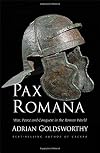
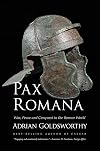
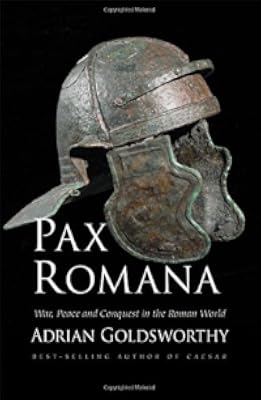
Adrian Goldsworthy’s Pax Romana represents a broad and reputable survey of the history of the Roman peace from roughly 150 BC to AD 235, with pax here seen not as a blissful moment of non-violence, but rather as a state of control established and continuously enforced by organized coercive force. It is worth highlighting at the start a few pitfalls into which such a work could easily show more descend. It could devolve into a ‘guts and glory’ military history narrating Rome’s conquests and imperial wars, with purple passages describing gladii carving through various aspects of human anatomy. The dust jacket provided by the press, featuring a handsome Imperial helmet, certainly seeks to appeal to those book buyers with a taste for old-school military history. show less
added by cinaedus
Lists

Books Read in 2019
4,052 works; 110 members
Author Information

41+ Works 9,370 Members
Adrian Goldsworthy is an award-winning historian of the classical world. He is the author of numerous books about ancient Rome, including Hadrian's Wall, Caesar, How Rome Fell, Pax Romana, and Augustus. Goldsworthy lives in South Wales.
Awards and Honors
Distinctions
Notable Lists
Common Knowledge
- Canonical title
- Pax Romana: War, Peace and Conquest in the Roman World
- Original title
- Pax Romana: War, Peace and Conquest in the Roman World
- Original publication date
- 2016
- Important places
- Rome, Italy; Roman Empire
- First words
- PREFACE
Pax Romana is one of those Latin expressions that journalists and cartoonists still expect their readers to understand without the need for translation, alongside tags such as mea culpa and Shak... (show all)espeare's 'et tu Brute'. - Last words
- (Click to show. Warning: May contain spoilers.)This is most certainly not a call for a new Roman Empire, and it is instead a reminder that so precious a thing as peace must be worked for.
- Blurbers
- Coates, Steven; Galinsky, Karl; Strauss, Barry; Massie, Allan; Lendon, J. E.
- Original language
- English
Classifications
- Genres
- History, Nonfiction, General Nonfiction
- DDC/MDS
- 937.06 — History & geography History of ancient world (to ca. 499) Italian Peninsula to 476 and adjacent territories to 476 Empire 31 B.C.-476 A.D.
- LCC
- DG276 .G65 — History of Europe, Asia, Africa and Oceania City History of Italy Ancient Italy. Rome to 476 History By period Empire, 27 B.C. - 476 A.D. Constitutional Empire, 27 B.C. - 284 A.D.
- BISAC
Statistics
- Members
- 642
- Popularity
- 45,412
- Reviews
- 7
- Rating
- (3.80)
- Languages
- Dutch, English, Polish, Spanish
- Media
- Paper, Audiobook, Ebook
- ISBNs
- 15
- ASINs
- 4