
Stephen Dando-Collins
Author of Caesar's Legion: The Epic Saga of Julius Caesar's Elite Tenth Legion and the Armies of Rome
About the Author
Stephen Dando-Collins is the Australian-born, multi-award-winning author of 45 books, many of which have been published around the world in numerous languages. He is considered an authority on the legions of ancient Rome, with his works covering ancient and modern history, biography, and children's show more novels. The bulk of his books deal with military history ranging from Greek, Persian and Roman times to American, British, and Australian 19th century history and World War Land World War II. He aims to travel roads that others have not, unearthing new facts and opening new perspectives on often-forgotten or overlooked individuals and aspects of history. show less
Series
Works by Stephen Dando-Collins
Caesar's Legion: The Epic Saga of Julius Caesar's Elite Tenth Legion and the Armies of Rome (2002) 356 copies, 8 reviews
Nero's Killing Machine: The True Story of Rome's Remarkable 14th Legion (2004) 122 copies, 2 reviews
Mark Antony's Heroes: How the Third Gallica Legion Saved an Apostle and Created an Emperor (2007) 96 copies, 1 review
Tycoon's War: How Cornelius Vanderbilt Invaded a Country to Overthrow America's Most Famous Military Adventurer (2008) 91 copies
Blood of the Caesars: How the Murder of Germanicus Led to the Fall of Rome (2008) 69 copies, 4 reviews
Operation Chowhound: The Most Risky, Most Glorious US Bomber Mission of WWII (2015) 66 copies, 12 reviews
Cleopatra's Kidnappers: How Caesars Sixth Legion Gave Egypt to Rome and Rome to Caesar (2006) — Author — 66 copies
Taking Hawaii: How Thirteen Honolulu Businessmen Overthrew the Queen of Hawaii in 1893, With a Bluff (2014) 31 copies, 1 review
Crack Hardy: From Gallipoli to Flanders to the Somme, the True Story of Three Australian Brothers at War (2011) 17 copies
PASTEUR'S GAMBIT : Louis Pasteur, the Australiasian Rabbit Plague and a Ten Million Dollar Prize (2008) 15 copies
Captain Bligh's Other Mutiny: The True Story of the Military Coup That Turned Australia Into a Two-Year Rebel Republic. (2007) 14 copies, 1 review
Constantice at the Bridge: How the Battle of the Milvian Bridge Created Christian Rome (2022) 8 copies
Tagged
Common Knowledge
- Birthdate
- 1950-05-01
- Gender
- male
- Education
- Launceston School of Art
- Occupations
- graphic designer
copywriter
creative director
marketing consultant
advertising agency executive
author (show all 7)
lecturer - Nationality
- Australia
- Birthplace
- Launceston, Tasmania, Australia
- Places of residence
- England, UK
Brisbane, Queensland, Australia
Sydney, New South Wales, Australia
Noosa, Queensland, Australia - Associated Place (for map)
- Australia
Members
Discussions
Stephen Dando-Collins' books on the Roman Legions in Ancient History (January 2009)
Reviews
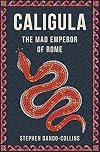
We think we know the story of Caligula, but as the author points out - we don’t, well not really.
With the exception of Josephus, none of the extant sources were alive at the time of Caligula’s principate, and some like Dio were writing a couple of hundred years later.
Furthermore, our view is inevitably influenced by Robert Graves’ I Claudius novel (which is after all based largely on the writings of Suetonius and Tacitus) and its nineteen seventies BBC adaptation, and also by some show more rather lurid Hollywood movies.
There’s also what I call the monk effect. The early medieval copyists copied the texts that they, or their sponsors found interesting or titillating, and so like the story of Theodora and the geese, the material that has survived is the more lurid.
The consequence is that we don’t really know Caligula at all.
Given the lack of contemporary sources, we possibly will never know Caligula, but what the author does is assemble what material is available, and summarising the latest scholarship, to try and produce a more balanced picture of his life, for example, the suggestion that he had an incestuous relationship with his sister is not borne out by any contemporary material and may well be a later calumny.
At the same time the book reads like a political thriller - despite having read and studied Roman history and archaeology for years I found the book compulsive reading, and while impeccably researched it is never overly dry and academic - definitely one worth reading ... show less
With the exception of Josephus, none of the extant sources were alive at the time of Caligula’s principate, and some like Dio were writing a couple of hundred years later.
Furthermore, our view is inevitably influenced by Robert Graves’ I Claudius novel (which is after all based largely on the writings of Suetonius and Tacitus) and its nineteen seventies BBC adaptation, and also by some show more rather lurid Hollywood movies.
There’s also what I call the monk effect. The early medieval copyists copied the texts that they, or their sponsors found interesting or titillating, and so like the story of Theodora and the geese, the material that has survived is the more lurid.
The consequence is that we don’t really know Caligula at all.
Given the lack of contemporary sources, we possibly will never know Caligula, but what the author does is assemble what material is available, and summarising the latest scholarship, to try and produce a more balanced picture of his life, for example, the suggestion that he had an incestuous relationship with his sister is not borne out by any contemporary material and may well be a later calumny.
At the same time the book reads like a political thriller - despite having read and studied Roman history and archaeology for years I found the book compulsive reading, and while impeccably researched it is never overly dry and academic - definitely one worth reading ... show less
 This review was written for LibraryThing Early Reviewers.
Caligula: The Mad Emperor of Rome is a sleek, focused account of events as we’ve been handed, running from the Rhine Revolt of 14 AD up to Caligula’s assassination in 41, followed by quick overviews of what came after with Claudius and Nero. Dando-Collins sets out to question whether the image we’ve been given of the depraved third Emperor of Rome is really a justified one, and whether it is or not, how it continues to shock and inform our lives even today.
My hat’s off to the author show more for even picking the subject to begin with. This era is one of the most controversial and trying to weed impartial facts out of the biased hyperbole in our late sources is a pretty thankless task. The rare archaeological find can push back small bits of darkness and doubt—and Dando-Collins luckily has some of these to work with like the newly uncovered cryptoporticus where Caligula died—but when it comes to guessing true character and intent? It’s all a matter of subjective interpretation, with little chance of consensus about what the “truth” is.
HANDLING THE SOURCES
Dando-Collins's plan to handle the sources carefully without just dismissing them as completely useless is, I feel, a good one. And with this in mind, he tightly marshals the events and sources, such as they are, into an entertaining, fast-paced narrative. The majority of speculation and analysis is saved for after Caligula becomes emperor, when the more stunning accusations come into play.
This tight focus, however, can sometimes work against the book. While there are some attempts to clear away the decadent mythology around Caligula, the other important people are rarely given the same benefit of the doubt, even when the actions described are from the more sensational sources. Tiberius is one of the major examples here with the sexual depravities assigned to him by Suetonius stated as if they aren’t the subject of heated dispute.
Obviously, to expect Dando-Collins to list each accusation and why he found it believable or not would be madness, to say nothing of tedious. However, this and many other examples throughout the text are areas behind which I'd have been very interested to know the author’s reasoning. What is it about these things claims in particular that strike him as credible? Is there some other record that makes it believable when so much else from the same sources is questioned? Is it just a feeling?
Whatever the conclusion was, I would have liked to know more about his thinking process and without it I felt I was only getting a small fraction of the whole story. Sure, Caligula is the focus, but these are people who impacted him in so many different ways and shaped his life so powerfully. Trying to clarify the possible distortions cast on them would not only add more flesh, but could only help when tackling Caligula himself.
METHOD OR MADNESS?
In the places where there is exploration, Dando-Collins convincingly argues method over madness. The practical explanation given for Caligula’s infamous ride across the Bay of Puteoli, for example, goes against the image of a vanity project undertaken to support the divine delusions of a vain madman. Likewise, his troubled attempts to launch a campaign against Britain culminating in his “war on the sea” are given rational possibilities. I was also fascinated to learn about the projects commonly ascribed to Claudius that were actually begun by Caligula in his effort to leave a legacy of progress and innovation and many other things I hadn’t known.
On the other hand, there are times where allegations from sources that are questioned elsewhere are passed over with little or no explanation, as mentioned above. Again, I don't expect Dando-Collins to give an explanation for each accusation and I don't doubt some of it is true. I just would have liked to know why certain parts of the records struck him as less subject to hyperbole than others.
Mercifully, in all of this there’s no effort to recast Caligula as a maligned champion of the Roman people against the corrupt elite. His paranoia and cruelty are never denied. Dando-Collins does explore more deeply the question of whether he was insane or merely corrupted by power in the second-to-last chapter, and after giving briefly summarizing and dismissing some of the theories, lands conclusively on one in particular. Whether you agree with it or not is obviously going to depend on your point of view.
Overall, I feel I did come out with a better image of Caligula and his foibles.
THE LAST CHAPTER
The chapter tucked away at the very end goes over Caligula's journalistic relationship to Trump, and whether the claims made are fair to either person.
I can't say I was looking forward to this chapter. Every author and text is subject to their own context in time and space, none can truly escape that. While understanding that, however, I'm personally pretty picky about modern references in biographies of the past. Sometimes they're useful and can illuminate the subject for a modern audience. Labeling Germanicus and Agrippina as the JFK & Jackie or Harry & Meghan Markle of their day, for instance, instantly conveys the impact they had on Roman society. Other times, the comparison IS the subject, which can illuminate our present as well as our past.
As it is, this particular example delivers a fast analysis listing point-by-point similarities and differences observed between the two men. Here and there I encountered an interesting tidbit (the on-going symbolism of the handshake into the modern era, for instance), but the chapter inevitably ends in the safe and predictable consignment of the matter to time.
Unfortunately, one of the dangers of tackling a subject like this is also that it’s an ongoing one that's evolving even as we speak, and that tends to speed up the process by which a work becomes dated. With neither subject really earning anything new out of it, it feels to be the case here.
In the end, a chapter that discussed Caligula's enduring legacy on our world and culture overall might have been more interesting, as opposed to a brief, inconclusive summary of the journalistic branding of one particular man. But, if the chapter as it is is of little interest to a reader, at least it can be safely skipped by those who'd rather just focus on the main subject without missing anything of the rest of the book. I don’t know that those who are interested, no matter where you stand on the issue, will be satisfied either.
IS IT RECOMMENDED?
Those who are well-versed in the book’s subject matter and who may be looking for a more thorough treatment of not just Caligula but the times he lived in and the people who surrounded him will probably be impatient with this book. I’m not an expert on Rome’s third emperor, but even for me there were parts that I knew weren’t as simple or decided as they were made to seem.
However, it's a fast-paced digestible account of events that I would recommend to those just beginning to dip their toe into Roman history or Caligula and his conflicted legacy. The many ancient sources are brought together to tell a cohesive and entertaining story. However, I'd throw in a word of caution that there are some errors, a lot of stones remain un-turned, and it can be a bit deceptive about what is considered definite or not.
It was a mixed bag, but still, for being my first biography of Caligula, I learned a lot I hadn’t known before.
FINAL RATING: 3.4 stars show less
My hat’s off to the author show more for even picking the subject to begin with. This era is one of the most controversial and trying to weed impartial facts out of the biased hyperbole in our late sources is a pretty thankless task. The rare archaeological find can push back small bits of darkness and doubt—and Dando-Collins luckily has some of these to work with like the newly uncovered cryptoporticus where Caligula died—but when it comes to guessing true character and intent? It’s all a matter of subjective interpretation, with little chance of consensus about what the “truth” is.
HANDLING THE SOURCES
Dando-Collins's plan to handle the sources carefully without just dismissing them as completely useless is, I feel, a good one. And with this in mind, he tightly marshals the events and sources, such as they are, into an entertaining, fast-paced narrative. The majority of speculation and analysis is saved for after Caligula becomes emperor, when the more stunning accusations come into play.
This tight focus, however, can sometimes work against the book. While there are some attempts to clear away the decadent mythology around Caligula, the other important people are rarely given the same benefit of the doubt, even when the actions described are from the more sensational sources. Tiberius is one of the major examples here with the sexual depravities assigned to him by Suetonius stated as if they aren’t the subject of heated dispute.
Obviously, to expect Dando-Collins to list each accusation and why he found it believable or not would be madness, to say nothing of tedious. However, this and many other examples throughout the text are areas behind which I'd have been very interested to know the author’s reasoning. What is it about these things claims in particular that strike him as credible? Is there some other record that makes it believable when so much else from the same sources is questioned? Is it just a feeling?
Whatever the conclusion was, I would have liked to know more about his thinking process and without it I felt I was only getting a small fraction of the whole story. Sure, Caligula is the focus, but these are people who impacted him in so many different ways and shaped his life so powerfully. Trying to clarify the possible distortions cast on them would not only add more flesh, but could only help when tackling Caligula himself.
METHOD OR MADNESS?
In the places where there is exploration, Dando-Collins convincingly argues method over madness. The practical explanation given for Caligula’s infamous ride across the Bay of Puteoli, for example, goes against the image of a vanity project undertaken to support the divine delusions of a vain madman. Likewise, his troubled attempts to launch a campaign against Britain culminating in his “war on the sea” are given rational possibilities. I was also fascinated to learn about the projects commonly ascribed to Claudius that were actually begun by Caligula in his effort to leave a legacy of progress and innovation and many other things I hadn’t known.
On the other hand, there are times where allegations from sources that are questioned elsewhere are passed over with little or no explanation, as mentioned above. Again, I don't expect Dando-Collins to give an explanation for each accusation and I don't doubt some of it is true. I just would have liked to know why certain parts of the records struck him as less subject to hyperbole than others.
Mercifully, in all of this there’s no effort to recast Caligula as a maligned champion of the Roman people against the corrupt elite. His paranoia and cruelty are never denied. Dando-Collins does explore more deeply the question of whether he was insane or merely corrupted by power in the second-to-last chapter, and after giving briefly summarizing and dismissing some of the theories, lands conclusively on one in particular. Whether you agree with it or not is obviously going to depend on your point of view.
Overall, I feel I did come out with a better image of Caligula and his foibles.
THE LAST CHAPTER
The chapter tucked away at the very end goes over Caligula's journalistic relationship to Trump, and whether the claims made are fair to either person.
I can't say I was looking forward to this chapter. Every author and text is subject to their own context in time and space, none can truly escape that. While understanding that, however, I'm personally pretty picky about modern references in biographies of the past. Sometimes they're useful and can illuminate the subject for a modern audience. Labeling Germanicus and Agrippina as the JFK & Jackie or Harry & Meghan Markle of their day, for instance, instantly conveys the impact they had on Roman society. Other times, the comparison IS the subject, which can illuminate our present as well as our past.
As it is, this particular example delivers a fast analysis listing point-by-point similarities and differences observed between the two men. Here and there I encountered an interesting tidbit (the on-going symbolism of the handshake into the modern era, for instance), but the chapter inevitably ends in the safe and predictable consignment of the matter to time.
Unfortunately, one of the dangers of tackling a subject like this is also that it’s an ongoing one that's evolving even as we speak, and that tends to speed up the process by which a work becomes dated. With neither subject really earning anything new out of it, it feels to be the case here.
In the end, a chapter that discussed Caligula's enduring legacy on our world and culture overall might have been more interesting, as opposed to a brief, inconclusive summary of the journalistic branding of one particular man. But, if the chapter as it is is of little interest to a reader, at least it can be safely skipped by those who'd rather just focus on the main subject without missing anything of the rest of the book. I don’t know that those who are interested, no matter where you stand on the issue, will be satisfied either.
IS IT RECOMMENDED?
Those who are well-versed in the book’s subject matter and who may be looking for a more thorough treatment of not just Caligula but the times he lived in and the people who surrounded him will probably be impatient with this book. I’m not an expert on Rome’s third emperor, but even for me there were parts that I knew weren’t as simple or decided as they were made to seem.
However, it's a fast-paced digestible account of events that I would recommend to those just beginning to dip their toe into Roman history or Caligula and his conflicted legacy. The many ancient sources are brought together to tell a cohesive and entertaining story. However, I'd throw in a word of caution that there are some errors, a lot of stones remain un-turned, and it can be a bit deceptive about what is considered definite or not.
It was a mixed bag, but still, for being my first biography of Caligula, I learned a lot I hadn’t known before.
FINAL RATING: 3.4 stars show less
This review was written for LibraryThing Early Reviewers.I received a copy in return for an honest review.
This book is chockablock full of interesting facts and covers Caligula’s life with shorter overviews of his father’s and his successor’s. Dando-Collins is obviously a very versed and through Caligula researcher.
Personally, I would have liked a more dramatic telling of some of these unbelievable tales, but maybe that is why I normally read novelizations more than straight non-fiction.
I am not sure I agree with his conclusions about show more Caligula’s mental health, but it is hard enough to diagnose someone alive now, near impossible to diagnose someone from 2000 years ago.
Normally I wouldn’t read about a historical character and try to find a modern day equivalent, but Dando-Collins states at the beginning that he wants to compare and contrast the emperor with President Trump. This meant I was comparing and contrast the figures throughout the book. And I have to say, I don’t see them as the same. They may share some narcissist qualities, but Caligula is just an entire order of magnitude worse than our President.
Anyway, it is worth the read if you are interested in a comprehensive biography of the mad emperor at only 277 pages. And you will understand why he was assassinated after only 4 years. show less
This book is chockablock full of interesting facts and covers Caligula’s life with shorter overviews of his father’s and his successor’s. Dando-Collins is obviously a very versed and through Caligula researcher.
Personally, I would have liked a more dramatic telling of some of these unbelievable tales, but maybe that is why I normally read novelizations more than straight non-fiction.
I am not sure I agree with his conclusions about show more Caligula’s mental health, but it is hard enough to diagnose someone alive now, near impossible to diagnose someone from 2000 years ago.
Normally I wouldn’t read about a historical character and try to find a modern day equivalent, but Dando-Collins states at the beginning that he wants to compare and contrast the emperor with President Trump. This meant I was comparing and contrast the figures throughout the book. And I have to say, I don’t see them as the same. They may share some narcissist qualities, but Caligula is just an entire order of magnitude worse than our President.
Anyway, it is worth the read if you are interested in a comprehensive biography of the mad emperor at only 277 pages. And you will understand why he was assassinated after only 4 years. show less
This review was written for LibraryThing Early Reviewers.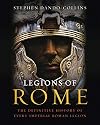
Over a dinner many years ago, I had discussion with an ex-army officer friend who was a would-be military reformer. There were a number of such people in the Washington of that day, as the Cold War Soviet enemy no longer existed, and the grinding Middle Eastern adventures of America had yet to occur. He had a number of what I found to be interesting ideas, one of which involved recruitment. In Britain today, combat regiments recruit from a specific area, not necessarily from the whole of a show more country. This leads to greater cohesion and unit pride. I found this an intriguing suggestion that the US might benefit from looking into. I knew that the Roman Army had done something similar, but I couldn’t point him to one place that would have that information. Stephen Dando-Collins has now provided us that resource.
Building on earlier works by Lawrence Keppie and Graham Webster, Mr. Dando-Collins has put in one place an account of each of the “classic” Roman legions, from Augustus to the Severans. Later anarchy period, Diocletianic and Constantinian legions are not covered, except as to how they were intertwined with the earlier legions.
The book is divided into three sections. The first covers the organization, equipment and operation of the Roman Army, primarily of the First, Second and early Third Centuries. The structure, pay grades, daily life and some of the tactics and equipment are described. Other “branches” of the Roman military, such as the navy and auxiliaries are covered here as well. It’s a good basic introduction.
The second-what I found most interesting-was the histories of each legion. The account of each begins with a table explaining the titles the legion may or may not have, the emblem, foundation, recruiting area, postings, battle honors and famous commanders. There is a short biography of each legion, sometimes longer if the author has a theory he lays out about the identity of the legion. Some of these are controversial, as in his identification of X Fretensis as Caesar’s famed X Legion.
But the area of greatest controversy in my mind was the first thing I noticed with I opened the book-the shield emblems. Traditionally, following the examples seen on Trajan’s Column in Rome, it was assumed that the shield emblems of the legions were more or less standardized into the lightning bolts and eagle’s wings seen in so many artists renditions and re-enactors’ equipment. Dando-Collins, following Keppie, disagrees with this, using as evidence some tantalizing tidbits of archeological findings and some numismatic evidence. I don’t think the case is closed, and barring more archeological data, I think this will remain an open question.
The third portion of the book is a history of the various campaigns that we can definitively place the legions in. Thus, it precludes some famous campaigns where we don’t have evidence that there are pre-235 legions involved, such as Julian’s disastrous Persian invasion. The accounts are written in a stand-alone fashion, so one doesn’t have to read them consecutively. Mr. Dando-Collins’ other life as a novelist serves him well here, as the accounts are extremely well written and colorful.
Despite the fact that the end of the Empire is perhaps the most talked about topic in “the history of history”, sometimes taking a different tack with it drives the point home in a way just blandly reading about it does not. Reading Dando-Collins’ brief account of Stilicho calling the VI Victrix from York where it had been for three hundred years to Italy to save it from the Goths, only to be destroyed shortly after is a depressing reminder that nothing is forever. A legion raised by Pompey to defend the Republic, it served first in the Civil War between Caesar and Pompey, then on Octavian’s side against Antony, then in the Cantabrian War finally subjugating North-West Spain, then in brief civil war of 69 and the Civilis Uprising of 70, then in the Dacian Wars, then rushed to Britain to reinforce after the disappearance of the XI Legion, finally to return home in a different world and different time, there meeting it's demise. Tempus fugit, memento mori… show less
Building on earlier works by Lawrence Keppie and Graham Webster, Mr. Dando-Collins has put in one place an account of each of the “classic” Roman legions, from Augustus to the Severans. Later anarchy period, Diocletianic and Constantinian legions are not covered, except as to how they were intertwined with the earlier legions.
The book is divided into three sections. The first covers the organization, equipment and operation of the Roman Army, primarily of the First, Second and early Third Centuries. The structure, pay grades, daily life and some of the tactics and equipment are described. Other “branches” of the Roman military, such as the navy and auxiliaries are covered here as well. It’s a good basic introduction.
The second-what I found most interesting-was the histories of each legion. The account of each begins with a table explaining the titles the legion may or may not have, the emblem, foundation, recruiting area, postings, battle honors and famous commanders. There is a short biography of each legion, sometimes longer if the author has a theory he lays out about the identity of the legion. Some of these are controversial, as in his identification of X Fretensis as Caesar’s famed X Legion.
But the area of greatest controversy in my mind was the first thing I noticed with I opened the book-the shield emblems. Traditionally, following the examples seen on Trajan’s Column in Rome, it was assumed that the shield emblems of the legions were more or less standardized into the lightning bolts and eagle’s wings seen in so many artists renditions and re-enactors’ equipment. Dando-Collins, following Keppie, disagrees with this, using as evidence some tantalizing tidbits of archeological findings and some numismatic evidence. I don’t think the case is closed, and barring more archeological data, I think this will remain an open question.
The third portion of the book is a history of the various campaigns that we can definitively place the legions in. Thus, it precludes some famous campaigns where we don’t have evidence that there are pre-235 legions involved, such as Julian’s disastrous Persian invasion. The accounts are written in a stand-alone fashion, so one doesn’t have to read them consecutively. Mr. Dando-Collins’ other life as a novelist serves him well here, as the accounts are extremely well written and colorful.
Despite the fact that the end of the Empire is perhaps the most talked about topic in “the history of history”, sometimes taking a different tack with it drives the point home in a way just blandly reading about it does not. Reading Dando-Collins’ brief account of Stilicho calling the VI Victrix from York where it had been for three hundred years to Italy to save it from the Goths, only to be destroyed shortly after is a depressing reminder that nothing is forever. A legion raised by Pompey to defend the Republic, it served first in the Civil War between Caesar and Pompey, then on Octavian’s side against Antony, then in the Cantabrian War finally subjugating North-West Spain, then in brief civil war of 69 and the Civilis Uprising of 70, then in the Dacian Wars, then rushed to Britain to reinforce after the disappearance of the XI Legion, finally to return home in a different world and different time, there meeting it's demise. Tempus fugit, memento mori… show less
Lists
Awards


You May Also Like


Associated Authors
Statistics
- Works
- 44
- Members
- 1,752
- Popularity
- #14,678
- Rating
- 3.7
- Reviews
- 53
- ISBNs
- 173
- Languages
- 5
