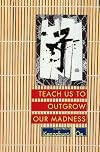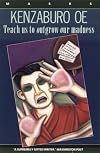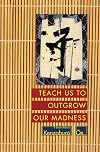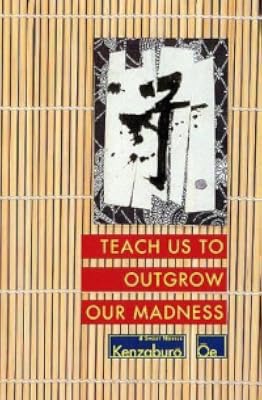
Teach Us to Outgrow Our Madness: Four Short Novels
by Kenzaburō Ōe
On This Page
Description
Kenzaburō Ōe was ten when American soldiers entered his mountain village during World War II, and his writing "reveals the tension and ambiguity forged by the collapse of the values of his childhood on the one hand and the confrontation with American writers on the other ... [His] heroes have been expelled from the certainty of childhood, into a world that bears no relation to their past"--Back cover. "These four novels display Oe's passionate and original vision. Oe was ten when show more American jeeps first drove into the mountain village where he lived, and his literary work reveals the tension and ambiguity forged by the collapse of values of his childhood on the one hand and the confrontation with American writers on the other. The earliest of his novels included here, Prize Stock, reveals the strange relationship between a Japanese boy and a captured black American pilot in a Japanese village. Teach Us to Outgrow Our Madness tells of the close relationship between an outlandishly fat father and his mentally defective son, Eeyore. Aghwee the Sky Monster is about a young man's first job -- chaperoning a banker's son who is haunted by the ghost of a baby in a white nightgown. The Day He Himself Shall Wipe My Tears Away is the longest piece in this collection and Oe's most disturbing work to date. The narrator lies in a hospital bed waiting to die of a liver cancer that he has probably imagined, wearing a pair of underwater goggles covered with dark cellophane."--Amazon.com. show lessTags
Recommendations




Member Reviews
THIS IS A REVIEW OF THE TITULAR NOVELLA, EXCLUSIVE OF SUNDRY FELLOWTRAVELLERS COLLECTED HEREIN
This book gutted me, and when I tell you now before you read it that it is obviously informed by (I will not say based on) Kenzaburo Ōe's relationship with his autistic son Hikari ("light"), I suspect it will gut you too. It's a father–son story set against Ōe's frequent narrative safety net of distant fathers grappling with their demons, caring-malevolent mothers doing cruel things to protect the ecological health of the family unit, sons trying to bring out the howls of anguish within them, irrelevant wives, etc. Here, that is the background (roughly speaking, though it busts out at the end per below), and rotundly in the foreground is a show more fat man (never just "the man," always "the fat man") who wants so much to communicate with his developmentally disabled (and also fat) son that he convinces himself he can feel his thoughts/fears/pain and communicate with him through the skin-to-skin bond formed their big and little, damp and sticky hands. This is a story about their adventures on the subway and at the noodle shop and with the optometrist and in the polar bear enclosure, and if you have ever wept with longing to have a little one to love or sat gobsmacked by your perfect child (I have done both), what happens to break their bond in the end will act as a sobering tonic to all those overwrought feelings and remind you that no new life is a a blank slate, there's never just two people in the room, that no matter how much we might be tempted to disappear into a brave new dyadic world where none of "that other stuff" counts and LOVE OUR KID RIGHT, every parent is always (already) also a child, sibling, lover, friend and foe ... ad nauseam! show less
This book gutted me, and when I tell you now before you read it that it is obviously informed by (I will not say based on) Kenzaburo Ōe's relationship with his autistic son Hikari ("light"), I suspect it will gut you too. It's a father–son story set against Ōe's frequent narrative safety net of distant fathers grappling with their demons, caring-malevolent mothers doing cruel things to protect the ecological health of the family unit, sons trying to bring out the howls of anguish within them, irrelevant wives, etc. Here, that is the background (roughly speaking, though it busts out at the end per below), and rotundly in the foreground is a show more fat man (never just "the man," always "the fat man") who wants so much to communicate with his developmentally disabled (and also fat) son that he convinces himself he can feel his thoughts/fears/pain and communicate with him through the skin-to-skin bond formed their big and little, damp and sticky hands. This is a story about their adventures on the subway and at the noodle shop and with the optometrist and in the polar bear enclosure, and if you have ever wept with longing to have a little one to love or sat gobsmacked by your perfect child (I have done both), what happens to break their bond in the end will act as a sobering tonic to all those overwrought feelings and remind you that no new life is a a blank slate, there's never just two people in the room, that no matter how much we might be tempted to disappear into a brave new dyadic world where none of "that other stuff" counts and LOVE OUR KID RIGHT, every parent is always (already) also a child, sibling, lover, friend and foe ... ad nauseam! show less
As most books sit on my list until I can go into them with no expectations, I was prepared just to read some new stories. However, the introduction first drops a 'charming' story about the author walking up to a colleague's wife and calling her a c***, excerpts some of the most racial moments of the book, and then explains the very first piece is so private and difficult to follow that most people never finish it. Way to whet my appetite! I debated not bothering and then settled on starting at the second story. Here at the end I can say that was good preparation, because these are intense, inward, ugly stories. There's a realism that I appreciate, but I'm not running out to buy more of his work.
this is the most lovable book. it's harsh, obsessive, and specific, beautifully written.
Wow! This was an exceedingly challenging read, especially The Day He Himself Shall Wipe Away My Tears. I enjoyed all 4 novellas and that they shared some thematic similarities. Particularly, strained and damaged relationships between sons and fathers, and the process of spinning towards insanity. Prize Stock was my favorite and the most accessible. I'm not sure this collection would appeal to "most" people but it you've read other Oe works, can make your way through Faulkner or similar, then this might be for you.
I've not yet read the 1st novella in this book. I may revisit it later. The 4/5 star rating is for the rest of this collection:
"Prize Stock": my favorite; a strange and powerful tale that really resonated with me. 5/5
"Teach Us to Outgrow Our Madness": strange is just the beginning here. But there is tenderness here too. The ending wasn't as satisfying as I'd hoped, but the writing is solid. 3.5/5
"Aghwee the Sky Monster": really good story. 3.5/5
"Prize Stock": my favorite; a strange and powerful tale that really resonated with me. 5/5
"Teach Us to Outgrow Our Madness": strange is just the beginning here. But there is tenderness here too. The ending wasn't as satisfying as I'd hoped, but the writing is solid. 3.5/5
"Aghwee the Sky Monster": really good story. 3.5/5
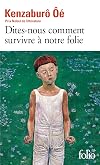
”Dites-nous comment survivre à notre folie” de Kenzaburo Oe (Prix Nobel de Littérature 1994) regroupe quatre nouvelles d’inspiration autobiographique. Difficile enfance dans le Japon en guerre, relations complexes avec père, mère et fils, coexistence et entremêlement du mythe, du rêve, de la folie et du souvenir. Des textes denses et exigeants qui plongent le lecteur dans un univers sans concession, à la violence latente et toujours au bord de l’aliénation.
Jun 3, 2018French
Pour l'instant je n'ai lu que la nouvelle éponyme... Très bonne... Sur un père abandonné qui s'occupe de son fils handicapé mental.
Aug 31, 2014French
Members
- Recently Added By
Lists

The Guardian's 1000 Novels Everyone Must Read
1,005 works; 550 members

Japanese Literature
230 works; 40 members
Author Information

138+ Works 8,385 Members
Kenzaburo Oe was born on January 31, 1935. He was born in a small village on the island of Shikoku, Japan. A winner of numerous Japanese literary prizes, Oe came to manhood during World War II and the occupation. At Tokyo University, Oe studied Jean-Paul Sartre and absorbed many popular leftist ideas. These influences appear in his early writings, show more which often deal with contemporary issues. With the birth of his deformed son, father and son became the new focus of his work. In his two books, A Personal Matter (1964) and A Healing Family (1996), Oe describes the pain involved with accepting his brain-damaged son and the small victories involved their lives as his son progressed. In 1994, Oe won the Nobel Prize for Literature. (Bowker Author Biography) show less
Some Editions
Awards and Honors
Series
Belongs to Publisher Series
Work Relationships
Common Knowledge
- Canonical title
- Teach Us to Outgrow Our Madness: Four Short Novels
- Original title
- われらの狂気を生き延びる道を教えよ
- Original publication date
- 1969 (original Japanese) (original Japanese); 1977 (English: Nathan) (English: Nathan)
Classifications
- Genres
- Fiction and Literature, General Fiction
- DDC/MDS
- 813 — Literature & rhetoric American literature in English American fiction in English
- LCC
- PL858 .E14 .T433 — Language and Literature Languages and literatures of Eastern Asia, Africa, Oceania Languages of Eastern Asia, Africa, Oceania Japanese language and literature Japanese literature Individual authors and works
- BISAC
Statistics
- Members
- 645
- Popularity
- 44,774
- Reviews
- 8
- Rating
- (3.87)
- Languages
- English, French, Italian, Japanese
- Media
- Paper, Ebook
- ISBNs
- 14
- ASINs
- 1