On This Page
Description
In this tribute to teachers everywhere. McCourt records the trials, triumphs and surprises he faces in public high schools around New York City. His methods anything but conventional, McCourt creates a lasting impact on his students through imaginative assignments, singalongs and field trips. As he struggles to find his way in the classroom, he spends his evenings drinking with writers and dreaming of one day putting his own story to paper. The book shows McCourt developing his ability to show more tell a great story as he works to gain the attention and respect of unruly or indifferent adolescents. His rocky marriage, his failed attempt to get a Ph.D. at Trinity College, Dublin, and his repeated firings due to his propensity to talk back to his superiors ironically lead him to New York's most prestigious school, Stuyvesant High School, where he finally finds a place and a voice.--From publisher description. show lessTags
Recommendations
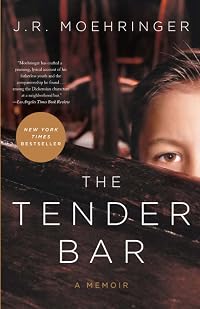
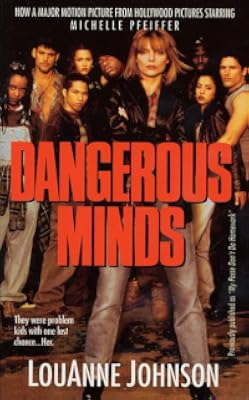
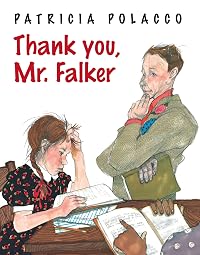
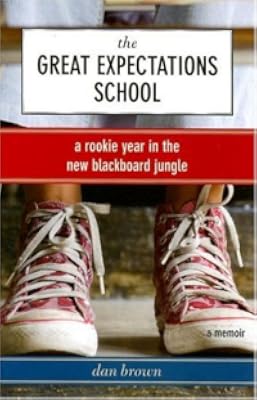


Member Recommendations
Member Reviews
I enjoyed Frank McCourt’s childhood biography, Angela’s Ashes, but never bothered to pick up ’Tis, so I wasn’t sure if I would find any coherent link between the child of Ireland and America, and the teacher of American children… McCourt, however, brought his whole life to his teaching experiences, and his memoir of those years is a moving, (if directionless), wholly worthwhile read. I could have spent a lot longer reading about the first 8 years of his career, because his floundering and occasional flashes of brilliance made for fascinating reading.
I was especially moved by the respect and appreciation he granted the pupils that graced his classrooms, even those that tested his early, fledgling teaching ability beyond its show more limits. I admit I expected something much more cynical from a retired teacher, but McCourt’s cynicism is reserved for his own life, bringing the internal Catholic guilt down upon himself for not somehow knowing or achieving what he wanted to do with his life – this despite having obviously done it, then and later, and quite successfully, at that. show less
I was especially moved by the respect and appreciation he granted the pupils that graced his classrooms, even those that tested his early, fledgling teaching ability beyond its show more limits. I admit I expected something much more cynical from a retired teacher, but McCourt’s cynicism is reserved for his own life, bringing the internal Catholic guilt down upon himself for not somehow knowing or achieving what he wanted to do with his life – this despite having obviously done it, then and later, and quite successfully, at that. show less
I was delighted to find this book at Borders, mainly coz I’ve read his other two, Angela’s Ashes and Tis. McCourt is the kind of author who test your patience. He’s not the kind who throws too many things at you in the first three chapters, almost challenging you to put it down if you didn’t have enough faith in him. But should you persevere, you will be duly rewarded, for McCourt is a late bloomer, as he would tell his readers repeatedly. You’d think that there’s no hope for him as he laments his string of misfortunes, one of it having to be born Irish, but rising above and beyond all stereotype and eventually making his mark as an accomplished author.
McCourt doesn’t write fiction, at least I have come to conclude. He show more writes his memoirs, his childhood growing up in Limerick though he was born in New York. Returning to America, he was cast as an outsider, a bitter irony that he resented deeply though that did not stop him. He finally became an English teacher, teaching high school kids about a language that they have taken for granted. If that wasn’t hard enough he had teenage angst, rebellion and lack of ambition to contend with. But McCourt pulled through and there were many moments in this book that reaffirmed his career choice, for like his students, he knows what it feels like to be a misfit, never quite blending into the background and finding that everything is one big struggle.
I took this book with me when I went away for work. Since I had many moments to myself, I found myself easily drawn into McCourt’s world. I saw him working at the docks to pay through his college education. I felt like I was in his class when he was trying to describe sentence structure aided by a ballpoint pen. I wished I was there when his students read recipes from cookbooks to the tune of various musical instruments, thus a reading of Eggs Benedict was elevated into an opus of some kind.
Read this if you’re a McCourt fan, or if you’re a teacher wanting a shot of inspiration. Or simply if like McCourt, you’re a tough mick trying to make it through but finding it hard and the whole world is against you. McCourt doesn’t use big words, or vague analogies to drive his message. Instead they’re everyday scenes, proving that greatness is achieved not through ingenuity or that rare streak of talent, but through sheer perseverance and finding inspiration in ourselves and within each other. show less
McCourt doesn’t write fiction, at least I have come to conclude. He show more writes his memoirs, his childhood growing up in Limerick though he was born in New York. Returning to America, he was cast as an outsider, a bitter irony that he resented deeply though that did not stop him. He finally became an English teacher, teaching high school kids about a language that they have taken for granted. If that wasn’t hard enough he had teenage angst, rebellion and lack of ambition to contend with. But McCourt pulled through and there were many moments in this book that reaffirmed his career choice, for like his students, he knows what it feels like to be a misfit, never quite blending into the background and finding that everything is one big struggle.
I took this book with me when I went away for work. Since I had many moments to myself, I found myself easily drawn into McCourt’s world. I saw him working at the docks to pay through his college education. I felt like I was in his class when he was trying to describe sentence structure aided by a ballpoint pen. I wished I was there when his students read recipes from cookbooks to the tune of various musical instruments, thus a reading of Eggs Benedict was elevated into an opus of some kind.
Read this if you’re a McCourt fan, or if you’re a teacher wanting a shot of inspiration. Or simply if like McCourt, you’re a tough mick trying to make it through but finding it hard and the whole world is against you. McCourt doesn’t use big words, or vague analogies to drive his message. Instead they’re everyday scenes, proving that greatness is achieved not through ingenuity or that rare streak of talent, but through sheer perseverance and finding inspiration in ourselves and within each other. show less
The author of Angela's Ashes brings us his self-deprecating reflections on a 30 year teaching career. Early on, he laments that teaching-college doesn't prepare you at all for dealing with a real high school classroom. High minded theories of pedogogy don't matter if you can't get the respect and attention of a room full of teenagers that have been in school going on 12 years straight.
His constant self-doubting is incredibly human. He has story after story that recaptures the mental haze of forging his own path. His best moments didn't come because he was a genious and a natural, but because he followed his gut, took a risk, worried about it for quite some time until it finally worked out. Or didn't.
As a teacher with a thick Irish show more accent in New York City, there's a lot to be learned from his classroom stories about cultural and racial classes. Or the tension of teaching poetry to New York's future dockworkers and hair dressers. Or dealing with parents that have a very low idea of teachers.
For me, leaving construction work and grassroots organizing behind to go into teaching, this book has been more insightful than any of the classes I've taken so far. show less
His constant self-doubting is incredibly human. He has story after story that recaptures the mental haze of forging his own path. His best moments didn't come because he was a genious and a natural, but because he followed his gut, took a risk, worried about it for quite some time until it finally worked out. Or didn't.
As a teacher with a thick Irish show more accent in New York City, there's a lot to be learned from his classroom stories about cultural and racial classes. Or the tension of teaching poetry to New York's future dockworkers and hair dressers. Or dealing with parents that have a very low idea of teachers.
For me, leaving construction work and grassroots organizing behind to go into teaching, this book has been more insightful than any of the classes I've taken so far. show less
This book put me in a time and place, and I could smell the class room that Mr. McCourt taught in. He reminds us that the best we can do is to reach the next generation in line. He wasn't always a perfect teacher, nor a perfect man, but he did his best.
read this after Angela's Ashes and 'Tis. Loved them all. His is a distinctive voice.
read this after Angela's Ashes and 'Tis. Loved them all. His is a distinctive voice.
Frank McCourt worked as a teacher in the New York school system for 30 years, well before he ever dreamed of writing the memoir that became a surprise best seller, Angela's Ashes. This book recounts various stories of him teaching - or, more accurately, meandering through trying to teach and make it in adulthood while constantly questioning his ability to do so.
I have to admit, it made for a bit of a tough read. Some of his descriptions of his classes and attempts to keep the class busy and out of trouble were amusing, other times I was wondering what on earth made him a "good" teacher like the jacket copy and blurbs all said. He was teaching primarily in the '60s and '70s and the book was published in 2005, so some of the descriptions show more of students' ethnicities don't age well, and one story he tells about a fat waitress he meets in Ireland is, I think, supposed to be funny but read to me as terribly cruel. And he kind of meanders through the memoir like he does through his life, spending the first 50 pages of only 250 total recounting stories of his Irish childhood that he told his classes when he didn't know what to teach them. If I didn't have to read it for book club, I wouldn't have finished it. show less
I have to admit, it made for a bit of a tough read. Some of his descriptions of his classes and attempts to keep the class busy and out of trouble were amusing, other times I was wondering what on earth made him a "good" teacher like the jacket copy and blurbs all said. He was teaching primarily in the '60s and '70s and the book was published in 2005, so some of the descriptions show more of students' ethnicities don't age well, and one story he tells about a fat waitress he meets in Ireland is, I think, supposed to be funny but read to me as terribly cruel. And he kind of meanders through the memoir like he does through his life, spending the first 50 pages of only 250 total recounting stories of his Irish childhood that he told his classes when he didn't know what to teach them. If I didn't have to read it for book club, I wouldn't have finished it. show less
I was hooked by listening to the author tell about his awful childhood in Limerick, Ireland. The pulitzer prize winning book Angela's Ashes is riveting and remarkable. This book by McCourt is less so. While I highly recommend listening instead of reading Teacher Man, it does not come close to the shock and awe of his previous works. Hearing McCourt's Irish accent, tone, and pitch retell every event is musical and adds so much depth to the accounts. For every soon to be English teacher this book should be on your shelf, but I can't see it being very enjoyable for anyone else. The stories of students are humorous and educational for a new teacher, but this books lacks the rawness I was hoping for from McCourt. It is, perhaps, unfair for show more me to judge this book against his others. Each one has a beauty and flavor unique to McCourt's writing style that I have come to love. If we were to place Teacher Man as a sequel (or even the third in the trilogy of memoirs) I would feel like McCourt ran out of steam by this addition. Without the overwhelming, well-deserved success of Angela's Ashes, I'm not sure Teacher Man could stand alone. show less
I'm conflicted about this one. His self-disgust can be tedious, even offensive. Is that right though? Do we not all question ourselves, our motives, our capabilities? I wanted him to move on, have an epiphany, get it right, stop maundering. He gives a tiny peek into the successes in his classroom, but flings the door wide to all his failures. Supposedly, he was a good teacher. I would like to know more about that and less about the sordid side he loathes. All that being said, the book was interesting and provoked thought.
Members
- Recently Added By
Published Reviews
ThingScore 88
Yes, Frank McCourt, the author of "Angela's Ashes" and " 'Tis," has done it again - distilled from the mash of his life a strong and alluring narrative brew. You start reading, one story leads to the next, and all of a sudden two hours have passed.
added by MikeBriggs
At the very least, McCourt has produced a collection of aphorisms that will grace classroom posters till the last red pen runs dry. ("You'd be better off as a cop. At least you'd have a gun or a stick to defend yourself. A teacher has nothing but his mouth.") And at most, he's described the teacher we all wish we'd had.
added by SqueakyChu
McCourt's many fans will of course love this book, but it should also be mandatory reading for every teacher in America. And it wouldn't hurt some politicians to read it, too.
added by thebookpile
Lists

Carole's List
445 works; 13 members

Llibres que he llegit el 2020
50 works; 1 member
Author Information

23+ Works 39,510 Members
Frank McCourt was born in Brooklyn, New York on August 13, 1930 to Irish immigrant parents. When he was four, his family moved back to Ireland. His father abandoned the family to a life of poverty. He attended school until the age of 14, at which point he was forced to drop out to help support the family. In 1949, he returned to the United States, show more where he worked odd jobs until being drafted into the U. S. Army during the Korean War. Using the GI Bill, he received a degree in English and education from New York University. He worked at several high schools throughout New York City including McKee Vocational and Technical High School, Seward Park High School, and Stuyvesant High School. During this time, he would occasionally write articles for newspapers and magazines. He retired from teaching in 1994. His first memoir, Angela's Ashes, was published in 1996. It won the National Book Critics Circle award in 1996 and the Pulitzer Prize in 1997. His other memoirs included 'Tis and Teacherman. He died on July 19, 2009 at the age of 78. (Bowker Author Biography) show less
Some Editions
Awards and Honors
Awards
Distinctions
Series

Belongs to Publisher Series
Gli Adelphi [Adelphi] (335)
btb (73750)
Work Relationships
Is contained in
Has the adaptation
Is abridged in
Common Knowledge
- Canonical title
- Teacher Man
- Original title
- Teacher man
- Alternate titles*
- Un jeune prof à New York
- Original publication date
- 2005
- People/Characters
- Frank McCourt
- Important places
- New York, New York, USA; Stuyvesant High School (New York, New York, USA)
- Dedication
- To the next generations of the Tribe McCourt:
Siobhan (daughter of Malachy) and her children, Fiona and Mark.
Malachy of Bali (son of Malachy).
Nina (stepdaughter of Malachy).
Mary Elizabeth (daughter of Michael) ... (show all)and her daughter, Sophia.
Angela (daughter of Michael).
Conor (son of Malachy) and his daughter, Gillian.
Cormac (son of Malachy) and his daughter, Adrianna.
Maggie (daughter of Frank) and her children, Chiara, Frankie, and Jack.
Allison (daughter of Alphie).
Mikey (son of Michael).
Katie (daughter of Michael).
Sing your song, dance your dance, tell your tale. - First words
- Here they come.
- Last words
- (Click to show. Warning: May contain spoilers.)I'll try.
- Publisher's editor
- Graham, Nan
- Blurbers
- Collins, Billy; Yagoda, Ben; Lopate, Phillip; Jones, Malcolm; Minzesheimer, Bob; Charles, Ron (show all 8); Roberts, Diane; Guin, Jeff
- Original language*
- englanti
*Some information comes from Common Knowledge in other languages. Click "Edit" for more information.
Classifications
- Genres
- Biography & Memoir, Nonfiction, General Nonfiction
- DDC/MDS
- 371.10092 — Society, government, & culture Education Schools and their activities; special education Teachers; Teaching personnel; Professors, masters instructors
- LCC
- LA2317 .M36 .A3 — Education History of education History of education Biography
- BISAC
Statistics
- Members
- 5,265
- Popularity
- 2,586
- Reviews
- 93
- Rating
- (3.62)
- Languages
- 16 — Catalan, Danish, Dutch, English, Estonian, Finnish, French, German, Italian, Lithuanian, Norwegian (Bokmål), Norwegian, Portuguese, Russian, Spanish, Swedish
- Media
- Paper, Audiobook, Ebook
- ISBNs
- 82
- UPCs
- 2
- ASINs
- 21