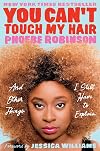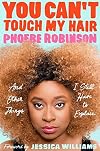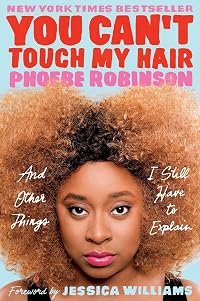
You Can't Touch My Hair and Other Things I Still Have to Explain
by Phoebe Robinson
On This Page
Description
A NEW YORK TIMES BEST SELLER • “A must-read...Phoebe Robinson discusses race and feminism in such a funny, real, and specific way, it penetrates your brain and stays with you.”—Ilana Glazer, co-creator and co-star of Broad CityA hilarious and timely essay collection about race, gender, and pop culture from comedy superstar and 2 Dope Queens podcaster Phoebe Robinson
Being a black woman in America means contending with old prejudices and fresh absurdities every day. Comedian show more Phoebe Robinson has experienced her fair share over the years: she's been unceremoniously relegated to the role of “the black friend,” as if she is somehow the authority on all things racial; she's been questioned about her love of U2 and Billy Joel (“isn’t that...white people music?”); she's been called “uppity” for having an opinion in the workplace; she's been followed around stores by security guards; and yes, people do ask her whether they can touch her hair all. the. time. Now, she's ready to take these topics to the page—and she’s going to make you laugh as she’s doing it.
Using her trademark wit alongside pop-culture references galore, Robinson explores everything from why Lisa Bonet is “Queen. Bae. Jesus,” to breaking down the terrible nature of casting calls, to giving her less-than-traditional advice to the future female president, and demanding that the NFL clean up its act, all told in the same conversational voice that launched her podcast, 2 Dope Queens, to the top spot on iTunes. As personal as it is political, You Can't Touch My Hair examines our cultural climate and skewers our biases with humor and heart, announcing Robinson as a writer on the rise.
One of Glamour's “Top 10 Books of 2016”
. show less
Tags
Recommendations


Member Reviews
I was lucky enough to learn about Phoebe Robinson when a friend recommended I listen to Two Dope Queens, the comedy podcast she hosts with Jessica Williams (of The Daily Show fame). She is a stand-up comedian and writer, and You Can’t Touch My Hair is her first book. It’s a collection of essays that take on topics as varied as black hair, guilty pleasures, and advice for her niece.
I write in my books, and I found myself underlining a lot in this one. I wasn’t just underlining the funny one-liners that had me chuckling out loud; mostly I was marking up her social commentary. Her chapter on “The Angry Black Woman Myth” should be required reading for white people. She also weighs in on the challenges people of color face in the show more entertainment industry, illustrating that section with sample composite casting calls that are both hilarious and deeply fucked up.
I could probably sit with this so I can provide a more thorough review, but I want to get this up there in case someone is looking for their next good read. If you like good writing, and serious issues discussed with a clever, strong voice, I think you’ll enjoy this one.
Also, check out the 2 Dope Queens podcast. . show less
I write in my books, and I found myself underlining a lot in this one. I wasn’t just underlining the funny one-liners that had me chuckling out loud; mostly I was marking up her social commentary. Her chapter on “The Angry Black Woman Myth” should be required reading for white people. She also weighs in on the challenges people of color face in the show more entertainment industry, illustrating that section with sample composite casting calls that are both hilarious and deeply fucked up.
I could probably sit with this so I can provide a more thorough review, but I want to get this up there in case someone is looking for their next good read. If you like good writing, and serious issues discussed with a clever, strong voice, I think you’ll enjoy this one.
Also, check out the 2 Dope Queens podcast. . show less
This book was on point! I didn't find the book laugh-out-loud funny but it was full of dark humor (dark because it was painfully true) that made me nod along and fist pump the air several times. Robinson writes about being a woman, particularly a black woman, in a society that does not necessarily value the agency of either. She writes with a humor and candidness that I loved.
She is an opinionated woman of color and is completely unapologetic about it. I loved that. And she also acknowledges the places where she has been trained by society to not be opinionated, or to not be so forthright about her opinions. I recognized the dance and the internal decisions she talks about before stating an opinion in order to avoid undue show more offense.
Lastly, I love that she challenged the reader (with her niece Olivia as a proxy) to have pride in, love, and respect herself.
Unfortunately, books like this one tend to only be read by those who already share Robinson's views, or are open to them because they are already aware of the injustice in the world, and the microaggressions (and overt agressions) PoC and women face every day. The ones who really need to hear this message won't hear it, and if they do hear it, won't have the empathy to accept it.
Review copy courtesy of the publisher. show less
She is an opinionated woman of color and is completely unapologetic about it. I loved that. And she also acknowledges the places where she has been trained by society to not be opinionated, or to not be so forthright about her opinions. I recognized the dance and the internal decisions she talks about before stating an opinion in order to avoid undue show more offense.
Lastly, I love that she challenged the reader (with her niece Olivia as a proxy) to have pride in, love, and respect herself.
Unfortunately, books like this one tend to only be read by those who already share Robinson's views, or are open to them because they are already aware of the injustice in the world, and the microaggressions (and overt agressions) PoC and women face every day. The ones who really need to hear this message won't hear it, and if they do hear it, won't have the empathy to accept it.
Review copy courtesy of the publisher. show less
Firstly, this is HILARIOUS! Phoebe is so alert to all cultural happenings that reading this will either crack you up or send you running to Google up everyone she mentions. Secondly, this is deadly serious. The author recounts many of her most trying moments in her career and her personal life, and how she has had to push the misery and pain of racism aside to feel powerful in her own skin (and hair!). There's a lot of wisdom here for Black women and a lot to learn for white people - like how to BEHAVE CIVILLY and to SHUT THE HELL UP BEFORE YOU SAY SOMETHING YOU'LL NEVER BE FORGIVEN FOR! I will be keeping many quotes for future reference. This is a fantastic gift book.
The author uses comedy to great effect to depict her life as a Black American woman. Her writing shows that she is multilayered and talented. Her analogies are hilarious (e.g. reparations equaling having a White makeup artist apply shea butter to her legs!). Her experiences with racism and sexism are relatable as well as infuriating.
The author is at her best when she describes these experiences because she illustrates how racism and sexism are systemic. When a White classmate uses her tears to deflect attention from the author's valid observations on race, her classmates and her teacher say nothing. When a comedy show judge criticizes her looks and intelligence, rather than focusing on her stage performance, the other judges stay show more silent. When a store employee ignores her to help others first, none of the customers or other employees pretend to notice. These injustices are sometimes termed "microaggressions," which almost minimizes them, when they are actually impactful, especially in aggregate. I hope that I will increase my awareness, and act accordingly, when I witness these actions in real life.
This book is well written and funny, with lots of pop culture references used to great effect. Recommended for all readers. show less
The author is at her best when she describes these experiences because she illustrates how racism and sexism are systemic. When a White classmate uses her tears to deflect attention from the author's valid observations on race, her classmates and her teacher say nothing. When a comedy show judge criticizes her looks and intelligence, rather than focusing on her stage performance, the other judges stay show more silent. When a store employee ignores her to help others first, none of the customers or other employees pretend to notice. These injustices are sometimes termed "microaggressions," which almost minimizes them, when they are actually impactful, especially in aggregate. I hope that I will increase my awareness, and act accordingly, when I witness these actions in real life.
This book is well written and funny, with lots of pop culture references used to great effect. Recommended for all readers. show less
"Explaining your life to a world that doesn't care to listen is often more draining than living in it."
Confession #1: Most of my IRL references are ripped from pop culture.
So I was pretty much guaranteed to love Robinson's book, which I did. I laughed out loud several times. Then I started running downstairs to read aloud to my daughter who then joined in laughing and simultaneously nodding her head. Robinson's "this is me" attitude is contagious and I loved her for it.
Confession #2: Before this book, I'd never heard of Phoebe Robinson. My loss, I know!
And beneath all the laughs is pure troof; that's Robinson's word for something even deeper than truth. Using equal parts wit, humor and snark, Robinson shares what it's like for her as a show more woman who is also Black in, what white society likes to (or used to) tell itself (pre-Trump) is, a post-racial America.
Confession #3: Before Twitter, I didn't know that Black women had to endure people asking to touch their hair (and a lot of times NOT even asking, just going right on ahead and doing it). I never in a million years would ask to touch someone else's hair. Personal boundaries, anyone? So Robinson's stories about Black hair gave me an even deeper understanding of what Black women have to put up with every. single. day. Just listening is exhausting - imagine living that, day in and day out.
One last note, if you're not a die-hard pop culture guru, you may not get all of Robinson's jokes and/or references. She drops them all over the place: from The West Wing to Kids Incorporated to Eagle Eye Cherry to Nina Simone, on and on.
Without further ado, here are my fave quotes from each of the 11 essays in this collection:
Introduction
"But there's an even harder truth to accept: The kind of growth required to move past race is nearly impossible to achieve because racism is rooted in the foundation of America."
"From Little Rock Nine to Nappy Hair, Don't Care in Eighteen and a Half-ish Years"
"The amount of time, effort, and money that is spent on black hair is not because of superficiality as some would have you believe; it's because black women know that the quality of their life and how others will treat them is riding on the presentation of their hair."
"A Brief History of Black Hair in Film, TV, Music, and Media"
"Usually, the media has shown black women as resilient and unbelievably strong in the face of crisis, so for a show to reveal a BW's vulnerability is monumental. The scene, and in particular the wig removal, illustrated that black women do have emotions, do get hurt, and do express themselves." (scene from HTGAWM when Annalise confronts Sam.)
"My Nine Favorite Not-So-Guilty Pleasures"
"I'm not a self-destructive person -- meaning no hard drugs, minimal alcohol, and zero dangerous physical activities--so eating fast food is my version of living on the edge."
"If your'e a nonnative, you become a New Yorker when your sidewalk rage is so strong that you feel the need to murder."
"Welcome to Being Black"
"But some people don't want to believe that, because if varying degrees of blackness become normalized, then that means society has to rethink how they treat black people."
"Micro-aggressions like this accumulate over days, weeks, months, and they shape my experience as a black person." (being ignored by staff at a Michaels)
"Dear Future Female President: My List of Demands"
"When you get sworn into office, yell, "I'm a feminist," and then throw your fist in the air like you're Judd Nelson at the end of The Breakfast Club."
"How to Avoid Being the Black Friend"
Wow, just wow.
"Uppity"
"Stand-up comedy is not a beauty pageant. It's about the jokes."
"First of all, people need to stop acting like racist behavior only happens within a three-block radius of Paula Deen's house. Ignorance exists everywhere, including liberal bastions like New York City."
I love that Robinson included a screenshot of the tweet she refused to delete!
"And I'll let you in on a little secret about what other black people rarely say: Explaining your life to a world that doesn't care to listen is often more draining than living in it."
"Casting Calls for People of Color That Were Not Written by People of Color"
"...it's wanting that dream in the first place. You have to take the leap and put the work in and go all in. And being all in means there is nowhere to hide... You have to be vulnerable."
"The Angry Black Woman Myth"
"So how do I, or any black woman for that matter, come up against these types of obstacles and remain in mint condition?"
"There is a distinction between the 'angry black woman' label that society has used to silence and shame black women, and being a black person who happens to be a woman and who happens to be a skosh angry, which, by the way, is usually what we refer to as multidimensional..."
"Being on the charm offensive all the time will win you friends and help avoid conflict, but it also leaves you feeling stifled and exhausted."
"But that's the thing. Being true to oneself shouldn't be considered threatening."
"People, Places, and Things That Need to Do Better"
Robinson refers to these as tough love, but, in my opinion, she used a gentle touch.
"Letters to Olivia" (6 letters to her then 2-year-old niece)
"Whether or not I was funny when talking about my body wasn't even the issue. The real problem was that I dared to talk about my body in the first place, and that shocked the male crowd."
"The joy of seeing yourself in another is pertinent not just to stand-up comedy but to being alive."
Acknowledgments
"But, please, dear reader, don't mistake my cheapness as a sign of my lack of devotion to [Magic Mike]XXL. I, in all sincerity, believe that film is the answer to the question Judy Blume posed forty-six years ago: 'Are you there God? It's me, Margaret.'"
4.5 stars
Itsy bitsy, teeny weeny nitpick - from a fellow pop culture nerd who grew up watching The Cosby Show every week - wasn't Sondra the eldest daughter, not Denise? (p. 227) On a side note, I wonder how many of us Denise fans sneaked and watched Angel Heart but were in no way prepared for it?! LOL good times. show less
Confession #1: Most of my IRL references are ripped from pop culture.
So I was pretty much guaranteed to love Robinson's book, which I did. I laughed out loud several times. Then I started running downstairs to read aloud to my daughter who then joined in laughing and simultaneously nodding her head. Robinson's "this is me" attitude is contagious and I loved her for it.
Confession #2: Before this book, I'd never heard of Phoebe Robinson. My loss, I know!
And beneath all the laughs is pure troof; that's Robinson's word for something even deeper than truth. Using equal parts wit, humor and snark, Robinson shares what it's like for her as a show more woman who is also Black in, what white society likes to (or used to) tell itself (pre-Trump) is, a post-racial America.
Confession #3: Before Twitter, I didn't know that Black women had to endure people asking to touch their hair (and a lot of times NOT even asking, just going right on ahead and doing it). I never in a million years would ask to touch someone else's hair. Personal boundaries, anyone? So Robinson's stories about Black hair gave me an even deeper understanding of what Black women have to put up with every. single. day. Just listening is exhausting - imagine living that, day in and day out.
One last note, if you're not a die-hard pop culture guru, you may not get all of Robinson's jokes and/or references. She drops them all over the place: from The West Wing to Kids Incorporated to Eagle Eye Cherry to Nina Simone, on and on.
Without further ado, here are my fave quotes from each of the 11 essays in this collection:
Introduction
"But there's an even harder truth to accept: The kind of growth required to move past race is nearly impossible to achieve because racism is rooted in the foundation of America."
"From Little Rock Nine to Nappy Hair, Don't Care in Eighteen and a Half-ish Years"
"The amount of time, effort, and money that is spent on black hair is not because of superficiality as some would have you believe; it's because black women know that the quality of their life and how others will treat them is riding on the presentation of their hair."
"A Brief History of Black Hair in Film, TV, Music, and Media"
"Usually, the media has shown black women as resilient and unbelievably strong in the face of crisis, so for a show to reveal a BW's vulnerability is monumental. The scene, and in particular the wig removal, illustrated that black women do have emotions, do get hurt, and do express themselves." (scene from HTGAWM when Annalise confronts Sam.)
"My Nine Favorite Not-So-Guilty Pleasures"
"I'm not a self-destructive person -- meaning no hard drugs, minimal alcohol, and zero dangerous physical activities--so eating fast food is my version of living on the edge."
"If your'e a nonnative, you become a New Yorker when your sidewalk rage is so strong that you feel the need to murder."
"Welcome to Being Black"
"But some people don't want to believe that, because if varying degrees of blackness become normalized, then that means society has to rethink how they treat black people."
"Micro-aggressions like this accumulate over days, weeks, months, and they shape my experience as a black person." (being ignored by staff at a Michaels)
"Dear Future Female President: My List of Demands"
"When you get sworn into office, yell, "I'm a feminist," and then throw your fist in the air like you're Judd Nelson at the end of The Breakfast Club."
"How to Avoid Being the Black Friend"
Wow, just wow.
"Uppity"
"Stand-up comedy is not a beauty pageant. It's about the jokes."
"First of all, people need to stop acting like racist behavior only happens within a three-block radius of Paula Deen's house. Ignorance exists everywhere, including liberal bastions like New York City."
I love that Robinson included a screenshot of the tweet she refused to delete!
"And I'll let you in on a little secret about what other black people rarely say: Explaining your life to a world that doesn't care to listen is often more draining than living in it."
"Casting Calls for People of Color That Were Not Written by People of Color"
"...it's wanting that dream in the first place. You have to take the leap and put the work in and go all in. And being all in means there is nowhere to hide... You have to be vulnerable."
"The Angry Black Woman Myth"
"So how do I, or any black woman for that matter, come up against these types of obstacles and remain in mint condition?"
"There is a distinction between the 'angry black woman' label that society has used to silence and shame black women, and being a black person who happens to be a woman and who happens to be a skosh angry, which, by the way, is usually what we refer to as multidimensional..."
"Being on the charm offensive all the time will win you friends and help avoid conflict, but it also leaves you feeling stifled and exhausted."
"But that's the thing. Being true to oneself shouldn't be considered threatening."
"People, Places, and Things That Need to Do Better"
Robinson refers to these as tough love, but, in my opinion, she used a gentle touch.
"Letters to Olivia" (6 letters to her then 2-year-old niece)
"Whether or not I was funny when talking about my body wasn't even the issue. The real problem was that I dared to talk about my body in the first place, and that shocked the male crowd."
"The joy of seeing yourself in another is pertinent not just to stand-up comedy but to being alive."
Acknowledgments
"But, please, dear reader, don't mistake my cheapness as a sign of my lack of devotion to [Magic Mike]XXL. I, in all sincerity, believe that film is the answer to the question Judy Blume posed forty-six years ago: 'Are you there God? It's me, Margaret.'"
4.5 stars
Itsy bitsy, teeny weeny nitpick - from a fellow pop culture nerd who grew up watching The Cosby Show every week - wasn't Sondra the eldest daughter, not Denise? (p. 227) On a side note, I wonder how many of us Denise fans sneaked and watched Angel Heart but were in no way prepared for it?! LOL good times. show less
nonfiction/humor-essays (audiobook)
Phoebe is a kick to listen to and spend time with, though I think I enjoyed her first book, [b:Everything's Trash, But It's Okay|38649805|Everything's Trash, But It's Okay|Phoebe Robinson|https://i.gr-assets.com/images/S/compressed.photo.goodreads.com/books/1527080689l/38649805._SY75_.jpg|60261098] maybe just a little more.
I was too lazy to google pictures of the hairstyles she mentioned in her essays on black hair in pop history, so that was one thing the print edition might have been better for, but on the other hand, I got to listen to Phoebe, and she's got a lot of valuable (and funny) insights, so--still a win.
Phoebe is a kick to listen to and spend time with, though I think I enjoyed her first book, [b:Everything's Trash, But It's Okay|38649805|Everything's Trash, But It's Okay|Phoebe Robinson|https://i.gr-assets.com/images/S/compressed.photo.goodreads.com/books/1527080689l/38649805._SY75_.jpg|60261098] maybe just a little more.
I was too lazy to google pictures of the hairstyles she mentioned in her essays on black hair in pop history, so that was one thing the print edition might have been better for, but on the other hand, I got to listen to Phoebe, and she's got a lot of valuable (and funny) insights, so--still a win.
“Explaining your life to a world that doesn’t care to listen is often more draining than living in it,” is the central thesis of Phoebe Robinson’s first book. I have so many complicated feelings about this book. On the one hand, I hate that another black person has to explain black experience to white people. Of course we need to welcome to all experiences. But at the same time, I want Robinson to spend her time living her fullest life--being funny and getting the opportunity to showcase her hard-earned talent, instead of lecturing to white people about the history of black hair or critiquing casting calls for women and POC or writing an open letter directly to the next female President. But as I sank further into the book, I show more could tell that living her fullest life is exactly what Robinson is doing. She fills this pseudo memoir with her individual flavor of humor--both the racial commentary and her personal stories offer an intimate insight into Robinson’s mind: a place you’re going to want to grab a white wine or a nice rosé and tuck in, because this is your new home, girl. show less
Members
- Recently Added By
Lists

BLM
210 works; 1 member

Brooklyn Public Library Literary Prize 2017
16 works; 1 member

Actors
65 works; 5 members

NPR Readers Poll: 100 Favorite Funny Books
100 works; 5 members

Reading Glasses Podcast
410 works; 3 members
Author Information

4+ Works 1,303 Members
Some Editions
Awards and Honors
Awards
Distinctions
Notable Lists
Common Knowledge
- Canonical title
- You Can't Touch My Hair and Other Things I Still Have to Explain
- Original publication date
- 2016-10-04
- Dedication
- For my parents, Phillip and Octavia. I love you.
- First words
- Phoebe Robinson is my work wife. (Foreword)
The other day, I was thinking about the first time someone of a different race gave me a lady boner. (Introduction) - Last words
- (Click to show. Warning: May contain spoilers.)Please, please, please keep their tempo, get yourself on a Black History Month stamp, and make Lisa Bonet proud. (Letter to Olivia)
Finally, Michael Fassbender, thanks in advance for being my future baby daddy. (Acknowledgments) - Blurbers
- Glazer, Ilana
Classifications
- Genres
- General Nonfiction, Biography & Memoir, Nonfiction, Sexuality and Gender Studies
- DDC/MDS
- 792.7 — Arts & recreation Recreation, sports, and performing arts Stage presentations Variety shows and theatrical dancing; burlesque, cabaret, vaudeville, music hall, nightclubs
- LCC
- PN2287 .R715 .A3 — Language and Literature Literature (General) Literature (General) Drama Dramatic representation. The theater Special regions or countries
- BISAC
Statistics
- Members
- 822
- Popularity
- 33,425
- Reviews
- 37
- Rating
- (3.80)
- Languages
- English
- Media
- Paper, Audiobook, Ebook
- ISBNs
- 7
- ASINs
- 3