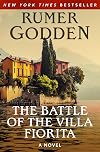
The Battle of the Villa Fiorita
by Rumer Godden
On This Page
Description
Two English children travel to Italy to rescue their wayward mother from her lover and save their family in this New York Times -bestselling novel. The lives of the two Clavering children, Hugh and Caddie, have been abruptly upended by the bitter divorce of their parents, British Army colonel Darrell and the formerly solid, dependable Fanny. Their English country home has been abandoned in favor of a London flat, and the fate of their adored pony, Topaz, is in serious question. And it all show more began the day the internationally renowned movie director, Rob Quillet, came to their small village and stole Fanny's heart. Now Fanny is gone, whisked off to the north of Italy by her famous filmmaker lover, leaving behind the jagged pieces of her broken family. While Hugh, at fourteen, understands the ways of the adult world better than his twelve-year-old sister, he is fiercely protective of stubborn, rebellious Caddie, who refuses to accept the situation or the hollow sympathy of grown-ups. So together they decide to take drastic action. Traveling alone across Europe, the siblings arrive at Quillet's pastoral Italian villa overlooking Lake Garda, determined to do battle with the man responsible for the destruction of their family. There can be no peace until they are victorious-and victory will only be achieved when they bring their mother home. A novel that masterfully blends heart, wit, poignancy, and honesty with a breathtaking evocation of the lush Northern Italian countryside, Rumer Godden's The Battle of Villa Fiorita is another unforgettable reading experience from the New York Times -bestselling author of The River and In This House of Brede. This ebook features an illustrated biography of the author including rare images from the Rumer Godden Literary Estate. show lessTags
Recommendations

























Member Reviews
When 14 year old Hugh and his 12 year old sister Caddie decide to sneak away to Italy to find their divorced mother, rather than taking their respective trains back to boarding school as their father expects them to, you know things probably aren't going to work out as THEY expect them to. The plan is that their mother, who has fallen in love with a movie producer thereby precipitating the divorce and leaving them in their father's custody, will realize the mistake she's made once she sees them and will return home where everyone will live happily ever after. It isn't even a particularly well-laid plan, and man does it go awry. Godden romps around a bit with tense and point of view here, which takes some getting used to. But she somehow show more manages to make us sympathize with everyone in the triangle, as well as the children; there are no villains or heroes. The adults are almost as unequal to the challenges of the situation as the children, but they strive valiantly to make it all right to the best of their ability. In the end, it's sadly clear that love does not conquer all, and that some battles cannot be won. show less
The opening scene is captivating.
Two children are walking through an unfamiliar garden, and into an a house. Rumer Godden captured their points of view quite perfectly and he writing was gorgeous – she was so good at houses and gardens. The children see so much that it lovely and that is quite new to them, but as they move indoors it clear that they have a sense of purpose, and it also becomes clear that this story will not be a happy one.
‘The villa was on Lake Garda in northern Italy. ‘But it doesn’t matter where it was, said Hugh afterwards. It might have been anywhere; it was simply a place where two opposing forces were to meet, as two armies meet on foreign soil to fight a battle. ‘ The battle of the Villa Fiorita,’ show more Caddie called it afterwards and always with an ache of guilt.’
Hugh, aged fourteen, and his sister Caddie, aged eleven, have just arrived in Italy, after a long and difficult journey mainly by train from London. They ran away while their father was overseas for work and the housekeeper was distracted, with the express intention of reuniting their father and mother and rebuilding their family home.
Neither Darrell nor Fanny Clavering had been unhappy in their marriage, but when a film crew came to the village where they lived Fanny began to realise that her life was unfulfilling, that the role of wife and mother was trapping her, and that the world offered so many possibilities that she had never explored. She began an affair with the film’s director – Rob Collett – and the depth of attraction between them was such that they ran away together and her husband divorced her. The lovers settled at the Villa Fiorita, planning to get married once the dust had settled.
Darrell closed up the family home – because he knew that a country house required a wife to manage things – and moved to a modern flat in London with his children and the family’s housekeeper.
It was impossible not to sympathise with the children, who had been presented with their parents’ divorce as a fait accompli, who had been abandoned by their mother, and who had lost the home and the life they loved and been tipped into an unfamiliar new world. I had to be impressed at the way they laid their plans and made their way across Europe; Caddie even selling her beloved pony, Topaz, to provide the necessary capital.
Seeing he children again stirred feelings that Fanny had buried
‘I was going to roll it all up, roll it into a ball that I could keep hidden in my hand, or in my heart. It was to be only Rob, Rob and I, together for the rest of our lives. I had accepted that, then … and across every thought and plan and feeling came this new triumphant song: ‘They ran away. Hugh and Caddie ran away to me.’
Rob was more pragmatic, and insisted that they must be sent home; but when Hugh was struck down by food poisoning he didn’t have the heart to send Caddie – who was so like her mother back alone; and when Darrell suggested that the children stay for a few weeks, until he returned from his travel, the stage was set for a battle.
The introduction of Rob’s daughter, Pia, who had been brought up by her grandmother and was terribly spoilt, exacerbated the situation and unsettled that relationship between brother and sister.
The children were completely caught up in their mission to bring their mother home. They could not – or would not – see that she was so much happier in her new life with her love than she had ever been before; and they failed to see that some of their actions could have serious repercussions.
Rumer Godden moved seamlessly between past and present, between the childish and adult perspectives, balancing everything quite beautifully. She drew the children so well, understanding their world views, their stages in life, and the way they see and deal with the things life throws at them. She understood their parents, and the other adults in their world, just as well; and most importantly she knew that their were no heroes and no villains, just fallible human beings at different stages of life.
I thought of another novel that explored the consequences of divorce for adults and children thirty year before this one – ‘Together and Apart’ by Margaret Kennedy – and I was struck by how little had changed.
The story told in this book was compelling and utterly believable. There was – of necessity – a little more drama and less gradual pressure than real life, but it worked.
I’ve seen concerns expressed about the resolution of the story, but I saw signs of how it would be early in the story, and as the end drew near I realised that it was inevitable.
I’m still thinking about that, thinking about everything that happened, and wondering what happened next. show less
Two children are walking through an unfamiliar garden, and into an a house. Rumer Godden captured their points of view quite perfectly and he writing was gorgeous – she was so good at houses and gardens. The children see so much that it lovely and that is quite new to them, but as they move indoors it clear that they have a sense of purpose, and it also becomes clear that this story will not be a happy one.
‘The villa was on Lake Garda in northern Italy. ‘But it doesn’t matter where it was, said Hugh afterwards. It might have been anywhere; it was simply a place where two opposing forces were to meet, as two armies meet on foreign soil to fight a battle. ‘ The battle of the Villa Fiorita,’ show more Caddie called it afterwards and always with an ache of guilt.’
Hugh, aged fourteen, and his sister Caddie, aged eleven, have just arrived in Italy, after a long and difficult journey mainly by train from London. They ran away while their father was overseas for work and the housekeeper was distracted, with the express intention of reuniting their father and mother and rebuilding their family home.
Neither Darrell nor Fanny Clavering had been unhappy in their marriage, but when a film crew came to the village where they lived Fanny began to realise that her life was unfulfilling, that the role of wife and mother was trapping her, and that the world offered so many possibilities that she had never explored. She began an affair with the film’s director – Rob Collett – and the depth of attraction between them was such that they ran away together and her husband divorced her. The lovers settled at the Villa Fiorita, planning to get married once the dust had settled.
Darrell closed up the family home – because he knew that a country house required a wife to manage things – and moved to a modern flat in London with his children and the family’s housekeeper.
It was impossible not to sympathise with the children, who had been presented with their parents’ divorce as a fait accompli, who had been abandoned by their mother, and who had lost the home and the life they loved and been tipped into an unfamiliar new world. I had to be impressed at the way they laid their plans and made their way across Europe; Caddie even selling her beloved pony, Topaz, to provide the necessary capital.
Seeing he children again stirred feelings that Fanny had buried
‘I was going to roll it all up, roll it into a ball that I could keep hidden in my hand, or in my heart. It was to be only Rob, Rob and I, together for the rest of our lives. I had accepted that, then … and across every thought and plan and feeling came this new triumphant song: ‘They ran away. Hugh and Caddie ran away to me.’
Rob was more pragmatic, and insisted that they must be sent home; but when Hugh was struck down by food poisoning he didn’t have the heart to send Caddie – who was so like her mother back alone; and when Darrell suggested that the children stay for a few weeks, until he returned from his travel, the stage was set for a battle.
The introduction of Rob’s daughter, Pia, who had been brought up by her grandmother and was terribly spoilt, exacerbated the situation and unsettled that relationship between brother and sister.
The children were completely caught up in their mission to bring their mother home. They could not – or would not – see that she was so much happier in her new life with her love than she had ever been before; and they failed to see that some of their actions could have serious repercussions.
Rumer Godden moved seamlessly between past and present, between the childish and adult perspectives, balancing everything quite beautifully. She drew the children so well, understanding their world views, their stages in life, and the way they see and deal with the things life throws at them. She understood their parents, and the other adults in their world, just as well; and most importantly she knew that their were no heroes and no villains, just fallible human beings at different stages of life.
I thought of another novel that explored the consequences of divorce for adults and children thirty year before this one – ‘Together and Apart’ by Margaret Kennedy – and I was struck by how little had changed.
The story told in this book was compelling and utterly believable. There was – of necessity – a little more drama and less gradual pressure than real life, but it worked.
I’ve seen concerns expressed about the resolution of the story, but I saw signs of how it would be early in the story, and as the end drew near I realised that it was inevitable.
I’m still thinking about that, thinking about everything that happened, and wondering what happened next. show less
One of the things I have come to appreciate in Rumer Godden’s novels for adults, is the way she writes children and young people. She always seems to fully understand their view of the world, the way they feel the hurts and disappointments that force them to grow up.
In The Battle of the Villa Fiorita we meet Hugh (14) and Caddie (almost 12) – they have an elder sister who they speak about from time to time, but who we never actually meet. As the novel opens, Hugh and Caddie have just arrived in Italy, following a long, arduous journey mainly by train from London. They have run away.
“She and Hugh were both gilded in sun; the things they held, the grips, coats, and net, had edges of light as had Hugh’s bare head, Caddie’s show more panama. Light bathed their tired dusty faces, their clothes which were crumpled and dishevelled as only clothes that have been slept in all night can be; it lay on their hands and legs, their dusty shoes, a light more warm and gold than anything they had known, but, ‘It’s Italian,’ said Caddie as if suspicious of it.”
They are on a mission to win back their mother – return her to their father and the family home. Their mother Frances (usually called Fanny) Clavering has recently been divorced by their father, following an affair with a film director, who she met whilst he was filming near to the family home. Now, Fanny has left England with her lover Rob Quillet. They are staying at the Villa Fiorita near Lake Garda, planning to get married in the near future.
The viewpoint is not always that of the children, Fanny is a woman whose life had seemed perfectly happy, married to dull, frequently absent Darrell Clavering. While she hadn’t been able to claim that she was miserable, meeting Rob, awakened something in her, showing her what her life had actually been, and what it could be instead. The narrative takes us back to when Fanny first met famous director Rob Quillet, their attraction to one another – and the tentative beginning of their affair. Fanny was torn, recognising the danger signals she tried to back away, pulled back by her feelings, which were so strong and so unexpected. Despite this, she attempts to carry on with her life, forget about Rob, concentrate on running Stebbings with seamless efficiency, socialising with other local country wives and keeping her mother-in-law Lady Candida happy. However, in time, Fanny begins to realise she can’t exist without Rob, and two of her friends are suspicious after one of them spots her in London with him.
Hugh and Caddie have had their world turned upside down, while they had been away at school the grownups silently got on with managing the scandalous situation. By the time they knew anything, it was practically all over. Stebbings; the loved country home, that is so familiar, has been closed up, a modern flat in London is where they will live with their father and the housekeeper/nanny Gwyneth. The pony, Topaz, which Caddie won in a competition, and is almost her sole reason for living, is stabled in the country, and Caddie doesn’t know when or if she will be able to see him. All they want is for everything to go back to normal, stunned by a kind of grief, they have been unable to see Fanny as being anyone other than their mother – they are only just seeing that she is also a woman in love.
“At the top of the walk Fanny and Rob stopped, dazzled by the sun after the shade. Because of the brilliant light, and because his eyes were so tired, Hugh could not see them clearly; the whole garden and the lake had become a blur, but, standing in the flood of evening light, framed against the green leaves and the spirals of mauve flowers, they looked illuminated, glorified. ‘A couple,’ Hugh thought before he could stifle the thought, not his mother and Rob Quillet but a man and woman close together.”
We can’t help but sympathise with the children, it is bad enough when parents’ divorce, but Hugh and Caddie have been abandoned by their adored mother, everything they took for granted has altered and they don’t quite recognise this new world they are being asked to live in.There is a selfishness to childhood which we only really recognise when we look back on it. I admit, that while I sympathised with the children, I got very annoyed by their blind selfishness too. Hugh and Caddie want their mother back, and they go all out to get her. Fanny is happier than she has ever been in her life, on some level the children recognise this – but easily discount it. Fanny is already beset with terrible guilt for what she did to her former husband, and especially her children, and having them appear at the villa – just as she and Rob are about to go out to dinner – shakes her resolve. Rob is apparently made of sterner stuff – and starts to arrange for the children to be returned immediately. However, things don’t go quite according to plan, as Hugh is struck down with food poisoning and Rob, allowing Caddie to get under his skin – she reminds him so much of her mother – can’t bring himself to send her off alone. It is arranged that the children will stay for a fortnight – when their father will have returned from a work trip. Once it has been agreed that the children will stay, Rob sends for his own daughter Pia – an impossibly stylish ten-year-old brought up by her grandmother. Pia is immediately dismissive of sad, scruffy Caddie, who can’t help admiring Pia despite her unfriendliness. Hugh, meanwhile who has been stomping around the villa in confused fury for days finds himself rather drawn to the little girl.
With three unhappy children in the villa, banding together, the battle lines are drawn, but will the children realise that their actions have consequences before things go too far?
The Battle of the Villa Fiorita is an absorbing novel, I loved the children and their fiendish plotting, and while I felt for them, I also felt for the adults, whose future happiness or unhappiness lies in the hands of their children. I was left with mixed feelings about how Godden ended her novel, and found myself thinking about it for several days after I had finished. show less
In The Battle of the Villa Fiorita we meet Hugh (14) and Caddie (almost 12) – they have an elder sister who they speak about from time to time, but who we never actually meet. As the novel opens, Hugh and Caddie have just arrived in Italy, following a long, arduous journey mainly by train from London. They have run away.
“She and Hugh were both gilded in sun; the things they held, the grips, coats, and net, had edges of light as had Hugh’s bare head, Caddie’s show more panama. Light bathed their tired dusty faces, their clothes which were crumpled and dishevelled as only clothes that have been slept in all night can be; it lay on their hands and legs, their dusty shoes, a light more warm and gold than anything they had known, but, ‘It’s Italian,’ said Caddie as if suspicious of it.”
They are on a mission to win back their mother – return her to their father and the family home. Their mother Frances (usually called Fanny) Clavering has recently been divorced by their father, following an affair with a film director, who she met whilst he was filming near to the family home. Now, Fanny has left England with her lover Rob Quillet. They are staying at the Villa Fiorita near Lake Garda, planning to get married in the near future.
The viewpoint is not always that of the children, Fanny is a woman whose life had seemed perfectly happy, married to dull, frequently absent Darrell Clavering. While she hadn’t been able to claim that she was miserable, meeting Rob, awakened something in her, showing her what her life had actually been, and what it could be instead. The narrative takes us back to when Fanny first met famous director Rob Quillet, their attraction to one another – and the tentative beginning of their affair. Fanny was torn, recognising the danger signals she tried to back away, pulled back by her feelings, which were so strong and so unexpected. Despite this, she attempts to carry on with her life, forget about Rob, concentrate on running Stebbings with seamless efficiency, socialising with other local country wives and keeping her mother-in-law Lady Candida happy. However, in time, Fanny begins to realise she can’t exist without Rob, and two of her friends are suspicious after one of them spots her in London with him.
Hugh and Caddie have had their world turned upside down, while they had been away at school the grownups silently got on with managing the scandalous situation. By the time they knew anything, it was practically all over. Stebbings; the loved country home, that is so familiar, has been closed up, a modern flat in London is where they will live with their father and the housekeeper/nanny Gwyneth. The pony, Topaz, which Caddie won in a competition, and is almost her sole reason for living, is stabled in the country, and Caddie doesn’t know when or if she will be able to see him. All they want is for everything to go back to normal, stunned by a kind of grief, they have been unable to see Fanny as being anyone other than their mother – they are only just seeing that she is also a woman in love.
“At the top of the walk Fanny and Rob stopped, dazzled by the sun after the shade. Because of the brilliant light, and because his eyes were so tired, Hugh could not see them clearly; the whole garden and the lake had become a blur, but, standing in the flood of evening light, framed against the green leaves and the spirals of mauve flowers, they looked illuminated, glorified. ‘A couple,’ Hugh thought before he could stifle the thought, not his mother and Rob Quillet but a man and woman close together.”
We can’t help but sympathise with the children, it is bad enough when parents’ divorce, but Hugh and Caddie have been abandoned by their adored mother, everything they took for granted has altered and they don’t quite recognise this new world they are being asked to live in.There is a selfishness to childhood which we only really recognise when we look back on it. I admit, that while I sympathised with the children, I got very annoyed by their blind selfishness too. Hugh and Caddie want their mother back, and they go all out to get her. Fanny is happier than she has ever been in her life, on some level the children recognise this – but easily discount it. Fanny is already beset with terrible guilt for what she did to her former husband, and especially her children, and having them appear at the villa – just as she and Rob are about to go out to dinner – shakes her resolve. Rob is apparently made of sterner stuff – and starts to arrange for the children to be returned immediately. However, things don’t go quite according to plan, as Hugh is struck down with food poisoning and Rob, allowing Caddie to get under his skin – she reminds him so much of her mother – can’t bring himself to send her off alone. It is arranged that the children will stay for a fortnight – when their father will have returned from a work trip. Once it has been agreed that the children will stay, Rob sends for his own daughter Pia – an impossibly stylish ten-year-old brought up by her grandmother. Pia is immediately dismissive of sad, scruffy Caddie, who can’t help admiring Pia despite her unfriendliness. Hugh, meanwhile who has been stomping around the villa in confused fury for days finds himself rather drawn to the little girl.
With three unhappy children in the villa, banding together, the battle lines are drawn, but will the children realise that their actions have consequences before things go too far?
The Battle of the Villa Fiorita is an absorbing novel, I loved the children and their fiendish plotting, and while I felt for them, I also felt for the adults, whose future happiness or unhappiness lies in the hands of their children. I was left with mixed feelings about how Godden ended her novel, and found myself thinking about it for several days after I had finished. show less
4.5* I really liked this book apart from the ending.
I made the mistake of reading a reader's review, which gave away enough of the ending that I'm giving the book away. It's probably worth reading, so I won't make any comments.
Ratings
Members
- Recently Added By
Lists

Publisher's Weekly Bestsellers - Part II - 1940 - 1979
355 works; 6 members
Author Information

89+ Works 15,358 Members
Margaret Rumer Godden was born Dec. 10, 1907, in Sussex, England. She was nine months old when her family moved to India, where her father ran a shipping line. She returned to London at age 20 to learn how to teach dance to children, and opened a school back in India. Returning to England while she was pregnant, she wrote her first book, "Chinese show more Puzzle," published in 1936. Her marriage to a stockbroker, Laurence Sinclair Foster, ended in 1941, leaving her penniless. In an effort to pay off her former husband's debts, Godden moved her family into a mountain cottage where she ran a school, made herbal teas for sale, and wrote books. Another novel of India, "The River," published in 1949, was one of her most acclaimed books and was made into a film by Jean Renoir in 1951. She returned to England to stay in 1945. Rumer Godden was the author of more than 60 books, including novels, short story collections, poetry, plays and non-fiction. She published her 21st novel, "Cromartie vs. the God Shiva," in 1997. Rumer Godden died a year later on November 8, 1998, in Thornhill, Scotland, at the age of 90. (Bowker Author Biography) show less
Some Editions
Awards and Honors
Distinctions
Series
Belongs to Publisher Series
Salamanderpockets (288)
Virago Modern Classics (574)
Work Relationships
Is contained in
Has the adaptation
Is abridged in
Reader's Digest Condensed Books: The Battle of the Villa Fiorita | The Edge of Sadness | On Safari | Of Good and Evil by Reader's Digest
Nudo io venni al mondo - Il viale della serenità - La prima pietra - La battaglia di Villa Fiorita by Reader's Digest
Common Knowledge
- Canonical title
- The Battle of the Villa Fiorita
- Original publication date
- 1963
- People/Characters
- Rob Quillet
- Important places
- Lake Garda, Lombardy, Italy
- Related movies
- The Battle of the Villa Fiorita (1965 | IMDb)
- Dedication
- To Ceril,
who made the dream real - First words
- The hedges of scented whitethorn on either side of the villa gates had the longest fiercest thorns they had ever seen.
- Last words
- (Click to show. Warning: May contain spoilers.)The last thing Hugh and Caddie saw were the gilt letters, 'Villa Fiorita', as, with Fanny sitting between them, they drove away.
Classifications
Statistics
- Members
- 365
- Popularity
- 86,672
- Reviews
- 6
- Rating
- (3.89)
- Languages
- Dutch, English, German
- Media
- Paper, Audiobook, Ebook
- ISBNs
- 14
- ASINs
- 16