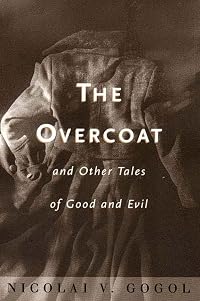
The Overcoat and Other Tales of Good and Evil
by Nikolai Vasilevich Gogol
On This Page
Description
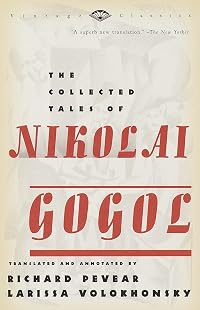
The compassion, simplicity, and gentle humor with which he treats the poignant quest of a hapless civil servant for the return of his stolen overcoat--and the fantastic yet realistic manner in which he takes revenge on his nemesis, the Very Important Person--mark "The Overcoat" as one of the greatest achievements of Gogol's genius.The five other "Tales of Good and Evil" in this superb collection demonstrate the broad range of Gogol's literary palette in his short fiction: the fantastic, show more supernaturally tinged "The Terrible Vengeance," the comic portraiture of "Ivan Fydorovich Shponka and His Aunt," the tragic moral realism of "The Portrait" and "Nevsky Avenue," and the rampaging satire and absurdism of his send-up of Russian upper-class stupidity, "The Nose." The stories offer the reader the perfect introduction to the imaginative genius of Gogol, which was to flower so triumphantly in his masterpiece, Deal Souls. show lessTags
Recommendations










Member Reviews
Gogol is a marvelous writer and these are marvelous stories. The only downside is a pervasive anti-Semitism, which seems par for the course for much of Russian literature of that period. In this case, it is also accompanied by anti-Catholicism and anti-a few other things. In some cases, it may be put down to the characters, but in others it seems to come more from the author. In any case, it doesn't overshadow the sheer variety and entertainment these stories provide.
"The Terrible Vengeance" is basically a horror story, set among Cossacks in Ukraine. The protagonist discovers that his bride's father-in-law, who has just returned after a long, mysterious absence, is not who he seems. This story has the most disturbing elements from a show more modern enlightened perspective, and it is certainly the one that is the most mannered in its telling (it is pretty gothic), making it an old-fashioned story of legendary times past, much different from the other stories in the book that deal with Gogol's contemporary Russia. Nevertheless, it is very effective and filled with memorable scenes.
"Ivor Fyodorovich Shponka and His Aunt" is very entertaining but incomplete. Still, as the editor indicates, it paints a very good picture and what follows is probably easy enough to figure out.
"The Portrait" is a long (the second part is too long) story of a strange portrait with eyes that look through you. The first part of the story concerns a young artist who buys the portrait and its effect on him. The second part, which takes place years later, depicts an auction for the picture, interrupted by a man who proceeds to tell an overlong story--but Gogol's marvelous ending makes up for the second part's modicum of tedium.
"Nevsky Avenue" tells the very different stories of two young men who see two young ladies on a St. Petersburg street and (separately) pursue them. A lot of odd, Russian things happen, and the stories end very differently. Gogol spends a great time describing the street of the title as a crossroads for all that goes on in the great city. At times, the tone here even reminds me of O. Henry--or maybe it is just the translation. In any case, another memorable story.
"The Nose" is an absurd classic. A barber finds a nose in his morning bread. A civil servant (and customer of the barber) wakes to find his nose missing and replaced with a smooth layer of skin, as if the nose had never been there. Embarrassed to be without his nose, he decides to report it to the police. The nose, meanwhile, has a life of its own. Again, the key here is absurdity and while I'm sure there is a lot of pointed satire a reader well-versed in Russia of the time can probably read into this, the story succeeds brilliantly by just being so strange. At this point in the book, one can only marvel at Gogol's range as a writer.
The book closes with "The Overcoat". In this case, a low-ranking civil servant is able to finally replace his falling-apart overcoat with a wonderful new one, only to have it stolen. Typical Russian tragedy ensues--except that's not where Gogol leaves it. Again, the ending is just brilliant--funny, horrifying, black humor at its best.
Compared to the novels of Dostoevsky I have read, which are highly entertaining but can be quite dense, Gogol's writing is much more in tune with that of 19th century British and American writers (or again, maybe this is just the translation--if so, good job). These stories are well-written, but it is the variety and often strangeness of the subject matter, together with their author's obtuse sense of humor, that makes them work so well.
Highly recommended. show less
"The Terrible Vengeance" is basically a horror story, set among Cossacks in Ukraine. The protagonist discovers that his bride's father-in-law, who has just returned after a long, mysterious absence, is not who he seems. This story has the most disturbing elements from a show more modern enlightened perspective, and it is certainly the one that is the most mannered in its telling (it is pretty gothic), making it an old-fashioned story of legendary times past, much different from the other stories in the book that deal with Gogol's contemporary Russia. Nevertheless, it is very effective and filled with memorable scenes.
"Ivor Fyodorovich Shponka and His Aunt" is very entertaining but incomplete. Still, as the editor indicates, it paints a very good picture and what follows is probably easy enough to figure out.
"The Portrait" is a long (the second part is too long) story of a strange portrait with eyes that look through you. The first part of the story concerns a young artist who buys the portrait and its effect on him. The second part, which takes place years later, depicts an auction for the picture, interrupted by a man who proceeds to tell an overlong story--but Gogol's marvelous ending makes up for the second part's modicum of tedium.
"Nevsky Avenue" tells the very different stories of two young men who see two young ladies on a St. Petersburg street and (separately) pursue them. A lot of odd, Russian things happen, and the stories end very differently. Gogol spends a great time describing the street of the title as a crossroads for all that goes on in the great city. At times, the tone here even reminds me of O. Henry--or maybe it is just the translation. In any case, another memorable story.
"The Nose" is an absurd classic. A barber finds a nose in his morning bread. A civil servant (and customer of the barber) wakes to find his nose missing and replaced with a smooth layer of skin, as if the nose had never been there. Embarrassed to be without his nose, he decides to report it to the police. The nose, meanwhile, has a life of its own. Again, the key here is absurdity and while I'm sure there is a lot of pointed satire a reader well-versed in Russia of the time can probably read into this, the story succeeds brilliantly by just being so strange. At this point in the book, one can only marvel at Gogol's range as a writer.
The book closes with "The Overcoat". In this case, a low-ranking civil servant is able to finally replace his falling-apart overcoat with a wonderful new one, only to have it stolen. Typical Russian tragedy ensues--except that's not where Gogol leaves it. Again, the ending is just brilliant--funny, horrifying, black humor at its best.
Compared to the novels of Dostoevsky I have read, which are highly entertaining but can be quite dense, Gogol's writing is much more in tune with that of 19th century British and American writers (or again, maybe this is just the translation--if so, good job). These stories are well-written, but it is the variety and often strangeness of the subject matter, together with their author's obtuse sense of humor, that makes them work so well.
Highly recommended. show less
Four contrasting short stories. All have satire or outright humour, but the overall mood is poignant, or even tragic.
They tend to have more detail about Russian, and “Little Russian” (Ukrainian), life, process, and society than I wanted, but that’s my problem, not any fault of Gogol’s.
1. Old-Fashioned Farmers, aka The Old World Landowners, 1835, 4*
“The beautiful rain patters luxuriously on the leaves, flows in murmuring rivulets, inclining your limbs to repose.”
A story of bucolic abundance, tinged with sadness. It has explicit echoes of Baucis and Philemon from Greek mythology.
The narrator reminisces about staying in a manor house, with a loved-up but childless elderly couple, generous in their hospitality, and kind to show more their staff and locals. With so much salting, preserving, and drying, the kitchen is like a chemical lab, and the stores are always full (despite “shrinkage”).
Image: Cover of an old Russian edition (Source)
“The most trifling causes produce the greatest events.”
A precursor to the butterfly effect, involving a feline, rather than an insect, takes the story down a very different path.
2. The Squabble, aka The Tale of how Ivan Ivanovitch Quarrelled with Ivan Nikiforovich, 1835, 3*
A tragic-comic story of disproportionality and the high price of sticking to one’s guns.
The two Ivans are total opposites in many ways, but live next door to each other and have long been the best of friends. They’re comfortably off, and getting old. A potentially trivial disagreement leads to one calling the other a “goose”, which is taken as a profound insult to the other’s honour. Evidently, it’s far more offensive in Russian than English.
Image: A Russian goose, by Ilya Ogarev. “Alluding to the selfish and sometimes aggressive behavior of geese, calling someone a goose would mean the person is predictably looking after himself and quite cunning.” (Source)
The feud gets worse, petitions are made to a judge, townsfolk try to engineer a reconciliation, lawyers are engaged (Chancery came to mind).
Noses are often mentioned, which might seem irrelevant if it weren’t for Gogol’s famous story, "The Nose" (below).
3. The Nose, 1836, 3*
A surreal, sometimes slapstick, comedy about the constraints of a rigid social hierarchy. It could be adapted as a children’s picture book (and has been: The Nose), or perhaps a Monty Python sketch, although in its full form, it’s a satire about rank.
A barber finds a customer’s nose in his freshly-baked morning loaf of onion bread and tries to dispose of it. Meanwhile, that customer awakes and is shocked to discover that his nose is missing, so he tries to find it. When he does, it is the size of a man, is wearing a uniform of superior rank to his own, and asserts its right to independent existence.
Image: Cover of "The Nose": A Stylistic and Critical Companion to Nikolai Gogol’s Story (which I’ve not read)
I thought of all the nasal idioms in English: toffee-nosed, turning one’s nose up, being nosey, putting someone’s nose out of joint, and apparently there are similar ones in Russian:
“‘Torn off’ (if it is too curious), ‘lifted up’ (if you have a high opinion of yourself), or ‘hung up’ (with obvious defeat and failure). By the 19th century, there has been an extensive literature in Russian prose dedicated to nose references” (from Wikipedia).
Indeed, Gogol makes lots of references to noses in "The Squabble" (above), and was apparently teased for his own nose.
4. The Overcoat, 1842, 5*
A tragic, Kafkaesque morality tale about social isolation, bureaucracy, and the danger of judging by appearances.
Akakii has a menial office job in a department where no one respects him and promotion is unlikely. But he is dutiful and never complains, “content with his fate”.
When his threadbare overcoat cannot hold yet another repair, he saves up for a year to afford a new one, excitedly planning the design with a tailor. The coat is worth the wait and sacrifices. For the first time in his life, he feels confident, visible, and respected by colleagues and strangers alike. But it seems more like mockery that he doesn’t recognise (he comes across as being on the autistic spectrum).
A twist sends him on a wild goose chase through officialdom, never able to find the right person, or to have followed the correct procedure. The ending is Dickensian, but also with echoes of Melville's Bartleby the Scrivener (see my review HERE).
Image: Cover by Igor Grabar, 1890s (Source)
More Gogol
I’ve reviewed four Gogol short stories, including this, in a GR review, HERE. show less
They tend to have more detail about Russian, and “Little Russian” (Ukrainian), life, process, and society than I wanted, but that’s my problem, not any fault of Gogol’s.
1. Old-Fashioned Farmers, aka The Old World Landowners, 1835, 4*
“The beautiful rain patters luxuriously on the leaves, flows in murmuring rivulets, inclining your limbs to repose.”
A story of bucolic abundance, tinged with sadness. It has explicit echoes of Baucis and Philemon from Greek mythology.
The narrator reminisces about staying in a manor house, with a loved-up but childless elderly couple, generous in their hospitality, and kind to show more their staff and locals. With so much salting, preserving, and drying, the kitchen is like a chemical lab, and the stores are always full (despite “shrinkage”).
Image: Cover of an old Russian edition (Source)
“The most trifling causes produce the greatest events.”
A precursor to the butterfly effect, involving a feline, rather than an insect, takes the story down a very different path.
2. The Squabble, aka The Tale of how Ivan Ivanovitch Quarrelled with Ivan Nikiforovich, 1835, 3*
A tragic-comic story of disproportionality and the high price of sticking to one’s guns.
The two Ivans are total opposites in many ways, but live next door to each other and have long been the best of friends. They’re comfortably off, and getting old. A potentially trivial disagreement leads to one calling the other a “goose”, which is taken as a profound insult to the other’s honour. Evidently, it’s far more offensive in Russian than English.
Image: A Russian goose, by Ilya Ogarev. “Alluding to the selfish and sometimes aggressive behavior of geese, calling someone a goose would mean the person is predictably looking after himself and quite cunning.” (Source)
The feud gets worse, petitions are made to a judge, townsfolk try to engineer a reconciliation, lawyers are engaged (Chancery came to mind).
Noses are often mentioned, which might seem irrelevant if it weren’t for Gogol’s famous story, "The Nose" (below).
3. The Nose, 1836, 3*
A surreal, sometimes slapstick, comedy about the constraints of a rigid social hierarchy. It could be adapted as a children’s picture book (and has been: The Nose), or perhaps a Monty Python sketch, although in its full form, it’s a satire about rank.
A barber finds a customer’s nose in his freshly-baked morning loaf of onion bread and tries to dispose of it. Meanwhile, that customer awakes and is shocked to discover that his nose is missing, so he tries to find it. When he does, it is the size of a man, is wearing a uniform of superior rank to his own, and asserts its right to independent existence.
Image: Cover of "The Nose": A Stylistic and Critical Companion to Nikolai Gogol’s Story (which I’ve not read)
I thought of all the nasal idioms in English: toffee-nosed, turning one’s nose up, being nosey, putting someone’s nose out of joint, and apparently there are similar ones in Russian:
“‘Torn off’ (if it is too curious), ‘lifted up’ (if you have a high opinion of yourself), or ‘hung up’ (with obvious defeat and failure). By the 19th century, there has been an extensive literature in Russian prose dedicated to nose references” (from Wikipedia).
Indeed, Gogol makes lots of references to noses in "The Squabble" (above), and was apparently teased for his own nose.
4. The Overcoat, 1842, 5*
A tragic, Kafkaesque morality tale about social isolation, bureaucracy, and the danger of judging by appearances.
Akakii has a menial office job in a department where no one respects him and promotion is unlikely. But he is dutiful and never complains, “content with his fate”.
When his threadbare overcoat cannot hold yet another repair, he saves up for a year to afford a new one, excitedly planning the design with a tailor. The coat is worth the wait and sacrifices. For the first time in his life, he feels confident, visible, and respected by colleagues and strangers alike. But it seems more like mockery that he doesn’t recognise (he comes across as being on the autistic spectrum).
A twist sends him on a wild goose chase through officialdom, never able to find the right person, or to have followed the correct procedure. The ending is Dickensian, but also with echoes of Melville's Bartleby the Scrivener (see my review HERE).
Image: Cover by Igor Grabar, 1890s (Source)
More Gogol
I’ve reviewed four Gogol short stories, including this, in a GR review, HERE. show less
As David Magarshack says in the introduction to this edition, with "The Overcoat", "...Gogol began a new chapter in Russian literature in which the underdog and social misfit is treated not as a nuisance, or a figure of fun, or an object of charity, but as a human being who has as much right to happiness as anyone else". He thereby served as an inspiration to the Russian realist authors who followed, such as Dostoevsky, who famously said "we have all come out from under Gogol's 'Overcoat'".
The two stories I loved most in this collection were "Ivan Fyodorovich Shponka and His Aunt" and "The Overcoat". I disliked "The Nose". The rest were all interesting and as with all great fiction, transported me to another time and place.
Among other show more things you'll find nationalism ("When Cossack hearts meet, they almost leap ouf of the breast to greet each other."), superstition (people afraid to walk in the woods after dark for fear of unbaptised children and maidens who have drowned themselves), anti-Semitism ("The majority of its officers drank hard and were very expert at dragging Jews about by their side locks, in which pastime they were as proficient as the hussars"), and poverty ("...I've been in the habit of stopping my ears for the night ever since that damned incident in a Russian inn when a cockroach crawled into my left ear. Those damned Russians, as I found out later, even eat their cabbage soup with cockroaches in it.").
It's not "pretty" fiction; the plots are sometimes irrational and there is a somewhat "raw" feeling throughout.
For all of his love of Russia, Gogol was also in the end was too conservative for his times, supporting serfdom and the patriarchal way of life as the tidal wave of change approached. Ultimately it drove him kinda nuts and he starved himself to death at the age of 42.
I love the linkages between the Russian giants: Gogol's friendship with Pushkin at the age of 22 as he burst upon the scene, Turgenev attending history class at Petersburg University with an inept Gogol as teacher, the critic Belinsky blasting Gogol in a letter, which Dostoevsky then read publicly to a group of radicals causing him to get sentenced to prison, etc.
It's certainly a part of why I read "Dead Souls" as well as these short stories; I enjoyed both and would recommend Gogol to others. I'm surprised at how few have him in their collections.
Quotes...
On death, from "The Overcoat":
"Akaky Akakyevich was taken to the cemetery and buried. And St. Petersburg carried on without Akaky, as though he had never lived there. A human being just disappeared and left no trace, a human being whom no one ever dreamed of protecting, who was not dear to anyone, whom no one thought of taking any interest in, who did not attract the attention even of a naturalist who never fails to stick a pin through an ordinary fly to examine it under the microscope…and upon whose head afterwards disaster had most pitilessly fallen, as it falls upon the heads of the great ones of this Earth!"
On joy in small things, from "Nevsky Avenue":
"He saw the unknown girl run up the steps, turn around, put a finger against her lips, and make a sign to him to follow her. His knees shook; his feelings, his thoughts, were aflame; joy like a flash of lightning pierced his heart, bringing with it the sensation of sharp pain. No, it was certainly not a dream! Oh, how much happiness could be crowded in one brief moment! What a lifetime of ecstasy in only two minutes!"
On old age, from "Ivan Fyodorovich Shponka and His Aunt":
"“…I’m too old. In the old days, I remember, our buckwheat used to reach as high as a man’s waist, but now goodness only knows what it is like. Though, mind you, I am told that everything is much better now.”
Here the old lady heaved a sigh. And some outside observer might have recognized in that sigh the sigh of the eighteenth century."
And again, from "The Portrait":
"He was already beginning, as is the habit of men of his age, to accuse all young people indiscriminately of immoral and viscous trends of thought. … He had, in fact, reached the age when anything showing the slightest flash of inspiration is condemned and frowned upon, when even the mightiest chord reaches the spirit feebly and does not pierce a man’s heart with its sound, when the touch of beauty no longer fans the virgin forces into fire and flame, but all burnt-out feelings respond more easily to the jingle of gold, hearken more attentively to its seductive music and little by little allow themselves unconsciously to be lulled to sleep by it." show less
The two stories I loved most in this collection were "Ivan Fyodorovich Shponka and His Aunt" and "The Overcoat". I disliked "The Nose". The rest were all interesting and as with all great fiction, transported me to another time and place.
Among other show more things you'll find nationalism ("When Cossack hearts meet, they almost leap ouf of the breast to greet each other."), superstition (people afraid to walk in the woods after dark for fear of unbaptised children and maidens who have drowned themselves), anti-Semitism ("The majority of its officers drank hard and were very expert at dragging Jews about by their side locks, in which pastime they were as proficient as the hussars"), and poverty ("...I've been in the habit of stopping my ears for the night ever since that damned incident in a Russian inn when a cockroach crawled into my left ear. Those damned Russians, as I found out later, even eat their cabbage soup with cockroaches in it.").
It's not "pretty" fiction; the plots are sometimes irrational and there is a somewhat "raw" feeling throughout.
For all of his love of Russia, Gogol was also in the end was too conservative for his times, supporting serfdom and the patriarchal way of life as the tidal wave of change approached. Ultimately it drove him kinda nuts and he starved himself to death at the age of 42.
I love the linkages between the Russian giants: Gogol's friendship with Pushkin at the age of 22 as he burst upon the scene, Turgenev attending history class at Petersburg University with an inept Gogol as teacher, the critic Belinsky blasting Gogol in a letter, which Dostoevsky then read publicly to a group of radicals causing him to get sentenced to prison, etc.
It's certainly a part of why I read "Dead Souls" as well as these short stories; I enjoyed both and would recommend Gogol to others. I'm surprised at how few have him in their collections.
Quotes...
On death, from "The Overcoat":
"Akaky Akakyevich was taken to the cemetery and buried. And St. Petersburg carried on without Akaky, as though he had never lived there. A human being just disappeared and left no trace, a human being whom no one ever dreamed of protecting, who was not dear to anyone, whom no one thought of taking any interest in, who did not attract the attention even of a naturalist who never fails to stick a pin through an ordinary fly to examine it under the microscope…and upon whose head afterwards disaster had most pitilessly fallen, as it falls upon the heads of the great ones of this Earth!"
On joy in small things, from "Nevsky Avenue":
"He saw the unknown girl run up the steps, turn around, put a finger against her lips, and make a sign to him to follow her. His knees shook; his feelings, his thoughts, were aflame; joy like a flash of lightning pierced his heart, bringing with it the sensation of sharp pain. No, it was certainly not a dream! Oh, how much happiness could be crowded in one brief moment! What a lifetime of ecstasy in only two minutes!"
On old age, from "Ivan Fyodorovich Shponka and His Aunt":
"“…I’m too old. In the old days, I remember, our buckwheat used to reach as high as a man’s waist, but now goodness only knows what it is like. Though, mind you, I am told that everything is much better now.”
Here the old lady heaved a sigh. And some outside observer might have recognized in that sigh the sigh of the eighteenth century."
And again, from "The Portrait":
"He was already beginning, as is the habit of men of his age, to accuse all young people indiscriminately of immoral and viscous trends of thought. … He had, in fact, reached the age when anything showing the slightest flash of inspiration is condemned and frowned upon, when even the mightiest chord reaches the spirit feebly and does not pierce a man’s heart with its sound, when the touch of beauty no longer fans the virgin forces into fire and flame, but all burnt-out feelings respond more easily to the jingle of gold, hearken more attentively to its seductive music and little by little allow themselves unconsciously to be lulled to sleep by it." show less
This collection is uneven -- with some stories being nearly unreadable ("The Terrible Vengeance" eg) and others are interesting -- but in a 19th-century Russian historical context.If I were to recommend this to someone, I'd suggest reading only "The Portrait" and "The Overcoat". I liked both despite some flaws.The emphasis on mores and customs of St Petersburg high society in the early 19th-century was mildly interesting to me, but I could see it being of little interest to many. This is a big part of the background of Gogol's stories so one should be prepared for that.
Gogol's great with words and quite funny. But the supernatural aspect of nearly all these stories put me off a bit. Still, I found the majority of these stories satisfying. Recommended.
I read The Overcoat because of its relevance to The Namesake. It's the longest story in my paper copy of a book of Gogol short stories, on my shelf forever and nearly too small type to read. I'm sure I read other Gogol short stories - I read a lot of Russian short stories in college - but I can't recall them now. I did read Dead Souls a few years ago for one of my f2f groups. Of course, it's a classic, and the clothes-make-the-man theme is relevant to more than just the Lahiri.
Ratings
Members
- Recently Added By
Lists

Literary Works Read in College
316 works; 15 members
Author Information

584+ Works 28,905 Members
Nikolai Vasilevich Gogol was born in 1809 in the Ukraine. His father was an amateur playwright who had a small estate with a number of serfs. From the ages of 12 to 19, young Gogol attended a boarding school where he became known for his sharp wit and ability to amuse his classmates. After school he worked as a government clerk. He soon began show more writing memories of his childhood. His quaint depictions of the Ukrainian countryside marked his style and helped to make him famous. Gogol quickly gained fame and formed a friendship with the influential poet, Aleksandr Pushkin. Gogol is largely remembered for his realistic characterizations, his rich imagination, and his humorous style. His works include Mirgorod, a collection of short stories including Taras Bulba. Gogol's wit is evident in his short story, The Nose, where a man's nose wanders off around town in a carriage. Gogol's masterpiece is the novel Dead Souls. In this work, a swindler plots to buy from landowners their dead serfs. Towards the end of Gogol's life, his creative powers faded and he fled to Moscow. Here, he came under the power of a fanatical priest. Ten days before his death he burned some manuscripts of the second part of Dead Souls. He died of starvation in 1852, on the cusp of madness. (Bowker Author Biography) show less
Some Editions
Common Knowledge
- Original publication date
- 1965 (collection) (collection)
- Original language
- Russian
- Disambiguation notice
- Note this edition is different from the 1949 Magarshack. The earlier version contained “Taras Bulba”, here replaced with “Ivan Fyodorovich Shponka and His Aunt” and “The Nose”.
Classifications
- Genres
- Fiction and Literature, General Fiction
- DDC/MDS
- 891.733 — Literature & rhetoric Asian Literature East Indo-European and Celtic literatures Russian and East Slavic languages Russian fiction 1800–1917
- LCC
- PG3333 .A15 — Language and Literature Slavic languages and literatures. Baltic languages. Albanian language Slavic. Baltic. Albanian Russian literature Individual authors and works 1800-1870 Gogol'
- BISAC
Statistics
- Members
- 680
- Popularity
- 42,042
- Reviews
- 6
- Rating
- (4.23)
- Languages
- English
- Media
- Paper
- ISBNs
- 3
- UPCs
- 1
- ASINs
- 7