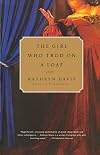
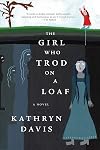
The Girl Who Trod on a Loaf
by Kathryn Davis
On This Page
Description
This remarkable novel immerses us in the lives of two women in a small upstate New York town: Frances Thorn, who waits tables, despite her privileged background, and raises her twin daughters without even a memory of their father; and Helle Ten Brix, an elderly Danish composer. At the heart of the two women's friendship is a Hans Christian Andersen tale about a prideful girl (the subject of Helle's final opera) who is damned for using a precarious loaf of bread, intended as a gift for her show more parents, as a stepping stone. The opera, left unfinished at Helle's death, is willed, along with the rest of Helle's music, to Frances. From this curious legacy, Frances must not only unravel the mysteries of the composer's life and work but also confront the fateful love triangle into which she and Helle had been drawn. show lessTags
Recommendations









Member Reviews
This is a well-written book with some plotting issues. Like many books, it has some parts that take place in the present and some in the past and the past parts are better than the contemporary ones. The story follows two women, Helle Ten Brix, a prickly celebrated composer, and Frances Thorn who comes to know her later in life. Helle dies at the beginning and Frances feels compelled to finish her final opera, The Girl Who Trod on a Loaf. She reflects on her relationship with Helle and describes Helle’s past.
The opening section is a bit hard to get into. However, the author’s imaginative, lyrical prose kept me reading. Davis does spend a lot of time describing scenery and setting, which might not be to everyone’s taste, but it was show more very well done. In the first section, multiple beginnings are thrown at the reader – it’s all a bit confusing and doesn’t catch your interest. There’s Helle’s death and Frances’ haunting shortly after. There are some glimpses of Helle’s friendship with Frances and her twins in its later stages. The story of Helle’s childhood starts. We get the folktale of the girl who trod on a loaf. Then there’s their initial meeting and Frances’ affair with one of Helle’s relatives. We get some glimpses of Frances’ life as a strapped single mother to two girls working as a waitress and some hints of past problems but not that much, which makes it hard to care about her as a character. In the later sections, Helle’s story takes prominence which made the book more interesting plotwise.
Helle’s story is told by Frances – she notes several times that Helle was rather slippery in her story-telling, so there are a number of fantastic elements in the descriptions of the past, though that added rather than detracted from this narrative. Helle’s childhood, spent in the bog-filled Danish countryside, provides plenty of atmospheric inspiration for her musical pieces. Davis gives some detailed descriptions of her operas. Some people might not like this, but I quite enjoyed them. It sounds like they would be fun operas to see. Never thought about a Virginia Woolf opera, but Helle has set one of her most challenging books – The Waves – to music. Interesting. One of them features a singing prow of a ship, another a princess turned into a moth, another a group of birds that are most definitely not a Hitler allegory according to Helle. Helle soon goes to the conservatory in Copenhagen and meets several people important to her career and life – her landlady, dictatorial former beauty Daisy, two sailor friends, her also dictatorial music teacher Binegger and capricious singer Maeve Marrow.
In later sections, the transition between the past – early to mid 20th century – and the present 1960’s is handled with more ease than the first section. However, the Frances parts are never as interesting as the Helle parts. Frances’ relationship with Sam isn’t given much justification or logic, but to be fair, Frances herself never gives much thought to that. Towards the end, after the climactic WWII scenes in Helle’s story, her thread loses momentum. She composed a several other operas and pieces – it would have been interesting to hear the backstory on those. A number of plotlines were left hanging, but that does in the end make it more realistic than tidy conclusions. The prose generally made up for any plot issues. show less
The opening section is a bit hard to get into. However, the author’s imaginative, lyrical prose kept me reading. Davis does spend a lot of time describing scenery and setting, which might not be to everyone’s taste, but it was show more very well done. In the first section, multiple beginnings are thrown at the reader – it’s all a bit confusing and doesn’t catch your interest. There’s Helle’s death and Frances’ haunting shortly after. There are some glimpses of Helle’s friendship with Frances and her twins in its later stages. The story of Helle’s childhood starts. We get the folktale of the girl who trod on a loaf. Then there’s their initial meeting and Frances’ affair with one of Helle’s relatives. We get some glimpses of Frances’ life as a strapped single mother to two girls working as a waitress and some hints of past problems but not that much, which makes it hard to care about her as a character. In the later sections, Helle’s story takes prominence which made the book more interesting plotwise.
Helle’s story is told by Frances – she notes several times that Helle was rather slippery in her story-telling, so there are a number of fantastic elements in the descriptions of the past, though that added rather than detracted from this narrative. Helle’s childhood, spent in the bog-filled Danish countryside, provides plenty of atmospheric inspiration for her musical pieces. Davis gives some detailed descriptions of her operas. Some people might not like this, but I quite enjoyed them. It sounds like they would be fun operas to see. Never thought about a Virginia Woolf opera, but Helle has set one of her most challenging books – The Waves – to music. Interesting. One of them features a singing prow of a ship, another a princess turned into a moth, another a group of birds that are most definitely not a Hitler allegory according to Helle. Helle soon goes to the conservatory in Copenhagen and meets several people important to her career and life – her landlady, dictatorial former beauty Daisy, two sailor friends, her also dictatorial music teacher Binegger and capricious singer Maeve Marrow.
In later sections, the transition between the past – early to mid 20th century – and the present 1960’s is handled with more ease than the first section. However, the Frances parts are never as interesting as the Helle parts. Frances’ relationship with Sam isn’t given much justification or logic, but to be fair, Frances herself never gives much thought to that. Towards the end, after the climactic WWII scenes in Helle’s story, her thread loses momentum. She composed a several other operas and pieces – it would have been interesting to hear the backstory on those. A number of plotlines were left hanging, but that does in the end make it more realistic than tidy conclusions. The prose generally made up for any plot issues. show less
Started this book, but didn't finish. It just didn't grab my interest, so I gave up. Still counting it as "read" though, since I did try.
Please see my review here .
Ratings
Members
- Recently Added By
Author Information

10+ Works 1,977 Members
Kathryn Davis is also the author of novels, "The Girl Who Trod on a Loaf" & "Hell." The recipient of a Kafka Prize, she teaches at Skidmore College & lives with her husband & their daughter in Vermont. (Publisher Provided)
Common Knowledge
- Canonical title
- The Girl Who Trod on a Loaf
- Original publication date
- 1993
- Epigraph
- Only music can create an indestructible complicity between two persons. A passion is perishable, it decays, like everything that partakes of life, whereas music is of an essence superior to life and, of course, to death. --E.... (show all) M. Cioran, Anathemas and Admirations
- Dedication
- For Louise Glück, Lois Harris, Elaine Segal--i più dolce amiche--And for Daphne.
- First words
- In the thirty-fourth year of my life, tragedy having turned by basic languor to indolence, my skepticism to sorrow, I came to be haunted by the ghost of a woman almost twice my age.
- Last words
- (Click to show. Warning: May contain spoilers.)Really, I said, sibylline, magnificent in my red winter coat, you should be nicer to him, or else.
- Blurbers
- Banville, John; Norfolk, Lawrence; Kurzweil, Allen
Classifications
Statistics
- Members
- 246
- Popularity
- 132,863
- Reviews
- 3
- Rating
- (3.40)
- Languages
- Dutch, English
- Media
- Paper, Audiobook, Ebook
- ISBNs
- 10
- ASINs
- 3