The Gospel According to the Son
by Norman Mailer 
On This Page
Description
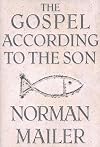
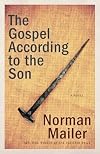
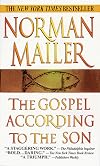
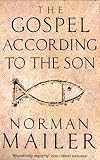
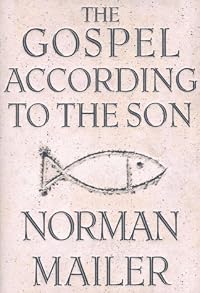
The autobiography of Jesus Christ, written by him after his ascension into heaven. The novel opens with his youth as a carpenter, gives his reaction to God's announcement of his mission to save mankind, and describes the terror of the crucifixion. Christ analyzes his two sides--the divine and the human--and recalls his debates with the devil.Tags
Recommendations









































Member Reviews
There was a cloud of tepid foreshadowing hanging over me as I went into this Mailer novel. It was decried as a soft and near lifeless work, a dedication of sorts from the secular Jewish Mailer to his then wife of and from America's Bible Belt.
But it was more than that. After reading Mailer for the last few years and hearing (in an interview with Charlie Rose I believe) that he willfully altered his style with every novel, I found myself more and enamored with his authorial ethos. Unlike, say, a Hemingway or a Faulkner, or a Pynchon, all of whom never seem to stray too far beyond their respective aesthetic spheres (and in some cases become almost slavish to them) Mailer ostensibly broke and re-broke his teeth with each new written show more endeavor.
And he was damn good at it too. Read Ancient Evenings and then The Gospel According to the Son and ask yourself how these two disparate works could have possibly been written by the same author. The former work wallowed in the excess and atavistic ritual of Ancient Egypt where the latter is almost monkish in its humanizing restraint in portraying Jesus Christ. And that Mailer was so able to characterize the Christian Messiah so believably as ideological rebel and conflicted man, as well as more than a bit vulnerable to the weaknesses of his partial humanity, while remaining mostly loyal to the gospels (save some genuinely funny and insightful editorial moments of Jesus's post death depictions in the hands of many who had never even met him) is a hell of a writerly feat in and of itself.
I read this in a day, I'm not saying you'll be carried by it as much as I was if only because at this point I'm probably far past the point of critical Stockholm syndrome concerning Mailer, but give it a shot to see a meditative, contemplative and, just as important, believable portrayal of the carpenter who, for many, divided history. show less
But it was more than that. After reading Mailer for the last few years and hearing (in an interview with Charlie Rose I believe) that he willfully altered his style with every novel, I found myself more and enamored with his authorial ethos. Unlike, say, a Hemingway or a Faulkner, or a Pynchon, all of whom never seem to stray too far beyond their respective aesthetic spheres (and in some cases become almost slavish to them) Mailer ostensibly broke and re-broke his teeth with each new written show more endeavor.
And he was damn good at it too. Read Ancient Evenings and then The Gospel According to the Son and ask yourself how these two disparate works could have possibly been written by the same author. The former work wallowed in the excess and atavistic ritual of Ancient Egypt where the latter is almost monkish in its humanizing restraint in portraying Jesus Christ. And that Mailer was so able to characterize the Christian Messiah so believably as ideological rebel and conflicted man, as well as more than a bit vulnerable to the weaknesses of his partial humanity, while remaining mostly loyal to the gospels (save some genuinely funny and insightful editorial moments of Jesus's post death depictions in the hands of many who had never even met him) is a hell of a writerly feat in and of itself.
I read this in a day, I'm not saying you'll be carried by it as much as I was if only because at this point I'm probably far past the point of critical Stockholm syndrome concerning Mailer, but give it a shot to see a meditative, contemplative and, just as important, believable portrayal of the carpenter who, for many, divided history. show less
Definitely not Mailer at his best — largely a cut-and-paste of excerpts from the four canonical gospels interlaced with Mailer's own commentary as put into the voice of Jesus as first-person narrator.
You can watch Mailer talking about reading the NT for the first time in a Charlie Rose interview on Youtube. He comes to it late in life and as an outsider (coming from a jewish heritage).
There's nothing transformative in this book, no radical new take or even divergence from the Biblical narrative (as with The Last Temptation for instance). Instead it's almost predictably a take on Jesus as a jewish man of his time, with some uncertainty and trepidation but overall following the beats as laid out in a harmonizing view of the gospels. This is like reading Mailer's own attempt to understand the story of the NT and that's the biggest failing. There's nothing wrong with it, the prose is nice enough, there's just nothing enticing there, no show more insight or revelation to uncover. It's exactly what you'd expect. show less
There's nothing transformative in this book, no radical new take or even divergence from the Biblical narrative (as with The Last Temptation for instance). Instead it's almost predictably a take on Jesus as a jewish man of his time, with some uncertainty and trepidation but overall following the beats as laid out in a harmonizing view of the gospels. This is like reading Mailer's own attempt to understand the story of the NT and that's the biggest failing. There's nothing wrong with it, the prose is nice enough, there's just nothing enticing there, no show more insight or revelation to uncover. It's exactly what you'd expect. show less
This is the gospel according to Jesus's own perspective. It was interesting and I found it uplifting, even though I am not a religious person. I found the perspective attributed to Jesus was credible.
While I enjoyed reading this, it left me wanting more. It was sparsely written and didn't go into Jesus's feelings in much depth.
While I enjoyed reading this, it left me wanting more. It was sparsely written and didn't go into Jesus's feelings in much depth.
Gospel retellings from Jesus' point of view have already been done, and done better than this. I was really disappointed with The Gospel According to the Son, because it doesn't deviate *enough* from its source; Mailer never does anything interesting with all of its possibilities. There are even places, both in the dialogue and prose, where the novel follows the gospel story word for word. Bad form, Norman Mailer. A bad book and a disappointment that I really wanted to like.
Very interesting fictional memoir of Jesus of Nazareth. The narrator's voice is highly believable as he undertakes a mission he's not sure he's up to.
Considering this was written by such a “name” author I was really underwhelmed. With a few small exceptions it didn’t seem substantially different than a blending of the more familiar gospels.
Members
- Recently Added By
Published Reviews
ThingScore 50
With few exceptions, even the most conservative Christian should find little to reject. In a writer of Mr. Mailer's past daring and outrage, however, such a humility of imagination constitutes his Gospel's most disappointing aspect. In his faithfulness to tradition -- a faithfulness that even leads him to a puzzling reliance on the archaic King James diction of a thousand Christmas and Easter show more pageants -- Mr. Mailer has barred himself from the kinds of penetrating meditation, risky invention and plunging insight that have always been his strongest gifts and that might have inspired less gifted searchers in the hunt for a possible Jesus. show less
added by Shortride
Lists

Best Historical Fiction
620 works; 257 members

Historical Fiction
889 works; 91 members

Books Read in 2020
4,379 works; 124 members

Books With Family Relationships in the Title
44 works; 4 members
Author Information

158+ Works 24,714 Members
Norman Kingsley Mailer was born on January 31, 1923 in Long Branch, N. J. and then moved with his family to Brooklyn, N. Y. Mailer later attended Harvard University and graduated with a degree in aeronautical engineering. Mailer served in the Army during World War II, and later wrote, directed, and acted in motion pictures. He was also a show more co-founder of the Village Voice and edited Disssent for nine years. Mailer has written several books including: The Armies of the Night, which won the National Book Award, the Pulitzer Prize, and a Polk Award; and The Executioner's Song, which won the Pulitzer Prize. In 2005, he won the Medal for Distinguished Contribution to American Letters from the National Book Foundation. He published his last novel, The Castle in the Forest, in 2007. He died of acute renal failure on November 10, 2007. (Bowker Author Biography) show less
Norman Mailer has a Legacy Library. Legacy libraries are the personal libraries of famous readers, entered by LibraryThing members from the Legacy Libraries group.
Awards and Honors
Awards
Distinctions
Common Knowledge
- Canonical title
- The Gospel According to the Son
- Original title
- The Gospel According to the Son
- Original publication date
- 1997
- First words
- In those days, I was the one who came down from Nazareth to be baptized by John in the River Jordan.
- Last words
- (Click to show. Warning: May contain spoilers.)Then from the depth of my sorrow wells up an immutable compassion, and I find the will to live again and rejoice.
- Original language*
- angličtina
*Some information comes from Common Knowledge in other languages. Click "Edit" for more information.
Classifications
Statistics
- Members
- 958
- Popularity
- 27,505
- Reviews
- 15
- Rating
- (3.21)
- Languages
- 15 — Catalan, Czech, Danish, Dutch, English, Finnish, French, German, Hungarian, Italian, Portuguese, Russian, Slovak, Spanish, Swedish
- Media
- Paper, Audiobook, Ebook
- ISBNs
- 40
- ASINs
- 6