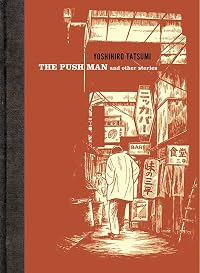
The Push Man and Other Stories
by Yoshihiro Tatsumi
On This Page
Description
Thirty years before the advent of the literary graphic novel movement in the United States, Yoshihiro Tatsumi created a library of comics that draw parallels to modern prose fiction and today's alternative comics. The stories collected inThe Push Manare simultaneously haunting, disturbing, and darkly humorous. A lone man travels the country, projecting pornographic films for private individuals while attempting to maintain a normal home life. The lives of two men become intertwined when one show more hires the other to observe his sexual escapades through a telescope. An auto mechanic's obsession with a female TV personality turns fatal after a chance meeting between the two show lessTags
Recommendations
























Member Recommendations
Member Reviews
Yoshihiro Tatsumi is one of the early alternative manga practitioners. His comics use the clearly Tezuka-influenced styles of mid 1960s Japanese manga, but with a much darker twist. The stories are short and the explanations are scant. Rather, these vignettes are enigmatic little morsels that leave a distinct feeling of urban hopelessness and isolation.
A theme running throughout the stories is a strange sort of misogyny. The men are generally downtrodden and hopeless, further put down by loudmouthed, angry women. In one story a man impregnates a rat by masturbating into the shower drain. When the pregnant rat appears in the apartment, the man’s girlfriend is indignant and leaves him to his beastly mistress. Throughout the exchange show more the man says not a word. This is typical of the stories.
Also typical is some kind of ambivalent infatuation with abortion. Sewer workers find carcasses, unwanted pregnancies abound, and all of this is dealt with in an unsettling way. It’s hard to say exactly where Tatsumi comes down on these issues, but if ambiguity is a sign of genius, then Tatsumi’s work is clearly something to spend some time with.
Push Man is a good antidote to the typical manga fare, and a great example of what comics can be when relieved of their kiddy constraints. show less
A theme running throughout the stories is a strange sort of misogyny. The men are generally downtrodden and hopeless, further put down by loudmouthed, angry women. In one story a man impregnates a rat by masturbating into the shower drain. When the pregnant rat appears in the apartment, the man’s girlfriend is indignant and leaves him to his beastly mistress. Throughout the exchange show more the man says not a word. This is typical of the stories.
Also typical is some kind of ambivalent infatuation with abortion. Sewer workers find carcasses, unwanted pregnancies abound, and all of this is dealt with in an unsettling way. It’s hard to say exactly where Tatsumi comes down on these issues, but if ambiguity is a sign of genius, then Tatsumi’s work is clearly something to spend some time with.
Push Man is a good antidote to the typical manga fare, and a great example of what comics can be when relieved of their kiddy constraints. show less
These sixteen stories from 1969, republished by Drawn and Quarterly in English in 2005, brought a master of gekiga manga to recognition in North America. The stories are dark, typically with underclass protagonists with little or no hope, yet with all of the drives and will of their better-off brothers. Sexually frank, violent, and usually involving the shredding of personal vanity to the point of self-harm. Stories like “Piranha,” or “Black Smoke,” or the title story “The Push Man,” see protagonists pushed (literally in some cases) beyond the breaking point. Others, such as “Projectionist,” “Test Tube,” “Bedridden,” peel back the surface on real but repulsive individuals.
Uneasily riveting.
Uneasily riveting.
Consider, if you will, the everyman. He has a job. He works hard at it, and tries to enjoy his pay. He has a woman in his life. Lately, though, the world has been looking grey. Small things have started to bother him. Tiny things, really, things no one else seems to notice. This is the world of Yoshihiro Tatsumi's "Push Man and Other Stories," a collection of the grandfather of Japanese Alternative Comics. Gekiga, as thiese unique "non-manga" works are called, tend to be more dramatic, brutally honest appraisals of the life of their subjects.
This collection essentially follows a series of similar Japanese working class men as they go about their "ordinary" lives. These men are under the yolk, and are treated mercilessly by society, show more their wives and girlfriends, and themselves. There are disturbing, and blunt examinations of a number of difficult topics here. Abortion, depression, sex workers, falling out of love, sexual infertility, menial labor, murder, celebrity obsession, and the occasional glimmer of good luck are all on display in these pages. Every small, challenging moment is made all the more poignant by knowing that Tatsumi's influence in creating these works in 1969 were not other illustrators or fiction, but police reports, and stories he heard from the working-class neighbors he lived amongst.
Tatsumi's vision of Japan is not a pleasant one, and is certainly not the vision presented in modern, or even classic manga works. There is little optimism here, and conspicuously absent are the celebrations of technological marvels, of societal glories, or even of cultural wonders. Still, for all the pain, the beautiful moments of self-discovery and knowing realization in absolute isolation are a huge payoff for the reader.
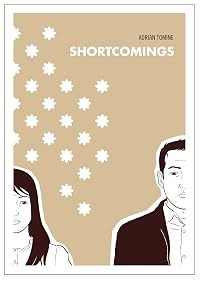
The edition with Adrian Tomine's (creator of "Shortcomings") introduction helps paint a bit of history of both Tatsumi and the Gekiga style comics. If it can be found, that is certainly the better version. show less
This collection essentially follows a series of similar Japanese working class men as they go about their "ordinary" lives. These men are under the yolk, and are treated mercilessly by society, show more their wives and girlfriends, and themselves. There are disturbing, and blunt examinations of a number of difficult topics here. Abortion, depression, sex workers, falling out of love, sexual infertility, menial labor, murder, celebrity obsession, and the occasional glimmer of good luck are all on display in these pages. Every small, challenging moment is made all the more poignant by knowing that Tatsumi's influence in creating these works in 1969 were not other illustrators or fiction, but police reports, and stories he heard from the working-class neighbors he lived amongst.
Tatsumi's vision of Japan is not a pleasant one, and is certainly not the vision presented in modern, or even classic manga works. There is little optimism here, and conspicuously absent are the celebrations of technological marvels, of societal glories, or even of cultural wonders. Still, for all the pain, the beautiful moments of self-discovery and knowing realization in absolute isolation are a huge payoff for the reader.
The edition with Adrian Tomine's (creator of "Shortcomings") introduction helps paint a bit of history of both Tatsumi and the Gekiga style comics. If it can be found, that is certainly the better version. show less
compelling honesty and skill
Tatsumi portrays the very base and earthly desires of resentment, jealousy, hatred, obsessiveness, libidinous addictions, misogyny, abuse, murder, and apathy. You'd think all of that wouldn't make for very good reading, but Tatsumi manages a compelling honesty in which I find it hard not to recognize parts of myself. There is a questioning desperation in these characters that resonates in how cleanly (though uniformly) they are drawn. They inspire pity and horror.
Tatsumi portrays the very base and earthly desires of resentment, jealousy, hatred, obsessiveness, libidinous addictions, misogyny, abuse, murder, and apathy. You'd think all of that wouldn't make for very good reading, but Tatsumi manages a compelling honesty in which I find it hard not to recognize parts of myself. There is a questioning desperation in these characters that resonates in how cleanly (though uniformly) they are drawn. They inspire pity and horror.
Tatsumi's protagonists, if they can be called such, are blue collar schmoes with unfaithful wives and girlfriends, dead-end jobs, and bad ideas. The main character in each (unconnected) story is practically speechless, reacting to the oppressively detailed and gritty world around him (which we see with equal clarity because there are so few speech bubbles) with gazes alternately shocked and resigned. Hands are sacrificed for investment capital, babies are born out of season, unspoken passions come out as rage-- these are stories about people who couldn't identify their real struggles until they were already defeated. It shouldn't be so easy to read such hard luck stories, but Tatsumi's concise artwork and pacing make the pages turn quickly.
Peculiar, this collection of short comics is just peculiar. They really make you think, at least in a twisted sense. The main character is always a man that doesn't say much that has a woman in his life that either cheats on him or is involved with another man. All the women seem to be portrayed very negatively, and then the main character kills them. It is definitely a social and sexual commentary on Japanese culture. I also think that it's about alienation because there are scenes where the protagonist blends into a crowd of people. The protagonist is usually displayed as a tight lipped "everyman" that does unspeakable violence to the people in his life - usually women. The stories are just odd and they make you wonder if doing bad show more things to bad people are justified. show less
Yoshihiro Tatsumi's art and storytelling style is brilliant. Every single panel is expressive and conveys a lot. The stories themselves, set in a modernising, urban Japan are bleak and miserable with dark humour. Our lead characters are all lonely, broken and confused working class men who often act in shocking and violent ways. They are frequently depicted in their daily drudgery, and walking alone through the city streets. Silent witnesses to a meaningless society.
Members
- Recently Added By
Lists

Classic Manga
31 works; 4 members

Club Read's Graphic Stories Recommendations
127 works; 2 members

Japanese Literature
230 works; 37 members
Author Information

32+ Works 2,117 Members
Some Editions
Awards and Honors
Awards
Series
Belongs to Publisher Series
Common Knowledge
Classifications
- Genre
- Graphic Novels & Comics
- DDC/MDS
- 741.5952 — Arts & recreation Drawing & decorative arts Drawing Comic books, graphic novels, fotonovelas, cartoons, caricatures, comic strips History, geographic treatment, biography Asian Japanese
- LCC
- PN6790 .J34 .T26 — Language and Literature Literature (General) Literature (General) Collections of general literature Comic books, strips, etc.
- BISAC
Statistics
- Members
- 513
- Popularity
- 58,729
- Reviews
- 19
- Rating
- (3.81)
- Languages
- English
- Media
- Paper
- ISBNs
- 2
- ASINs
- 1