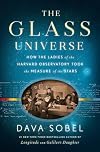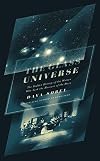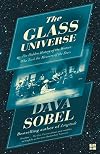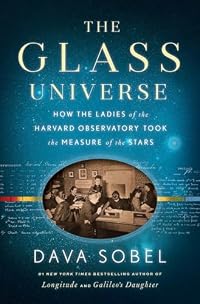
The Glass Universe: How the Ladies of the Harvard Observatory Took the Measure of the Stars
by Dava Sobel
On This Page
Description
From #1 New York Times bestselling author Dava Sobel, the "inspiring" (People), little-known true story of women's landmark contributions to astronomyA New York Times Book Review Notable Book of 2017
Named one of the best books of the year by NPR, The Economist, Smithsonian, Nature, and NPR's Science Friday
Nominated for the PEN/E.O. Wilson Literary Science Writing Award
"A joy to read.” —The Wall Street Journal
In the mid-nineteenth century, the Harvard College Observatory began show more employing women as calculators, or “human computers,” to interpret the observations their male counterparts made via telescope each night. At the outset this group included the wives, sisters, and daughters of the resident astronomers, but soon the female corps included graduates of the new women's colleges—Vassar, Wellesley, and Smith. As photography transformed the practice of astronomy, the ladies turned from computation to studying the stars captured nightly on glass photographic plates.
The “glass universe” of half a million plates that Harvard amassed over the ensuing decades—through the generous support of Mrs. Anna Palmer Draper, the widow of a pioneer in stellar photography—enabled the women to make extraordinary discoveries that attracted worldwide acclaim. They helped discern what stars were made of, divided the stars into meaningful categories for further research, and found a way to measure distances across space by starlight. Their ranks included Williamina Fleming, a Scottish woman originally hired as a maid who went on to identify ten novae and more than three hundred variable stars; Annie Jump Cannon, who designed a stellar classification system that was adopted by astronomers the world over and is still in use; and Dr. Cecilia Helena Payne, who in 1956 became the first ever woman professor of astronomy at Harvard—and Harvard’s first female department chair.
Elegantly written and enriched by excerpts from letters, diaries, and memoirs, The Glass Universe is the hidden history of the women whose contributions to the burgeoning field of astronomy forever changed our understanding of the stars and our place in the universe. show less
Tags
Recommendations





















Member Recommendations
Miss Leavitt's Stars : The Untold Story of the Woman Who Discovered How to Measure the Universe by George Johnson
themulhern Both books cover the same subject, and they don't entirely agree, which is interesting. "The Glass Universe" is longer and broader, "Miss Leavitt's Stars" is shorter and more focused.
20
Member Reviews
A history of the Harvard Observatory spanning decades from the 1880s to 1950s, The "glass universe" refers to the many glass plate negatives taken through telescopes over those years. It begins with the death of Henry Draper, an amateur astronomer who was especially interested in studying stellar spectra, and his wife's giving money and a telescope to the Observatory to continue his work. Edward Pickering, then the director of the Observatory, and several women he employed there, began a massive undertaking in photographing stars, classifying and storing the plates, and studying the plates to not just learn about the spectra, but discovering binary stars and what, in fact, stars are made of as well as much more.
The subtitle of the book show more is "how the ladies of the Harvard Observatory took the measure of the stars." My guess is that with other books coming out such as Hidden Figures and The Radium Girls focusing on forgotten women's history, that the publishers may have chosen to focus on that aspect of the story. It hardly hints at the sprawling narrative within, however, that spans roughly 70 years and many people, both men and women, who worked with the Observatory to advance astronomy significantly. I got a little lost in the narrative, to be honest, and wish I had discovered the list of people in the back before I was almost finished the book. The science is kept fairly light and accessible for a non-specialist like me, and I am left wanting to look up even more of the astronomers highlighted, such as Adelaide Ames who published articles with then-director Harlow Shapley, and Cecilia Payne Gaposchkin who got a doctorate, discovered what stars are made of, and kept working even after she married. There's much more to be found between these pages, but if you're anything like me you'll be left wanting to learn a lot more. show less
The subtitle of the book show more is "how the ladies of the Harvard Observatory took the measure of the stars." My guess is that with other books coming out such as Hidden Figures and The Radium Girls focusing on forgotten women's history, that the publishers may have chosen to focus on that aspect of the story. It hardly hints at the sprawling narrative within, however, that spans roughly 70 years and many people, both men and women, who worked with the Observatory to advance astronomy significantly. I got a little lost in the narrative, to be honest, and wish I had discovered the list of people in the back before I was almost finished the book. The science is kept fairly light and accessible for a non-specialist like me, and I am left wanting to look up even more of the astronomers highlighted, such as Adelaide Ames who published articles with then-director Harlow Shapley, and Cecilia Payne Gaposchkin who got a doctorate, discovered what stars are made of, and kept working even after she married. There's much more to be found between these pages, but if you're anything like me you'll be left wanting to learn a lot more. show less
In The Glass Universe: How the Ladies of the Harvard Observatory Took the Measure of the Stars, Dava Sobel examines the spectroscopy work performed at Harvard under the auspices of the Henry Draper Memorial. She seeks to counter the prevailing view of the female computers at Harvard as "underpaid, undervalued victims of a factory system" (pg. 262). Sobel's narrative begins with the work of Draper, who took spectroscopic photographs of the stars through a telescope, but died before having the opportunity to examine them. His widow, wishing to see the work completed, endowed the Harvard Observatory with a grant to catalogue the images and make further photographic and spectroscopic examinations, leading to the discovery of the chemical show more nature of the stars.
Sobel's work examines the lives and work of the women who worked as computers, counting the Fraunhofer lines on the stellar spectra and creating a system to interpret it. Most interesting of all, despite working in the late nineteenth and early twentieth centuries in a field dominated by men, the ladies and their contributions were recognized both in the United States and abroad. Williamina Paton Stevens Fleming, who worked as a maid before establishing a system to classify the stars, and Annie Jump Cannon, a Wellesley graduate, both stand out in this narrative for their dedication and exactitude in their work as well as their lasting contributions to science. Their names should be spoken in the same breath as Isaac Newton and Einstein for how they changed our view of the cosmos.
The history Sobel examines is fundamental to our understanding of the universe and so has appeared before, in Cosmos and Alan Hirshfeld's Starlight Detectives, but her examination brings an unprecedented level of detail that demonstrates the significance of the women of the Harvard Observatory in their own time along with the challenges they faced, often working on a shoestring budget or without pay. Beyond her subjects' research, Sobel explores the nature of academia and academic funding in the late nineteenth and early twentieth centuries, showing how research that would easily receive university and financial support in the twenty-first century struggled at times in the era on which she focuses.
Sobel's title refers to the massive collection of glass photographic plates accumulated in the Harvard collection as a result of their research (pg. 203). The research and writing are everything readers expect of Sobel and a delight to delve into, sharing in her narrative. Though unrelated to Sobel's work, the appearance of the book is rather lovely as well. show less
Sobel's work examines the lives and work of the women who worked as computers, counting the Fraunhofer lines on the stellar spectra and creating a system to interpret it. Most interesting of all, despite working in the late nineteenth and early twentieth centuries in a field dominated by men, the ladies and their contributions were recognized both in the United States and abroad. Williamina Paton Stevens Fleming, who worked as a maid before establishing a system to classify the stars, and Annie Jump Cannon, a Wellesley graduate, both stand out in this narrative for their dedication and exactitude in their work as well as their lasting contributions to science. Their names should be spoken in the same breath as Isaac Newton and Einstein for how they changed our view of the cosmos.
The history Sobel examines is fundamental to our understanding of the universe and so has appeared before, in Cosmos and Alan Hirshfeld's Starlight Detectives, but her examination brings an unprecedented level of detail that demonstrates the significance of the women of the Harvard Observatory in their own time along with the challenges they faced, often working on a shoestring budget or without pay. Beyond her subjects' research, Sobel explores the nature of academia and academic funding in the late nineteenth and early twentieth centuries, showing how research that would easily receive university and financial support in the twenty-first century struggled at times in the era on which she focuses.
Sobel's title refers to the massive collection of glass photographic plates accumulated in the Harvard collection as a result of their research (pg. 203). The research and writing are everything readers expect of Sobel and a delight to delve into, sharing in her narrative. Though unrelated to Sobel's work, the appearance of the book is rather lovely as well. show less
The science of astronomy had existed for hundreds — thousands — of years, but much was still unknown in the late 19th century and early 20th century. Around the world, astronomers were doing their best to decode the mysteries of the stellar world using direct observation through telescopes. And a very few began using a new technique: long-exposure photographs on glass negatives. The photographs had the advantage of being perusable repeatedly and in daylight, and the images they captured through a prism-and-camera system attached to telescopes revealed the spectra of individual stars in ways that were baffling at first but came to make more and more sense as they were studied.
Among the people studying these fragile negatives for show more clues to the composition and location of the stars were a group of women at the Harvard College Observatory. Originally brought together as literal human computers — performing mathematical calculations on the glass negatives that helped the observatory's male director create a map of what stars stood where in the sky — over time a few of the women took on much larger roles. The director, Edward Pickering, gave the women the freedom to not only perform calculations to his specifications, but to examine the negatives and do independent classification work on the types, sizes, and locations of the stars pictured. Women including Willamina Fleming, Annie Jump Cannon, and Henrietta Leavitt made crucial discoveries that helped to advance science's understanding of stars, as well as creating the classification systems that allowed astronomers to share data and research about specific stars, and to better understand (literally) what stars were made of. Those systems are still in use today, with some modern refinements.
One of the most surprising and pleasing aspects of learning about the work these women did is how much respect they were given by their male colleagues. The discoveries and research that they did was freely credited to them in research journals, and they were elected to various professional societies and given research prizes. (Not all was sunshine and lollipops, though; women wrote their own research papers but then had to rely on a man to deliver them at conferences, since speaking in front of large audiences was not considered appropriate woman's work. Sigh.) Pickering in particular, and his successors at Harvard, Solon Bailey and Harlow Shapley, were generous in their encouragement of the independent research and discoveries that the women made.
Sobel does her usual fine job of making an exceedingly complex subject understandable to even a decidedly unscientific layperson like myself. And she skillfully explores not only the professional lives of the women she profiles but also their personal circumstances in an effort to understand what drove them to do the work they did.
All in all, this was a deeply satisfying exploration of what was to me a little-known aspect of women in science. I would venture that anyone who enjoyed [Hidden Figures] would find this book compelling in its subject matter as well. show less
Among the people studying these fragile negatives for show more clues to the composition and location of the stars were a group of women at the Harvard College Observatory. Originally brought together as literal human computers — performing mathematical calculations on the glass negatives that helped the observatory's male director create a map of what stars stood where in the sky — over time a few of the women took on much larger roles. The director, Edward Pickering, gave the women the freedom to not only perform calculations to his specifications, but to examine the negatives and do independent classification work on the types, sizes, and locations of the stars pictured. Women including Willamina Fleming, Annie Jump Cannon, and Henrietta Leavitt made crucial discoveries that helped to advance science's understanding of stars, as well as creating the classification systems that allowed astronomers to share data and research about specific stars, and to better understand (literally) what stars were made of. Those systems are still in use today, with some modern refinements.
One of the most surprising and pleasing aspects of learning about the work these women did is how much respect they were given by their male colleagues. The discoveries and research that they did was freely credited to them in research journals, and they were elected to various professional societies and given research prizes. (Not all was sunshine and lollipops, though; women wrote their own research papers but then had to rely on a man to deliver them at conferences, since speaking in front of large audiences was not considered appropriate woman's work. Sigh.) Pickering in particular, and his successors at Harvard, Solon Bailey and Harlow Shapley, were generous in their encouragement of the independent research and discoveries that the women made.
Sobel does her usual fine job of making an exceedingly complex subject understandable to even a decidedly unscientific layperson like myself. And she skillfully explores not only the professional lives of the women she profiles but also their personal circumstances in an effort to understand what drove them to do the work they did.
All in all, this was a deeply satisfying exploration of what was to me a little-known aspect of women in science. I would venture that anyone who enjoyed [Hidden Figures] would find this book compelling in its subject matter as well. show less
I really enjoyed this one, despite a nagging feeling that there was so much about the history of astronomy that I know I learned but have since forgotten. I certainly knew of the women of the Harvard Observatory but I was fascinated to learn more of their work and lives. My only complaint was that I think she could have picked a shorter time frame and really gone into more details. Every person is probably worth a full-fledged biography, though I know there are some out there. It also did somewhat peter out at the end as she moved quickly through the post WWII period when these jobs mostly came to an end. However, the manual work done by women in astronomy remained, I have posted above my desk the following from a 1965 paper:
"Star show more counts were made on a single plate of a field near the north galactic pole by Miss D.M. Pyper. The plate was subdivided for counting in such a way that miscounts produced by the fatigue of the counter would produce random rather than systematic variations across the plate."
Whenever I encounter a particularly tedious bit of work, I do feel an historical kinship to Miss Pyper. show less
"Star show more counts were made on a single plate of a field near the north galactic pole by Miss D.M. Pyper. The plate was subdivided for counting in such a way that miscounts produced by the fatigue of the counter would produce random rather than systematic variations across the plate."
Whenever I encounter a particularly tedious bit of work, I do feel an historical kinship to Miss Pyper. show less
Very informative and interesting historical study of the remarkable, talented women who worked at the Harvard Observatory in the late 1800s and early 1900s. Initially employed in low-paid roles, many of them rose from humble beginnings to make very substantial contributions to astronomy.
Take Willamina Fleming, for example. Born in Scotland in 1857, she was abandoned by her husband, leaving her with a child to support. Working initially as a maid at the home of Edward Pickering, the director of the Observatory, she was employed by him to examine and catalog photographic plates of stellar spectra. Eventually she devised a classification system of stars which became the basis of the alphabetical system still used today. It’s because of show more this Scottish maid that we refer to our Sun as a G-type star, for example.
There were many other women employed by the Observatory who went on to make major scientific contributions. Annie Jump Cannon, who improved on the classification system; Henrietta Swan Leavitt, who discovered the luminosity-period relationship of Cepheid variable stars; the list goes on.
Sobel makes all of this a fascinating story. My only complaint (perhaps due to my faltering memory these days) is that there are SO many names mentioned that it sometimes became difficult to remember who was being talked about at a particular time. show less
Take Willamina Fleming, for example. Born in Scotland in 1857, she was abandoned by her husband, leaving her with a child to support. Working initially as a maid at the home of Edward Pickering, the director of the Observatory, she was employed by him to examine and catalog photographic plates of stellar spectra. Eventually she devised a classification system of stars which became the basis of the alphabetical system still used today. It’s because of show more this Scottish maid that we refer to our Sun as a G-type star, for example.
There were many other women employed by the Observatory who went on to make major scientific contributions. Annie Jump Cannon, who improved on the classification system; Henrietta Swan Leavitt, who discovered the luminosity-period relationship of Cepheid variable stars; the list goes on.
Sobel makes all of this a fascinating story. My only complaint (perhaps due to my faltering memory these days) is that there are SO many names mentioned that it sometimes became difficult to remember who was being talked about at a particular time. show less
In the mid-19th century, the Harvard Observatory began employing women as computers, to do the calculations that were the necessary next step after observations were made and recorded. It was considered inappropriate to subject women to the rigors of nighttime observation work, but there was no reason they couldn't do the essential mathematics. Initially, these women were often family members of the director or other astronomers, introduced to the field by their husbands, brothers, or fathers. As time went on and the demand for good computers grew, though, it became a field of science unusually open to women who were increasingly able to pursue formal scientific education.
That need grew in part because another woman, Mrs. Anna Draper, show more heiress to the Draper fortune, wanted to support her late husband's dedication to photographic study of the stars. Through her support, Harvard amassed half a million glass photographic plates, which could be studied in far more detail and precision than hand-drawn records that preceded them.
The women of the Harvard Observatory, whether wives, sisters, and daughters at the outset, or later, graduates of the women's colleges of Smith, Vassar, and Wellesley, or even, in one case, a former maid, Williamina Fleming, recruited by the observatory director, made major discoveries. Fleming discovered ten novae and over three hundred variable stars. Annie Jump Cannon developed the stellar classification system still in use today. Dr. Cecelia Helena Payne-Gaposchkin became not just Harvard's first female professor of astronomy, but also its first female department head.
They weren't just doing the boring, tedious stuff, as sometimes assumed now. They were doing ground-breaking scientific work, collaborating in what might now seem surprising equality with the men of the observatory.
These are fascinating stories, and well told by Sobel and well read by Campbell. In addition, this audiobook does include the sources, glossary, and other after-matter that are an essential part of the book, making pursuit of further information about any of the subjects that much easier.
Highly recommended.
I bought this audiobook. show less
That need grew in part because another woman, Mrs. Anna Draper, show more heiress to the Draper fortune, wanted to support her late husband's dedication to photographic study of the stars. Through her support, Harvard amassed half a million glass photographic plates, which could be studied in far more detail and precision than hand-drawn records that preceded them.
The women of the Harvard Observatory, whether wives, sisters, and daughters at the outset, or later, graduates of the women's colleges of Smith, Vassar, and Wellesley, or even, in one case, a former maid, Williamina Fleming, recruited by the observatory director, made major discoveries. Fleming discovered ten novae and over three hundred variable stars. Annie Jump Cannon developed the stellar classification system still in use today. Dr. Cecelia Helena Payne-Gaposchkin became not just Harvard's first female professor of astronomy, but also its first female department head.
They weren't just doing the boring, tedious stuff, as sometimes assumed now. They were doing ground-breaking scientific work, collaborating in what might now seem surprising equality with the men of the observatory.
These are fascinating stories, and well told by Sobel and well read by Campbell. In addition, this audiobook does include the sources, glossary, and other after-matter that are an essential part of the book, making pursuit of further information about any of the subjects that much easier.
Highly recommended.
I bought this audiobook. show less
Edward Pickering, the fourth director of the Harvard College Observatory, was its longest-serving director. During his tenure, he employed numerous female assistants as “computers” to record and organize notes and make calculations from astronomical observations and from photographic plates. Sobel picks up her story with the premature death of amateur astronomer Henry Draper and his widow’s subsequent funding of Pickering’s research in her husband’s memory.
The Draper Catalogue of Stellar Spectra and its successors were the result of methodical analysis and classification of the photographic images of the stars. Most of this work was carried out by women such as Williamina Fleming, Antonia Maury, and Annie Jump Cannon. These show more women had an incredible opportunity to contribute to the science of astronomy, yet they were underpaid and under-rewarded for their achievements. These women were known among the community of astronomers, yet the awards for their contributions primarily went to Pickering and his successors. It’s ironic that even Sobel, in writing a book about the ladies of Harvard Observatory, gives more attention to Pickering than to any of the many women who worked with him.
Although Sobel writes for a popular audience, I found parts of the book hard going with no background in astronomy. I was more interested in other aspects of the book, such as the personal lives of the astronomers, Pickering’s cultivation of donors for the work, the politics of academia, and the problems of organization and storage of the rapidly growing library of photographic plates. All of these aspects are more relatable to me. show less
The Draper Catalogue of Stellar Spectra and its successors were the result of methodical analysis and classification of the photographic images of the stars. Most of this work was carried out by women such as Williamina Fleming, Antonia Maury, and Annie Jump Cannon. These show more women had an incredible opportunity to contribute to the science of astronomy, yet they were underpaid and under-rewarded for their achievements. These women were known among the community of astronomers, yet the awards for their contributions primarily went to Pickering and his successors. It’s ironic that even Sobel, in writing a book about the ladies of Harvard Observatory, gives more attention to Pickering than to any of the many women who worked with him.
Although Sobel writes for a popular audience, I found parts of the book hard going with no background in astronomy. I was more interested in other aspects of the book, such as the personal lives of the astronomers, Pickering’s cultivation of donors for the work, the politics of academia, and the problems of organization and storage of the rapidly growing library of photographic plates. All of these aspects are more relatable to me. show less
Members
- Recently Added By
Published Reviews
added by rodneyvc
Lists

Science: Astronomy
62 works; 2 members

al.vick-wishlist-science and nature
83 works; 1 member

Wishlist
50 works; 1 member

Books Read in 2018
4,360 works; 110 members

Club Read's Recommended Nonfiction Written by Women
618 works; 30 members
Author Information

27+ Works 22,006 Members
Dava Sobel was born in the Bronx, New York on June 15, 1947. She received a B.A. from the State University of New York at Binghamton in 1969. She is a former New York Times science reporter and has contributed articles to Audubon, Discover, Life, Harvard Magazine, and The New Yorker. She has written several science related books including Letters show more to Father, The Planets, and A More Perfect Heaven: How Copernicus Revolutionized the Cosmos. Longitude: The True Story of a Lone Genius Who Solved the Greatest Scientific Problem of His Time won the Harold D. Vursell Memorial Award from the American Academy of Arts and Letters. Galileo's Daughter: A Historical Memoir of Science, Faith, and Love won the 1999 Los Angeles Times Book Prize for science and technology and a 2000 Christopher Award. She has co-authored six books with astronomer Frank Drake including Is Anyone Out There? She also co-authored with William J. H. Andrewes The Illustrated Longitude. Because her work provides awareness of science and technology to the general public, she has received the Individual Public Service Award from the National Science Board in 2001, the Bradford Washburn Award in 2001,the Klumpke-Roberts Award in 2008, and the Eduard Rhein Foundation in Germany in 2014. (Bowker Author Biography) show less
Some Editions
Awards and Honors
Awards
Distinctions
Notable Lists
Common Knowledge
- Canonical title
- The Glass Universe: How the Ladies of the Harvard Observatory Took the Measure of the Stars
- Original title
- The glass universe
- Original publication date
- 2016
- People/Characters
- Williamina Paton Fleming; Annie Jump Cannon; Edward Charles Pickering; Henrietta Swan Leavitt; Cecilia Payne-Gaposchkin; Antonia Maury (show all 11); Harlow Shapley; Mary Anna Draper; Solon Irving Bailey; Adelaide Ames; Maria Mitchell
- Important places
- Harvard College Observatory, Cambridge, Massachusetts, USA
- Epigraph*
- "Cercai comete per un'ora circa, poi mi trastullai a osservare le varietà di colore. Mi meraviglio di essere stata così a lungo insensibile a questa attrattiva celeste, le sfumature delle diverse stelle sono assai delicate ... (show all)nella loro molteplicità [...] Peccato che alcuni produttori non siano in grado di rubare alle stelle il segreto dei coloranti."
Maria Mitchell (1818-1889), docente di astronomia, Vassar College
"Le bianche cavalle delle luna galoppano nel cielo percuotendo con i loro zoccoli dorati la volta di vetro"
Amy Lowell (1874-1925), vincitrice del premio Pulitzer per la poesia - Dedication
- To the ladies who sustain me:
Diane Ackerman, Jane Allen,
KC Cole, Mary Giaquinto, Sara James, Joanne Julian,
Zoe Klein, Celia Michaels, Lois Morris,
Chiara Peacock, Sarah Pillow,
Rita Reiswig, Lydia Salant, Am... (show all)anda Sobel,
Margaret Thomspon, and Wendy Zomparelli
with love and thanks - First words
- A little piece of heaven.
- Quotations
- The year 1925 brought belated recognition for Henrietta Leavitt, from an admirer who did not yet know that she had died. “Honoured Miss Leavitt,” began the letter of February 23 from Gosta Mittag-Leffler of the Royal Swed... (show all)ish Academy of Sciences. “What my friend and colleague Professor von Zeipel of Uppsala has told me about your admirable discovery of the empirical law touching the connection between magnitude and period length for the S. Cephei-variables of the Little Magellan’s Cloud, has impressed me so deeply that I feel seriously inclined to nominate you to the Nobel prize in physics for 1926, although I must confess that my knowledge of the matter is as yet rather incomplete.” The writer, a ferocious advocate for the recognition of women in science, had agitated in 1889 to gain a full professorship at Stockholm University College for the Russian mathematician Sofia Kovalevskaya. In 1903 he successfully pressed the Nobel committee to include Madame Marie Curie in the physics prize being awarded to her husband, Pierre, and their countryman Henri Becquerel, the discoverer of radioactivity.
- Last words
- (Click to show. Warning: May contain spoilers.)Once again they will reveal the stellar spectra, the variable stars, the star clusters, the spiral galaxies, and all the other luminous sights they first conveyed to a small but dedicated circle of women.
- Original language
- English
*Some information comes from Common Knowledge in other languages. Click "Edit" for more information.
Classifications
- Genres
- Science & Nature, General Nonfiction, History, Nonfiction, Biography & Memoir, Sexuality and Gender Studies
- DDC/MDS
- 522.19744409252 — Natural sciences & mathematics Astronomy Techniques, procedures, apparatus, equipment, materials Observatories History, reports and serial publications of observatories
- LCC
- QB34.5 .S63 — Science Astronomy Astronomy General
- BISAC
Statistics
- Members
- 913
- Popularity
- 29,210
- Reviews
- 39
- Rating
- (3.73)
- Languages
- English, German, Italian, Spanish
- Media
- Paper, Audiobook, Ebook
- ISBNs
- 22
- ASINs
- 6