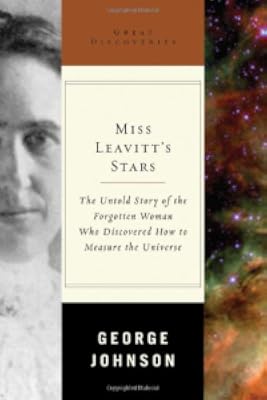
Miss Leavitt's Stars : The Untold Story of the Woman Who Discovered How to Measure the Universe
by George Johnson
On This Page
Description
How big is the universe? In the early twentieth century, scientists took sides. One held that the entire universe was contained in the Milky Way galaxy; their champion was the strong-willed astronomer Harlow Shapley. Another camp believed that the universe was so vast that the Milky Way was just one galaxy among billions--the view that would prevail, proven by the equally headstrong Edwin Hubble. Almost forgotten is the Harvard Observatory Computer--a human number cruncher hired to calculate show more the positions and luminosities of stars in astronomical photographs--who found the key to the mystery. Radcliffe-educated Henrietta Swan Leavitt, fighting ill health and progressive deafness, stumbled upon a new law that allowed astronomers to use variable stars--those whose brightness rhythmically changes--as a cosmic yardstick. This book is both an account of how we measure the universe, and the moving story of a neglected genius.--From publisher description. show lessTags
Recommendations


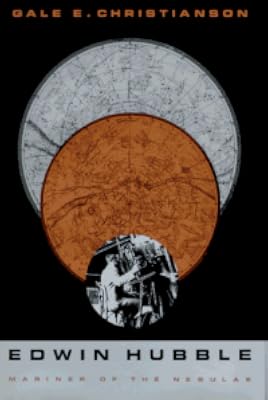

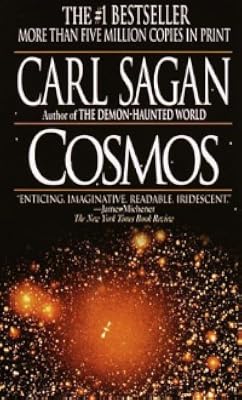


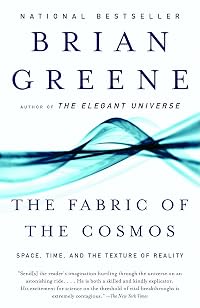
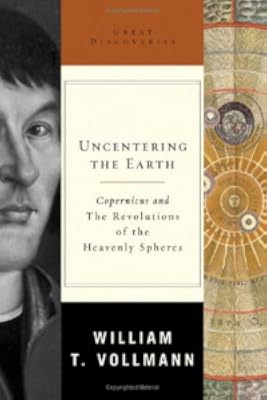






















Member Recommendations

The Glass Universe: How the Ladies of the Harvard Observatory Took the Measure of the Stars by Dava Sobel
themulhern Both books cover the same subject, and they don't entirely agree, which is interesting. "The Glass Universe" is longer and broader, "Miss Leavitt's Stars" is shorter and more focused.
Member Reviews
In the early days of the 20th century, astronomy was tedious and manual. To understand what was out in the heavens, scientists used photographic plates attached to telescopes, exposed them to the night sky, and then pored over the resulting images to catalog new stars and nebulae. The sadder part of this endeavor is that the cataloging of celestial bodies on photo plates was seen as menial labor and left for groups of “human computers” to do. These groups usually consisted of brilliant women who were terrific at mathematics and physics, but were hired for dimes on the dollar simply because of their gender. George Johnson’s Miss Leavitt’s Stars is the tale of one computer who went on make a revolutionary discovery that changed show more the way we view the universe.
Henrietta Swan Leavitt was born on Independence Day, 1868. She was most likely a precocious child, and went on to attend Oberlin College and later Radcliffe to get her degree. She became interested in astronomy and went to work for Edward Pickering at the Harvard College Observatory to study variable stars. The stars were called variable for the simple reason that their brightness changed over time. After fifteen years and working through the images for over 1,700 stars, she made a simple but startling discovery. The intensity of a star’s brightness was directly related to how long the star stayed bright. Using this information about variable stars, or Cepheids, she was able to determine their distance from Earth, and from there, the distance of other galaxies from Earth. These measurements lead directly to the discovery that the universe is expanding from a some central point that wasn’t the Milky Way, giving credence to what we now call the Big Bang Theory.
Johnson’s little book on such a big discovery was fun and enlightening (if you’ll pardon the pun). There’s not a lot of background information on Leavitt, so the biography here is thin. Johnson supplements that with the history of astronomical photography, the story of Edward Pickering (and his harem of human computers), and the ramifications of Leavitt’s discovery. It’s one of the great shames of history that she died before she could be formally nominated for the Nobel Prize that she so richly deserved, but those that benefitted from her research were always keen to credit her work accordingly. A quick and informative read. show less
Henrietta Swan Leavitt was born on Independence Day, 1868. She was most likely a precocious child, and went on to attend Oberlin College and later Radcliffe to get her degree. She became interested in astronomy and went to work for Edward Pickering at the Harvard College Observatory to study variable stars. The stars were called variable for the simple reason that their brightness changed over time. After fifteen years and working through the images for over 1,700 stars, she made a simple but startling discovery. The intensity of a star’s brightness was directly related to how long the star stayed bright. Using this information about variable stars, or Cepheids, she was able to determine their distance from Earth, and from there, the distance of other galaxies from Earth. These measurements lead directly to the discovery that the universe is expanding from a some central point that wasn’t the Milky Way, giving credence to what we now call the Big Bang Theory.
Johnson’s little book on such a big discovery was fun and enlightening (if you’ll pardon the pun). There’s not a lot of background information on Leavitt, so the biography here is thin. Johnson supplements that with the history of astronomical photography, the story of Edward Pickering (and his harem of human computers), and the ramifications of Leavitt’s discovery. It’s one of the great shames of history that she died before she could be formally nominated for the Nobel Prize that she so richly deserved, but those that benefitted from her research were always keen to credit her work accordingly. A quick and informative read. show less
Another sharp, clean tiny biography from the Great Discoveries series. Johnson leverages every scrap of documentation maximally and ultimately runs up against the limits of the record (he squeezes a few good paragraphs out of census forms). Still, a job well done: I know what Leavitt did and perhaps as much about herself as can be known (not much, really).
Written by New York Times science reporter George Johnson, this book is not a biography because there is so little information about Leavitt to write a complete biography. Instead Johnson explains the science and math of astronomy and what Leavitt worked with at Harvard in the early 1900s. Her discovery created a "cosmic yardstick" to measure the universe leading to additional discoveries by later scientists.
I confess I was somewhat lost in the science of island universes and the inverse square law. I expected to learn more about Leavitt's personal life and education as well as struggles in her career as a "computer". But the author notes that she did not leave diaries, letters or journals from which to gather this information so very show more little of the book is a biography per se. It only makes me want to find out more. The book was well written but just over my head and I struggled with all the math so I rated it 3 stars more on my shortcomings than on the authors. show less
I confess I was somewhat lost in the science of island universes and the inverse square law. I expected to learn more about Leavitt's personal life and education as well as struggles in her career as a "computer". But the author notes that she did not leave diaries, letters or journals from which to gather this information so very show more little of the book is a biography per se. It only makes me want to find out more. The book was well written but just over my head and I struggled with all the math so I rated it 3 stars more on my shortcomings than on the authors. show less
Unfortunately, Henrietta Swan Leavitt's story remains untold, for reasons the author himself notes: there are few sources to consult. Thus, Johnson has written not a book about Henrietta Levitt, the discoverer of the astronomical period-luminosity relationship but, indeed, one about "her" stars. Not biographical except in the sense of describing the context of her life, this slim volume cannot accomplish what I take to have been Johnson's goal, to lift this woman of science out of the footnotes of the History of Science and onto the page.
I've been invited to participate in the 2007 Sante Fe Science Writing Workshop and George Johnson, a science writer for the New York Times, is one of the organizers of the workshop. I was looking around for something he had written and I found this wonderful little book about Miss Leavitt, a “computer” at the Harvard College Observatory in the 1920's. The “computer's” at the Observatory were young women, hired for 25 cents an hour to examine and record stars on photographic plates. The book is subtitled The Unknown Story of the Woman Who Discovered How to Measure the Universe. Miss Leavitt was assigned to measure the brightness of the variable stars, now known as Cepheids, in the Large and Small Magellanic Clouds. She did this show more so well, and so diligently, that her work set the stage for measuring the size and extent of the visible Universe. If you've ever wondered how we know a galaxy is two million light years away, you will find the answer in this little book. show less
Did not learn much new as Miss Leavitt did not leave much behind after her death other than a few letters and notes. The other did a good job of esplaining why her work was important.
Partial detailed review.
Prologue: The village in the canyon.
A metaphor for the astronomer's difficulty in calculating the distance to any star.
Chapter 1: Black Stars, White NIghts
Why the white nights? Does he mean white skies? Sets up the problem. How do we know, or believe that we know, the distance to the next galaxy over? Discusses early astronomy and fast forwards to the establishment of the Harvard observatory and its large refracting telescope. Then comes the union of astronomy and photography. Discusses the techniques involved in comparing the brightness of an individual star over time to detect variability. Remarks on the population of women who catalogued the stars. Is not that clear about how many there were or for how long show more this situation lasted.
Chapter 2: Hunting for Variables
Chapter 3: Henrietta's Law
Little is known about Henrietta Leavitt. But after graduating from Radcliffe we find her working as an unpaid assistant at the observatory. Then she spends two years traveling in Europe. Then she goes to her father's place in Beloit, Wisconsin. Then she suggests to Pickering that he employ her. He does, but there are numerous false starts and delays as she is chronically unhealthy and caught up with family obligations. She observes the relation between the period and the brightness of the stars in the Magellanic Clouds and over the space of years works to refine the data. All this is really puzzling. Leavitt was not a computer who worked constantly at the observatory, she was as often far away and getting work sent to her by Pickering. Why didn't he give up on her, with all her delays and illness? It is so hard to understand.
Chapter 4: Triangles
Using parallax, and lots of math, to calculate the distances to stars. A story of an ever expanding baseline. The diameter of the earth is big enough to allow a reasonable calculation of the distance to the moon. And, once the AU was known, the diameter of the earth's orbit will allow calculation of the distances to nearby stars. Proxima Centauri is only four light years away. Since all the Cepheid variables were too far away for their distance to be determined by parallax, astronomers were back to the same situation as they had been with the AU before the transit of Venus measurements; they knew the distance to various stars only in terms of the unknown distance to the Small Magellanic Clouds. But, over the course of years the sun travels and the earth with it, and this gives another baseline, which can be longer than the earth's orbit. Ejnar Hertzsprung takes a stab at this technique and puts the distance to the Small Magellanic Clouds as 30,000 light years. In 1914 Leavitt publishes her completed work on the North Polar Sequence.
Chapter 5: Shapley's Ants
Herschel believes that nebulae may be other galaxies, Laplace is convinced that they are local star factories. Now we know that both are right; some nebulae are other galaxies and others are local star factories. Photography finds 100,000 or so of these nebulae. In 1914, Slipher, at the Lowell Observatory, uses red shift to estimate velocity of nebulae and finds that these things are receding rapidly, 1000 km/second, some of them. Heber Curtis uses super-novae as standard candles, and estimates that the nebulae are millions of light years away. In 1914 it is generally believed that the Milky Way is 25,000 light years long and about a quarter that wide, and that the solar system is near the center. Shapley uses Doppler effect and statistics to estimate the transverse velocity of some stars; that, compared with their perceived velocity from earth, provides an estimate of their distance. By various, rather reckless methods, Shapley calculates the diameter of the Milky Way at about 300,000 light years. Another astronomer calculates the rotational velocity of some galaxies based on estimates of their size and distance and is forced to conclude that their outer stars are moving faster than the speed of light. This can't be true, so the galaxies must be closer and smaller than was previously estimated. Shapley changes his mind and decided that there is only one galaxy, the Milky Way, and all the nebulae lie within it. Shapley notices that the Milky Way is denser toward Sagittarius and concluded that the center of the Milky Way must lie over there somewhere.
In the remaining chapters the astronomers who took Leavitt's work and ran with it are introduced. show less
Prologue: The village in the canyon.
A metaphor for the astronomer's difficulty in calculating the distance to any star.
Chapter 1: Black Stars, White NIghts
Why the white nights? Does he mean white skies? Sets up the problem. How do we know, or believe that we know, the distance to the next galaxy over? Discusses early astronomy and fast forwards to the establishment of the Harvard observatory and its large refracting telescope. Then comes the union of astronomy and photography. Discusses the techniques involved in comparing the brightness of an individual star over time to detect variability. Remarks on the population of women who catalogued the stars. Is not that clear about how many there were or for how long show more this situation lasted.
Chapter 2: Hunting for Variables
Chapter 3: Henrietta's Law
Little is known about Henrietta Leavitt. But after graduating from Radcliffe we find her working as an unpaid assistant at the observatory. Then she spends two years traveling in Europe. Then she goes to her father's place in Beloit, Wisconsin. Then she suggests to Pickering that he employ her. He does, but there are numerous false starts and delays as she is chronically unhealthy and caught up with family obligations. She observes the relation between the period and the brightness of the stars in the Magellanic Clouds and over the space of years works to refine the data. All this is really puzzling. Leavitt was not a computer who worked constantly at the observatory, she was as often far away and getting work sent to her by Pickering. Why didn't he give up on her, with all her delays and illness? It is so hard to understand.
Chapter 4: Triangles
Using parallax, and lots of math, to calculate the distances to stars. A story of an ever expanding baseline. The diameter of the earth is big enough to allow a reasonable calculation of the distance to the moon. And, once the AU was known, the diameter of the earth's orbit will allow calculation of the distances to nearby stars. Proxima Centauri is only four light years away. Since all the Cepheid variables were too far away for their distance to be determined by parallax, astronomers were back to the same situation as they had been with the AU before the transit of Venus measurements; they knew the distance to various stars only in terms of the unknown distance to the Small Magellanic Clouds. But, over the course of years the sun travels and the earth with it, and this gives another baseline, which can be longer than the earth's orbit. Ejnar Hertzsprung takes a stab at this technique and puts the distance to the Small Magellanic Clouds as 30,000 light years. In 1914 Leavitt publishes her completed work on the North Polar Sequence.
Chapter 5: Shapley's Ants
Herschel believes that nebulae may be other galaxies, Laplace is convinced that they are local star factories. Now we know that both are right; some nebulae are other galaxies and others are local star factories. Photography finds 100,000 or so of these nebulae. In 1914, Slipher, at the Lowell Observatory, uses red shift to estimate velocity of nebulae and finds that these things are receding rapidly, 1000 km/second, some of them. Heber Curtis uses super-novae as standard candles, and estimates that the nebulae are millions of light years away. In 1914 it is generally believed that the Milky Way is 25,000 light years long and about a quarter that wide, and that the solar system is near the center. Shapley uses Doppler effect and statistics to estimate the transverse velocity of some stars; that, compared with their perceived velocity from earth, provides an estimate of their distance. By various, rather reckless methods, Shapley calculates the diameter of the Milky Way at about 300,000 light years. Another astronomer calculates the rotational velocity of some galaxies based on estimates of their size and distance and is forced to conclude that their outer stars are moving faster than the speed of light. This can't be true, so the galaxies must be closer and smaller than was previously estimated. Shapley changes his mind and decided that there is only one galaxy, the Milky Way, and all the nebulae lie within it. Shapley notices that the Milky Way is denser toward Sagittarius and concluded that the center of the Milky Way must lie over there somewhere.
In the remaining chapters the astronomers who took Leavitt's work and ran with it are introduced. show less
Members
- Recently Added By
Lists

"I'd Group-Read That"
20 works; 6 members

For Science!
39 works; 5 members

Books discovered on LibraryThing
256 works; 36 members

Best Biographies of Notable Women
279 works; 101 members
Author Information

9+ Works 2,125 Members
George Johnson was born in 1952, in Fayetteville, Ark. He has worked for newspapers in Albuquerque, N.Mex. and Minneapolis, Minn., and is a science writer for the New York Times. His first book, Architects of Fear: Conspiracy Theories and Paranoia in American Politics (1984), won a special achievement award in nonfiction from the Los Angeles show more chapter of International PEN. Many of Johnson's other books evidence thoughtful, spiritual examinations of the relation between man and science. Fire in the Mind: Science, Faith and the Search for Order (1995) is about the diversity of ideas in New Mexico. Johnson draws parallels between Los Alamos and the worshipful view of scientific discovery and the high desert, a sacred place for the Tewa Indians and Hermanos Penitentes. (Bowker Author Biography) show less
Awards and Honors
Distinctions
Series
Belongs to Publisher Series
Common Knowledge
- Canonical title
- Miss Leavitt's Stars : The Untold Story of the Woman Who Discovered How to Measure the Universe
- Original publication date
- 2005
- People/Characters
- Henrietta Swan Leavitt (1868-1921); Edward Charles Pickering (1846-1919); Williamina Paton Fleming (1857-1911 | aka "Wilhelmina"); Annie Jump Cannon (1863-1941); Antonia Caetana Maury (1866-1952); Harlow Shapley (1885-1972) (show all 10); Heber Curtis; Edwin Hubble; Milton Humason; Walter Baade
- Important places
- Harvard College Observatory, Observatory Hill, Cambridge, Massachusetts, USA; Milky Way Galaxy; 9 Warland Street, Cambridge, Massachusetts, USA (Leavitt's 1880 home); Harvard University, Cambridge, Massachusetts, USA
- Epigraph
- Her columns grew longer, and if she squinted at them, the confetti of inklings began to resemble a skyful of stars. She had time to let her mind wander. The Magi's search for Bethlehem; the music of Milton's cryst... (show all)al spheres . . . they could all be reduced to those numbers. There was actually no need to squint and pretend that the digits were the stars. They were, by themselves, wildly alive, fact and symbol of the vast, cool distances in which one located the light of different worlds.
--Thomas Mallon, Two Moons
Then, by means of the instrument at hand, they travelled together from the earth to Uranus, and the mysterious outskirts of the solar system; from the solar system to a star in the Swan, the nearest fixed star in the northern... (show all) sky; from the star in the Swan to remoter stars; thence to the remotest visible; till the ghastly chasm which they had bridged by a fragile line of sight was realized. . . .
--Thomas Hardy, Two on a Tower - Dedication
- For my mother, Dorris M. Johnson
- First words
- Preface:
Henrietta Swan Leavitt deserves a proper biography. She will probably never get one, so faint is the trail she left behind.
Prologue: The Village in the Canyon.
The village was hidden at the bottom of a deep chasm with sides so steep and slick that no one had ever climbed them.
Chapter 1: Black Stars, White Nights.
It is only with great difficulty that one can imagine what it was like to be a computer at Harvard Observatory a hundred years ago, not a soulless machine of wire and silicon but ... (show all)a living, breathing young woman. - Quotations
- We are celestial couch potatoes. (Prologue part 3, p.7)
- Last words
- (Click to show. Warning: May contain spoilers.)Measuring began as a way to gather data to verify theories. Now the measuring stick itself has become one more theory to test.
- Blurbers
- Ferris, Timothy; Grinspoon, David; Henig, Robin Marantz
Classifications
- Genres
- Science & Nature, Nonfiction, General Nonfiction, History, Biography & Memoir
- DDC/MDS
- 522.09 — Natural sciences & mathematics Astronomy Techniques, procedures, apparatus, equipment, materials Astronomers and Astronomy by place and time
- LCC
- QB807 .J64 — Science Astronomy Astronomy Descriptive astronomy Stars
- BISAC
Statistics
- Members
- 249
- Popularity
- 130,442
- Reviews
- 7
- Rating
- (3.55)
- Languages
- 6 — Czech, English, Italian, Japanese, Spanish, Swedish
- Media
- Paper, Audiobook, Ebook
- ISBNs
- 11
- ASINs
- 4