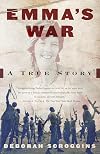
Emma's War
by Deborah Scroggins
On This Page
Description
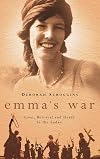
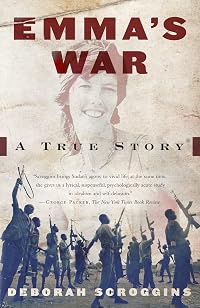
The adventurous young British relief worker Emma McCune came to Sudan determined to make a difference. She became a near legend in the bullet-scarred, famine-ridden country, but her eventual marriage to a rebel warlord made international headlines and spelled disastrous consequences for her ideals.Tags
Recommendations


Member Recommendations
Member Reviews
http://nwhyte.livejournal.com/1263632.html?#cutid3
Emma McCune was the daughter of colonial parents, kicked out of India in the 1960s. They split up and her father committed suicide; Emma grew up with that missionary zeal which one sometimes encounters, to make the world a better place regardless of the personal consequences.
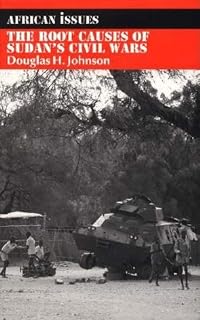
A lot of Scroggins' narrative isn't actually about Emma McCune, but about the horrors of the Sudanese conflict and the ensuing famine, which she covered as a journalist. She gives a decent summary of the background history but her strength is the human dimension. Both Collins and Johnson record, for instance, that when the refugee camps in Ethiopia closed in 1991, their inhabitants returned to South Sudan, causing show more further strain on local and international resources; but Scroggins was actually there, and converts the historical record into the sight of thousands of human beings trudging desperately along the Sobat river, being strafed by Sudanese planes and raided by bandits, in just one of many vivid descriptive passages which will linger with me for a long time.
Scroggins is also very good at describing the mentality and lifestyle of the foreign aid workers in a crisis situation. Where Johnson raises (reasonable) doubts about the entire enterprise, here we have an explanation of the zeal that motivates people to get into the field and do what they can for humanity. It's a world I have dipped into and I recognised most of the characters who Scroggins describes. (And one or two of the actual people.) Her insider critique of why the rest of the world engages with humanitarian crises is very well argued.
One of the most intensely engaged of the expats was, of course, Emma McCune, who got heavily involved with delivering educational aid and trying to liberate child soldiers, largely in the Nuer areas of the SPLA-held south. She then went one further by marrying the local warlord, Riek Machar, who shortly after split from John Garang, creating a civil war within the SPLA. Machar's new English wife was blamed for this by Garang's supporters, but Scroggins is pretty clear that 'Emma's War' was not her fault.
One other figure who repeatedly appears in the narrative is the British businessman Tiny Rowland, who I knew of only as the owner of the Observer newspaper, but who of course had made his fortune by building up his company, Lonrho (from London and Rhodesia) into a conglomerate with tentacles all over the continent. Rowland, never a man for modesty, claimed in one conversation to have created the SPLA. He certainly played a crucial role in its history, and in the internal politics of many other African countries; like Emma McCune, he had a particular obsession with Sudan.
Emma McCune and her unborn baby were killed in a traffic accident in Nairobi only two years into her marriage. Scroggins follows the story a bit further - Machar signed a separate peace with Khartoum, and found another wife, this time from Minnesota; after Scroggins' book was published, Machar actually reconciled with Garang and, with Garang now being out of the picture, is again one of the leading figures in south Sudan.
Emma's War is one of the best books I have read this year, and is I think essential reading for anyone who wants to know more about the human condition. show less
Emma McCune was the daughter of colonial parents, kicked out of India in the 1960s. They split up and her father committed suicide; Emma grew up with that missionary zeal which one sometimes encounters, to make the world a better place regardless of the personal consequences.
A lot of Scroggins' narrative isn't actually about Emma McCune, but about the horrors of the Sudanese conflict and the ensuing famine, which she covered as a journalist. She gives a decent summary of the background history but her strength is the human dimension. Both Collins and Johnson record, for instance, that when the refugee camps in Ethiopia closed in 1991, their inhabitants returned to South Sudan, causing show more further strain on local and international resources; but Scroggins was actually there, and converts the historical record into the sight of thousands of human beings trudging desperately along the Sobat river, being strafed by Sudanese planes and raided by bandits, in just one of many vivid descriptive passages which will linger with me for a long time.
Scroggins is also very good at describing the mentality and lifestyle of the foreign aid workers in a crisis situation. Where Johnson raises (reasonable) doubts about the entire enterprise, here we have an explanation of the zeal that motivates people to get into the field and do what they can for humanity. It's a world I have dipped into and I recognised most of the characters who Scroggins describes. (And one or two of the actual people.) Her insider critique of why the rest of the world engages with humanitarian crises is very well argued.
One of the most intensely engaged of the expats was, of course, Emma McCune, who got heavily involved with delivering educational aid and trying to liberate child soldiers, largely in the Nuer areas of the SPLA-held south. She then went one further by marrying the local warlord, Riek Machar, who shortly after split from John Garang, creating a civil war within the SPLA. Machar's new English wife was blamed for this by Garang's supporters, but Scroggins is pretty clear that 'Emma's War' was not her fault.
One other figure who repeatedly appears in the narrative is the British businessman Tiny Rowland, who I knew of only as the owner of the Observer newspaper, but who of course had made his fortune by building up his company, Lonrho (from London and Rhodesia) into a conglomerate with tentacles all over the continent. Rowland, never a man for modesty, claimed in one conversation to have created the SPLA. He certainly played a crucial role in its history, and in the internal politics of many other African countries; like Emma McCune, he had a particular obsession with Sudan.
Emma McCune and her unborn baby were killed in a traffic accident in Nairobi only two years into her marriage. Scroggins follows the story a bit further - Machar signed a separate peace with Khartoum, and found another wife, this time from Minnesota; after Scroggins' book was published, Machar actually reconciled with Garang and, with Garang now being out of the picture, is again one of the leading figures in south Sudan.
Emma's War is one of the best books I have read this year, and is I think essential reading for anyone who wants to know more about the human condition. show less
Fascinating- the author does a great job of sequencing background information about Emma, interview with colleagues and friends from different times in her life, and presenting the actual events as she observed them in Sudan. You end up feeling jealous of Emma for her verve, then awed by her dedication, then annoyed at her blindness and impracticality, then just sorry for her because it seems that everything led up to her impossible predicament. I sympathized with a lot of the people presented, and for the first time caught a glimpse of what some of Africa is like...
Fascinating- the author does a great job of sequencing background information about Emma, interview with colleagues and friends from different times in her life, and presenting the actual events as she observed them in Sudan. You end up feeling jealous of Emma for her verve, then awed by her dedication, then annoyed at her blindness and impracticality, then just sorry for her because it seems that everything led up to her impossible predicament. I sympathized with a lot of the people presented, and for the first time caught a glimpse of what some of Africa is like...
Emma's War is a fascinating account of what's been going on in the Sudan for the last thirty years. From the cover, and the squib on the back, I mistakenly assumed it was about the "tragically short life" of a "young British relief worker, Emma McCune". I assumed she had been doing great works and was shot in the cross-fire of a war, or perhaps worse. The book was in fact much more about the complexity of politics in Eastern Africa, the romantic notions and sheer hubris of those who offer to work in countries such as the Sudan with a mind to solve centuries-old issues.
While the book isn't really about Emma, it had to start somewhere. Where do you begin when speaking of Sudan? It is dizzying to try to keep track of the multitude of show more factions and shifting alliances without something to center on, so why not a charismatic British woman who married a warlord? She came to the Sudan because she loved the romance of Africa, because any ordinary day in Sudan is worthy of a tale to your British comrades back home or in Nairobi. She stayed in a Master's program just long enough to get contacts and then skipped out to the Sudan to hand out pencils to children and recruit teachers for schools. She was fearless, or reckless, however you chose to see it, and soon was known to everyone because of her willingness to go to the furthest reaches of Sudan on her own. And like everyone else she was maddened by the politics that led to such destruction, famine, disease, war. Name the horseman of the Apocalypse, he was there. So when she met and fell for a sweet-talking warlord who promised peace, she married him. She would be in a position of power, she could bring Western influence to help his side, she could be the key to peace in Africa!
But (there is always a but) the UN can't work in a partisan fashion. It goes where the government lets it go and if the food goes towards feeding one rebel faction over another, well it's no longer humanitarian relief, it's fuelling a war. And Riek Machar, her husband, was still a warlord: incredibly good at saying what people want to hear -- so good that Emma remained faithful to his cause -- but perfectly willing to execute anyone who disagreed, willing to force refugees to stay near his camp so the UN would bring food, and then ready to steal food from starving children to feed his soldiers. Through the course of the book you see the Sudanese rebels sink from one or two major groups fighting against the government to dozens of tribal factions fighting each other with machetes and machine guns. You read about the famine, about the refugees, about the killings, and it is tribute to the book that the Bor Massacre is still horrifying in comparison. Thousands dead, women hacked in two, children with their skulls smashed in. You don't need pictures to have the images fresh in your mind.
In the end, Emma dies in a car crash, proof yet again that the most dangerous thing I did in Guatemala was be on the roads. Some people felt she was a self-sacrificing do-gooder, not least the hundreds of Africans who came to her funeral, believing that because she was white she had power even though she was a young and not terribly gifted woman from a middling English family who hadn't been employed by any relief agency for two years. One said of her "She was really nothing. She was just an adventurer. If she were in a European setting, she would never even have been noticed." It is that sentiment which frightens me a little. We all try to be exceptional in some way, and for Emma, simply by existing in the Sudan she drew attention. Of course, it isn't news that some people are exceptional in some places and unexceptional in others. Lawrence of Arabia made a terrible clerk and a wonderful commander. But it seems Emma's attempts to be exceptional simply made her sensational, worthy of gossip but in no way effective either in furthering her husband's cause or in helping starving Africans.
At several points the author makes a point of saying what a travesty it is that Americans don't care about genocide, in Rwanda, in Sudan, in Sierra Leone, in Somalia. Then in the next chapter she talks about how little aid actually helps, how much it is guided by and used for political purposes. You are left uncertain what to do. If you send troops into Somalia, well, what do you hope to achieve? How can you stop people from war when they have nothing, when all it takes to kill someone is a machete and each tribe runs over to the next village to burn it down, when soldiers steal from the starving and parents send their young boys to the military camps simply because they know soldiers are more likely to eat than civilians. It all seems a horrible horrible mess, and solidifies my opinion that I don't want to work there, at least not in the wartorn segments. So what to do? This book provides no answers, but it certainly provides illumination into the awful things that still continue in today's world. show less
While the book isn't really about Emma, it had to start somewhere. Where do you begin when speaking of Sudan? It is dizzying to try to keep track of the multitude of show more factions and shifting alliances without something to center on, so why not a charismatic British woman who married a warlord? She came to the Sudan because she loved the romance of Africa, because any ordinary day in Sudan is worthy of a tale to your British comrades back home or in Nairobi. She stayed in a Master's program just long enough to get contacts and then skipped out to the Sudan to hand out pencils to children and recruit teachers for schools. She was fearless, or reckless, however you chose to see it, and soon was known to everyone because of her willingness to go to the furthest reaches of Sudan on her own. And like everyone else she was maddened by the politics that led to such destruction, famine, disease, war. Name the horseman of the Apocalypse, he was there. So when she met and fell for a sweet-talking warlord who promised peace, she married him. She would be in a position of power, she could bring Western influence to help his side, she could be the key to peace in Africa!
But (there is always a but) the UN can't work in a partisan fashion. It goes where the government lets it go and if the food goes towards feeding one rebel faction over another, well it's no longer humanitarian relief, it's fuelling a war. And Riek Machar, her husband, was still a warlord: incredibly good at saying what people want to hear -- so good that Emma remained faithful to his cause -- but perfectly willing to execute anyone who disagreed, willing to force refugees to stay near his camp so the UN would bring food, and then ready to steal food from starving children to feed his soldiers. Through the course of the book you see the Sudanese rebels sink from one or two major groups fighting against the government to dozens of tribal factions fighting each other with machetes and machine guns. You read about the famine, about the refugees, about the killings, and it is tribute to the book that the Bor Massacre is still horrifying in comparison. Thousands dead, women hacked in two, children with their skulls smashed in. You don't need pictures to have the images fresh in your mind.
In the end, Emma dies in a car crash, proof yet again that the most dangerous thing I did in Guatemala was be on the roads. Some people felt she was a self-sacrificing do-gooder, not least the hundreds of Africans who came to her funeral, believing that because she was white she had power even though she was a young and not terribly gifted woman from a middling English family who hadn't been employed by any relief agency for two years. One said of her "She was really nothing. She was just an adventurer. If she were in a European setting, she would never even have been noticed." It is that sentiment which frightens me a little. We all try to be exceptional in some way, and for Emma, simply by existing in the Sudan she drew attention. Of course, it isn't news that some people are exceptional in some places and unexceptional in others. Lawrence of Arabia made a terrible clerk and a wonderful commander. But it seems Emma's attempts to be exceptional simply made her sensational, worthy of gossip but in no way effective either in furthering her husband's cause or in helping starving Africans.
At several points the author makes a point of saying what a travesty it is that Americans don't care about genocide, in Rwanda, in Sudan, in Sierra Leone, in Somalia. Then in the next chapter she talks about how little aid actually helps, how much it is guided by and used for political purposes. You are left uncertain what to do. If you send troops into Somalia, well, what do you hope to achieve? How can you stop people from war when they have nothing, when all it takes to kill someone is a machete and each tribe runs over to the next village to burn it down, when soldiers steal from the starving and parents send their young boys to the military camps simply because they know soldiers are more likely to eat than civilians. It all seems a horrible horrible mess, and solidifies my opinion that I don't want to work there, at least not in the wartorn segments. So what to do? This book provides no answers, but it certainly provides illumination into the awful things that still continue in today's world. show less
This is more of an impression than a review, because I read the book some years ago. My copy has since gone into orbit, crossing continents and ending up with someone in London. (I know who you are, and I would like my book back please!)
My impression was that, whether the author intended it or not, it is a cautionary tale, a warning for any naive young British woman choosing to embrace Africa.
There are more informative reviews below, but, someone please tell me, how do they get away with revealing the end of Emma's story? That's not on, surely?
My impression was that, whether the author intended it or not, it is a cautionary tale, a warning for any naive young British woman choosing to embrace Africa.
There are more informative reviews below, but, someone please tell me, how do they get away with revealing the end of Emma's story? That's not on, surely?
The Emma in question is a want-to-be aid worker who got caught up in the feuds of Sudan, marrying the warlord leader of one of the multiple factions in Sudan's wars. It is an interesting story in itself but it is only part of Scroggins' book, which explores the Sudan and its fractious history, building some kind of explanation of how Sudan got itself into the mess it is in today. She also explores the influence of Western humanitarian aid, questioning the motives of those involved. The conclusions reached are bleak and depressing, yet sadly realistic.
There is a lot of detail in the book - tribes involved, their interwoven politics, the personalities of those involved and their backgrounds. What could have been a very dry read is made show more fascinating by Scroggins - she never takes anything or anyone at face values, exploring the story behind the story.
Anyone who thinks they understand what the Horn of Africa needs should read this book before saying anything. It may not be the full story, but it makes many valid and well thought out points. show less
There is a lot of detail in the book - tribes involved, their interwoven politics, the personalities of those involved and their backgrounds. What could have been a very dry read is made show more fascinating by Scroggins - she never takes anything or anyone at face values, exploring the story behind the story.
Anyone who thinks they understand what the Horn of Africa needs should read this book before saying anything. It may not be the full story, but it makes many valid and well thought out points. show less
This is a story of Sudan and even a bit about Somalia. The civil war is named after Emma who married Sudanese warlord Riek Machar. Apparently war's are often blamed on women and because she was his wife. Emma was an idealist aide to Africa. She was working to feed the children. The book is more about the politics of Sudan at the time and the story of Emma was interesting. I felt that this was very good journalism. I have to say, I learned a lot.
Members
- Recently Added By
Author Information

Awards and Honors
Awards
Common Knowledge
Classifications
- Genres
- Nonfiction, General Nonfiction, Biography & Memoir, History, Religion & Spirituality
- DDC/MDS
- 962.404 — History & geography History of Africa Egypt, Sudan, South Sudan Sudan [& South Sudan] Sudan & South Sudan Sudan & South Sudan
- LCC
- DT157.672 .S37 — History of Europe, Asia, Africa and Oceania Africa History of Africa
- BISAC
Statistics
- Members
- 307
- Popularity
- 103,418
- Reviews
- 14
- Rating
- (3.71)
- Languages
- 7 — Dutch, English, German, Norwegian (Bokmål), Norwegian, Spanish, Swedish
- Media
- Paper, Audiobook, Ebook
- ISBNs
- 22
- ASINs
- 1