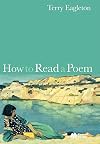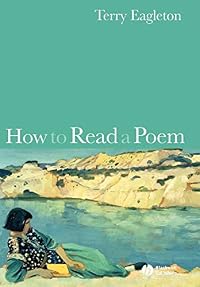
How to Read a Poem
by Terry Eagleton
On This Page
Description
Lucid, entertaining and full of insight, How To Read A Poemis designed to banish the intimidation that too often attends thesubject of poetry, and in doing so to bring it into the personalpossession of the students and the general reader. Offers a detailed examination of poetic form and its relationto content. Takes a wide range of poems from the Renaissance to the presentday and submits them to brilliantly illuminating closesanalysis. Discusses the work of major poets, including John show more Milton,Alexander Pope, John Keats, Christina Rossetti, Emily Dickinson,W.B. Yeats, Robert Frost, W.H.Auden, Seamus Heaney, Derek Mahon,and many more. Includes a helpful glossary of poetic terms. show lessTags
Recommendations





Member Reviews
Literary criticism has quite a bad press among certain circles, and I confess to be myself a bit wary of it. As much as I like the insights it can offer, when dissecting texts like coroners would a corpse these people indeed tend to, more often than not, go overboard with dry analysis if not complete wild fancies. An invite like here on 'how to read a poem', made not by a poet but by a literary critic like Terry Eagleton therefore had me a bit on edge although curious.
To his credit the author himself is well aware literary criticism can be labelled -as he himself puts it-'bombast, hot air, specious manipulation'. Funnily enough then , he starts this whole book by a defence of his field, those roots he traces back to that noble exercise: show more rhetoric. It's a nice endeavour, but then so what?
Then follow an attempt to define poetry through a discussion of Russian Formalism and, beyond, the work of Yury Lotman. It's interesting, but I must say a dry and circumvallated way to finally arrive at what is, strikingly, a rough and imperfect definition:
'Poetry is language organized in such a way as to generate certain effects, and to this extend it has much in common with everyday speech. One difference, as we have seen, is that everyday utterances usually skim over the flavour and texture of words in order to achieve their ends; whereas in poetry, one of these ends is precisely the exploration of words in themselves. This is how poetry can be rhetorical without being crudely instrumental.'
'If a piece of writing had no striking verbal effects at all, and no moral insights, then it is doubtful we would call it a poem.'
Obvious, isn't it? Obvious and certainly not very helpful. And that, that is exactly the problem with such a book. It's unnecessarily too circumvallated, to state obvious things, that are not helpful. Now don't get me wrong!
I love his take on how to fully engage with a poems via an holistic approach encompassing both form and content, those interplay -in harmony or at loggerhead- is the core of poetical effects. Discussing it all, Terry Eagleton can indeed here again throw some punchy insights. But, considering his target audience are (as I assume, in any case) people willing to fully engage with the deeper meaning of poetry while not having a clue on how to go about it, I don't think such intricate yet given babbling will serve as an easy way in. The numerous examples he gives might read like boring and unengaging school homework. Worst, among all poets available to really nail his point he choose... the elitist and hard to read T.S. Eliot! The tools could have been handed down otherwise than in such a pompous way.
Or could they?
I mean, was the goal of the author here to enrich and educate novice poetry readers or, show off his abilities to dissert on even the most challenging poems of the English canon? I wonder, and that's a point going beyond this book alone and Terry Eagleton per se to touch at literary criticism as a discipline. Here we are, going full circle. Yes, literary criticism can be rich in interesting and punchy insights. Yet, left into the sole hands of academics who are not poets themselves it tends to turn condescending, self-indulgent, and arrogantly showy. Ouch!
Who was the first to admit that literary criticism could be perceived as 'bombast, hot air, specious manipulation'? Well... show less
To his credit the author himself is well aware literary criticism can be labelled -as he himself puts it-'bombast, hot air, specious manipulation'. Funnily enough then , he starts this whole book by a defence of his field, those roots he traces back to that noble exercise: show more rhetoric. It's a nice endeavour, but then so what?
Then follow an attempt to define poetry through a discussion of Russian Formalism and, beyond, the work of Yury Lotman. It's interesting, but I must say a dry and circumvallated way to finally arrive at what is, strikingly, a rough and imperfect definition:
'Poetry is language organized in such a way as to generate certain effects, and to this extend it has much in common with everyday speech. One difference, as we have seen, is that everyday utterances usually skim over the flavour and texture of words in order to achieve their ends; whereas in poetry, one of these ends is precisely the exploration of words in themselves. This is how poetry can be rhetorical without being crudely instrumental.'
'If a piece of writing had no striking verbal effects at all, and no moral insights, then it is doubtful we would call it a poem.'
Obvious, isn't it? Obvious and certainly not very helpful. And that, that is exactly the problem with such a book. It's unnecessarily too circumvallated, to state obvious things, that are not helpful. Now don't get me wrong!
I love his take on how to fully engage with a poems via an holistic approach encompassing both form and content, those interplay -in harmony or at loggerhead- is the core of poetical effects. Discussing it all, Terry Eagleton can indeed here again throw some punchy insights. But, considering his target audience are (as I assume, in any case) people willing to fully engage with the deeper meaning of poetry while not having a clue on how to go about it, I don't think such intricate yet given babbling will serve as an easy way in. The numerous examples he gives might read like boring and unengaging school homework. Worst, among all poets available to really nail his point he choose... the elitist and hard to read T.S. Eliot! The tools could have been handed down otherwise than in such a pompous way.
Or could they?
I mean, was the goal of the author here to enrich and educate novice poetry readers or, show off his abilities to dissert on even the most challenging poems of the English canon? I wonder, and that's a point going beyond this book alone and Terry Eagleton per se to touch at literary criticism as a discipline. Here we are, going full circle. Yes, literary criticism can be rich in interesting and punchy insights. Yet, left into the sole hands of academics who are not poets themselves it tends to turn condescending, self-indulgent, and arrogantly showy. Ouch!
Who was the first to admit that literary criticism could be perceived as 'bombast, hot air, specious manipulation'? Well... show less
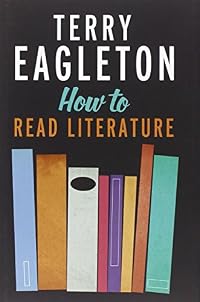
I enjoyed this a lot, though I think it needs quite a bit of reorganization. Or at the very least: this is not as straightforward as How to Read Literature felt. I can see someone picking this up and putting it aside quickly because it takes several chapters, including a whole chapter on Russian Formalists, to get to the material “how” of reading a poem. As a person who has read Eagleton’s other literary studies books, I think it fit in nicely (sure wish the Formalism chapter existed in Literary Theory: An Introduction!) into that larger collection of work.
All of that said, I did once again learn a lot, and I think the strongest chapters probably are the last two, where he stops kind of retreading previous ground (if you’ve show more read his others books—if you haven’t, it’s all new!) and gets into the meat of things. He suggests reading the chapters out of order, but I wonder why it was this specific order he went with. Still good, solid explanations, funny, just not my favorite of Eagleton’s. show less
All of that said, I did once again learn a lot, and I think the strongest chapters probably are the last two, where he stops kind of retreading previous ground (if you’ve show more read his others books—if you haven’t, it’s all new!) and gets into the meat of things. He suggests reading the chapters out of order, but I wonder why it was this specific order he went with. Still good, solid explanations, funny, just not my favorite of Eagleton’s. show less
Misleading title. You read a poem using your eyes and whatever it is that makes your heart go boom.
Ratings
Members
- Recently Added By
Author Information

110+ Works 11,943 Members
Terry Eagleton received a Ph.D from Cambridge University. He is a literary critic and a writer. He has written about 50 books including Shakespeare and Society, Criticism and Ideology, The Ideology of the Aesthetic, Literary Theory, The Illusions of Postmodernism, Why Marx Was Right, The Event of Literature, and Across the Pond: An Englishman's show more View of America. He wrote a novel entitled Saints and Scholars, several plays including Saint Oscar, and a memoir entitled The Gatekeeper. He is also the chair in English literature in Lancaster University's department of English and creative writing. (Bowker Author Biography) show less
Common Knowledge
- Original publication date
- 2007
- Dedication
- To Peter Grant, who taught me poetry and a great deal more.
Classifications
Statistics
- Members
- 330
- Popularity
- 95,902
- Reviews
- 3
- Rating
- (3.60)
- Languages
- English, Spanish, Turkish
- Media
- Paper, Ebook
- ISBNs
- 8
- ASINs
- 3