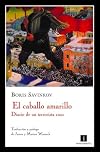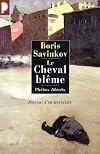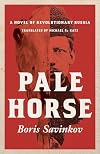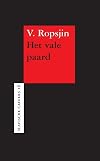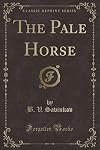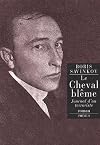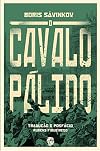
The Pale Horse
by Boris Savinkov
On This Page
Description
This is a new translation of a classic Russian novel that provides a fictional account of the assassination of the conservative and reactionary Grand Duke Sergei Alexandrovich, uncle and brother-in-law of Tsar Nicholas II. Written by the revolutionary, writer, and leader of the terrorist cell who organized the real murder.Tags
Recommendations






























Member Reviews
This novel by Russian terrorist icon Boris Savinkov is remarkably similar to his final work, Black Horse, leading one to believe that he chose the titles deliberately. The format is the same: short, dated entries as if from a diary. Both books feature protagonists named George, leaders who have become disillusioned from the struggle. Much is made of the relationships with women, which in both cases prove to be completely unsatisfying — to both people. Both books are full of casual violence and death.
And yet this first book was written before the Revolution, at a time when Russian terrorists like Savinkov and the double agent Ievno Azef were feted across Europe as heroes in the fight against tsarist autocracy. There is no idealism in show more this book nor was there any in the last novel, set a decade later during the Russian Civil War.
The story is a simple one — a small group of terrorists, presumably members of the Socialist Revolutionary Party, have been put into some provincial capital with the task of assassinating its governor. The governor is fearful of precisely such an event, so he is heavily guarded at all times. The attempts are repeatedly thwarted. Members of George’s small band are killed. The killing of the governor, when it comes, is anti-climactic.
Savinkov writes very well. Had he not chosen a career as a professional revolutionary, he might have become a famous Russian novelist. One of my favourite passages occurs very early in the book, in the opening scene in George’s hotel room:
“The hotel bores me to weariness. I know so well its hall-porter in his blue tunic, its gilt mirrors, its carpets. There is a shabby sofa in my room and dusty curtains. I have placed three kilograms of dynamite under the table. … I have headaches at night.”
Recommended. show less
And yet this first book was written before the Revolution, at a time when Russian terrorists like Savinkov and the double agent Ievno Azef were feted across Europe as heroes in the fight against tsarist autocracy. There is no idealism in show more this book nor was there any in the last novel, set a decade later during the Russian Civil War.
The story is a simple one — a small group of terrorists, presumably members of the Socialist Revolutionary Party, have been put into some provincial capital with the task of assassinating its governor. The governor is fearful of precisely such an event, so he is heavily guarded at all times. The attempts are repeatedly thwarted. Members of George’s small band are killed. The killing of the governor, when it comes, is anti-climactic.
Savinkov writes very well. Had he not chosen a career as a professional revolutionary, he might have become a famous Russian novelist. One of my favourite passages occurs very early in the book, in the opening scene in George’s hotel room:
“The hotel bores me to weariness. I know so well its hall-porter in his blue tunic, its gilt mirrors, its carpets. There is a shabby sofa in my room and dusty curtains. I have placed three kilograms of dynamite under the table. … I have headaches at night.”
Recommended. show less
Muito bom. Temos quatro terrorista buscando a morte do governador geral de Moscou: um por Cristo, um pelo Comunismo, uma por Amor e um porque sim. O por cristo morre, o pelo comunismo é morto, a por amor se mata. O porque sim continua vivo e escreve esse livro.
Diario, confesión de George, trasunto del propio Savinkov, que prepara un atentado contra el gobernador general de Moscú, El Gran Duque Serguei.
Jun 24, 2013Spanish
Pour mieux comprendre ce que fut le Ministre de la Défense de Kerensky.
Jun 13, 2012French
Ratings
Members
- Recently Added By
Published Reviews
added by niceinfodoc
Author Information
14 Works 135 Members
Series
Belongs to Publisher Series
Common Knowledge
- Canonical title
- The Pale Horse
Classifications
- DDC/MDS
- 947.0099 — History & geography History of Europe Eastern European Counties and Russia Russian & Slavic History by Period Russia
- LCC
- PG3470 .S3 .K613 — Language and Literature Slavic languages and literatures. Baltic languages. Albanian language Slavic. Baltic. Albanian Russian literature Individual authors and works 1870-1917
- BISAC
Statistics
- Members
- 70
- Popularity
- 446,488
- Reviews
- 4
- Rating
- (3.61)
- Languages
- 9 — Dutch, English, French, German, Italian, Japanese, Portuguese, Russian, Spanish
- Media
- Paper, Ebook
- ISBNs
- 18
- ASINs
- 1