The Red Dwarf
by Molly Thynne
On This Page
Description
A stormy night. A seemingly deserted farmhouse in the north of England. A young farmer returns to find a well-dressed woman seated at his desk, dead from a gunshot wound. John Leslie is completely mystified. Who is she? The police identify her as Mrs. Draycott, a visitor to the area. And since John cannot provide a plausible alibi, he is charged with her murder. Luckily for him, famed barrister Sir Edward Kean and Allen "Hatter" Fayre, both friends of John's aristocratic fiancée, believe in show more his innocence and are determined to help him. Fayre, recently returned from a career in India, has the time to follow up on the meager clues at his disposal. These involve a tramp, a mysterious car, a bad-tempered doctor, and a pen. Complicating matters is the decidedly unsavory past of the much-married Mrs. Draycott. But as Sir Edward points out, Fayre is an amateur, and deciphering which clues are pertinent to discovering the murderer is tricky business. Molly Thynne produced six detective novels in her career during the genre's Golden Age. The Draycott Murder Mystery is her first and her spot-on depiction of the upper classes in her novels came from personal experience. A wealthy descendant of the Marquess of Bath and the painter James Whistler, Thynne's literary career spanned the era between the wars. Originally published in 1928. show lessTags
Recommendations















Member Reviews
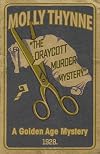
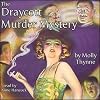
"The Draycott Murder Mystery" by Molly Thynne was originally published as The Red Dwarf in the UK.
Young farmer John Leslie comes home to his farm one stormy night and finds a luxuriously clad woman who has been shot in his sitting room. He calls the police and, as he has no alibi, he is soon the main suspect and brought to London. However, his aristocratic fiancée as well as the circle of upper class friends she moves in are convinced of his innocence and set out to prove it.
There are quite a lot of characters, but the reader mainly follows Allen Fayre, who has recently returned from India and has too much time on his hands, so he cannot help himself but try to support the star lawyer who has taken on the case at the fiancées show more bidding.
I enjoyed this story very much because I liked the characters and the story, and it is well written. The style is quite literary. The author was aristocratic herself, and apart from the whodunit she paints a vivid portrait of the 1920s in the English countryside as experienced by her class. She wrote five more crime novels and I am looking forward to reading them in the future. show less
Young farmer John Leslie comes home to his farm one stormy night and finds a luxuriously clad woman who has been shot in his sitting room. He calls the police and, as he has no alibi, he is soon the main suspect and brought to London. However, his aristocratic fiancée as well as the circle of upper class friends she moves in are convinced of his innocence and set out to prove it.
There are quite a lot of characters, but the reader mainly follows Allen Fayre, who has recently returned from India and has too much time on his hands, so he cannot help himself but try to support the star lawyer who has taken on the case at the fiancées show more bidding.
I enjoyed this story very much because I liked the characters and the story, and it is well written. The style is quite literary. The author was aristocratic herself, and apart from the whodunit she paints a vivid portrait of the 1920s in the English countryside as experienced by her class. She wrote five more crime novels and I am looking forward to reading them in the future. show less
I found this Golden Age mystery quite a pleasant story, although never riveting. For my tastes, there was too much lucky coincidence and stumbling over pieces of evidence by chance.
The prose was easy to read, but with some odd formatting that sometimes made it difficult to work out who was talking, entailing backtracking. And there was a lot of talking! Pages and pages of characters telling each other the plot. I may have skimmed a little 😳
As to the actual storyline, I found it odd that everyone was so convinced that the outlook was bad for the (wrongly accused - that's hardly a big spoiler!) defendant based on the stated evidence against him, although obviously investigative methodology/technology was different nearly a century ago. show more The other thing that struck me was a lot of travel between (roughly) Carlisle and London. That's over 300 miles, which surely couldn't have been a trivial journey but somehow didn't come across as a big deal (apart from when the plot needed it to be...)
My major criticism is a feeling that the author wasn't playing fair with the reader. Someone would find out something Very Important (with lots of reflection on How Important This Was), but the reader wouldn't be allowed to learn the information at the same time the character did. That possibly reflects the age of the writing, but always leaves me with a feeling that the author is cheating. show less
The prose was easy to read, but with some odd formatting that sometimes made it difficult to work out who was talking, entailing backtracking. And there was a lot of talking! Pages and pages of characters telling each other the plot. I may have skimmed a little 😳
As to the actual storyline, I found it odd that everyone was so convinced that the outlook was bad for the (wrongly accused - that's hardly a big spoiler!) defendant based on the stated evidence against him, although obviously investigative methodology/technology was different nearly a century ago. show more The other thing that struck me was a lot of travel between (roughly) Carlisle and London. That's over 300 miles, which surely couldn't have been a trivial journey but somehow didn't come across as a big deal (apart from when the plot needed it to be...)
My major criticism is a feeling that the author wasn't playing fair with the reader. Someone would find out something Very Important (with lots of reflection on How Important This Was), but the reader wouldn't be allowed to learn the information at the same time the character did. That possibly reflects the age of the writing, but always leaves me with a feeling that the author is cheating. show less
Despite the fact that I guessed the identity of the murderer long before the end, I enjoyed reading about Fayre working on the case.
Ratings
Members
- Recently Added By
Lists

Books Read in 2017
4,249 works; 130 members
Author Information
7 Works 262 Members
Some Editions
Common Knowledge
- Canonical title
- The Red Dwarf
- Original title
- The Red Dwarf
- Alternate titles
- The Draycott Murder Mystery
- Original publication date
- 1928
- Important places*
- London, England, UK; Carlisle, Cumbria, England, UK; Cumberland, England, UK
- First words*
- The wind swept down the crooked main street of the little village of Keys with a shriek that made those fortunate inhabitants who had nothing to tempt them from their warm firesides draw their chairs closer and speculate as t... (show all)o the number of trees that would be found blown down on the morrow.
- Last words*
- (Click to show. Warning: May contain spoilers.)"We stole off all by ourselves and did it yesterday. And we're not a bit ashamed of ourselves, either, thank you."
- Original language*
- English
- Canonical LCC
- PR6111
- Disambiguation notice
- The Red Dwarf was published in the U.S. as The Draycott Murder Mystery.
*Some information comes from Common Knowledge in other languages. Click "Edit" for more information.
Classifications
Statistics
- Members
- 65
- Popularity
- 479,978
- Reviews
- 3
- Rating
- (3.45)
- Languages
- English
- Media
- Paper, Audiobook, Ebook
- ISBNs
- 1
- ASINs
- 3