
The Clothing of Books
by Jhumpa Lahiri
On This Page
Description
How do you clothe a book? In this deeply personal reflection, Pulitzer Prize-winning author Jhumpa Lahiri explores the art of the book jacket from the perspectives of both reader and writer. Probing the complex relationships between text and image, author and designer, and art and commerce, Lahiri delves into the role of the uniform; explains what book jackets and design have come to mean to her; and how, sometimes, "the covers become a part of me."Tags
Recommendations
















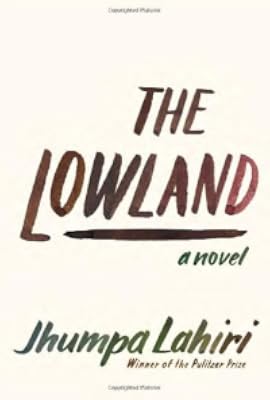










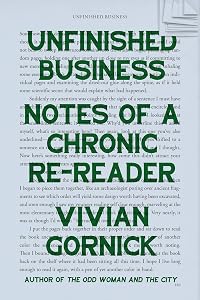






















Member Recommendations

akblanchard Speeches by celebrated authors turned into slender books.
Member Reviews
2018 Winter, audiobook:
I will always, always, always have an affinity for Jhumpa Lahiri's writing, and feel a deep intimacy with her words, her spirit, her messages after spending all my Master's Thesis on her. I couldn't help but get into this work. I loved the whole meta expressive notion of talking about how books and covers ("their clothing") all interact and intersect. I got lost in this so fast and I'm slightly sad it's over so soon, too.
I will always, always, always have an affinity for Jhumpa Lahiri's writing, and feel a deep intimacy with her words, her spirit, her messages after spending all my Master's Thesis on her. I couldn't help but get into this work. I loved the whole meta expressive notion of talking about how books and covers ("their clothing") all interact and intersect. I got lost in this so fast and I'm slightly sad it's over so soon, too.
In this long-form essay, the author discusses her views on all things "book cover". She leads with a personal story about how she wished that her school had uniforms, like her cousins wore in India, because it was more egalitarian. She attended public school in the USA, and was regularly bullied for the unfashionable and ill-fitting clothes her parents bought her. Then, she shares her strong opinions about the relationship between books, book covers, publishers, authors, and readers.
As a non-author who does not work in publishing, I was unaware of how much of the book cover design is made without regard for the author's input or the subject matter of the book. Many cover designers don't seem to read even a blurb about the book before show more creating the imagery. The author, if allowed any input at all, gets to voice an opinion after the cover designs have already been completed. More often than not, according to Lahiri, the opinion of the author counts for very little and may be disregarded in favor of commercial decisions.
In one section, Lahiri mentions that there is a certain cover of one of her books that she absolutely hates. She doesn't specify which one, but I want to know which one it is! I have a few of her books on my shelves, so it's possible that I own the dreaded cover version. She was explicit in that she generally does not trust book cover designers; the only truly satisfying experience was when the cover was created in collaboration with an artist friend of hers, for her book IN OTHER WORDS.
Throughout the essay, she shares tidbits about the publishing process that readers may not know. For example, if a book doesn't sell well in hardcover the paperback edition will have a different cover. Different countries have different design teams, and will create strikingly different covers for the same book, because of the differing norms and societal expectations.
It was fascinating to realize that the humble book cover is really living at the confluence of art, marketing, psychology, sales, and readability. While this essay only touches on book covers, it certainly gives readers a glance at an often-hidden world, and may cause you to look more critically at the books on your shelves. show less
As a non-author who does not work in publishing, I was unaware of how much of the book cover design is made without regard for the author's input or the subject matter of the book. Many cover designers don't seem to read even a blurb about the book before show more creating the imagery. The author, if allowed any input at all, gets to voice an opinion after the cover designs have already been completed. More often than not, according to Lahiri, the opinion of the author counts for very little and may be disregarded in favor of commercial decisions.
In one section, Lahiri mentions that there is a certain cover of one of her books that she absolutely hates. She doesn't specify which one, but I want to know which one it is! I have a few of her books on my shelves, so it's possible that I own the dreaded cover version. She was explicit in that she generally does not trust book cover designers; the only truly satisfying experience was when the cover was created in collaboration with an artist friend of hers, for her book IN OTHER WORDS.
Throughout the essay, she shares tidbits about the publishing process that readers may not know. For example, if a book doesn't sell well in hardcover the paperback edition will have a different cover. Different countries have different design teams, and will create strikingly different covers for the same book, because of the differing norms and societal expectations.
It was fascinating to realize that the humble book cover is really living at the confluence of art, marketing, psychology, sales, and readability. While this essay only touches on book covers, it certainly gives readers a glance at an often-hidden world, and may cause you to look more critically at the books on your shelves. show less
Whenever I go book shopping, the first thing that attracts me for newer authors is the book cover. Its colour, its illustrations, its penmanship... I find it very tough to pick up a book where the cover doesn't appeal to me. For some old favourites, I always used to wonder: what made the author go for such a drab cover?
Now that I've read "The Clothing of Books" by Jhumpa Lahiri, I feel like I've been judging authors unfairly. She stunned me when she wrote that in this new age of digital publishing, the author didn't have much of a say in choosing covers. In fact, the author and cover designer don't even meet. That is an eye-opener, isn't it?
This is a beautiful little book. Actually not even a book, it's more like a non-fiction novella, show more hardly about 80 pages long. I would not recommend this to everyone. This would appeal to those who are intrigued to know the publishing & cover selection problems from an author's perspective, and to those who genuinely love books in their true form, i.e. not just for their story or author or the spice they add to your life but for simply being a physical book - a work of art to be treasured and relished passionately!
Does this mean that I won't judge books by their covers anymore? Not at all. But at least I won't blame authors for poor cover art.
Here's a little excerpt from this lovely little essay:
"Publishers today have overloaded covers with unreasonable expectations. They must grab and win the attention of dazed and disoriented browsers in big bookstores, who must pluck this book and only this one from overstuffed shelves or a table blanketed in volumes. All of the energy and strategy behind a book cover underlines a depressing fact: the terrifying number of books published in the world every year, and the few that are actually bought and read."
********************************************
Join me on the Facebook group, "Readers Forever!", for more reviews and other book-related discussions and fun. show less
Now that I've read "The Clothing of Books" by Jhumpa Lahiri, I feel like I've been judging authors unfairly. She stunned me when she wrote that in this new age of digital publishing, the author didn't have much of a say in choosing covers. In fact, the author and cover designer don't even meet. That is an eye-opener, isn't it?
This is a beautiful little book. Actually not even a book, it's more like a non-fiction novella, show more hardly about 80 pages long. I would not recommend this to everyone. This would appeal to those who are intrigued to know the publishing & cover selection problems from an author's perspective, and to those who genuinely love books in their true form, i.e. not just for their story or author or the spice they add to your life but for simply being a physical book - a work of art to be treasured and relished passionately!
Does this mean that I won't judge books by their covers anymore? Not at all. But at least I won't blame authors for poor cover art.
Here's a little excerpt from this lovely little essay:
"Publishers today have overloaded covers with unreasonable expectations. They must grab and win the attention of dazed and disoriented browsers in big bookstores, who must pluck this book and only this one from overstuffed shelves or a table blanketed in volumes. All of the energy and strategy behind a book cover underlines a depressing fact: the terrifying number of books published in the world every year, and the few that are actually bought and read."
********************************************
Join me on the Facebook group, "Readers Forever!", for more reviews and other book-related discussions and fun. show less
Surprisingly facile, with an argument that is neither developed nor consistent, and which relies on an almost wilful ignorance of the history of the book, past and present. (To give one brief example: Lahiri claims that Americans’ championing of individualism blocks any attempt of homogeneity in the covers of books produced in the U.S. Yet more romance novels are sold in the U.S. every year than any other genre, and the most cursory glance at the covers of the myriad Harlequin series would neatly disprove Lahiri’s point.)
Zeer korte uiteenzetting over het thema: de kaften van boeken, en wat ze betekenen voor het boek, de schrijver, de verkoper en de lezer. Dit is de weergave van een lezing die Lahiri heeft gegeven. Vandaar de zeer beperkte omvang, en het gebrek aan diepgang. Ze snijdt echter wel een paar interessante thema's aan, vond ik, als boekenliefhebber. Thema's die mij ook aan het denken zetten.
On a trip to the bookstore to finish up some Christmas shopping, I found this book and a book on publishing in a tiny stack on a featured table, clearly abandoned there. Given how much time I'd spent obsessing over starting my own micro press recently, it felt like fate, so I immediately picked them up to buy them.
This book is adapted from a speech that Lahiri gave in Italy at a festival. It mostly ends up very personal -- about how she feels about the covers of her books, but there were some interesting thoughts here. Particularly what it means for a book to be part of an edited series, and how the covers of such a series communicate that. As an micro press is, essentially, a series, I appreciated her thoughts here.
I do think that I show more should read more on book design, from the designer's or the publisher's perspective. I'm glad I found this one to start me on my way. show less
This book is adapted from a speech that Lahiri gave in Italy at a festival. It mostly ends up very personal -- about how she feels about the covers of her books, but there were some interesting thoughts here. Particularly what it means for a book to be part of an edited series, and how the covers of such a series communicate that. As an micro press is, essentially, a series, I appreciated her thoughts here.
I do think that I show more should read more on book design, from the designer's or the publisher's perspective. I'm glad I found this one to start me on my way. show less
An interesting essay about book jackets and book covers. A bit of history thrown in, but not so much that you get bogged down or bored. What surprised me to learn is that authors don't have a say in the artwork or design of the book jackets and book covers for their books. What dismayed me to learn is that she doesn't like any of the dust jackets and covers that have been put on her books. How sad for an author to be unhappy to look at their own books.
Members
- Recently Added By
Lists

On Books
70 works; 1 member
Author Information

59+ Works 39,569 Members
Jhumpa Lahiri was born in London, England on July 11, 1967. She received a B.A. in English literature from Barnard College in 1989, and a M.A. in English, a M.A. in Creative Writing, a M.A. in Comparative Studies in Literature and the Arts, and a Ph.D. in Renaissance Studies from Boston University. Lahiri taught creative writing at Boston show more University and the Rhode Island School of Design. Her debut work, Interpreter of Maladies, won the Pulitzer Prize for fiction in 2000. She has also won the PEN/Hemmingway Award, an O. Henry Award, The New Yorker's best debut of the year award, and an Addison Metcalf award. Her other works include The Namesake, which was made into a movie in 2007, Unaccustomed Earth, and The Lowland, which won 2015 DSC Prize for South Asian Literature. (Bowker Author Biography) show less
Some Editions
Common Knowledge
- Canonical title*
- Il vestito dei libri
- Original publication date
- 2015
- Epigraph
- Camerado! This is no book;
Who touches this, touches a man.
Walt Whitman, Leaves of Grass - First words
- In the house of my father's family in Calcutta, which I visited as a child, I would watch my cousins getting dressed in the mornings.
- Quotations
- If the process of writing is a dream, the book cover represents an awakening.
A good cover is flattering. I feel myself listened to, understood.
A bad cover is like an enemy; I find it hateful. - Last words
- (Click to show. Warning: May contain spoilers.)For a few moments I stood between them and, imagining myself transformed into the pages of a book, I was jacketed by both.
- Disambiguation notice
- First published in both English and Italian by the Santa Maddalena Foundation, Romano-Firenze, in 2015.
*Some information comes from Common Knowledge in other languages. Click "Edit" for more information.
Classifications
Statistics
- Members
- 305
- Popularity
- 104,740
- Reviews
- 14
- Rating
- (3.51)
- Languages
- Dutch, English, Italian, Spanish
- Media
- Paper, Audiobook, Ebook
- ISBNs
- 14
- ASINs
- 3