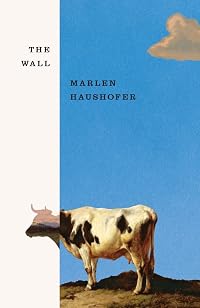
The Wall
by Marlen Haushofer
On This Page
Description
"While vacationing in a hunting lodge in the Austrian mountains, a middle-aged woman awakens one morning to find herself separated from the rest of the world by an invisible wall. With a cat, a dog, and a cow as her sole companions, she learns how to survive and cope with her loneliness. Allegorical yet deeply personal and absorbing, The Wall is at once a critique of modern civilization, a nuanced and loving portrait of a relationship between a woman and her animals, a thrilling survival show more story, a Cold War-era dystopian adventure, and a truly singular feminist classic"-- show lessTags
Recommendations





















Member Recommendations


Member Reviews
A simple, unadorned, matter-of-fact journal about living in the forest with a handful of animals after the end of the world. Told in the first person, it is simply a record of the day-to-day practicalities of a woman who may be the last human on earth: finding a few vegetables to plant, chopping wood, harvesting hay for the cow, mending clothes. There is surprisingly little overt philosophizing, though these thoughts stood out for me:
“I can allow myself to write the truth; all the people for whom I have lied throughout my life are dead.”
“I have never held the shortcomings of the unimaginative against them, sometimes I’ve even envied them. They had an easier and more pleasant life than everyone else.”
“I pity animals, and I show more pity people, because they’re thrown into this life without being consulted. Maybe people are more deserving of pity, because they have just enough intelligence to resist the natural course of things. It has made them wicked and desperate, and not very lovable. All the same, life could have been lived differently. There is no impulse more rational than love. It makes life more bearable for the lover and the loved one. We should have recognized in time that this was our only chance, our only hope for a better life. For an endless army of the dead, mankind’s only chance has vanished for ever. I keep thinking about that. I can’t understand why we had to take the wrong path. I only know it’s too late.”
It is quietly devastating. show less
“I can allow myself to write the truth; all the people for whom I have lied throughout my life are dead.”
“I have never held the shortcomings of the unimaginative against them, sometimes I’ve even envied them. They had an easier and more pleasant life than everyone else.”
“I pity animals, and I show more pity people, because they’re thrown into this life without being consulted. Maybe people are more deserving of pity, because they have just enough intelligence to resist the natural course of things. It has made them wicked and desperate, and not very lovable. All the same, life could have been lived differently. There is no impulse more rational than love. It makes life more bearable for the lover and the loved one. We should have recognized in time that this was our only chance, our only hope for a better life. For an endless army of the dead, mankind’s only chance has vanished for ever. I keep thinking about that. I can’t understand why we had to take the wrong path. I only know it’s too late.”
It is quietly devastating. show less
I don’t know why, but it seems I am drawn to books about singular women that have a heightened contact with nature. I’ve just read The Forgotten Beasts of Eld by Patricia McKillip, about a female wizard that grew up in isolation, surrounded by fantastic beasts. I also have fond memories of Drive Your Plow over the Bones of the Dead by the Polish Olga Tokarczuk – who won the 2018 Nobel Prize. And don’t get me started on The Door by the Hungarian Magda Szabó: while my review of that 1987 book was just short, it is one of my favorite reads ever – if you haven’t read it, I urge you to give it a try.
25 years older than The Door and 46 years younger than Drive Your Plow…, The Wall also has a central European origin: Austria. show more Marlen Haushofer wrote it in German, and Die Wand was translated in English in 1990 by Shaun Whiteside.
The story has a clear speculative premise: the female protagonist gets trapped in the Austrian mountains, as a suddenly appearing giant transparent wall closes her in, encircling the hunting lodge and the surrounding landscape – mountains, woods, an alm, a valley. It seems all animal life outside the wall is dead, and the woman is left to her own devices to survive – together with a cow, a dog, and a cat.
(...)
In a way, it is a miracle Haushofer managed to write an utterly compelling novel, rather than a drab, boring tale about someone planting potatoes again and again. The Wall sucked me in after 30 pages, and if I could, I would have finished it in one sitting.
Two factors contribute to that. The fact that the main character writes only for herself makes for an honest voice, resulting in someone interesting, devoid of moral conventions, a woman that isn’t shy to admit she has grown disinterested in her two children.
Haushofer herself led something of a double life, living partly in small town Steyr, where she was the quiet wife of a dentist and nobody knew she was a writer, and partly in Vienna, where “she moved in fashionable literary circles, discussed books and ideas, had affairs”. The Wall‘s protagonist easily convinces as a real character, not some naive concoction, and it seems to me this is the result of Haushofer being in touch with the full spectrum of human existence – and not some idealized moral version of it.
The second factor is that Haushofer – with very few narrative tricks – manages to convey a constant feeling of dread to the reader. Because of the specific nature of these tricks, it is best to limit your exposure to spoilers.
(...)
Full review on Weighing A Pig Doesn't Fatten It show less
25 years older than The Door and 46 years younger than Drive Your Plow…, The Wall also has a central European origin: Austria. show more Marlen Haushofer wrote it in German, and Die Wand was translated in English in 1990 by Shaun Whiteside.
The story has a clear speculative premise: the female protagonist gets trapped in the Austrian mountains, as a suddenly appearing giant transparent wall closes her in, encircling the hunting lodge and the surrounding landscape – mountains, woods, an alm, a valley. It seems all animal life outside the wall is dead, and the woman is left to her own devices to survive – together with a cow, a dog, and a cat.
(...)
In a way, it is a miracle Haushofer managed to write an utterly compelling novel, rather than a drab, boring tale about someone planting potatoes again and again. The Wall sucked me in after 30 pages, and if I could, I would have finished it in one sitting.
Two factors contribute to that. The fact that the main character writes only for herself makes for an honest voice, resulting in someone interesting, devoid of moral conventions, a woman that isn’t shy to admit she has grown disinterested in her two children.
Haushofer herself led something of a double life, living partly in small town Steyr, where she was the quiet wife of a dentist and nobody knew she was a writer, and partly in Vienna, where “she moved in fashionable literary circles, discussed books and ideas, had affairs”. The Wall‘s protagonist easily convinces as a real character, not some naive concoction, and it seems to me this is the result of Haushofer being in touch with the full spectrum of human existence – and not some idealized moral version of it.
The second factor is that Haushofer – with very few narrative tricks – manages to convey a constant feeling of dread to the reader. Because of the specific nature of these tricks, it is best to limit your exposure to spoilers.
(...)
Full review on Weighing A Pig Doesn't Fatten It show less
Marlen Haushofer’s 1963 Austrian novel The Wall is a hauntingly claustrophobic feminist sci-fi masterpiece that subverts traditional survival narratives. It tells the story of an unnamed 40-year-old woman who is on holiday at a hunting lodge in the Austrian mountains and wakes to find herself completely cut off from civilization by a mysterious, transparent, impassable wall. On the other side of the barrier, all life seems instantly petrified and dead. Her life is isolated forever, turned into a brutal series of alpine survival routines with a small menagerie of animals: a loyal dog (Lynx), a pregnant cow (Bella), and a cat. And yet the story is profoundly meditative. I enjoyed the eerie environment and moments of poetic reverie that show more the author created. show less
Man cannot become an animal. He just passes the animal stage on his way to the abyss.
Something Happens, and a middle-aged woman is suddenly, as far as she can tell, the last human being on Earth, waking up in a friend's hunting lodge up in the decidedly Julie Andrews-less Austrian alps, and finding an invisible wall all around the area she's in.
(Insert space here for snarky comparisons to The Simpsons Movie or that Stephen King novel, even though The Wall predates them by 50 years and is a very different beast.)
The wall has kept her safe from whatever seems to have killed all life outside it, but also traps her in a world she, as a city dweller, has no idea how to survive. She has a gun, a dog, a cat, a cow, and her hands and feet. She show more can grow potatoes (insert space here for snarky comparisons to The Martian etc) and shoot deer, so she won't starve, but gradually loneliness, back-breaking physical exertion and the inability of that big Homo Sapiens brain to not keep spinning begins to... I almost wrote "break her down", but that's not entirely true; evolution knows nothing about higher or lower levels. "Reshape her" is probably more apt. Two and a half years in, she starts writing down her story to hang on to whatever humanity remains, going over and writing down every detail, every emotion, every hard-earned piece of satisfaction she can remember.
The Wall is an astounding novel, which opens up to a ton of interpretations (cold war eschatology, existentialism, feminism, depression, post-nazi self-deception (it's supposedly one of Elfriede Jelinek's favourite novels), etc etc) but remains so grounded in its details of everyday hard-working life and in the Vonnegutian ways Haushofer keeps dropping hints of what will inevitably have happened that it never really feels like an allegory. Even without a name, she remains singular, just a woman with her dog and her cat and her cow trying to survive even at the end of hope. show less
Something Happens, and a middle-aged woman is suddenly, as far as she can tell, the last human being on Earth, waking up in a friend's hunting lodge up in the decidedly Julie Andrews-less Austrian alps, and finding an invisible wall all around the area she's in.
(Insert space here for snarky comparisons to The Simpsons Movie or that Stephen King novel, even though The Wall predates them by 50 years and is a very different beast.)
The wall has kept her safe from whatever seems to have killed all life outside it, but also traps her in a world she, as a city dweller, has no idea how to survive. She has a gun, a dog, a cat, a cow, and her hands and feet. She show more can grow potatoes (insert space here for snarky comparisons to The Martian etc) and shoot deer, so she won't starve, but gradually loneliness, back-breaking physical exertion and the inability of that big Homo Sapiens brain to not keep spinning begins to... I almost wrote "break her down", but that's not entirely true; evolution knows nothing about higher or lower levels. "Reshape her" is probably more apt. Two and a half years in, she starts writing down her story to hang on to whatever humanity remains, going over and writing down every detail, every emotion, every hard-earned piece of satisfaction she can remember.
The Wall is an astounding novel, which opens up to a ton of interpretations (cold war eschatology, existentialism, feminism, depression, post-nazi self-deception (it's supposedly one of Elfriede Jelinek's favourite novels), etc etc) but remains so grounded in its details of everyday hard-working life and in the Vonnegutian ways Haushofer keeps dropping hints of what will inevitably have happened that it never really feels like an allegory. Even without a name, she remains singular, just a woman with her dog and her cat and her cow trying to survive even at the end of hope. show less
A woman is trapped in a mountainous area by a mysterious physical barrier. She chooses survival, which includes the essential work of caring for a cow, a dog, and handful of cats. The nature of the disaster and the wall are never quite clear, but the narrator presumes it to be perhaps a nuclear disaster or conflict.
The book was originally released in 1968 and is part of the standard curriculum in Austria, only recently available in English translation. Placing a woman, and not a particularly rugged one at that, at the heart of a survival tale is part of Haushofer's subversive take, as well as the dawning reality that there will be no rescue.
The book is structured without breaks, as though you sat down with the narrator and she told show more you the story. Although much of it focuses on the routines of securing food and fuel, it is engaging immersive read. with offhand references to the previous life of the narrator. hints of pending events, and brief reflections on her circumstances. Yet there is heroism in the caretaking and the labor itself. Despite the highly developed connections between the narrator and her creatures, but readers learn early on that some meet terrible ends.
The narrator reflects on the her predicament in ways that feel fully prescient of our own times, under threats of climate change and expanding conflicts:
"Maybe people are more deserving of pity, because they have just enough intelligence to resist the natural course of things. It has made them wicked and desperate, and not very lovable. All the same, life could have been lived differently. There is no impulse more rational than love. It makes life more bearable for the lover and the loved one. We should have recogniyed in time that this was our only chance, our only hope for a better life. For an endless army of the dead, mankind's only chance has vanished forever. I keep thinking about that. I can't understand why we had to take the wrong path. I only know it's too late." show less
The book was originally released in 1968 and is part of the standard curriculum in Austria, only recently available in English translation. Placing a woman, and not a particularly rugged one at that, at the heart of a survival tale is part of Haushofer's subversive take, as well as the dawning reality that there will be no rescue.
The book is structured without breaks, as though you sat down with the narrator and she told show more you the story. Although much of it focuses on the routines of securing food and fuel, it is engaging immersive read. with offhand references to the previous life of the narrator. hints of pending events, and brief reflections on her circumstances. Yet there is heroism in the caretaking and the labor itself. Despite the highly developed connections between the narrator and her creatures, but readers learn early on that some meet terrible ends.
The narrator reflects on the her predicament in ways that feel fully prescient of our own times, under threats of climate change and expanding conflicts:
"Maybe people are more deserving of pity, because they have just enough intelligence to resist the natural course of things. It has made them wicked and desperate, and not very lovable. All the same, life could have been lived differently. There is no impulse more rational than love. It makes life more bearable for the lover and the loved one. We should have recogniyed in time that this was our only chance, our only hope for a better life. For an endless army of the dead, mankind's only chance has vanished forever. I keep thinking about that. I can't understand why we had to take the wrong path. I only know it's too late." show less
8.5/10
I’d spent most of my life struggling with daily human concerns. Now that I had barely anything left, I could sit in peace on the bench and watch the stars dancing against the black firmament. I had got as far from myself as it is possible for a human being to get and I realized this state couldn't last if I wanted to stay alive.
Neither utopian or dystopian, this book defies its place in my reading universe: I don't know quite where to place it. In a sense, it is almost a Book of Hours -- albeit a more secular, and less colourful version than its medieval predecessor. There are no prayers or psalms; no devotions ... at least in the Christian sense of those words, but each action engenders a long, slow reflection -- and before we show more realize it, we have achieved a meditational devotion on our own lives. We have reflected, and given pause; and meditated, and given thanks; and thought deeply about those things which we barely give a glancing thought to, in the course of normal days.
It is an interesting construct that Haushofer offers the narrator of this strange tale: imprisoned in a walled universe: from which she can see that all life is dead beyond that wall. Her own universe is bounded in a nutshell; a queen of infinite space, she is mistress over dog, cat and cow. The book unfolds in a long, mundane retelling of every action she undertakes: when she sleeps or rises; when she feeds the cat and walks with the dog; when she milks the cow and when she churns the butter. It is a long, slow, dogged tale of relentless commonplace actions which, seemingly, delivers nothing. One could die of boredom in this nutshell. And yet, our lady of infinite space, manages to deliver such a visceral punch, that one ends up crying with rage by the end of it all.
Since my childhood I had forgotten to see things with my own eyes, and I had forgotten that the world had once been young, untouched and very beautiful and terrible. I couldn't find my way back there since I was no longer a child and no longer capable of experiencing things as a child, but loneliness led me, in moments free of memory and consciousness, to see the great brilliance of life again. Perhaps animals spend their whole lives in a world of terror and delight. They cannot escape, and have to bear reality until they have ceased to be. Even their death is without solace and hope, a real death.
The narrator has captivated us in the end, with her small actions. Her offerings, to no one in particular, no one at all, in fact, resulted in an affirmation of her own life, finally. Whether the book is a success or a failure, in the middle of all these banalities depends upon what you value. Whether you cheer for her, or grieve for her becomes a revelation of one's own spirit. show less
I’d spent most of my life struggling with daily human concerns. Now that I had barely anything left, I could sit in peace on the bench and watch the stars dancing against the black firmament. I had got as far from myself as it is possible for a human being to get and I realized this state couldn't last if I wanted to stay alive.
Neither utopian or dystopian, this book defies its place in my reading universe: I don't know quite where to place it. In a sense, it is almost a Book of Hours -- albeit a more secular, and less colourful version than its medieval predecessor. There are no prayers or psalms; no devotions ... at least in the Christian sense of those words, but each action engenders a long, slow reflection -- and before we show more realize it, we have achieved a meditational devotion on our own lives. We have reflected, and given pause; and meditated, and given thanks; and thought deeply about those things which we barely give a glancing thought to, in the course of normal days.
It is an interesting construct that Haushofer offers the narrator of this strange tale: imprisoned in a walled universe: from which she can see that all life is dead beyond that wall. Her own universe is bounded in a nutshell; a queen of infinite space, she is mistress over dog, cat and cow. The book unfolds in a long, mundane retelling of every action she undertakes: when she sleeps or rises; when she feeds the cat and walks with the dog; when she milks the cow and when she churns the butter. It is a long, slow, dogged tale of relentless commonplace actions which, seemingly, delivers nothing. One could die of boredom in this nutshell. And yet, our lady of infinite space, manages to deliver such a visceral punch, that one ends up crying with rage by the end of it all.
Since my childhood I had forgotten to see things with my own eyes, and I had forgotten that the world had once been young, untouched and very beautiful and terrible. I couldn't find my way back there since I was no longer a child and no longer capable of experiencing things as a child, but loneliness led me, in moments free of memory and consciousness, to see the great brilliance of life again. Perhaps animals spend their whole lives in a world of terror and delight. They cannot escape, and have to bear reality until they have ceased to be. Even their death is without solace and hope, a real death.
The narrator has captivated us in the end, with her small actions. Her offerings, to no one in particular, no one at all, in fact, resulted in an affirmation of her own life, finally. Whether the book is a success or a failure, in the middle of all these banalities depends upon what you value. Whether you cheer for her, or grieve for her becomes a revelation of one's own spirit. show less
In this gripping novel, a nameless woman is visiting friends at a hunting lodge in the Austrian Alps. Her companions had gone to a nearby village for drinks the night before. She wakes the next morning to discover they have not returned. Going to investigate, accompanied by the lodge owner’s dog, she encounters an invisible, impermeable barrier which has cut her off from the rest of the world. Worse still, it soon becomes evident that no one else is left alive on the other side of this wall. Published in 1963, The Wall, written by the Austrian author Marlen Haushofer, is usually labeled a work of dystopian fiction. While it does include the trappings of the genre, its true focus is on a woman coming to terms with the reality of her show more isolation and the struggles she undergoes daily to survive.
She is not completely alone. Besides the dog, there is a cow, and she is soon joined by a cat as well. These animals become an integral part of her life and of the story itself. The book describes, without chapter breaks – in what she calls a report – the first two years of her life following the appearance of the wall. She is the mother of two daughters, and while she is haunted by such ghosts from her past, the story is the description of a person shedding her old self, and the emergence of a truer essence. Written in diary form, it is a meditation on the meaning of life and of humans’ relative insignificance in the natural world.
Published at a time when fears of nuclear war were high, Haushofer’s novel imagines a scenario in which human civilization disappears in the blink of an eye. It has strong feminist overtones, showing how a woman could survive without the help of men in her life. It also draws on the story of Robinson Crusoe and on Thoreau’s Walden. Just as importantly, the characters of the animals in her life are vividly provided in their starring roles. This book captivated me from the beginning and kept me spellbound to its very end. I will be strongly recommending it to a wider audience. It’s a cult classic, but deserves to be better known and appreciated. show less
She is not completely alone. Besides the dog, there is a cow, and she is soon joined by a cat as well. These animals become an integral part of her life and of the story itself. The book describes, without chapter breaks – in what she calls a report – the first two years of her life following the appearance of the wall. She is the mother of two daughters, and while she is haunted by such ghosts from her past, the story is the description of a person shedding her old self, and the emergence of a truer essence. Written in diary form, it is a meditation on the meaning of life and of humans’ relative insignificance in the natural world.
Published at a time when fears of nuclear war were high, Haushofer’s novel imagines a scenario in which human civilization disappears in the blink of an eye. It has strong feminist overtones, showing how a woman could survive without the help of men in her life. It also draws on the story of Robinson Crusoe and on Thoreau’s Walden. Just as importantly, the characters of the animals in her life are vividly provided in their starring roles. This book captivated me from the beginning and kept me spellbound to its very end. I will be strongly recommending it to a wider audience. It’s a cult classic, but deserves to be better known and appreciated. show less
Members
- Recently Added By
Published Reviews
ThingScore 100
The Wall is a quiet book about domesticity, planting, beauty, the rhythms of keeping house, the land, human nature—and what a person can love in a people-less world. I consider it The Road’s antithesis. In contrast to McCarthy’s characters, who are toiling desperately for their survival in an ugly world, The Wall suggests our disappearance from the planet need not seem a tragedy.
added by zhejw
Lists

Best Feminist Science Fiction
188 works; 35 members

Favorite Science Fiction by Women Authors
737 works; 202 members

Best Science Fiction Originally Published in a Language Other Than English
449 works; 31 members

Recommend the 20 best books you've read in the last five years
2,168 works; 601 members

German Literature
518 works; 56 members

EU Fiction: 1950-2022
223 works; 68 members

Female Author
1,234 works; 67 members

500 Great Books by Women
507 works; 60 members
SF & Fantasy in Translation
95 works; 18 members
Literature About Women and Girls
394 works; 39 members

Walls
24 works; 2 members

Books Read in 2020
4,379 works; 123 members

Speculative Fiction from around the World
610 works; 18 members

Tonikat reading completed on Librarything journals
329 works; 2 members
Best Book and Movie Combos
70 works; 11 members

Die besten Werke der deutschsprachigen Erzählliteratur von 1924 bis 2024
100 works; 2 members
Author Information

Some Editions
Awards and Honors
Awards
Distinctions
Series
Belongs to Publisher Series
Gyldendals små grå (19)
Work Relationships
Has the adaptation
Has as a student's study guide
Common Knowledge
- Canonical title
- The Wall
- Original title
- Die Wand
- Original publication date
- 1963
- Important places
- Alps; Austria
- Related movies
- Die Wand (2012 | IMDb)
- Dedication
- For my parents
- First words
- Today, the fifth of November, I shall begin my report. I shall set everything down as precisely as I can. But I don't even know if today really is the fifth of November. Over the course of the past winter I've lost track of a... (show all) few days. I can't even say what day of the week it is. But I don't think that's very important. All I have to rely on is a few meager jottings; meager, because I never expected to write the report, and I'm afraid that much that I remember will be different from my real experiences.
- Quotations
- Violent as these storms were, the sky was clear the next morning, and the mists billowed only in the valley. The meadow seemed to be floating along on the clouds, a green and damply gleaming ship on the white foaming waves of... (show all) a turbulent ocean. And the sea subsided slowly, and the tips of the spruces rose from it wet and fresh.
I had waited much too often and much too long for people or events which had never turned up, or which had turned up so late that they had ceased to mean anything to me.
Loving and looking after another creature is a very troublesome business and much harder than killing and destruction.
If everyone had been like me there would’ve never been a wall.
As long as there is something to love in the forest, I shall love it. And if some day there is nothing, I shall stop living.
I often look forward to a time when there won’t be anything to be attached to. - Last words
- (Click to show. Warning: May contain spoilers.)When they are out of sight I shall go to the clearing and feed the white crow. It will already be waiting for me.
- Blurbers
- Polser, Julian Roman; Lessing, Doris
- Original language
- German
- Canonical DDC/MDS
- 833.08762
- Canonical LCC
- PT2617.A425 W313
Classifications
- Genres
- Fiction and Literature, General Fiction, Science Fiction
- DDC/MDS
- 833.08762 — Literature & rhetoric German & related literatures German fiction Fiction of specific media, scope, kinds {only by more than one author} Specific kinds of fiction Adventure fiction Science and fantasy fiction, alternative histories Science fiction
- LCC
- PT2617 .A425 .W313 — Language and Literature German, Dutch and Scandinavian literatures German literature Individual authors or works 1860/70-1960
- BISAC
Statistics
- Members
- 1,911
- Popularity
- 11,197
- Reviews
- 90
- Rating
- (4.15)
- Languages
- 20 — Basque, Catalan, Czech, Danish, Dutch, English, Estonian, Finnish, French, German, Hungarian, Italian, Norwegian (Bokmål), Norwegian, Polish, Portuguese, Serbian, Spanish, Swedish, Turkish
- Media
- Paper, Audiobook, Ebook
- ISBNs
- 94
- ASINs
- 24
