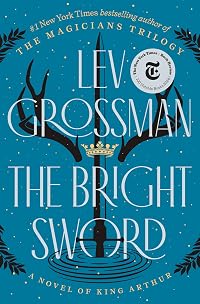
The Bright Sword
by Lev Grossman
On This Page
Description
"Collum, a brilliantly gifted young knight from the provinces, arrives at Camelot two weeks after the Battle of Camlann, hoping to compete for a spot on the Round Table. But he finds the city empty, King Arthur dead, and the Table destroyed. The remaining six knights aren't the mighty heroes, the legends, like Lancelot and Gawain and Tristram and Galahad. These are the survivors, a grab-bag of minor oddball knights from the margins--Sir Palomides, the Saracen Knight; Sir Bedivere, Arthur's show more one-handed longtime companion; Sir Dagonet, Arthur's fool, knighted as a joke; Sir Dinadan, a cutting wit who's hiding a deep secret. Arthur's death has exposed the splinters of his kingdom, and a void has opened in the heart of Britain. As power-hungry lords from the north descend on Camelot to seize control of the land, Collum is thrust into the front lines. Here lies the battlefield between pagans and Christians, fantasy and empire, power and destiny. Monsters and fairies are reawakening, the moral center is gone, and the fragile alliances that held Britain together are breaking. It is up to the surviving knights, the rebellious sorceress Nimue, and young Collum to avenge Arthur's murder and save Camelot. Can they re-build the Table and bring back the glory that was Camelot? Should they even try? The first major Arthurian epic of the new millennium, full of duels and quests, battles and tournaments, magic swords and Fisher Kings, The Bright Sword is a story about power and hope, and the struggle for the soul of England between the new Christian God and the old gods of fairy. But most of all it's a story about flawed men and women full of strength and pain who are looking for a way to reforge a broken land, in spite of being broken themselves"-- show lessTags
Recommendations









Member Reviews
Best Grossman yet! A wonderful soup of legend and the latest research into that era (no longer 'the dark ages' but 'early medieval'). As a passionate fan of the novel Porius (which I suspect Grossman is too) and deep reader in anything that comes my way pertaining to that era or folklore, I was delighted by the way he wove the stories and facts together. Grossman also skilfully navigated the line between using appropriate language to evoke the times and descriptions (of bits of armour, swordplay, creatures, fay) but also having people speak in 'modern' voices, no 'forsooths' etcetera--it's logical anyway because to those people forsooth was the equivalent of "Who knew?". Of course, he pushed it to the limit which is why the book is a show more bit of a soup ranging from Mallory (1400's) or even Tennyson in the 1800's to the time in which the story is set, somewhere around 500 -- the same time frame of Porius. The Romans are gone for good, a hundred and some years ago. There are Britons in the west of Britain hanging onto customs and language but things are changing rapidly. That is how it was. Only later when 'England' (the blending of Brits and Saxon, Jute etc) was seeking a backstory did the legend of Arthur grow -- but it has always acquired the customs of the era in which a new version of the legend has been put forth. So -- Grossman takes all of it to put into the novel. The bright sword is, of course, Excalibur, and the book is about the pivotal moment when whatever had been happening in Britain shifts when a steady influx of new people, refugees, come to settle the east. I love too how Grossman has Morgan say (paraphrased). Well, we came as refugees from the west a thousand years ago displacing the old ones who put up the stone circles, and now, in turn, we are being displaced. A timely lesson that it would behoove all of us to remember. Nothing stays the same and fighting to preserve the past is futile. It doesn't mean you should neglect history, only that trying to get back to some (now) mythical idyll (which never was anyway) will fail. Lovely book! ***** show less
***SPOILERS HIDDEN***
(Full disclosure: Book abandoned at page 300, out of 670 pages.)
I’m so disappointed by this wrong turn from Lev Grossman. I'm this author’s biggest fan. Way back when, right after reading a professional review of The Magicians, I ran out to buy that newly published book from my local bookstore. It was well worth every full-priced penny. I regret paying (not just full price but at all) for The Bright Sword and spending so much time reading a huge chunk of this book only to find it a slog.
The main character of this Camelot-themed fantasy is Collum, an idealistic young man who travels to Camelot to see King Arthur. Upon arriving, however, he learns from a handful of King Arthur’s knights that the king died show more recently. The story from here shows knights so mired in hopelessness that they just sit around lamenting the loss and fretting about how to move forward. I don’t know how Grossman thought this was compelling—and he knows how to write compellingly.
Whereas The Magicians has vivid characters that pique interest from the start, The Bright Sword has fairly indistinguishable characters (in part because, except for one unnotable woman, they’re all men and all knights) that don’t do anything of much importance after finally pulling themselves together. Whereas The Magicians has consequential interactions that familiarize readers with vivid characters, The Bright Sword has colorless characters repeatedly circling back to the debate about who could succeed King Arthur. Their conversation drags in the same way war-room discussions can drag. Talk is logistical, spoken in a serious, pragmatic way with occasional bursts of disagreement or pessimism. The few sword fights are detailed blow by blow yet somehow lack tension.And because Grossman didn’t get readers emotionally invested in the characters, when one is killed it doesn’t matter. Grossman wrote a battle that highlights its chaos to a fault; it’s just too confusing. Whereas The Magicians has a huge, Narnia-esque world and school of magic, The Bright Sword has a brash fairy, some hybrid creatures, and an “underworld” that isn’t weird and wondrous despite an appearance by a mysterious giant.
Grossman is passionate about Medieval stories and Camelot, and he displays an encyclopedic knowledge of Medieval times, down to the various parts of a castle (the book is educational on a few fronts), but at times The Bright Sword gets stuck in these details. Calling this a fantasy is also generous, at least when one knows how capable Grossman is in the genre. This is why I contrast The Bright Sword with his Magicians trilogy. He’s shown how saturated with magic his fantasy creations can get—this is the writer whose characters don’t summon some general “magic system”; they have to master the elaborate, real-sounding mathematical equations that power the spells. The Bright Sword is dusted with some mediocre fantasy only. The imaginative, brave backstories of some of the knights are the book’s only riveting chapters.
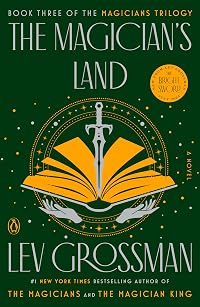
At least Grossman’s writing is as sophisticated and observant as ever. It also has one of his pleasantly surprising trademarks: Language isn’t the expected formal and archaic but modern. It’s one characteristic The Bright Sword does share with The Magicians and a true magic trick of the author’s own: modern without, somehow, being anachronistic. The characters’ elevated position (knight or magician) doesn’t extend to their speech, which doesn’t shy away from cuss words, so readers remember these ordained people are also regular people. Grossman is still allergic to necessary commas like he shows in The Magician’s Land but fortunately a little less so.
I still admire much about Grossman’s talent, and it pains me to not recommend The Bright Sword, even to rabid fans of Medieval fantasy, even to those who like slowly paced stories. It will disappoint both, plus test the patience of the latter. Failing to hook the reader so far into a book is a flaw, unquestionably. This mega-fan of the author had her ample generosity strained to the point of breaking—not enough to bypass all his future work but enough to lower expectations and to borrow instead of buy. show less
(Full disclosure: Book abandoned at page 300, out of 670 pages.)
I’m so disappointed by this wrong turn from Lev Grossman. I'm this author’s biggest fan. Way back when, right after reading a professional review of The Magicians, I ran out to buy that newly published book from my local bookstore. It was well worth every full-priced penny. I regret paying (not just full price but at all) for The Bright Sword and spending so much time reading a huge chunk of this book only to find it a slog.
The main character of this Camelot-themed fantasy is Collum, an idealistic young man who travels to Camelot to see King Arthur. Upon arriving, however, he learns from a handful of King Arthur’s knights that the king died show more recently. The story from here shows knights so mired in hopelessness that they just sit around lamenting the loss and fretting about how to move forward. I don’t know how Grossman thought this was compelling—and he knows how to write compellingly.
Whereas The Magicians has vivid characters that pique interest from the start, The Bright Sword has fairly indistinguishable characters (in part because, except for one unnotable woman, they’re all men and all knights) that don’t do anything of much importance after finally pulling themselves together. Whereas The Magicians has consequential interactions that familiarize readers with vivid characters, The Bright Sword has colorless characters repeatedly circling back to the debate about who could succeed King Arthur. Their conversation drags in the same way war-room discussions can drag. Talk is logistical, spoken in a serious, pragmatic way with occasional bursts of disagreement or pessimism. The few sword fights are detailed blow by blow yet somehow lack tension.
Grossman is passionate about Medieval stories and Camelot, and he displays an encyclopedic knowledge of Medieval times, down to the various parts of a castle (the book is educational on a few fronts), but at times The Bright Sword gets stuck in these details. Calling this a fantasy is also generous, at least when one knows how capable Grossman is in the genre. This is why I contrast The Bright Sword with his Magicians trilogy. He’s shown how saturated with magic his fantasy creations can get—this is the writer whose characters don’t summon some general “magic system”; they have to master the elaborate, real-sounding mathematical equations that power the spells. The Bright Sword is dusted with some mediocre fantasy only. The imaginative, brave backstories of some of the knights are the book’s only riveting chapters.
At least Grossman’s writing is as sophisticated and observant as ever. It also has one of his pleasantly surprising trademarks: Language isn’t the expected formal and archaic but modern. It’s one characteristic The Bright Sword does share with The Magicians and a true magic trick of the author’s own: modern without, somehow, being anachronistic. The characters’ elevated position (knight or magician) doesn’t extend to their speech, which doesn’t shy away from cuss words, so readers remember these ordained people are also regular people. Grossman is still allergic to necessary commas like he shows in The Magician’s Land but fortunately a little less so.
I still admire much about Grossman’s talent, and it pains me to not recommend The Bright Sword, even to rabid fans of Medieval fantasy, even to those who like slowly paced stories. It will disappoint both, plus test the patience of the latter. Failing to hook the reader so far into a book is a flaw, unquestionably. This mega-fan of the author had her ample generosity strained to the point of breaking—not enough to bypass all his future work but enough to lower expectations and to borrow instead of buy. show less
This is rather good, in fact a lot better, more thoughtful and interesting than I expected, which is aside from the real qualities of the story and the characters. It engages with the legends and myths of Arthur in a fascinating way, elegaic, celebratory, but wry and humane amidst all the oddness and the wonders. The rag-tag found family survivors of Camelot after the death of Arthur, with the addition of a callow young would-be knight in stolen armour from a far-off island, try to work out what to do next. Will Arthur come back? Is there another king out there waiting to be found? Will God come back after deserting them at the end of the clamitous Grail Quest? Will the fairy lands invade, lead by Morgan Le Fay? Where is Lancelot? Where show more is Guinevere? Where is Merlin? Through a series of adventures that manage to be fruitless, shambolic and inconclusive, when they're not downright tragic, various answers are revealed. There are stories of fairies, stories of the wonders of God, stories that mix up both, stories of magic. It's all such a muddle, reflecting the muddle of Arthurian lore, yet Grossman cuts a clear narrative path through it all, to a surprisingly triumphant - yet at the same time cconsistently thematically inconclusive - conclusion, until a final moving moment of grace. An unexpectedly affecting love-letter to the once and future king. show less
King Arthur, the Knights of the Round Table, Merlin, etc. and the whole mystique surrounding Camelot and Arthurian legends are not what you expect in this unique retelling, The Bright Sword.
You get the intro of a new knight aspirant, Collum who gets to Camelot a wee bit too late.
You get deep dives into some of the more famous knights.
There is a lot of back/forth of timelines.
You get fae and witch/wizard magic.
Is the bright sword of the title Excalibur or Collum or Arthur?
In all, I would call this a most unexpected but satisfying read!
You get the intro of a new knight aspirant, Collum who gets to Camelot a wee bit too late.
You get deep dives into some of the more famous knights.
There is a lot of back/forth of timelines.
You get fae and witch/wizard magic.
Is the bright sword of the title Excalibur or Collum or Arthur?
In all, I would call this a most unexpected but satisfying read!
Collum of the Out Islands leaves Mull and heads to Camelot, where he dreams of becoming a Knight of the Round Table - but he arrives too late: Arthur is dead, and only a few knights remain. Throughout the country, a battle for power is already occurring. Collum joins Sir Bedivere and the other remaining knights, and the magician Nimue (Merlin's former apprentice, who turned on him when he tried to assault her and buried him in a hill); they go on a number of quests, and each knight's back story is revealed, side-quest fashion. (Sir Palomides, a prince of Baghdad, was my favorite, along with Nimue, but all their stories were interesting.) Morgan le Fay is presented as a villain in Collum's eyes, but rather sympathetic to the reader; show more Guinevere comes off as calm, cool, competent, and queenly; Lancelot turns out to be rather a fanatic and a villain as well. British, Roman, and Fairy influences mix on the isle, to a dreamy, fantastic effect with medieval trappings, though Arthur - if he existed - would have been around the late 5th or early 6th century (see historical note). I was skeptical whether this book would deserve its page count (nearly 700 pages!) but I thoroughly enjoyed it.
Quotes
Adventures were quick and exciting when you heard about them, but when you were inside one they happened very, very slowly. (Collum, 12)
It was a good story. It made him feel better. Stories were useful that way, they smoothed over the gaps and sharp edges of the world. (15)
"Of all the animals...only man can feel a despair that is beyond his power to endure." (19)
But what is buried is not gone. (Arthur, 79)
"I am tired of putting my faith in things that break. I have had enough of it." (Palomides, 143)
When would he gain the wisdom to finally give up? (Palomides, 199)
"A lot of heroes hate themselves, it's why they work so hard to make everybody love them." (Morgan, 233)
Did time ever really move on, or was he always fighting the same fight? (Collum, 238)
...how very many thoughts we have that we can't brea to let ourselves think... (239)
"Everybody has secrets," he said.
"Of course they do...but you want to be particular about which secrets you keep, right? Because they require a lot of care and feeding. In my experience it's almost never worth it." (Collum and Nimue, 298)
If he could do nothing else, Collum thought, he knew how to double down o a rash decision. (319)
He'd been right but she was not wrong. (Collum re: Morgan, 334)
Dagonet was amazed once again at how unfailingly the world taxed people with the very thing that would try them the most. (357)
The worst disasters come dressed as miracles. (371)
"God is terrible, and He is merciful, and the really hard thing is that you never know which you're going to get." (Lancelot, 400)
Power was Merlin's real medium, even more than magic, and power, like heat, was never destroyed, only redistributed. Somebody somewhere always had it. You just had to figure out who it was and how to get close to them. (Nimue, 442)
"The choice is not his to make. I don't think Arthur wanted it either. But you know, I find that it's the people who actually want to be king who are the problem." (Constantine, 466)
"The world is finally broken enough that we can put it back together the way it should be." (Morgan, 474)
"In my experience people don't come back. And if they do they're not the same." (Morgan, 474)
Despair. The peace of lost hope. (507)
The door to the golden world was closed forever, Morgan had slammed it shut in their faces, but he didn't see how she could have done anything else. How could any of them? They had acted according to their natures. They were all just parts in the blind mechanical engine of the world. (509)
"One day you will see that it is a mistake to love an empire, or a throne, or a crown, because those things cannot love. They can only die." (the woman in the mound to Scipio, 527)
When you were inside them adventures happened slowly, but the aftermath of a failed adventure was even slower. (531)
It wasn't over, the millstone of history would keep turning till it had ground them all to fine dust that would blow away in the wind. (532)
Maybe not everything meant something; certainly the available evidence strongly supported that conclusion. (534)
"I corrected whoever would listen, but like I said: when people want to believe something even the king can't stop them. It's just too good a story." (Lancelot, 539)
The quest was over, they were back home safe, and it was all for nothing, but everything had worked out anyway, more or less. In the end they'd made no contribution whatsoever. They could've stayed home for all the difference it made.
Though who knows, maybe things would've gone differently if they hadn't. We cannot know what would have happened. (541)
"But of course everybody loved Arthur too. They all wanted a piece, so I suppose it's no wonder he was torn to pieces in the end." (Guinevere, 553)
"People love stories, I love them, but stories are like gods, they care little for the human beings in their care. They don't care if they're true or not." (Guinevere, 558)
"It's an in-between place...All fairy places are in-between but Avalon is even more so than most - it's somehow in between the world and the Otherworld." (Morgan, 566)
"Let us talk about the future," Guinevere said.
"I'm not interested in the future," said Bedivere. "I want the past back." (566)
It was like trying to read the secret scraped-off underwriting of a palimpsest. (588)
"I can be a good person without God, or fairy either. I guess I'll just believe in myself for a while." (Nimue, 588)
...except that nothing meant anything, and everything was only what it was and nothing more. (614)The past was a cursed wound. No perfect knight would ever come to heal it as if it never happened. The best you could hope for was forgiveness. And even that was cold comfort.
It was the future that required attention. (Arthur, 625)
...in that moment he saw it all, the whole world, past and future, as no one else could...but complicated was not the same as broken. [Britain] would never be pure or perfect, but it might still one day be whole. (626)
But of course it wasn't over. Why would the future be simpler than the past? Stories never really ended, they just rolled one into the next. The past was never wholly lost, and the future was never quite found. We wander forever in a pathless forest, dropping with weariness, as home draws us back, and the grail draws us on, and we never arrive, and the quest never ends. (667) show less
Quotes
Adventures were quick and exciting when you heard about them, but when you were inside one they happened very, very slowly. (Collum, 12)
It was a good story. It made him feel better. Stories were useful that way, they smoothed over the gaps and sharp edges of the world. (15)
"Of all the animals...only man can feel a despair that is beyond his power to endure." (19)
But what is buried is not gone. (Arthur, 79)
"I am tired of putting my faith in things that break. I have had enough of it." (Palomides, 143)
When would he gain the wisdom to finally give up? (Palomides, 199)
"A lot of heroes hate themselves, it's why they work so hard to make everybody love them." (Morgan, 233)
Did time ever really move on, or was he always fighting the same fight? (Collum, 238)
...how very many thoughts we have that we can't brea to let ourselves think... (239)
"Everybody has secrets," he said.
"Of course they do...but you want to be particular about which secrets you keep, right? Because they require a lot of care and feeding. In my experience it's almost never worth it." (Collum and Nimue, 298)
If he could do nothing else, Collum thought, he knew how to double down o a rash decision. (319)
He'd been right but she was not wrong. (Collum re: Morgan, 334)
Dagonet was amazed once again at how unfailingly the world taxed people with the very thing that would try them the most. (357)
The worst disasters come dressed as miracles. (371)
"God is terrible, and He is merciful, and the really hard thing is that you never know which you're going to get." (Lancelot, 400)
Power was Merlin's real medium, even more than magic, and power, like heat, was never destroyed, only redistributed. Somebody somewhere always had it. You just had to figure out who it was and how to get close to them. (Nimue, 442)
"The choice is not his to make. I don't think Arthur wanted it either. But you know, I find that it's the people who actually want to be king who are the problem." (Constantine, 466)
"The world is finally broken enough that we can put it back together the way it should be." (Morgan, 474)
"In my experience people don't come back. And if they do they're not the same." (Morgan, 474)
Despair. The peace of lost hope. (507)
The door to the golden world was closed forever, Morgan had slammed it shut in their faces, but he didn't see how she could have done anything else. How could any of them? They had acted according to their natures. They were all just parts in the blind mechanical engine of the world. (509)
"One day you will see that it is a mistake to love an empire, or a throne, or a crown, because those things cannot love. They can only die." (the woman in the mound to Scipio, 527)
When you were inside them adventures happened slowly, but the aftermath of a failed adventure was even slower. (531)
It wasn't over, the millstone of history would keep turning till it had ground them all to fine dust that would blow away in the wind. (532)
Maybe not everything meant something; certainly the available evidence strongly supported that conclusion. (534)
"I corrected whoever would listen, but like I said: when people want to believe something even the king can't stop them. It's just too good a story." (Lancelot, 539)
The quest was over, they were back home safe, and it was all for nothing, but everything had worked out anyway, more or less. In the end they'd made no contribution whatsoever. They could've stayed home for all the difference it made.
Though who knows, maybe things would've gone differently if they hadn't. We cannot know what would have happened. (541)
"But of course everybody loved Arthur too. They all wanted a piece, so I suppose it's no wonder he was torn to pieces in the end." (Guinevere, 553)
"People love stories, I love them, but stories are like gods, they care little for the human beings in their care. They don't care if they're true or not." (Guinevere, 558)
"It's an in-between place...All fairy places are in-between but Avalon is even more so than most - it's somehow in between the world and the Otherworld." (Morgan, 566)
"Let us talk about the future," Guinevere said.
"I'm not interested in the future," said Bedivere. "I want the past back." (566)
It was like trying to read the secret scraped-off underwriting of a palimpsest. (588)
"I can be a good person without God, or fairy either. I guess I'll just believe in myself for a while." (Nimue, 588)
...except that nothing meant anything, and everything was only what it was and nothing more. (614)The past was a cursed wound. No perfect knight would ever come to heal it as if it never happened. The best you could hope for was forgiveness. And even that was cold comfort.
It was the future that required attention. (Arthur, 625)
...in that moment he saw it all, the whole world, past and future, as no one else could...but complicated was not the same as broken. [Britain] would never be pure or perfect, but it might still one day be whole. (626)
But of course it wasn't over. Why would the future be simpler than the past? Stories never really ended, they just rolled one into the next. The past was never wholly lost, and the future was never quite found. We wander forever in a pathless forest, dropping with weariness, as home draws us back, and the grail draws us on, and we never arrive, and the quest never ends. (667) show less
Okay, here’s the thing about me. I am not afraid at all of a long book. If there’s the promise of a good story inside of that menacing looking tome, I’m happy to dive right in. That being said, even I was slightly taken aback by the sheer length of The Bright Sword. I’m by no means an expert on the subject, but I know that there is plenty of Arthurian lore to pull from out there. Still, what magic could this book hold that required so very many pages? That’s what I was determined to find out.
The beginning of the story centers on Callum, a young man who is Camelot bound and determined to become a knight of the round table. He was the type of character that I could get behind. Callum was full of grit and grace in equal parts, show more while still feeling relatable because of his deep worries about actually being good enough to become a true knight. For the first few chapters, I was hooked. I especially loved when Callum first met the remaining knights of the round table. Broken though they were, you could tell why each of them had managed to get to this place of honor and how much they truly loved their former king.
I also really loved the fact that Grossman gives the reader ample time to meet each of the main characters in turn. As a reader, there is nothing that makes me happier than a good backstory. With his signature witty writing style, Grossman unveils the history behind each of our famous knights. We get the opportunity to see what made them the strong, capable, and also of course deeply flawed men that they are today.
However, here’s where my complaints about this book begin. The backstory portions were lovely, but they didn’t really flow with the overall story. There is a constant flipping between present day and the past, but not in a way that feels cohesive. It almost felt like the knight’s stories could have each been their own novella, while the main story continued on with Callum’s journey in the new Britain that is now missing its king. Even worse, and this is one of my biggest pet peeves, it truly felt like nothing these poor, brave men did actually mattered at all. I suppose that does somewhat stay true to the original King Arthur lore. They often set off on trivial quests that seemed to come to nothing. In this context though it just seemed to add a lot of unnecessary length to the overall story.
Which brings me the answer to the first question I had at the start of this book: what could it hold that made it so long? The answer is, a lot of rambling quests, and so very many heavy explanations. The Bright Song started to drag for me about halfway through, and I only kept on because I’d already made it to the halfway point. Happily, things did pick up towards the end again! It just felt like too little too late.
I love Fantasy novels. I love big worlds, sweeping magic systems, solidly written characters and the type of character development that makes you fall in love with the person you’re following along with. Whether the book is only 200 pages or 800 pages, as long as I feel the payoff is worth it I’ll keep going on forever. In this case, it’s my honest opinion that this story could have been much shorter and it would have had a much bigger impact. I’ll still happily award it a solid three star rating. Grossman is an absolutely excellent writer. I just think The Bright Sword tried too hard to pull too much in at once and struggled with the heaviness of it all. show less
The beginning of the story centers on Callum, a young man who is Camelot bound and determined to become a knight of the round table. He was the type of character that I could get behind. Callum was full of grit and grace in equal parts, show more while still feeling relatable because of his deep worries about actually being good enough to become a true knight. For the first few chapters, I was hooked. I especially loved when Callum first met the remaining knights of the round table. Broken though they were, you could tell why each of them had managed to get to this place of honor and how much they truly loved their former king.
I also really loved the fact that Grossman gives the reader ample time to meet each of the main characters in turn. As a reader, there is nothing that makes me happier than a good backstory. With his signature witty writing style, Grossman unveils the history behind each of our famous knights. We get the opportunity to see what made them the strong, capable, and also of course deeply flawed men that they are today.
However, here’s where my complaints about this book begin. The backstory portions were lovely, but they didn’t really flow with the overall story. There is a constant flipping between present day and the past, but not in a way that feels cohesive. It almost felt like the knight’s stories could have each been their own novella, while the main story continued on with Callum’s journey in the new Britain that is now missing its king. Even worse, and this is one of my biggest pet peeves, it truly felt like nothing these poor, brave men did actually mattered at all. I suppose that does somewhat stay true to the original King Arthur lore. They often set off on trivial quests that seemed to come to nothing. In this context though it just seemed to add a lot of unnecessary length to the overall story.
Which brings me the answer to the first question I had at the start of this book: what could it hold that made it so long? The answer is, a lot of rambling quests, and so very many heavy explanations. The Bright Song started to drag for me about halfway through, and I only kept on because I’d already made it to the halfway point. Happily, things did pick up towards the end again! It just felt like too little too late.
I love Fantasy novels. I love big worlds, sweeping magic systems, solidly written characters and the type of character development that makes you fall in love with the person you’re following along with. Whether the book is only 200 pages or 800 pages, as long as I feel the payoff is worth it I’ll keep going on forever. In this case, it’s my honest opinion that this story could have been much shorter and it would have had a much bigger impact. I’ll still happily award it a solid three star rating. Grossman is an absolutely excellent writer. I just think The Bright Sword tried too hard to pull too much in at once and struggled with the heaviness of it all. show less
This is the Arthurian book I didn’t know I needed but now will be pushing on all my friends.
Members
- Recently Added By
Published Reviews
ThingScore 100
Care and respect has gone into this story, which allows it to sit comfortably alongside the pantheon of Arthurian legend that’s come before, while telling new tales filled with new ideas about what these stories mean. That’s no simple feat.
added by ablachly
We didn’t need to know what happened after Arthur died, but Arthuriana is far richer for the fact that Grossman, like countless storytellers before him, couldn’t let the dream of Camelot go.
added by ablachly
Lists

Best Arthurian Fiction
104 works; 33 members
Modern Arthurian Fiction
237 works; 16 members

2025 Hugo Awards -- Eligible Works -- Novels
33 works; 2 members

Books Read in 2024
4,623 works; 126 members

Top Five Books of 2024
795 works; 264 members

Books We Discovered On LibraryThing
530 works; 130 members

Wilson
6 works; 1 member
Top Five Books of 2025
954 works; 303 members

Books Read in 2026
1,961 works; 66 members

Queer Fiction (Owned TBR)
142 works; 1 member
Author Information

Lev Grossman was born on June 26, 1969. He received a degree in literature from Harvard University in 1991. He spent three years in the Ph.D. program in comparative literature at Yale University, but left before completing his dissertation. In 2002, he became a book reviewer and one of the lead technology writers for Time magazine. He has written show more for Salon, The Village Voice, The Wall Street Journal, Wired, Entertainment Weekly, The Believer, Lingua Franca, and the New York Times. His first novel, Warp, was published in 1997. His other novels include Codex, The Magicians, which won a 2010 Alex Award, The Magician King and The Magician's Land. (Bowker Author Biography) show less
Some Editions
Awards and Honors
Awards
Distinctions
Common Knowledge
- Canonical title
- The Bright Sword
- Epigraph
- anoeth bid bet y Arthur
a hidden thing is the grave of Arthur
-"The Stanza of the Graves," from The Black Book of Carmarthen
Strange women lying in ponds distributing swords is no basis for a system of government. -Monty Python and the Holy Grail - First words
- Collum punched the other knight in the face with the pommel of his sword gripped in his gauntleted fist, so hard the dark inlaid metal dimpled under his knuckles, but his opponent showed absolutely no sign of falling over or ... (show all)surrendering to him. -Chapter One
- Last words
- (Click to show. Warning: May contain spoilers.)He looked up at the empty clouds, and as he died he wondered, not for the first time but for the very last, why it should be that we are made for a bright word, but live in a dark one.
- Canonical DDC/MDS
- 813.54
- Canonical LCC
- PS3557.R6725
Classifications
- Genres
- Fantasy, Fiction and Literature, Historical Fiction, General Fiction
- DDC/MDS
- 813.54 — Literature & rhetoric American literature in English American fiction in English 1900-1999 1945-1999
- LCC
- PS3557 .R6725 — Language and Literature American literature American literature Individual authors 1961-
- BISAC
Statistics
- Members
- 1,147
- Popularity
- 21,962
- Reviews
- 32
- Rating
- (3.92)
- Languages
- English, German, Hungarian, Spanish
- Media
- Paper, Audiobook, Ebook
- ISBNs
- 18
- ASINs
- 5