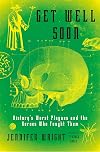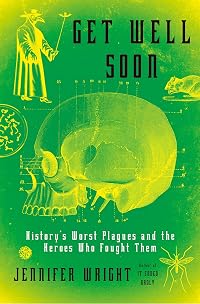
Get Well Soon: History's Worst Plagues and the Heroes Who Fought Them
by Jennifer Wright
On This Page
Description
A witty, irreverent tour of history's worst plagues?from the Antonine Plague, to leprosy, to polio?and a celebration of the heroes who fought themIn 1518, in a small town in Alsace, Frau Troffea began dancing and didn't stop. She danced until she was carried away six days later, and soon thirty-four more villagers joined her. Then more. In a month more than 400 people had been stricken by the mysterious dancing plague. In late-nineteenth-century England an eccentric gentleman founded the No show more Nose Club in his gracious townhome?a social club for those who had lost their noses, and other body parts, to the plague of syphilis for which there was then no cure. And in turn-of-the-century New York, an Irish cook caused two lethal outbreaks of typhoid fever, a case that transformed her into the notorious Typhoid Mary.
Throughout time, humans have been terrified and fascinated by the diseases history and circumstance have dropped on them. Some of their responses to those outbreaks are almost too strange to believe in hindsight. Get Well Soon delivers the gruesome, morbid details of some of the worst plagues we've suffered as a species, as well as stories of the heroic figures who selflessly fought to ease the suffering of their fellow man. With her signature mix of in-depth research and storytelling, and not a little dark humor, Jennifer Wright explores history's most gripping and deadly outbreaks, and ultimately looks at the surprising ways they've shaped history and humanity for almost as long as anyone can remember.
. show less
Tags
Recommendations




Member Reviews
Can a book about diseases be utterly charming and often hilarious? It turns out that if the author is Jennifer Wright, the answer is yes.
This compilation of short histories of some of the worst plagues in history is punctuated (literally) by lots of italics, exclamation points, jokes, contemporary references, sarcasm, and humorous epigraphs before each chapter. But the subject matter is deadly.
Topics include the Bubonic plague, smallpox, polio, the great influenza epidemic of 1918, and the “man-made” plague of lobotomies, inter alia.
Wright also includes information on how these diseases impacted history. For example, it is estimated that smallpox killed around 90 percent of the native people of the Americas, clearing the path for show more the great land grab by Europeans.
It is not so well known that during World War I, forty thousand American soldiers were killed by what was called the “Spanish flu” (she explains how it got this name). For perspective, she points out, “that’s only seven thousand fewer American soldiers than were killed in combat in Vietnam.” In one month alone, October of 1918, 195,000 people died of the Spanish flu. It was the deadliest month in U.S. history. Why did it get so bad so fast? She explains that too.
She comes back several times in her book to the subject of vaccination, stating:
“Vaccination is one of the best things that has happened to civilization. Empires toppled like sandcastles in the wake of diseases we do not give a second thought to today.”
She addresses current fears about vaccines, which she considers to be not only scientifically baseless but dangerous - explaining:
“. . . some vaccines contain an extremely diluted amount of formaldehyde, which sounds scary, as formaldehyde in large doses is linked to cancer. However, formaldehyde also occurs naturally in your body and helps you metabolize food. The amount you would find in a vaccine. . . [is less than you would find in an average apple.]”
It is shocking to learn that Zimbabwe now has a higher immunization rate for one-year-olds against measles than the United States does. So do 112 other countries, according to the World Health Organization (WHO). The U.S. is down to 91 percent vaccination rate for measles, which, according to the WHO, makes us much more vulnerable to outbreaks:
“Refusing to vaccinate puts at risk not just your children but the people in our communities who most require our protection.”
But does a “cure” ever cause more harm than good? She does explore when that happens in a chapter on lobotomies, which are intentional partial destructions of the brain, and “the scariest procedure that you never want performed.” Approximately 40,000 lobotomies were performed in the United States between the 1930s and the 1970s. As Wrights avers, “. . . this was one of the darkest chapters in American medical history.”
She ends with the AIDS crisis, lamenting that we did not learn the lessons of history in fighting it, in particular that the issue of “morals” or “character” has nothing to do with the cause of diseases. She implores us to become wiser after “the horrible mismanagement of the AIDS crisis":
“We know what works and what doesn’t! Be smarter, please, please, be smarter, be kinder, be kinder and smarter, I am begging you.”
Evaluation: This book is informative and lively, and combines laugh-out-loud moments with important messages. It is an entertaining way to learn a part of history often neglected but more consequential to the rise and fall of civilizations than you would expect. show less
This compilation of short histories of some of the worst plagues in history is punctuated (literally) by lots of italics, exclamation points, jokes, contemporary references, sarcasm, and humorous epigraphs before each chapter. But the subject matter is deadly.
Topics include the Bubonic plague, smallpox, polio, the great influenza epidemic of 1918, and the “man-made” plague of lobotomies, inter alia.
Wright also includes information on how these diseases impacted history. For example, it is estimated that smallpox killed around 90 percent of the native people of the Americas, clearing the path for show more the great land grab by Europeans.
It is not so well known that during World War I, forty thousand American soldiers were killed by what was called the “Spanish flu” (she explains how it got this name). For perspective, she points out, “that’s only seven thousand fewer American soldiers than were killed in combat in Vietnam.” In one month alone, October of 1918, 195,000 people died of the Spanish flu. It was the deadliest month in U.S. history. Why did it get so bad so fast? She explains that too.
She comes back several times in her book to the subject of vaccination, stating:
“Vaccination is one of the best things that has happened to civilization. Empires toppled like sandcastles in the wake of diseases we do not give a second thought to today.”
She addresses current fears about vaccines, which she considers to be not only scientifically baseless but dangerous - explaining:
“. . . some vaccines contain an extremely diluted amount of formaldehyde, which sounds scary, as formaldehyde in large doses is linked to cancer. However, formaldehyde also occurs naturally in your body and helps you metabolize food. The amount you would find in a vaccine. . . [is less than you would find in an average apple.]”
It is shocking to learn that Zimbabwe now has a higher immunization rate for one-year-olds against measles than the United States does. So do 112 other countries, according to the World Health Organization (WHO). The U.S. is down to 91 percent vaccination rate for measles, which, according to the WHO, makes us much more vulnerable to outbreaks:
“Refusing to vaccinate puts at risk not just your children but the people in our communities who most require our protection.”
But does a “cure” ever cause more harm than good? She does explore when that happens in a chapter on lobotomies, which are intentional partial destructions of the brain, and “the scariest procedure that you never want performed.” Approximately 40,000 lobotomies were performed in the United States between the 1930s and the 1970s. As Wrights avers, “. . . this was one of the darkest chapters in American medical history.”
She ends with the AIDS crisis, lamenting that we did not learn the lessons of history in fighting it, in particular that the issue of “morals” or “character” has nothing to do with the cause of diseases. She implores us to become wiser after “the horrible mismanagement of the AIDS crisis":
“We know what works and what doesn’t! Be smarter, please, please, be smarter, be kinder, be kinder and smarter, I am begging you.”
Evaluation: This book is informative and lively, and combines laugh-out-loud moments with important messages. It is an entertaining way to learn a part of history often neglected but more consequential to the rise and fall of civilizations than you would expect. show less
Wright presents lots o' research and even manages to insert a lot of humor into a pretty grim topic: diseases throughout human history. She covers the 'biggies': the bubonic plague, leprosy, cholera, the Spanish flu. She also delves into leprosy, lobotomies (not really a disease but certainly a "contagious" practice, and polio. She has a real moral agenda: disease is NOT a human failing. We should not punish or shun the ill; rather, embrace them and work to get them better. She also lauds great leaders who set a tone of courage and compassion. She has especially harsh words for those leaders who "ignore" diseases (Woodrow Wilson/The Spanish Flu, Ronald Reagan/AIDS) Needless to add, in this year of COVID-19, her lessons seem eerily show more relevant. Young adults and other weird folks (like this reader) would appreciate her sardonic humor and the gruesome pictures at the end. Highly recommended for this admittedly select audience. show less
I finally finished this one. The delay was a combination of being on holiday, and needing to put some space between my experience of this book and the experience of others, as I was starting to feel like I was losing my objectivity regarding my feelings about this book.
So, my feelings: Get Well Soon was poorly sub-titled and marketed. As a popular science book, or a popular history-about-science book, it fails. As an introductory anthropological and cultural survey of how society has historically reacted to epidemics and pandemics, I think its excellent.
Furthermore, while I like her writing style a lot, it is polarising. Jennifer Wright is a 30-something author whose voice is informal, irreverent and snarky. She writes the way friends show more - good friends - talk when they don't have to behave themselves. She uses this no-nonsense voice to sometimes share her thoughts about topics that are themselves, polarising.
So this is a book that isn't going to appeal to everyone. It particularly isn't going to appeal - at all - to anyone looking for a more sober, scientifically-focused exploration of the topic. After reading the whole thing, I'm pretty sure it was never meant to, at least, not from the author's perspective.
"If you take nothing else away from this book, I hope it's that sick people are not villains."
This is a recurring theme from start to finish. Wright's objective seems to be to focus a spotlight on humanity's reaction to mass illness throughout history, whether good or bad. Her hope in doing so is that perhaps those who read this book will learn from history rather than doom themselves to repeat it. She does this is the frankest, bluntest possible way, with a lot of snarky humor.
In this objective, I believe she succeeds. I think those of us who could be labeled as 'prolific readers' or those who voraciously devour their favorite subjects, might lose perspective on how well-informed, or not, most people today are. Society today is at least as divided as it's been at almost any other time in history, and a good deal of opinion is shaped via the internet, a source we all know can be about as accurate as a round of the telephone game.
In this context, I think the book is fantastic. Jennifer Wright seems to be a popular author of columns in various newspapers and magazines; if even a handful of her fans from Harper's Bazaar, et al, read this book simply because she wrote it, and they come away having learned something they didn't know before they started, or thinking harder about their responsibility in society, then Wright will have succeeded where others have failed. (And yes, I'm generally pessimistic about the world I live in - my country is being run by an orange lunatic; I think I'm entitled to a bit of pessimism.)
I'm not one of her magazine/newspaper fans. In fact it wasn't until after I'd started this that I realised I'd ever read anything by her before. I'm also quantitatively better read, if not qualitatively (some would argue), and I can say that not only did I enjoy this book a great deal, but I learned more than I expected to. For example, I had no idea that the Spanish Flu wasn't actually Spanish, but probably American, and I had no idea that it killed so many Americans. Granted, most of my knowledge of the Spanish Flu comes from British fiction, but it's a testament to the horrifying effectiveness of government censorship during WWI that you still don't read about it in American fiction, and this is a disease that killed in one month more Americans than the US Civil War. I'd also never heard of Encephalitis Lethargica, and sort of wish I never had. Even on the diseases I knew more about, Wright managed to impart something new for me, and in at least 2 chapters, left me misty eyed over the power people have when they choose to be selfless.
As a popular science book meant to tackle a complicated topic in a palatable way, this book is a fail; there's not nearly enough scientific discussion or data here to qualify this as such a book. But as a popular, cultural overview of the way societies throughout history have succeeded or failed to handle epidemics when they happened and the importance of rational, humane leaders and populace in times of crises, I think Wright succeeds very well.
The tragedy of this book is that it's marketed to the very people who are bound to be disappointed by it and likely don't need its message, and the people who might gain the most from it are likely to pass it by because they think it'll be too boring and dry.
I read this for The Flat Book Society's September read, but it also qualifies for the Doomsday square in Halloween Bingo. show less
So, my feelings: Get Well Soon was poorly sub-titled and marketed. As a popular science book, or a popular history-about-science book, it fails. As an introductory anthropological and cultural survey of how society has historically reacted to epidemics and pandemics, I think its excellent.
Furthermore, while I like her writing style a lot, it is polarising. Jennifer Wright is a 30-something author whose voice is informal, irreverent and snarky. She writes the way friends show more - good friends - talk when they don't have to behave themselves. She uses this no-nonsense voice to sometimes share her thoughts about topics that are themselves, polarising.
So this is a book that isn't going to appeal to everyone. It particularly isn't going to appeal - at all - to anyone looking for a more sober, scientifically-focused exploration of the topic. After reading the whole thing, I'm pretty sure it was never meant to, at least, not from the author's perspective.
"If you take nothing else away from this book, I hope it's that sick people are not villains."
This is a recurring theme from start to finish. Wright's objective seems to be to focus a spotlight on humanity's reaction to mass illness throughout history, whether good or bad. Her hope in doing so is that perhaps those who read this book will learn from history rather than doom themselves to repeat it. She does this is the frankest, bluntest possible way, with a lot of snarky humor.
In this objective, I believe she succeeds. I think those of us who could be labeled as 'prolific readers' or those who voraciously devour their favorite subjects, might lose perspective on how well-informed, or not, most people today are. Society today is at least as divided as it's been at almost any other time in history, and a good deal of opinion is shaped via the internet, a source we all know can be about as accurate as a round of the telephone game.
In this context, I think the book is fantastic. Jennifer Wright seems to be a popular author of columns in various newspapers and magazines; if even a handful of her fans from Harper's Bazaar, et al, read this book simply because she wrote it, and they come away having learned something they didn't know before they started, or thinking harder about their responsibility in society, then Wright will have succeeded where others have failed. (And yes, I'm generally pessimistic about the world I live in - my country is being run by an orange lunatic; I think I'm entitled to a bit of pessimism.)
I'm not one of her magazine/newspaper fans. In fact it wasn't until after I'd started this that I realised I'd ever read anything by her before. I'm also quantitatively better read, if not qualitatively (some would argue), and I can say that not only did I enjoy this book a great deal, but I learned more than I expected to. For example, I had no idea that the Spanish Flu wasn't actually Spanish, but probably American, and I had no idea that it killed so many Americans. Granted, most of my knowledge of the Spanish Flu comes from British fiction, but it's a testament to the horrifying effectiveness of government censorship during WWI that you still don't read about it in American fiction, and this is a disease that killed in one month more Americans than the US Civil War. I'd also never heard of Encephalitis Lethargica, and sort of wish I never had. Even on the diseases I knew more about, Wright managed to impart something new for me, and in at least 2 chapters, left me misty eyed over the power people have when they choose to be selfless.
As a popular science book meant to tackle a complicated topic in a palatable way, this book is a fail; there's not nearly enough scientific discussion or data here to qualify this as such a book. But as a popular, cultural overview of the way societies throughout history have succeeded or failed to handle epidemics when they happened and the importance of rational, humane leaders and populace in times of crises, I think Wright succeeds very well.
The tragedy of this book is that it's marketed to the very people who are bound to be disappointed by it and likely don't need its message, and the people who might gain the most from it are likely to pass it by because they think it'll be too boring and dry.
I read this for The Flat Book Society's September read, but it also qualifies for the Doomsday square in Halloween Bingo. show less
This nonfiction account of the worst plagues in history is shockingly funny. Wright shares the facts, but with a dark sense of humor that I loved. She is honest about her bias against certain leaders and doctors who made horrific choices. Who knew that reading about plagues could be so incredibly entertaining?
“Pretending any historical age before proper indoor plumbing was a glorious epoch is a ludicrous delusion.”
“Feel free to start using Walter Jackson Freeman II as an insult directed toward people you hate. Almost no one will get the reference, but if I am in the room we’ll high-five and it will be awesome.”
“Knowing about pop culture doesn’t make you dumb; it makes you a person who is interested in the world you live show more in. Besides, it is impossible to believe that everyone in the past was a serious figure meriting great respect once you learn that one guy thought
tubercular patients should take up new careers as alligator hunters.” show less
“Pretending any historical age before proper indoor plumbing was a glorious epoch is a ludicrous delusion.”
“Feel free to start using Walter Jackson Freeman II as an insult directed toward people you hate. Almost no one will get the reference, but if I am in the room we’ll high-five and it will be awesome.”
“Knowing about pop culture doesn’t make you dumb; it makes you a person who is interested in the world you live show more in. Besides, it is impossible to believe that everyone in the past was a serious figure meriting great respect once you learn that one guy thought
tubercular patients should take up new careers as alligator hunters.” show less
I cannot remember who recommended Get Well Soon to me, but I am forever in that person’s debt because it will go down as one of my favorite audiobooks of all time. It has everything I love in books. It is informative and entertaining, full of weird facts and scary statistics. Adding to all of that is Gabra Zackman’s narration, which exudes sarcasm and wit as well as the horror and indignation at these plagues and the responses to them.
Laughing while horrified, I marvel at Ms. Wright’s ability to turn these most horrible outbreaks in human history into morality lessons without making them sound like a sermon. Her willingness to speak hard truths – about government responses, about anti-vaccine advocates, etc. – are made all the show more more compelling by the honesty infused into her words and the don’t-give-a-shit attitude she expresses. Her use of anecdotes humanizes the distant past and reminds everyone that diseases have a tendency to return when we become complacent. The end effect is a book that educates but maintains a level of levity to offset the gruesome and disturbing details.
The details ARE disturbing, and Ms. Wright minces no words when describing anything. From the cesspools of London to the horrifying symptoms of tertiary syphilis to the causes of cholera and polio, the facts are revolting on so many levels. The faint of heart might want to shy away from any book that freely talks about fecal matter in drinking water and pus, but the information the book provides is too important to ignore. The thing about using blunt language to describe something awful though is that you find yourself getting over your disgust rather quickly. Your nausea is nothing in light of the suffering of others, and Ms. Wright uses this to her advantage.
If anything, you walk away from Get Well Soon with a greater appreciation for anyone who survived until the discovery of penicillin and the use of vaccinations. She makes you appreciate the drugs we take for granted because they really have altered the history of man by making it possible to live longer, healthier lives. At the same time, you realize how complacent we continue to be about the threat of a plague and how that complacency could risk your life or those of your loved ones. Get Well Soon is as much a cautionary tale as it is an educational one, and with an anti-vaxxer in the White House, her message is ever more important. Thankfully, Ms. Wright makes the whole thing so damn entertaining that you can’t help but enjoy every second of it. show less
Laughing while horrified, I marvel at Ms. Wright’s ability to turn these most horrible outbreaks in human history into morality lessons without making them sound like a sermon. Her willingness to speak hard truths – about government responses, about anti-vaccine advocates, etc. – are made all the show more more compelling by the honesty infused into her words and the don’t-give-a-shit attitude she expresses. Her use of anecdotes humanizes the distant past and reminds everyone that diseases have a tendency to return when we become complacent. The end effect is a book that educates but maintains a level of levity to offset the gruesome and disturbing details.
The details ARE disturbing, and Ms. Wright minces no words when describing anything. From the cesspools of London to the horrifying symptoms of tertiary syphilis to the causes of cholera and polio, the facts are revolting on so many levels. The faint of heart might want to shy away from any book that freely talks about fecal matter in drinking water and pus, but the information the book provides is too important to ignore. The thing about using blunt language to describe something awful though is that you find yourself getting over your disgust rather quickly. Your nausea is nothing in light of the suffering of others, and Ms. Wright uses this to her advantage.
If anything, you walk away from Get Well Soon with a greater appreciation for anyone who survived until the discovery of penicillin and the use of vaccinations. She makes you appreciate the drugs we take for granted because they really have altered the history of man by making it possible to live longer, healthier lives. At the same time, you realize how complacent we continue to be about the threat of a plague and how that complacency could risk your life or those of your loved ones. Get Well Soon is as much a cautionary tale as it is an educational one, and with an anti-vaxxer in the White House, her message is ever more important. Thankfully, Ms. Wright makes the whole thing so damn entertaining that you can’t help but enjoy every second of it. show less
Enjoyed this, even with the rather disturbing subject matter. However this may not be everyone's cup of tea. It is well presented, without being terribly graphic. She doesn't stint with being factual or presenting her own opinion** after presenting the subject in certain areas (polio is one example) but she doesn't do that through the whole book.
In one chapter she points out how the Spanish overcame the South American Empires, and does so succinctly and with little sympathy for the Spanish of the era. Good for her.. they were myopic and brutal. and that's being nice. (fyi.. they conquered because they brought illness, mainly smallpox in this instance, which more than decimated the peoples of the Americas as they had not encountered show more these diseases, and had no immunity to them. Terrible devastation. )
This was written and published in 2017, so pre-pandemic (as in COVID). She speculates (hopefully) about a future pandemic, and it is - in retrospect - humorous in spots, even if she didn't write those bits to be funny. This has a lot of rewarding stories and information about people who fought and overcame certain diseases, it's not all dark!
This is the second book I've read from this author, both have been enjoyed, and surprisingly as I just noticed this was her second publication. So I guess I'm reading them in order lol.
** I don't totally disagree with her, but if you are heavily (or lightly?) anti-vaxx you are forewarned when reading the end of the polio and measles chapters (and possibly some other of the later chapters). Also don't go all weird about your opinions on vaccination pro or con here, I'm giving people a heads up, not inviting a war. show less
In one chapter she points out how the Spanish overcame the South American Empires, and does so succinctly and with little sympathy for the Spanish of the era. Good for her.. they were myopic and brutal. and that's being nice. (fyi.. they conquered because they brought illness, mainly smallpox in this instance, which more than decimated the peoples of the Americas as they had not encountered show more these diseases, and had no immunity to them. Terrible devastation. )
This was written and published in 2017, so pre-pandemic (as in COVID). She speculates (hopefully) about a future pandemic, and it is - in retrospect - humorous in spots, even if she didn't write those bits to be funny. This has a lot of rewarding stories and information about people who fought and overcame certain diseases, it's not all dark!
This is the second book I've read from this author, both have been enjoyed, and surprisingly as I just noticed this was her second publication. So I guess I'm reading them in order lol.
** I don't totally disagree with her, but if you are heavily (or lightly?) anti-vaxx you are forewarned when reading the end of the polio and measles chapters (and possibly some other of the later chapters). Also don't go all weird about your opinions on vaccination pro or con here, I'm giving people a heads up, not inviting a war. show less
Being in the midst of a pandemic, I found this 2017 account of medical plagues of various types very interesting. It's amazing how enjoyable Wright could make such a grim subject. But Wright is an excellent writer, and also had just the right touch of dark humor.
She covers expected subjects: The "black death," the 1918 influenza pandemic, polio, and AIDS. There were also less familiar epidemics. I learned a lot from this book!
I found some passages quite worth noting, especially in light of our current situation.
From the Introduction:
". . . when plagues erupt, some people behave amazingly well. They minimize the level of death and destruction around them. They are kind, they are courageous. They showcase the best of our nature. Other show more people behave like superstitious lunatics and add to the death toll."
". . . whether plagues are managed quickly doesn't just depend on hard-working doctors and scientists. It depends on people who like to sleep in on weekends and watch movies and eat french fries and do the fantastic common things in life. Which is to say, it depends on all of us. Whether a civilization fares well during a crisis has a great deal to do with how the ordinary, non-scientist citizen responds."
On learning from the past:
"... when the next outbreak comes, and I lack the optimism to believe it won't, so many of our challenges will remain the same. We will be so much better off if the absolute maximum number of present-day and future people handle the disease with the aplomb of some of the best figures in this book."
Near the end of the chapter on the 1918 pandemic, she quotes John Barry from his book [The Great Influenza]:
"Those in authority must retain the public's trust. The way to do that is to distort nothing. To put the best face on nothing. To try to manipulate no one. Leadership must make whatever horror exists concrete."
Wright closes that chapter, " ... we are always stronger when we work together. If there is a next time, it would be very much to our benefit to remember that."
It IS next time now, and I fear that some people have NOT remembered that! show less
She covers expected subjects: The "black death," the 1918 influenza pandemic, polio, and AIDS. There were also less familiar epidemics. I learned a lot from this book!
I found some passages quite worth noting, especially in light of our current situation.
From the Introduction:
". . . when plagues erupt, some people behave amazingly well. They minimize the level of death and destruction around them. They are kind, they are courageous. They showcase the best of our nature. Other show more people behave like superstitious lunatics and add to the death toll."
". . . whether plagues are managed quickly doesn't just depend on hard-working doctors and scientists. It depends on people who like to sleep in on weekends and watch movies and eat french fries and do the fantastic common things in life. Which is to say, it depends on all of us. Whether a civilization fares well during a crisis has a great deal to do with how the ordinary, non-scientist citizen responds."
On learning from the past:
"... when the next outbreak comes, and I lack the optimism to believe it won't, so many of our challenges will remain the same. We will be so much better off if the absolute maximum number of present-day and future people handle the disease with the aplomb of some of the best figures in this book."
Near the end of the chapter on the 1918 pandemic, she quotes John Barry from his book [The Great Influenza]:
"Those in authority must retain the public's trust. The way to do that is to distort nothing. To put the best face on nothing. To try to manipulate no one. Leadership must make whatever horror exists concrete."
Wright closes that chapter, " ... we are always stronger when we work together. If there is a next time, it would be very much to our benefit to remember that."
It IS next time now, and I fear that some people have NOT remembered that! show less
Members
- Recently Added By
Published Reviews
There’s no question that Wright has covered a lot of medical territory with good information; if only she had curbed her enthusiasm to pontificate.
added by g33kgrrl
Wright (It Ended Badly) adopts a lighthearted approach—with mixed results—to delivering sociologically oriented descriptions of history’s greatest epidemics, including bubonic plague, smallpox, typhoid, and polio.
added by g33kgrrl
Lists

Top Five Books of 2017
757 works; 231 members

Books Read in 2018
4,360 works; 110 members

Books Read in 2019
4,052 works; 110 members

Books You Couldn't Finish
202 works; 32 members
Author Information

7 Works 1,257 Members
Awards and Honors
Awards
Distinctions
Common Knowledge
- Canonical title
- Get Well Soon: History's Worst Plagues and the Heroes Who Fought Them
- Original publication date
- 2017
- Important events
- Great Influenza Epidemic
- Dedication
- For Mom and Dad. Would it kill you to go to the doctor now and then?
- First words
- When I tell people that I am writing a book on plagues, well-meaning acquaintances suggest I add a modern twist.
- Last words
- (Click to show. Warning: May contain spoilers.)Onward and upward.
- Canonical DDC/MDS
- 614.4
- Canonical LCC
- RA649
Classifications
- Genres
- General Nonfiction, Science & Nature, History, Nonfiction
- DDC/MDS
- 614.4 — Applied science & technology Medicine & health Epidemics and poisons Incidence of and public measures to prevent disease
- LCC
- RA649 — Medicine Public aspects of medicine Public aspects of medicine Public health. Hygiene. Preventive medicine Epidemics. Epidemiology. Quarantine. Disinfection
- BISAC
Statistics
- Members
- 589
- Popularity
- 50,036
- Reviews
- 62
- Rating
- (4.04)
- Languages
- English, Polish
- Media
- Paper, Audiobook, Ebook
- ISBNs
- 10
- ASINs
- 5