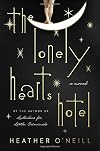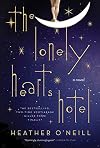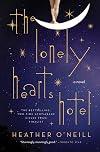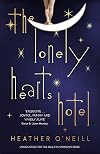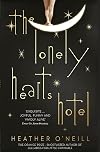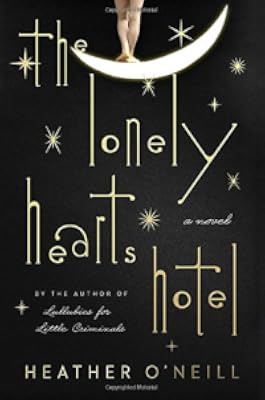
The Lonely Hearts Hotel
by Heather O'Neill
On This Page
Description
"With echoes of The Night Circus, a spellbinding story about two gifted orphans -in love with each other since they can remember-whose childhood talents allow them to rewrite their future. The Lonely Hearts Hotel is a love story with the power of legend. An unparalleled tale of charismatic pianos, invisible dance partners, radicalized chorus girls, drug-addicted musicians, brooding clowns, and an underworld whose economy hinges on the price of a kiss. In a landscape like this, it takes great show more creative gifts to thwart one's origins. It might also take true love. Two babies are abandoned in a Montreal orphanage in the winter of 1914. Before long, their talents emerge: Pierrot is a piano prodigy; Rose lights up even the dreariest room with her dancing and comedy. As they travel around the city performing clown routines, the children fall in love with each other and dream up a plan for the most extraordinary and seductive circus show the world has ever seen. Separated as teenagers, sent off to work as servants during the Great Depression, both descend into the city's underworld, dabbling in sex, drugs and theft in order to survive. But when Rose and Pierrot finally reunite beneath the snowflakes -after years of searching and desperate poverty -the possibilities of their childhood dreams are renewed, and they'll go to extreme lengths to make them come true. Soon, Rose, Pierrot and their troupe of clowns and chorus girls have hit New York, commanding the stage as well as the alleys, and neither the theater nor the underworld will ever look the same. With her musical language and extravagantly realized world, Heather O'Neill enchants us with a novel so magical there is no escaping its spell"-- show lessTags
Recommendations


















Member Reviews
*4.75*
There is no love without fury. There is no beauty without ugliness.
This book was a rollercoaster. I loved it. I hated it. I wanted to name my first-born Pierrot and then I wanted to burn the entire first-manuscript for the pain it put me through. It was like being love—full of fury and ugliness.
I want to first say that the prose of this novel was absolutely gorgeous. It was descriptive while still heady, and it made the characters–and especially the setting–come so, so alive.
The dual narrative of the novel between Rose and Pierrot throughout was genius. I haven't seen something like that done so seamlessly and though totally conspicuous to illustrate how they are always together in thought, I found myself not really show more caring. I'm not always a fan of experimental form, but this was just different enough for me to not only appreciate it, but also absolutely love it. Take this paragraph:
The character of Pierrot was one of my most favorite characters I've read in a long time. I loved having such an emotional, good-hearted, male figure to follow and get to know, and he ultimately felt so real. From his heart-breaking beginnings with the nun (argh!!) to the later abuse problems, I thought both were handled so well and poignantly, especially the former. I do think though in the end, I almost wish there was more of a discussion on it, and the long-term effects it would have had on him. Just because he tells Rose, doesn't mean it's out of his system for good. Being able to see the character in situations of wealth to nothing was also fascinating, and made me think about all the lovely characters I've come admire though they be bathed in wealth. Who would they be without it?
I liked being able to see Pierrot for the good in both and made me seem that much better through it. Through his battles and vices though, I thought it was smart in the end to have Rose eventually come to be a foil/contrast for the avarice and need for control was really smart. He's a good man, just in a bad situation.
The ending was heartbreaking. I don't even know if I can probably put what I felt into words. It left me seeing hollow, and I honestly hadn't expected Pierrot's death. I did like the icing of the bitch nun at the end, and Rose looking after his son though, and that's probably the best I could ask for after losing a character I loved so much. I'm a bit iffy on the book's message his life was destined to be over though–I'm not of a nature to believe people have a purpose and then die, or that death is some way valiant or affirming. I know I'm still sensitive to it, but I just needed to put it out there I didn't agree with the author there.
One major issue I had with the book was the gratuitousness of the sex present. I feel like I need to start off saying that I'm not a prude, nor am I weird about this stuff, and you'll just have to believe me when I say I deal with written sex more than I care to admit. I rationalized the choice to show such scenes in the beginning believing it would come back later to highlight all the (frankly) terrible sexual experiences the two had had earlier, to contrast it to love and what not, but by the end I wasn't convinced that was so much so. The same needlessly explicit language was used when (TW: rape)Pierrot was raped as a child to Rose's time as a trapped mistress, and while the scenes of the two together were sweet,
it was still a bit too much than warranted, and shows to me no development. In the end, I don't like large enough elements (here, the motif of explicit sex) that add nothing to the theme, and I ultimately felt that the raunchiness of the sex was pointless and told me nothing of the characters or their development. It felt pornographic at times, and it confused me trying to read into it, ultimately fruitlessly. Oh Eavan, how fucking naïve.
I'm not here to harang it anymore though, and I could probably spend a good few hours remembering and putting into words thoughts and feelings on this book, but I'd be here all day. Read this book. Enjoy it. Throw it against a wall and cry. Do everything with it–it won't disappoint. show less
There is no love without fury. There is no beauty without ugliness.
This book was a rollercoaster. I loved it. I hated it. I wanted to name my first-born Pierrot and then I wanted to burn the entire first-manuscript for the pain it put me through. It was like being love—full of fury and ugliness.
I want to first say that the prose of this novel was absolutely gorgeous. It was descriptive while still heady, and it made the characters–and especially the setting–come so, so alive.
The dual narrative of the novel between Rose and Pierrot throughout was genius. I haven't seen something like that done so seamlessly and though totally conspicuous to illustrate how they are always together in thought, I found myself not really show more caring. I'm not always a fan of experimental form, but this was just different enough for me to not only appreciate it, but also absolutely love it. Take this paragraph:
Pierrot lit a cigarette. Rose inhaled from her cigarette. Pierrot exhaled smoke rings. Rose let white swirls escape from her nose. Pierrot tossed the cigarette onto the ground. Rose ground the cigarette with the sole of her shoe.
The character of Pierrot was one of my most favorite characters I've read in a long time. I loved having such an emotional, good-hearted, male figure to follow and get to know, and he ultimately felt so real. From his heart-breaking beginnings with the nun (argh!!) to the later abuse problems, I thought both were handled so well and poignantly, especially the former. I do think though in the end, I almost wish there was more of a discussion on it, and the long-term effects it would have had on him. Just because he tells Rose, doesn't mean it's out of his system for good. Being able to see the character in situations of wealth to nothing was also fascinating, and made me think about all the lovely characters I've come admire though they be bathed in wealth. Who would they be without it?
I liked being able to see Pierrot for the good in both and made me seem that much better through it. Through his battles and vices though, I thought it was smart in the end to have Rose eventually come to be a foil/contrast for the avarice and need for control was really smart. He's a good man, just in a bad situation.
He was walking around, but he knew that his story was over. His life story was written, and he was living in the extra blank pages at the back of a book. There was a beginning, middle, end to his life.
But most of all, he wanted to do something he had never done before. He wanted to have sex with someone he was in love with.
One major issue I had with the book was the gratuitousness of the sex present. I feel like I need to start off saying that I'm not a prude, nor am I weird about this stuff, and you'll just have to believe me when I say I deal with written sex more than I care to admit. I rationalized the choice to show such scenes in the beginning believing it would come back later to highlight all the (frankly) terrible sexual experiences the two had had earlier, to contrast it to love and what not, but by the end I wasn't convinced that was so much so. The same needlessly explicit language was used when (TW: rape)
it was still a bit too much than warranted, and shows to me no development.
I'm not here to harang it anymore though, and I could probably spend a good few hours remembering and putting into words thoughts and feelings on this book, but I'd be here all day. Read this book. Enjoy it. Throw it against a wall and cry. Do everything with it–it won't disappoint. show less
So weird yet brilliant! The book is full of the paradoxes it celebrates. Matter of factly discussing sexual encounters, poverty, loneliness, crime and corruption. The subject matter is disturbing but the book carries along without dwelling on it. Sex and its disparity of power and love and meaninglessness and bonds, love and obsession, power struggles for women who had nothing, roaring twenties into Great Depression. I couldn't read it but I couldn't put it down! This book is not a romance but it is a love story. It might appear to be a beach read but it is crammed with symbolism and themes and motifs and insight on life. It is too much to say I loved it, but I admire it immensely and think it deserves critical acclaim for its ingenuity show more and writing. show less
Set in the time of the 1920s and 1930s this book begins with the birth of two children who as babies are placed in the orphanage in Montreal. At this orphanage, all the children are given the name Mary or Joseph, though to counter confusion the children have nicknames. The girl is Rose and the boy is Pierrot. As soon as they meet as young children they seem to hit it off. But at the orphanage friendships between girls and boys are discouraged because they can lead to romances later in life which can lead to more babies. So the two are kept far apart.
Life in the orphanage is hard. They are not treated with any kind of love or kindness. Sometimes the nuns hit them for no real reason at all. Rose is often locked up in the closet for hours show more at a time, or even on occasion days. Pierrot becomes protected by a young nun named Eloise who molests him. He feels guilty about the protection and guilty and confused about the sexual acts happening between them. He doesn't know how to tell her no.
Then one day Pierrot who is a self-taught piano player sits down to play a song he made up during dinner and Rose begins to dance to it and the two notice each other again. Pierrot seeks her out and at the Christmas concert for the public Pierrot begins to play his song and Rose sneaks on stage to dance. The two are a hit. Donors to the orphanage want these two to come to their house to perform and they will pay handsomely for it. So the Mother Superior agrees to it because the orphanage needs the money. Eloise, however, is not happy about this. She is burning up with jealousy. Pierrot ends up having sex with her and promising to marry her to get her to calm down. But he says they won't do anything else until they are married.
Rose and Pierrot's act is a smash around town. This is when Rose writes down a plan she has for "The Snowflake Icicle Extravaganza". It's an act she plans to put on stage using their talents and others and make a lot of money doing it. But the happiness between the two cannot last. A rich old man decides that he wants to adopt Pierrot because he loves his piano playing as it makes him happy and Eloise beats Rose so bad she winds up in the sick ward for weeks. Pierrot leaves a letter behind for her, but Eloise burns the letter and every other letter he mails to the orphanage from his new home. So Rose begins to believe that Pierrot has forgotten her and Pierrot believe the same thing about Rose since she doesn't return his letters, though he keeps sending them for years.
Rose winds up working as a nanny for two wild children of a gangster and his wife who generally stays in bed all day. Rose is a wild as the children, but they keep her because she makes the children happy and because the wife doesn't believe she has anything to worry about with Rose and her husband. And years pass and the husband who is rarely at home is not someone who is interested in Rose or vice versa. Until they are. Then things become complicated.
Pierrot, meanwhile, becomes screwed when the old man whom he had been taking care of dies, and his relatives who cared nothing for him sweep in and take everything, burning the new will that left a sum of money to Pierrot. Pierrot is trained to do nothing. He is heartbroken over the loss of the old man and runs into a prostitute named Poppy who tells him he can get a job at a theater as an usher. She also gets him hooked on heroin. At this theater, they still have a piano at the front from when they showed silent pictures and Pierrot asks if he can play it during intermissions and they let him and everyone is amazed by his playing. Soon no one is leaving their seats during intermission. Of course, he uses all of his pay to get high.
Both of them are searching for the other one and just barely miss catching them. But their love is strong and they will keep on trying. And Rose hasn't given up on her Icicle Extravaganza dream. Life has always been hard for the two of them, but they are survivors. This book is so beautifully written. Some examples: "The soft sound of the rain on the rooftop sounded like young girls sneaking off in stockings to elope.""The waves made a sound of someone biting into an apple. When they crashed, they were a hundred thousand chorus girls raising up their dresses at once. And then the water receded again like the train of a jilted bride walking off into the distance." There's a bit of sadness to this book as Rose and Pierrot cannot seem to find each other and their lives without each other are rather unhappy. But give it a moment before you throw the book against your wall. I'm not saying this book has a happy ending. I'm not saying it doesn't. It has the ending it is meant to have. I truly loved this book and I believe you will too.
Quotes
If there was one thing responsible for ruining lives, it was love.
-Heather O’Neill (The Lonely Hearts Hotel p 10)
A young girl’s body is the most dangerous place in the world, as it is the spot where violence is most likely to be enacted.
-Heather O’Neil (The Lonely Hearts Hotel p 28)
Perhaps the most dangerous people in the world are the ones who believe in right and wrong but what they ascribe to as “right” and “wrong” is completely insane. They are bad with conviction that they are good. That idea is the impetus behind evil.
-Heather O’Neil (The Lonely Hearts Hotel p 40)
“I find that I can’t help being bad. I promise and promise and promise myself that I won’t be a bad person. But then I just do something bad.” “That’s because we’re girls. We’re supposed to only have emotions. We aren’t even allowed to have thoughts. And it’s fine to feel sad and happy and mad and in love—but those are just moods. Emotions can’t get anything done. An emotion is just a reaction. You don’t only want to be having reactions in this lifetime. You need to be having actions too, thoughtful actions.”
-Heather O’Neil (The Lonely Hearts Hotel p 74)
Being a woman was a trap. Something would bring you down before you turned twenty-three. The only time the world shows you any favor, or cuts you any slack, is during the very brief period of courtship where the world is trying to fuck you for the first time.
-Heather O’Neil (The Lonely Hearts Hotel p 133)
It’s sort of impossible to be absentminded and vacant and daydreamy during sex. You are either enjoying it intensely or you are in a state of high stress.
-Heather O’Neil (The Lonely Hearts Hotel p 144)
But although he was paying for her whole life, McMahon still wasn’t sure whether he truly possessed her. To make certain that he did, he tried to make Rose miserable. This was the only real proof that a woman belonged to you. Anybody could make a girl happy. It was only when a girl was in love with a man that he could ruin her self-esteem.
-Heather O’Neil (The Lonely Hearts Hotel p 168)
A girl’s desire is like a pretty butterfly. And a man’s desire is like a butterfly net. His desire captures and kills her. He turns her into an object to be pinned on a corkboard. I don’t think I’m interested in the tyranny of the couple. I’m more interested in what a person does when they’re forced to be by themselves.
-Heather O’Neil (The Lonely Hearts Hotel p 200)
Isn’t it an obvious fact that the pursuit of happiness always makes a person miserable. So do you think that if we went out of our way to look for things that made us miserable, we would find ourselves perfectly content in the end?
-Heather O’Neil (The Lonely Hearts Hotel p 207)
All fear is dependent on context.
-Heather O’Neil (The Lonely Hearts Hotel p 209)
Nothing can really happen when you are dreaming.
-Heather O’Neil (The Lonely Hearts Hotel p 230)
This Depression was deeply humiliating. Since women were taught that they were worthless, they took poverty and hardship less personally.
-Heather O’Neil (The Lonely Hearts Hotel p 266)
You couldn’t really achieve happiness as an adult. It was something that belonged to children. It was a fool’s errand to try to experience it as a grown-up. Once you were old, all you could do was make others happy, and that gave you some sense of fulfillment.
-Heather O’Neil (The Lonely Hearts Hotel p 336)
Childhood is such a perverse injustice, I don’t know how anyone survives it without going crazy.
-Heather O’Neil (The Lonely Hearts Hotel p 343)
That’s all you get in life—a childhood. And you get a mommy, and if you’re real lucky, you get a daddy. And that time is filled with all these feelings of love, even if you get the worst parents in the world. And then as an adult you always have to go around trying to find fake ways to get that feeling. You have to do the dirtiest, most lowlife things to find that feeling. That feeling is always in the most strangest of places.
-Heather O’Neil (The Lonely Hearts Hotel p 347-8)
Many of them, like him, would never grow old enough to understand that you only go from one hardship to another. And that the best we can hope from life is that it is a wonderful depression.
-Heather O’Neil (The Lonely Hearts Hotel p 380)
But there’s something eternally lovely about being a girl.
-Heather O’Neil (The Lonely Hearts Hotel p 382) show less
Life in the orphanage is hard. They are not treated with any kind of love or kindness. Sometimes the nuns hit them for no real reason at all. Rose is often locked up in the closet for hours show more at a time, or even on occasion days. Pierrot becomes protected by a young nun named Eloise who molests him. He feels guilty about the protection and guilty and confused about the sexual acts happening between them. He doesn't know how to tell her no.
Then one day Pierrot who is a self-taught piano player sits down to play a song he made up during dinner and Rose begins to dance to it and the two notice each other again. Pierrot seeks her out and at the Christmas concert for the public Pierrot begins to play his song and Rose sneaks on stage to dance. The two are a hit. Donors to the orphanage want these two to come to their house to perform and they will pay handsomely for it. So the Mother Superior agrees to it because the orphanage needs the money. Eloise, however, is not happy about this. She is burning up with jealousy. Pierrot ends up having sex with her and promising to marry her to get her to calm down. But he says they won't do anything else until they are married.
Rose and Pierrot's act is a smash around town. This is when Rose writes down a plan she has for "The Snowflake Icicle Extravaganza". It's an act she plans to put on stage using their talents and others and make a lot of money doing it. But the happiness between the two cannot last. A rich old man decides that he wants to adopt Pierrot because he loves his piano playing as it makes him happy and Eloise beats Rose so bad she winds up in the sick ward for weeks. Pierrot leaves a letter behind for her, but Eloise burns the letter and every other letter he mails to the orphanage from his new home. So Rose begins to believe that Pierrot has forgotten her and Pierrot believe the same thing about Rose since she doesn't return his letters, though he keeps sending them for years.
Rose winds up working as a nanny for two wild children of a gangster and his wife who generally stays in bed all day. Rose is a wild as the children, but they keep her because she makes the children happy and because the wife doesn't believe she has anything to worry about with Rose and her husband. And years pass and the husband who is rarely at home is not someone who is interested in Rose or vice versa. Until they are. Then things become complicated.
Pierrot, meanwhile, becomes screwed when the old man whom he had been taking care of dies, and his relatives who cared nothing for him sweep in and take everything, burning the new will that left a sum of money to Pierrot. Pierrot is trained to do nothing. He is heartbroken over the loss of the old man and runs into a prostitute named Poppy who tells him he can get a job at a theater as an usher. She also gets him hooked on heroin. At this theater, they still have a piano at the front from when they showed silent pictures and Pierrot asks if he can play it during intermissions and they let him and everyone is amazed by his playing. Soon no one is leaving their seats during intermission. Of course, he uses all of his pay to get high.
Both of them are searching for the other one and just barely miss catching them. But their love is strong and they will keep on trying. And Rose hasn't given up on her Icicle Extravaganza dream. Life has always been hard for the two of them, but they are survivors. This book is so beautifully written. Some examples: "The soft sound of the rain on the rooftop sounded like young girls sneaking off in stockings to elope.""The waves made a sound of someone biting into an apple. When they crashed, they were a hundred thousand chorus girls raising up their dresses at once. And then the water receded again like the train of a jilted bride walking off into the distance." There's a bit of sadness to this book as Rose and Pierrot cannot seem to find each other and their lives without each other are rather unhappy. But give it a moment before you throw the book against your wall. I'm not saying this book has a happy ending. I'm not saying it doesn't. It has the ending it is meant to have. I truly loved this book and I believe you will too.
Quotes
If there was one thing responsible for ruining lives, it was love.
-Heather O’Neill (The Lonely Hearts Hotel p 10)
A young girl’s body is the most dangerous place in the world, as it is the spot where violence is most likely to be enacted.
-Heather O’Neil (The Lonely Hearts Hotel p 28)
Perhaps the most dangerous people in the world are the ones who believe in right and wrong but what they ascribe to as “right” and “wrong” is completely insane. They are bad with conviction that they are good. That idea is the impetus behind evil.
-Heather O’Neil (The Lonely Hearts Hotel p 40)
“I find that I can’t help being bad. I promise and promise and promise myself that I won’t be a bad person. But then I just do something bad.” “That’s because we’re girls. We’re supposed to only have emotions. We aren’t even allowed to have thoughts. And it’s fine to feel sad and happy and mad and in love—but those are just moods. Emotions can’t get anything done. An emotion is just a reaction. You don’t only want to be having reactions in this lifetime. You need to be having actions too, thoughtful actions.”
-Heather O’Neil (The Lonely Hearts Hotel p 74)
Being a woman was a trap. Something would bring you down before you turned twenty-three. The only time the world shows you any favor, or cuts you any slack, is during the very brief period of courtship where the world is trying to fuck you for the first time.
-Heather O’Neil (The Lonely Hearts Hotel p 133)
It’s sort of impossible to be absentminded and vacant and daydreamy during sex. You are either enjoying it intensely or you are in a state of high stress.
-Heather O’Neil (The Lonely Hearts Hotel p 144)
But although he was paying for her whole life, McMahon still wasn’t sure whether he truly possessed her. To make certain that he did, he tried to make Rose miserable. This was the only real proof that a woman belonged to you. Anybody could make a girl happy. It was only when a girl was in love with a man that he could ruin her self-esteem.
-Heather O’Neil (The Lonely Hearts Hotel p 168)
A girl’s desire is like a pretty butterfly. And a man’s desire is like a butterfly net. His desire captures and kills her. He turns her into an object to be pinned on a corkboard. I don’t think I’m interested in the tyranny of the couple. I’m more interested in what a person does when they’re forced to be by themselves.
-Heather O’Neil (The Lonely Hearts Hotel p 200)
Isn’t it an obvious fact that the pursuit of happiness always makes a person miserable. So do you think that if we went out of our way to look for things that made us miserable, we would find ourselves perfectly content in the end?
-Heather O’Neil (The Lonely Hearts Hotel p 207)
All fear is dependent on context.
-Heather O’Neil (The Lonely Hearts Hotel p 209)
Nothing can really happen when you are dreaming.
-Heather O’Neil (The Lonely Hearts Hotel p 230)
This Depression was deeply humiliating. Since women were taught that they were worthless, they took poverty and hardship less personally.
-Heather O’Neil (The Lonely Hearts Hotel p 266)
You couldn’t really achieve happiness as an adult. It was something that belonged to children. It was a fool’s errand to try to experience it as a grown-up. Once you were old, all you could do was make others happy, and that gave you some sense of fulfillment.
-Heather O’Neil (The Lonely Hearts Hotel p 336)
Childhood is such a perverse injustice, I don’t know how anyone survives it without going crazy.
-Heather O’Neil (The Lonely Hearts Hotel p 343)
That’s all you get in life—a childhood. And you get a mommy, and if you’re real lucky, you get a daddy. And that time is filled with all these feelings of love, even if you get the worst parents in the world. And then as an adult you always have to go around trying to find fake ways to get that feeling. You have to do the dirtiest, most lowlife things to find that feeling. That feeling is always in the most strangest of places.
-Heather O’Neil (The Lonely Hearts Hotel p 347-8)
Many of them, like him, would never grow old enough to understand that you only go from one hardship to another. And that the best we can hope from life is that it is a wonderful depression.
-Heather O’Neil (The Lonely Hearts Hotel p 380)
But there’s something eternally lovely about being a girl.
-Heather O’Neil (The Lonely Hearts Hotel p 382) show less
Look, I loved the Neutral Milk Hotel's "In the Aeroplane Over the Sea" as much as anyone did. I even bought the first album from their Quebecer cousins/copycats The Arcade Fire, and I don't think it's too bad. But while the uncanny mix of innocence and vice in Heather O'Neill's "Lullabies for Little Criminals" positively astounded me, she plays with something a bit more dangerous here, and that's whimsy. Other reviewers have certainly mentioned the term, but it's undeniable: throughout "The Lonely Hearts Hotel", the author runs the risk of getting Too Cute.
But she doesn't, mostly. Yes, namesake of the male protagonist, Pierrot, is a sad clown character, and he's introduced to opiates by a redhead named Poppy. But "The Lonely Hearts show more Hotel" is, at the end, a story of survival and heartbreak, and underneath these mannerisms, it can be as real and hard-hitting as anything else in the bookstore.
It helps that O'Niell's writerly talent is still on display here. She's still capable of ambushing the reader with a descriptive phrase so beautiful — and so unexpected — that you'd swear it could give you fibrillations. But she also meditates at length — as she did in "Lullabies", actually — on the nature of art. This time, she contrasts Rose and Pierrot's spontaneous, brilliantly raw piano playing and dance moves with the ruminations of the sad, philosophical clowns that come together to form a circus in the book's second half. Sad, philosophical clowns! If that's not whimsy, I don't know what is. But then again, O'Neill writes trenchantly about poverty, too: both the structural kind you find in orphanage where Pierrot and Rose are raised and the kind that overtook much of the world during the Great Depression. There aren't enough pretty turns of phrase or unlikely, heart-warming plot twists to paper over the kind of suffering that she describes in some of this book's sections. "The Lonely Hearts Hotel" is, in a sense, a pretty book about ugly things, and it succeeds on its own terms. Did I like it as much as I liked the author's first one? No. But it's still a fine piece of writing, and I suspect that many readers will enjoy it. show less
But she doesn't, mostly. Yes, namesake of the male protagonist, Pierrot, is a sad clown character, and he's introduced to opiates by a redhead named Poppy. But "The Lonely Hearts show more Hotel" is, at the end, a story of survival and heartbreak, and underneath these mannerisms, it can be as real and hard-hitting as anything else in the bookstore.
It helps that O'Niell's writerly talent is still on display here. She's still capable of ambushing the reader with a descriptive phrase so beautiful — and so unexpected — that you'd swear it could give you fibrillations. But she also meditates at length — as she did in "Lullabies", actually — on the nature of art. This time, she contrasts Rose and Pierrot's spontaneous, brilliantly raw piano playing and dance moves with the ruminations of the sad, philosophical clowns that come together to form a circus in the book's second half. Sad, philosophical clowns! If that's not whimsy, I don't know what is. But then again, O'Neill writes trenchantly about poverty, too: both the structural kind you find in orphanage where Pierrot and Rose are raised and the kind that overtook much of the world during the Great Depression. There aren't enough pretty turns of phrase or unlikely, heart-warming plot twists to paper over the kind of suffering that she describes in some of this book's sections. "The Lonely Hearts Hotel" is, in a sense, a pretty book about ugly things, and it succeeds on its own terms. Did I like it as much as I liked the author's first one? No. But it's still a fine piece of writing, and I suspect that many readers will enjoy it. show less
The Lonely Hearts Hotel is a unique blend of whimsy and melancholy. Set against the backdrop of Montreal heading into the Great Depression, the story follows two orphans, Rose and Pierrot, throughout their lives as they struggle to survive. This story was extremely grim, explicit, and emotionally devastating, from start to finish. Check the content warnings for this one before reading, for sure. Heather O’Neill doesn't shy away from the dark, terrible parts of the human experience. But the way O'Neill writes has such a lightness to it that it makes the darkness a little bit easier to witness. Overall, it's a 4 star read for me!
Two children abandoned at birth were raised together in a Montreal orphanage run by nuns who inflicted appalling abuse and saw the children as evidence of sin. The boy, named Pierrot for his pale skin, and the girl Rose for her red cheeks vow to stay together. The names suggest that the story is based on commedia dell'arte a traditional theatrical style, with artistes who performed for rich patrons, like the two children did. O'Neill conveys the style in many ways: masks or hidden identities, the comic opera, the tirades and abuses reminiscent of Punch and Judy. Although this is an even darker concept than any of The Brothers Grimm characters it is in fact a fairy tale love story. Unsettling, unpleasant, yet clever in a dark bleak way. show more I appreciated O'Neill's talent but can't say I enjoyed this one. show less
"If we all knew that we were all perverts, we might all be a lot happier."
This book was bizarre and fantastical and ludicrous all at once, but I really liked it? I really liked it.
I must warn future readers of the excessive amount of sexual content there is in this novel. The very opening scene on the first page describes the incestuous rape of a child, who then bears a child from that assault.
And so we follow the lives of two French-Canadian children in the very early 20th century through their adulthood, their fates seemingly already written for them just by the caliber of their parents and their upbringing in an abusive orphanage—abusive in every sense of the word. But one’s beginnings are not necessarily a permanent foretelling show more of one’s future. Terrible things can happen to good people, but it doesn’t always mean that they are glued to terrible circumstances.
In their own ways, Rose and Pierrot overcome their tragic childhoods and in some ways they never recover from them. They experience absolutely wild events, sometimes upsetting, but always attention-holding. From being exploited by the nuns as children to perform for rich families in Montreal, to heroin addiction, working in brothels for survival and disposing of three prematurely-born babies in the crudest of fashions. (*Stefan voice*: This book has it all.)
This book is absolutely nuts, but it was written in a way that I had a hard time putting it down. The sentences are short and sweet and powerful. (I could use a lesson or two.)
The author is a little bit of a magician; she writes these metaphors that are incredibly far-fetched yet simultaneously spot-on and beautiful. It’s such an odd dichotomy, and at first I found it off-putting, but I ended up loving her descriptions and looking forward to what she would come up with next.
The ending is fantastic. Left me with the biggest smile on my face. show less
This book was bizarre and fantastical and ludicrous all at once, but I really liked it? I really liked it.
I must warn future readers of the excessive amount of sexual content there is in this novel. The very opening scene on the first page describes the incestuous rape of a child, who then bears a child from that assault.
And so we follow the lives of two French-Canadian children in the very early 20th century through their adulthood, their fates seemingly already written for them just by the caliber of their parents and their upbringing in an abusive orphanage—abusive in every sense of the word. But one’s beginnings are not necessarily a permanent foretelling show more of one’s future. Terrible things can happen to good people, but it doesn’t always mean that they are glued to terrible circumstances.
In their own ways, Rose and Pierrot overcome their tragic childhoods and in some ways they never recover from them. They experience absolutely wild events, sometimes upsetting, but always attention-holding. From being exploited by the nuns as children to perform for rich families in Montreal, to heroin addiction, working in brothels for survival and disposing of three prematurely-born babies in the crudest of fashions. (*Stefan voice*: This book has it all.)
This book is absolutely nuts, but it was written in a way that I had a hard time putting it down. The sentences are short and sweet and powerful. (I could use a lesson or two.)
The author is a little bit of a magician; she writes these metaphors that are incredibly far-fetched yet simultaneously spot-on and beautiful. It’s such an odd dichotomy, and at first I found it off-putting, but I ended up loving her descriptions and looking forward to what she would come up with next.
The ending is fantastic. Left me with the biggest smile on my face. show less
Members
- Recently Added By
Lists

Magic Realism
371 works; 52 members

Under The Big Top - Favorite circus-related adult fiction
18 works; 15 members

2017 Baileys Women's Prize for Fiction
16 works; 7 members

Books Set in Canada
80 works; 16 members

Top Five Books of 2017
757 works; 230 members

Books Read in 2017
4,249 works; 129 members

2017 Science Fiction and Fantasy I'm Looking Forward To
46 works; 6 members

Kirkus Starred Fiction Reviews of Books Published in 2017
412 works; 7 members
Canadian Historical Fiction 🇨🇦
157 works; 8 members
Author Information

11+ Works 3,485 Members
Awards and Honors
Awards
Distinctions
Notable Lists
Common Knowledge
- Canonical title
- The Lonely Hearts Hotel
- Original publication date
- 2017-02-07
- People/Characters
- Rose; Pierrot
- Important places
- Montréal, Québec, Canada
- Important events
- Great Depression
- First words
- On that day in 1914, a young girl banged on the door of the Hôpital de la Miséricorde in Montreal.
- Blurbers
- Mandel, Emily St. John; Link, Kelly; July, Miranda; Oyeyemi, Helen
- Original language
- English
Classifications
Statistics
- Members
- 802
- Popularity
- 34,746
- Reviews
- 38
- Rating
- (3.74)
- Languages
- Dutch, English, French, German
- Media
- Paper, Audiobook, Ebook
- ISBNs
- 29
- ASINs
- 6