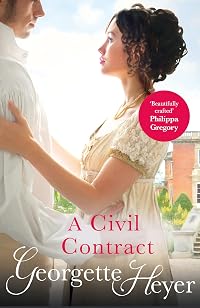
A Civil Contract
by Georgette Heyer
On This Page
Description
Georgette Heyer, the bestselling Queen of Regency Romance, brings her extraordinary plots and characterizations to an unexpected and delightful marriage of convenience love story.Can the wrong bride become the perfect wife?
Adam Deveril, the new Viscount Lynton, is madly in love with the beautiful Julia Oversley. But he has returned from the Peninsular War to find his family on the brink of ruin and his ancestral home mortgaged to the hilt. He has little choice when he is introduced to Mr. show more Jonathan Chawleigh, a City man of apparently unlimited wealth and no social ambitions for himself—but with his eyes firmly fixed on a suitable match for his only daughter, the quiet and decidedly plain Jenny Chawleigh.
Praise for Georgette Heyer:
Georgette Heyer was one of the great protagonists of the historical novel in the post-war golden age of the form. Her regency romances are delightful light reading, and her historical novels such as The Spanish Bride and An Infamous Army demonstrate how fiction and history can work together to make a valuable literary form.—Philippa Gregory, bestselling author
"A five-star job of sheerly delightful romance writing."—Chicago Tribune
. show less
Tags
Recommendations




















Member Recommendations
Member Reviews
When Captain Adam Deveril returns homes from the Napoleonic Wars, he is shocked to discover that his family fortune has been lost, and that he stands in danger of losing Fontley, his family's ancestral seat. Surrendering his dreams of marrying the woman he loves, the new Viscount Lynton does his duty by his family instead, marrying the far less attractive Miss Jenny Chawleigh, daughter of England's most wealthy merchant...
A Civil Contract has never ranked among my favorite Georgette Heyer novels, owing in large part to the fact that it is somewhat melancholy, and far less romantic than some of her other work. The story of a married couple who start out without love, but eventually achieve a comfortable friendship, it is not designed to show more appeal to younger readers.
That said, I did find myself enjoying it far more than I expected while re-reading it, and think it marvelously well-written. Some of the secondary characters, from the vulgar Joseph Chawleigh to the spirited Lydia Deveril, are truly engaging, and the reader can't help but wonder what will happen next.
It is unfortunate however, that this second reading did nothing to improve my impressions of the hero, whom Heyer presents as a model of forbearance and good manners, but who strikes me as a somewhat dim-witted hypocrite, so blinded by his own class prejudice that he believes that Jenny - the most perceptive and honorable character in the book - lacks the "sensibility" necessary to understand his feelings. She spends the entire novel protecting him from his own weakness, despite knowing that he only married her for her money, and he spends it trying to adjust to the vulgarity of relations he wouldn't have at all if he wasn't more concerned with their money than their "quality."
What can I say? Jenny is worth ten of her "hero." I might have given A Civil Contract 2 stars, had Heyer's excellent writing not saved it... show less
A Civil Contract has never ranked among my favorite Georgette Heyer novels, owing in large part to the fact that it is somewhat melancholy, and far less romantic than some of her other work. The story of a married couple who start out without love, but eventually achieve a comfortable friendship, it is not designed to show more appeal to younger readers.
That said, I did find myself enjoying it far more than I expected while re-reading it, and think it marvelously well-written. Some of the secondary characters, from the vulgar Joseph Chawleigh to the spirited Lydia Deveril, are truly engaging, and the reader can't help but wonder what will happen next.
It is unfortunate however, that this second reading did nothing to improve my impressions of the hero, whom Heyer presents as a model of forbearance and good manners, but who strikes me as a somewhat dim-witted hypocrite, so blinded by his own class prejudice that he believes that Jenny - the most perceptive and honorable character in the book - lacks the "sensibility" necessary to understand his feelings. She spends the entire novel protecting him from his own weakness, despite knowing that he only married her for her money, and he spends it trying to adjust to the vulgarity of relations he wouldn't have at all if he wasn't more concerned with their money than their "quality."
What can I say? Jenny is worth ten of her "hero." I might have given A Civil Contract 2 stars, had Heyer's excellent writing not saved it... show less
On one hand, I found this novel engaging and fun to read. On the other hand, it strikes me as more troublingly sexist than the other Heyer novels I've read. Which makes it sort of sad in various ways.
It's neat that Heyer messes with romance conventions here, paying attention to a different kind of love and undermining the Passionate Romance / Love at First Sight / Grand Gestures thing. I like the sensible and sturdy Jenny, and also the male lead's super-fun little sister Lydia and Jenny's rough-with-a-soft-heart father. The vulnerability he shows at various points is thoughtfully represented.
But the way Jenny gradually wins her husband's love is by 'making him comfortable,' by being 'a born housewife,' by trying to read his mind and show more blaming herself when she can't, by never ever appearing annoyed or even acknowledging that he was--in fact--late or whatever, by taking on his interests and opinions as her own, and by doing tons of work and causing the household staff to do tons of work to make his world just to his tastes and whims (preferably without him having any idea of the work required)? That's ... problematic, to say the least. show less
It's neat that Heyer messes with romance conventions here, paying attention to a different kind of love and undermining the Passionate Romance / Love at First Sight / Grand Gestures thing. I like the sensible and sturdy Jenny, and also the male lead's super-fun little sister Lydia and Jenny's rough-with-a-soft-heart father. The vulnerability he shows at various points is thoughtfully represented.
But the way Jenny gradually wins her husband's love is by 'making him comfortable,' by being 'a born housewife,' by trying to read his mind and show more blaming herself when she can't, by never ever appearing annoyed or even acknowledging that he was--in fact--late or whatever, by taking on his interests and opinions as her own, and by doing tons of work and causing the household staff to do tons of work to make his world just to his tastes and whims (preferably without him having any idea of the work required)? That's ... problematic, to say the least. show less
Adam Deveril, Viscount Lynton has inherited a nearly bankrupt estate, thanks to his father's profligate ways. To save his family home and settle his family debts, he decides in favour of marrying the gently-reared daughter of a "Cit" to restore his fortunes.
This is a re-read for me and I am still entertained by the story. Good characterisation of the new Lady Lynton and the family she marries into, plus a realistic look at a common-sense solution to insolvency. This theme makes an interesting story departure compared to many of Heyer's Regency novels. The developing relationship was beautifully conveyed, and never descended into unrealistic romanticism with a saccharine ending ~ certainly a most enjoyable piece of writing.
This is a re-read for me and I am still entertained by the story. Good characterisation of the new Lady Lynton and the family she marries into, plus a realistic look at a common-sense solution to insolvency. This theme makes an interesting story departure compared to many of Heyer's Regency novels. The developing relationship was beautifully conveyed, and never descended into unrealistic romanticism with a saccharine ending ~ certainly a most enjoyable piece of writing.
Almost an anti-romance, this work subverts Heyer's usual world where people marry for love (though generally sensibly). Here we have a hero who must marry for money and who learns, as time passes that he's better off with his plain, practical bride. Although the subtext that the way to a mans heart is through making him comfortable can make for uncomfortable reading! A little unusual but worth the read.
I’ve owned most of Georgette Heyer’s Regency romances in paper form for many years now, and they’re something of a comfort read for me. I’m slowly collecting the Kindle editions as they appear in various deals. They’re light and undemanding, and as Heyer was something of an expert on Regency England the plots and the dialogue ring true unlike many so-called historical romances which read more like 20th century women in fancy dress (quite apart from the gratuitous sex). This one is one of my favourites.
Set in 1814 & 1815, Adam Deverill has to return urgently to England from the Peninsular following the sudden death of his father, Vicount Lynton, in a hunting accident. The family are in dire financial straits, and Adam has to show more try and ensure his sisters don’t suffer. He is in love with Julia Oversly, the daughter of a neighbour, but in truth he cannot support a wife - it’s likely he will have to sell the family estates. However, a different course is proposed to him: marry Jenny Chawleigh, the only child of a very vulgar but fabulously wealthy Cit and he can keep his estates and provide for his sisters in the bargain.
The story covers about 18 months, and ends just after Waterloo. Adam and Jenny must come to understand each other, deal with Mr Chawleigh who is inclined to ride rough-shod over everyone, and deal with Adam’s family. An arranged marriage matures into contentment and love, if not the passion Adam felt for Julia.
Recommended. show less
Set in 1814 & 1815, Adam Deverill has to return urgently to England from the Peninsular following the sudden death of his father, Vicount Lynton, in a hunting accident. The family are in dire financial straits, and Adam has to show more try and ensure his sisters don’t suffer. He is in love with Julia Oversly, the daughter of a neighbour, but in truth he cannot support a wife - it’s likely he will have to sell the family estates. However, a different course is proposed to him: marry Jenny Chawleigh, the only child of a very vulgar but fabulously wealthy Cit and he can keep his estates and provide for his sisters in the bargain.
The story covers about 18 months, and ends just after Waterloo. Adam and Jenny must come to understand each other, deal with Mr Chawleigh who is inclined to ride rough-shod over everyone, and deal with Adam’s family. An arranged marriage matures into contentment and love, if not the passion Adam felt for Julia.
Recommended. show less
A Civil Contract by Georgette Heyer is not one of that author's very best, but it certainly kept me reading. It tells the story of Captain Adam Deveril, who upon his father's death is facing ruin of the most ignominious kind. Even the beloved family estate of Fontley will have to be sold to pay the debts, unless... unless Adam can be persuaded to marry for money. Though his heart is already given to an acknowledged beauty of the ton, Julia Oversley, he will not marry her even if her father would allow it, because of his poverty. So with that sacrifice already settled in his mind, can it be so much worse to marry a respectable Cit's daughter and restore the family fortunes?
Enter Jonathan Chawleigh. He is the very essence of the self-made show more man, rich as Croesus but inestimably vulgar to the tastes of the ton. It is his greatest desire to see his only daughter, Jenny, ascend to the heights of society and he hopes to achieve this aim by marrying her to a title. Jenny herself is not terribly ambitious for social distinction, but she is used to giving way to her father's overwhelming personality. She and Adam are soon married and begin their lives with comparative tranquility — but storms are looming ahead. For Adam, though always kind and gentle to Jenny, does not love his slightly stout, undistinguished-looking wife, and comes to resent the garish, lavish presents his father-in-law is always bestowing. Jenny, for her part, loves her handsome, pleasant husband but fears that he looks down upon her. To top it off, she and his old flame Julia Oversley were school friends, and Julia's excessive sensibility leads her to display her broken heart for all the gossips to observe. It seems an inescapable muddle.
This is all very predictable, but also very fun. You know in the end that Adam will begin to value the wife he married over the one he originally wished for; it's seeing how it comes about that is the real interest of the story. I appreciate how he is committed to Jenny and takes his marriage vows seriously, even though his heart inclines him otherwise. What a model of self-discipline! And from the control he exercises over his behavior even when his emotions aren't in it, his feelings and inner thoughts begin to follow the lead of his actions. He does come to love Jenny, not with the adoring worship he gave Julia, but with a sturdier, more practical love that will last.
I enjoyed Heyer's characterizations, as usual. The one that stood out to me in particular was Julia. She is not a thorough-going villain by any means, petulant and selfish and lazy like Adam's mother. Nor is she simply a tragic figure, whose first love was crushed by the cruel circumstance of finance. No, she is something of both, loving to be worshiped and but also generous with giving other girls the spotlight (but, as Heyer observes, only when she gives it, not when the other girl is already occupying that throne of attention without any help from Julia... then it's a different story, oh yes). Shallow is probably the best single word to describe her, and yet it doesn't quite do her justice. If Adam had married her, they would have been deliriously happy for a time, but ultimately the dissimilarity between their interests would have given them their own marital difficulties. Several characters hint that Adam had a lucky escape, even.
Though I knew how this was all going to end, it speaks of the sheer pleasure of reading Heyer that I propped open my eyelids and consumed it to the last page after a tiring day. I just didn't want to put it down. For readers new to Heyer, I would recommend reading Friday's Child first as Heyer's better effort at this basic plot. But there's much to enjoy in A Civil Contract as well. show less
Enter Jonathan Chawleigh. He is the very essence of the self-made show more man, rich as Croesus but inestimably vulgar to the tastes of the ton. It is his greatest desire to see his only daughter, Jenny, ascend to the heights of society and he hopes to achieve this aim by marrying her to a title. Jenny herself is not terribly ambitious for social distinction, but she is used to giving way to her father's overwhelming personality. She and Adam are soon married and begin their lives with comparative tranquility — but storms are looming ahead. For Adam, though always kind and gentle to Jenny, does not love his slightly stout, undistinguished-looking wife, and comes to resent the garish, lavish presents his father-in-law is always bestowing. Jenny, for her part, loves her handsome, pleasant husband but fears that he looks down upon her. To top it off, she and his old flame Julia Oversley were school friends, and Julia's excessive sensibility leads her to display her broken heart for all the gossips to observe. It seems an inescapable muddle.
This is all very predictable, but also very fun. You know in the end that Adam will begin to value the wife he married over the one he originally wished for; it's seeing how it comes about that is the real interest of the story. I appreciate how he is committed to Jenny and takes his marriage vows seriously, even though his heart inclines him otherwise. What a model of self-discipline! And from the control he exercises over his behavior even when his emotions aren't in it, his feelings and inner thoughts begin to follow the lead of his actions. He does come to love Jenny, not with the adoring worship he gave Julia, but with a sturdier, more practical love that will last.
I enjoyed Heyer's characterizations, as usual. The one that stood out to me in particular was Julia. She is not a thorough-going villain by any means, petulant and selfish and lazy like Adam's mother. Nor is she simply a tragic figure, whose first love was crushed by the cruel circumstance of finance. No, she is something of both, loving to be worshiped and but also generous with giving other girls the spotlight (but, as Heyer observes, only when she gives it, not when the other girl is already occupying that throne of attention without any help from Julia... then it's a different story, oh yes). Shallow is probably the best single word to describe her, and yet it doesn't quite do her justice. If Adam had married her, they would have been deliriously happy for a time, but ultimately the dissimilarity between their interests would have given them their own marital difficulties. Several characters hint that Adam had a lucky escape, even.
Though I knew how this was all going to end, it speaks of the sheer pleasure of reading Heyer that I propped open my eyelids and consumed it to the last page after a tiring day. I just didn't want to put it down. For readers new to Heyer, I would recommend reading Friday's Child first as Heyer's better effort at this basic plot. But there's much to enjoy in A Civil Contract as well. show less
A Civil Contract by Georgette Heyer is a Regency Romance about a bankrupted Viscount who enters a marriage of convenience to a wealthy merchant’s daughter. This is a far different story than her usual humorous adventure style, having more depth and insight that her whirlwind romances tend to have. Adam Deveril, coming into his inheritance is shocked to find out the scale of the debts his father left. Although tentatively promised to another he ends that relationship feeling like he has just said goodbye to the love of his life. His new bride isn’t a beauty but in exchange for the estate's debts and mortgages being settled he promises to be a good husband and treat Jenny with kindness and respect. As the story goes on we find that show more Adam and Jenny are, in fact, very well matched.
Along with the main characters to root along, Heyer has given us a number of other characters to follow. Both Adam’s sisters and their respective admirers are interesting. As for Adam’s ex-love, we soon see that she is rather self-centered and immature and she and Adam would not have been a good match. Heyer also delves into the politics of the day and the Battle of Waterloo plays a key part in the plot.
I enjoyed the story and grew to really like both Adam and Jenny and rank A Civil Contract as another winner from Georgette Heyer. show less
Along with the main characters to root along, Heyer has given us a number of other characters to follow. Both Adam’s sisters and their respective admirers are interesting. As for Adam’s ex-love, we soon see that she is rather self-centered and immature and she and Adam would not have been a good match. Heyer also delves into the politics of the day and the Battle of Waterloo plays a key part in the plot.
I enjoyed the story and grew to really like both Adam and Jenny and rank A Civil Contract as another winner from Georgette Heyer. show less
Members
- Recently Added By
Lists

Favorite Georgette Heyer Novels, Ranked
49 works; 29 members

Best Love Stories
107 works; 14 members

Books Read in 2015
3,299 works; 129 members

Books Read in 2019
4,052 works; 110 members

Books Read in 2021
5,361 works; 113 members

Books Read in 2022
5,226 works; 115 members

Books Read in 2023
5,638 works; 147 members

Books We Love to Reread
695 works; 298 members

Our Favorite Comfort Reads
334 works; 200 members

Books Read in 2025
4,128 works; 98 members
Author Information

125+ Works 78,302 Members
Georgette Heyer was born on August 16, 1902 at Wimbledon, London. She wrote The Black Moth as a story for her brother Boris. Her father, impressed with his daughter's imagination, suggested that she prepare it to be published, which it was by Constable in 1921. Having scored an instant success with The Black Moth at the age of nineteen under her show more own name, Georgette Heyer, she experimented with a pseudonym, Stella Martin, for her third book, published by Mills & Boon. She continued writing and in 1925 she married Ronald Rougier, a mining engineer. After reasonable but not spectacular sales from her first few books the instant success of These Old Shades in 1926 brought her a solid source of income which was very necessary at the time since the family relied to a large extent on the income from Georgette Heyer's writing. She wrote over fifty books during her lifetime and created the Regency England genre of romance novels. She died on July 4, 1974 at the age of 71. (Bowker Author Biography) show less
Some Editions
Series
Belongs to Publisher Series
rororo (949)
Common Knowledge
- Canonical title
- A Civil Contract
- Original title
- A Civil Contract
- Original publication date
- 1961
- People/Characters
- Adam Deveril, Viscount Lynton; Jenny Chawleigh; Jonathan Chawleigh; Lady Lynton; Lydia Lynton; Julia Oversley (show all 18); Lady Oversley; Lord Oversley; Viscount Brough; Lord Rockhill; Wimmering; Martha Pinhoe; Lambert Ryde; Charlotte Deveril Ryde; Lady Nassington; Mrs. Quarley-Bix; Dr. Croft; Mr. Coke
- Important places
- Fontley Priory, Lincolnshire, England, UK; London, England, UK
- Important events
- Battle of Waterloo; Napoleonic Wars
- Dedication
- To Pat Wallace with Love
- First words
- The library at Fontley Priory, like most of the principal apartments in the sprawling building, looked to the south-east, commanding a prospect of informal gardens and a plantation of poplars, which acted as a wind-break and ... (show all)screened from view the monotony of the fen beyond.
- Last words
- (Click to show. Warning: May contain spoilers.)They were not very romantic, but they were really much more important than grand passions or blighted loves: Giles Jonathan had cut his first tooth, and Adam's best cow had given birth to a fine heifer-calf.
- Original language
- English
Classifications
Statistics
- Members
- 1,580
- Popularity
- 14,500
- Reviews
- 62
- Rating
- (3.97)
- Languages
- English, German, Italian
- Media
- Paper, Audiobook, Ebook
- ISBNs
- 37
- UPCs
- 1
- ASINs
- 27