Sweet Lamb of Heaven
by Lydia Millet
On This Page
Description
Lydia Millet's chilling new novel is the first-person account of a young mother, Anna, escaping her cold and unfaithful husband, a businessman who's just launched his first campaign for political office. When Ned chases Anna and their six-year-old daughter from Alaska to Maine, the two go into hiding in a run-down motel on the coast. But the longer they stay, the less the guests in the dingy motel look like typical tourists-- and the less Ned resembles a typical candidate. As his pursuit of show more Anna and their child moves from threatening to criminal, Ned begins to alter his wife's world in ways she never could have imagined. A double-edged and satisfying story with a strong female protagonist, a thrilling plot, and a creeping sense of the apocalyptic, Sweet Lamb of Heaven builds to a shattering ending with profound implications for its characters-- and for all of us. show lessTags
Recommendations
























Member Recommendations
by anonymous user
Member Reviews
Maybe our gods are as small as we are or as large, varying with the size of our empathy. Maybe when a man's mind is small his god shrinks to fit.
Sweet Lamb of Heaven by Lydia Millet is an odd, difficult-to-describe book that had me from the opening pages. Part of the plot is easy to describe; after she becomes pregnant, Anna finds that her husband wants nothing to do with either of them so, when her daughter is five, they leave. Her husband Ned decides to make his career in politics and needs his family back for appearance's sake. Anna eventually finds refuge at a seaside motel in the off-season, but their safety is tenuous.
The other aspects of the plot are more difficult. Anna begins hearing a voice after her daughter is born. It goes show more away once her daughter can speak. What keeps her from thinking it's some sort of auditory hallucination is that her husband mentions hearing it, too. Then she finds other people who have had the same experience.
Millet isn't a lyrical author, and while she writes well, it's not her writing or her characters or her plots that make her memorable. Millet is an author of ideas. Sweet Lamb of Heaven is a religious book, but not a theological one; she's exploring the idea of God and what that means to different people and different species. And with an emphasis on ideas, the plot becomes secondary, as does the idea of finding any answers. show less
Sweet Lamb of Heaven by Lydia Millet is an odd, difficult-to-describe book that had me from the opening pages. Part of the plot is easy to describe; after she becomes pregnant, Anna finds that her husband wants nothing to do with either of them so, when her daughter is five, they leave. Her husband Ned decides to make his career in politics and needs his family back for appearance's sake. Anna eventually finds refuge at a seaside motel in the off-season, but their safety is tenuous.
The other aspects of the plot are more difficult. Anna begins hearing a voice after her daughter is born. It goes show more away once her daughter can speak. What keeps her from thinking it's some sort of auditory hallucination is that her husband mentions hearing it, too. Then she finds other people who have had the same experience.
Millet isn't a lyrical author, and while she writes well, it's not her writing or her characters or her plots that make her memorable. Millet is an author of ideas. Sweet Lamb of Heaven is a religious book, but not a theological one; she's exploring the idea of God and what that means to different people and different species. And with an emphasis on ideas, the plot becomes secondary, as does the idea of finding any answers. show less
A very disjointed experience. It's hard to say how I feel about this book because there are aspects of it that really worked for me, but they are hidden amidst a lot of passages that don't. It reads very much like a diary (which makes sense in the context of the story), but because of that I never quite knew what was happening within the plot. There is a certain subplot for example that is left unexplained, and while it should feel eerie and discomforting, I was mostly left confused and discombobulated.
Maybe that was the author's intent, and if so she did her job because that's absolutely how I felt.
Maybe that was the author's intent, and if so she did her job because that's absolutely how I felt.
There will be spoilers.
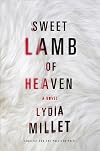
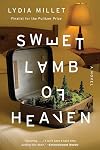
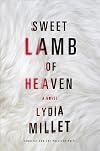
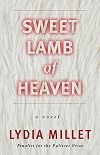
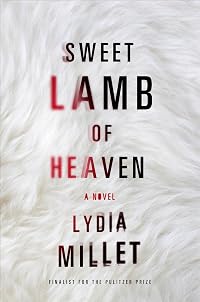
There will be complaints about what is surely the ugliest book design of any book I have ever purchased. Yes, that is HORROR MOVIE lettering superimposed on a lamb skin rug. Yes, the text is presented in the most boring font you have ever seen.
There will be one question: what the f***?
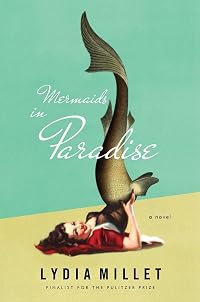
Look, Lydia Millet is a great writer, who has written some of the most ambitious American novels of the last two decades--not ambitious in the million-dollar-advance-900-pages-long-ohmygod way, but ambitious in the far more difficult to pull off "appealing at the level of both plot and brain" way. Her last novel, Mermaids in Paradise was like this; a great plot, wildly entertaining, smart about the relationship between marketing, show more profit-making, and environmental destruction; and most notably, if not most successfully, smart in having the plot make an intellectual point. At the end of MiP, it turns out that the whole enjoyable plot has been carried out while an asteroid heads towards earth. The planet will be destroyed very soon. Wait, the reader asks, why are these characters bothering to help mermaids, or bothering to profit off them? Exactly, wise Lydia Millet nods. Why are we bothering to do anything when environmental catastrophe looms? But remember, she continues, the environment is not an asteroid. We can do something about the environment...
So, as plot, it was kind of ridiculous, but ambitious and kind of fun. Sweet Lamb of Heaven is like the last two pages of MiP, only stretched out over 250.
The plot is standard issue divorce-stalker silliness. The conceit is fine: woman hears voices, turns out those voices are real, not in her head, she is somehow led to a hotel where other people who've heard that real voice try to make sense of it.
If the entire novel had been them trying to make sense of it during some understated domestic disturbance, the novel would have been great. Instead, divorce stalker arrives and we're in bad hollywood slasher flick territory for rather too long. Where MiP was goofy and funny and knowingly ridiculous, SLH is po-faced and thus painful. Bad slasher flicks at last come with an ironic wink. This one comes instead, with sub-Pynchonian paranoia.
The conclusion to SLH is foregone: the divorced husband is essentially the devil, the voice is some vaguely panpsychical God, humans have been abandoned by God but that's okay because we remember it was there once and we can work to save the planet now, whether we're religious or not.
The sad thing is that the idea for this book is great: the place of religion in American life, how it can help or hinder, all tied up in a fabulous plot? Sounds perfect, and of course it would take about 600 pages. But this book is 250, and because the thoughts are mostly trite, the plot is dull, and none of it fits together, that feels about 230 too many. show less
There will be complaints about what is surely the ugliest book design of any book I have ever purchased. Yes, that is HORROR MOVIE lettering superimposed on a lamb skin rug. Yes, the text is presented in the most boring font you have ever seen.
There will be one question: what the f***?
Look, Lydia Millet is a great writer, who has written some of the most ambitious American novels of the last two decades--not ambitious in the million-dollar-advance-900-pages-long-ohmygod way, but ambitious in the far more difficult to pull off "appealing at the level of both plot and brain" way. Her last novel, Mermaids in Paradise was like this; a great plot, wildly entertaining, smart about the relationship between marketing, show more profit-making, and environmental destruction; and most notably, if not most successfully, smart in having the plot make an intellectual point. At the end of MiP, it turns out that the whole enjoyable plot has been carried out while an asteroid heads towards earth. The planet will be destroyed very soon. Wait, the reader asks, why are these characters bothering to help mermaids, or bothering to profit off them? Exactly, wise Lydia Millet nods. Why are we bothering to do anything when environmental catastrophe looms? But remember, she continues, the environment is not an asteroid. We can do something about the environment...
So, as plot, it was kind of ridiculous, but ambitious and kind of fun. Sweet Lamb of Heaven is like the last two pages of MiP, only stretched out over 250.
The plot is standard issue divorce-stalker silliness. The conceit is fine: woman hears voices, turns out those voices are real, not in her head, she is somehow led to a hotel where other people who've heard that real voice try to make sense of it.
If the entire novel had been them trying to make sense of it during some understated domestic disturbance, the novel would have been great. Instead, divorce stalker arrives and we're in bad hollywood slasher flick territory for rather too long. Where MiP was goofy and funny and knowingly ridiculous, SLH is po-faced and thus painful. Bad slasher flicks at last come with an ironic wink. This one comes instead, with sub-Pynchonian paranoia.
The conclusion to SLH is foregone: the divorced husband is essentially the devil, the voice is some vaguely panpsychical God, humans have been abandoned by God but that's okay because we remember it was there once and we can work to save the planet now, whether we're religious or not.
The sad thing is that the idea for this book is great: the place of religion in American life, how it can help or hinder, all tied up in a fabulous plot? Sounds perfect, and of course it would take about 600 pages. But this book is 250, and because the thoughts are mostly trite, the plot is dull, and none of it fits together, that feels about 230 too many. show less
This book had a strong start, slumped a little in the middle, and ended strong. When it began to slump for me was when some of the details of the antagonist's main ambition seemed a little off kilter -- which registered for me as poorly researched and written and implausible in a world that for the most part hewed pretty close to reality -- but boy did my interest in quibbling with the book's realism fade as I got into the last few chapters. The book is at its best when Millet delves into the philosophical and the lyrical, and there's sufficient delving of this sort to make the more procedural bits worthwhile. It's a short book that, apart from a several-dozen-page slump around the middle, I found really gripping.
Lydia Millet has captured something in Sweet Lamb of Heaven, and I feel at the very end of my abilities to say what it is. This Pulitzer Prize-nominated novel captures in frightening detail the horrifying political world we live in today - this example deals with the American version. This novel will haunt you, and stretch your imagination, and scare you, in an Alfred Hitchcock mode. It’s challenging, head-turning stuff. Supremely rewarding.
Anna, a sometime college lecturer in languages and literature, takes her six year-old daughter Lena and flees her emotionally-remote husband. (The husband is so remote, in fact, that midway through the story Anna checks off a long list of characteristics, and decides he is sociopathic. It doesn’t show more take the reader that long to figure it out.) We learn from the outset that after her daughter was born Anna had hallucinations - I don’t say “suffered” because the term doesn’t fit. She hears voices speaking to her. The voice seems versed in a wide range of subjects: “single-cell organisms, hockey scores, feathers on dinosaurs, celebrity suicides, the pattern of Pleistocene extinctions, the fate of the tribe called the Nez Perce; relativity, particle accelerators,” and so on. It speaks to Anna in English, Spanish, and French. Anna also thinks she hears English that sounds like Shakespeare, and Middle English, which she encountered while reading Chaucer.
And it is this breadth of the voice, in subject matter, language, and temporal origin, that is the key for me. It supports Anna’s fellow “listeners,” a group of people who have also had the auditory hallucinations, which we meet at a motel on the rocky coast of Maine - the end of the earth. The one salient opinion to emerge from the motley crew is that the voices have something in common with a common subconscious, a language which is the foundation of all life on earth.
Lay on top of these metaphysical considerations the thread of Anna’s cold, repellant husband. He uses his over-the-top charisma and ingratiating acting ability to start a career in politics. He corners Anna in Maine, coerces her back to Alaska to appear as part of his campaign for state senate, all the while having coopted the “family” agenda of a reactionary political party. After getting her back “on board” for photo ops and meet-and-greets, he sends her emails with each day’s appointments, bullet points of opinions to express if pressed; Anna and her daughter have daily sessions for makeup and clothes.
And thus is the shallowness and venality of modern-day politics exposed to us. Estranged husband Ned despises Anna, but hauls her up before cameras and microphones during his campaign. He threatens her and treats his daughter as though she doesn’t exist - and then the real fun starts. In a few jarring pages, Anna hallucinates something very strange indeed. She watches herself age before her eyes: terrified at the pace of her growing hair and nails, she emerges from her bath to see Lena and a trusted friend still seated on a hotel bed, reading, where she just left them. The sequence abruptly turns to a midsummer festival in Anna’s home town, and she has apparently lost three months, just like that. She has been in an altered state the whole time and cannot remember any of it.
Thus through strong drugs and an outwardly orthodox relationship, does Ned control and attempt to ruin Anna’s life. This Hitchcockian episode illustrates the very real and ruthless impulse of those who would control speech and discourse to their own ends and agendas. Ms. Millet takes it further: the totalitarians would control or even exterminate not only the public policy discussion, but would ruin language of any and all kinds. There is grist here for a much more in-depth treatment, which I promised to try to grind to fine flour at some point in the near future.
Suffice it at current to say that any modern reader interested in communication, politics, sensory perception, or theories of language would be challenged and delighted with this book. It’s also a damn fine read: something sinister’s always lurking near the surface; a group of friends and supporters are a particularly motley crew and we can’t be sure they’re reliable. Anna lives a desperate existence on the margin, and sometimes has reason to doubt her own stability. It seems unlikely that you’ll be as confounded as I was by Sweet Lamb of Heaven. I recommend you go ahead and try to find out.
https://bassoprofundo1.blogspot.com/2018/09/sweet-lamb-of-heaven-by-lydia-millet... show less
Anna, a sometime college lecturer in languages and literature, takes her six year-old daughter Lena and flees her emotionally-remote husband. (The husband is so remote, in fact, that midway through the story Anna checks off a long list of characteristics, and decides he is sociopathic. It doesn’t show more take the reader that long to figure it out.) We learn from the outset that after her daughter was born Anna had hallucinations - I don’t say “suffered” because the term doesn’t fit. She hears voices speaking to her. The voice seems versed in a wide range of subjects: “single-cell organisms, hockey scores, feathers on dinosaurs, celebrity suicides, the pattern of Pleistocene extinctions, the fate of the tribe called the Nez Perce; relativity, particle accelerators,” and so on. It speaks to Anna in English, Spanish, and French. Anna also thinks she hears English that sounds like Shakespeare, and Middle English, which she encountered while reading Chaucer.
And it is this breadth of the voice, in subject matter, language, and temporal origin, that is the key for me. It supports Anna’s fellow “listeners,” a group of people who have also had the auditory hallucinations, which we meet at a motel on the rocky coast of Maine - the end of the earth. The one salient opinion to emerge from the motley crew is that the voices have something in common with a common subconscious, a language which is the foundation of all life on earth.
Lay on top of these metaphysical considerations the thread of Anna’s cold, repellant husband. He uses his over-the-top charisma and ingratiating acting ability to start a career in politics. He corners Anna in Maine, coerces her back to Alaska to appear as part of his campaign for state senate, all the while having coopted the “family” agenda of a reactionary political party. After getting her back “on board” for photo ops and meet-and-greets, he sends her emails with each day’s appointments, bullet points of opinions to express if pressed; Anna and her daughter have daily sessions for makeup and clothes.
And thus is the shallowness and venality of modern-day politics exposed to us. Estranged husband Ned despises Anna, but hauls her up before cameras and microphones during his campaign. He threatens her and treats his daughter as though she doesn’t exist - and then the real fun starts. In a few jarring pages, Anna hallucinates something very strange indeed. She watches herself age before her eyes: terrified at the pace of her growing hair and nails, she emerges from her bath to see Lena and a trusted friend still seated on a hotel bed, reading, where she just left them. The sequence abruptly turns to a midsummer festival in Anna’s home town, and she has apparently lost three months, just like that. She has been in an altered state the whole time and cannot remember any of it.
Thus through strong drugs and an outwardly orthodox relationship, does Ned control and attempt to ruin Anna’s life. This Hitchcockian episode illustrates the very real and ruthless impulse of those who would control speech and discourse to their own ends and agendas. Ms. Millet takes it further: the totalitarians would control or even exterminate not only the public policy discussion, but would ruin language of any and all kinds. There is grist here for a much more in-depth treatment, which I promised to try to grind to fine flour at some point in the near future.
Suffice it at current to say that any modern reader interested in communication, politics, sensory perception, or theories of language would be challenged and delighted with this book. It’s also a damn fine read: something sinister’s always lurking near the surface; a group of friends and supporters are a particularly motley crew and we can’t be sure they’re reliable. Anna lives a desperate existence on the margin, and sometimes has reason to doubt her own stability. It seems unlikely that you’ll be as confounded as I was by Sweet Lamb of Heaven. I recommend you go ahead and try to find out.
https://bassoprofundo1.blogspot.com/2018/09/sweet-lamb-of-heaven-by-lydia-millet... show less
After her daughter is born, Anna begins hearing voices; for the next year, she struggles to discern the meaning of this unexpected event. At the same time, she finds herself dealing with her unfaithful husband, Ned, who wants nothing to do with their daughter. Finally, when Lena is six, Anna decides to leave and ends up hiding from her estranged husband in a run-down motel on the coast of Maine.
When Ned decides to run for political office, he sets out to reclaim his wife and daughter in order to project the proper image for the voters; his actions take a criminal turn and Anna’s tortured existence assumes nightmarish proportions . . . .
The writing is profound and lyrical, the stories absorbing. The narrative intertwines the show more first-person account of the cat-and-mouse game between Anna and her husband with the more esoteric analysis of the voices, providing for both suspense and thoughtful consideration, but the two don’t always mesh well. While the Anna-Ned-Lena storyline builds to a chilling climax and keeps the pages turning, the intellectual examination of the phenomenon of the voices is likely to disappoint readers as it spins out to a disappointing, unimaginative refutation of intrinsic beliefs. show less
When Ned decides to run for political office, he sets out to reclaim his wife and daughter in order to project the proper image for the voters; his actions take a criminal turn and Anna’s tortured existence assumes nightmarish proportions . . . .
The writing is profound and lyrical, the stories absorbing. The narrative intertwines the show more first-person account of the cat-and-mouse game between Anna and her husband with the more esoteric analysis of the voices, providing for both suspense and thoughtful consideration, but the two don’t always mesh well. While the Anna-Ned-Lena storyline builds to a chilling climax and keeps the pages turning, the intellectual examination of the phenomenon of the voices is likely to disappoint readers as it spins out to a disappointing, unimaginative refutation of intrinsic beliefs. show less
Do I really understand this novel? No. Do I really like this novel despite that? YES!
Is was interesting, thought provoking, and had an extremely well thought out and complex tone. Growing up in Maine made it really easy for me to picture this motel, in its drab state of disrepair next to a cliff and the ocean. It was ethereal in a way I didn't expect.
I don't know what the ultimate takeaway of the story is. It could be a number of things, and I can understand why people are maybe unsatisfied with the lack of conclusion with some aspects, chiefly the support group aspect. This didn't bother me though. The throughline of human's primordial, nonverbal language being lost went a long way with me. If readers are upset that there was no show more definitive answer or proof for that, I think they are missing the point.
As with many great books, the ending is not meant to soothe and provide closure; the journey to arrive there has to be enough. In Sweet Lamb of Heaven, it was. show less
Is was interesting, thought provoking, and had an extremely well thought out and complex tone. Growing up in Maine made it really easy for me to picture this motel, in its drab state of disrepair next to a cliff and the ocean. It was ethereal in a way I didn't expect.
I don't know what the ultimate takeaway of the story is. It could be a number of things, and I can understand why people are maybe unsatisfied with the lack of conclusion with some aspects, chiefly the support group aspect. This didn't bother me though. The throughline of human's primordial, nonverbal language being lost went a long way with me. If readers are upset that there was no show more definitive answer or proof for that, I think they are missing the point.
As with many great books, the ending is not meant to soothe and provide closure; the journey to arrive there has to be enough. In Sweet Lamb of Heaven, it was. show less
Members
- Recently Added By
Lists

2017 Tournament of Books
18 works; 18 members

Must-Read Maine
146 works; 91 members
Kirkus Starred Fiction Reviews of Books Published in 2016
63 works; 3 members

Animals in the Title
498 works; 11 members

2017 Hugo Eligible Novels
145 works; 14 members

Reading Glasses Podcast
410 works; 3 members
Author Information

27+ Works 4,435 Members
Lydia Millet is the author of Omnivores and George Bush, Dark Prince of Love. She lives in Tucson, Arizona and New York City. (Bowker Author Biography)
Awards and Honors
Awards
Distinctions
Notable Lists
Common Knowledge
- Canonical title
- Sweet Lamb of Heaven
- Original publication date
- 2016
- People/Characters
- Anna; Lena; Ned
- Important places
- Maine, USA; Alaska, USA
- First words
- When I insisted on keeping the baby, Ned threw his hands in the air palms-forward.
- Last words
- (Click to show. Warning: May contain spoilers.)We feel a terrible tenderness, a terrible gratitude, and at the end we see that face and know the moment is here. The beast has come for us at last.
- Original language
- English
Classifications
- Genres
- Fiction and Literature, General Fiction, Suspense & Thriller
- DDC/MDS
- 813.54 — Literature & rhetoric American literature in English American fiction in English 1900-1999 1945-1999
- LCC
- PS3563 .I42175 .S94 — Language and Literature American literature American literature Individual authors 1961-
- BISAC
Statistics
- Members
- 317
- Popularity
- 100,832
- Reviews
- 33
- Rating
- (3.18)
- Languages
- English
- Media
- Paper, Audiobook, Ebook
- ISBNs
- 12
- ASINs
- 2