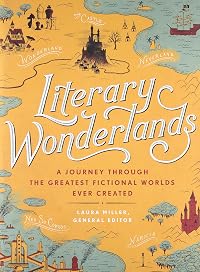
Literary Wonderlands: A Journey Through the Greatest Fictional Worlds Ever Created (Literary Worlds Series)
by Laura Miller (Editor)
On This Page
Description
From the epic of Gilgamesh, almost two thousand years BCE, to the modern fantasies of Stephen King's Dark Tower series and J.K. Rowling's Harry Potter, authors have created fictional realms that have captivated audiences. Miller has guided a team of writers to unlock the mysteries and meanings of nearly 100 fantastical lands. The essays explore the contemporary events and circumstances that influenced each work, and examine how elements of the author's life were relevant to the creation of show more the story. show lessTags
Recommendations






Member Recommendations
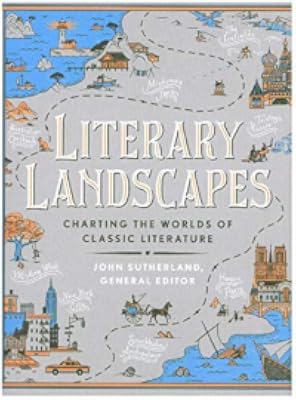
Literary Landscapes: Charting the Worlds of Classic Literature (Literary Worlds Series) by John Sutherland
dajashby Identical format, from the same publisher.
Member Reviews
This book ended up not being what I initially thought it was going to be, I thought it was going to be a sort of cutesy, let’s pretend these places are real look at the different worlds in fiction. Instead it was a surprisingly informative (for the relatively short entries per world) look at what influenced the creation of these worlds and how they have influenced our culture.
The book covers both the well known and many somewhat obscure works of fiction and both ancient and surprisingly current stories.
There were a nice variety of images accompanying each entry with a lot of color plates (when applicable), which I always appreciate.
Overall I learned a lot and enjoyed myself while doing so, though I will say this is a book better show more read in spurts vs. all at once as it can get a bit repetitive feeling after a while. Definitely a good resource and reference book. show less
The book covers both the well known and many somewhat obscure works of fiction and both ancient and surprisingly current stories.
There were a nice variety of images accompanying each entry with a lot of color plates (when applicable), which I always appreciate.
Overall I learned a lot and enjoyed myself while doing so, though I will say this is a book better show more read in spurts vs. all at once as it can get a bit repetitive feeling after a while. Definitely a good resource and reference book. show less
This is a truly beautiful book, with gorgeous color illustrations on almost every page 2-page spread, so reading it, even flipping through it, is a delight.The first thing I did was check to see which of my favorite literary worlds had been included, and I read those entries feeling great pleasure and satisfaction to see the texts I love treated with such respectful and thought-provoking attention.
But discovering new-to-you authors is the biggest perk of Literary Wonderlands, with one very slight caveat. If you are someone who avoids spoilers at all costs (I am not), if your reading pleasure is diminished by knowing ahead of time some of what happens in a story, then you'll want to precede with caution. In order for them give show more substantial insights, quite a few of the entries contain summaries which tell in a very general way what happens in the book being featured. Since many of these books are well known classics, especially the older ones, I don't think this will be an issue for most readers.
The entries were authored by an impressive list of knowledgeable and talented writers, some of them scholars or historians, and some of them creators of their own literary wonderlands, like Lev Grossman (his The Magicians series is, sadly, not included in the book). Essays are arranged in 5 chronological groups: Ancient Myth and Legend, Science and Romanticism, Golden Age of Fantasy, New World Order, and The Computer Age ( a strange title choice because most of the stories in this group have nothing to do with computers). Most, but not quite all, of the authors are from Europe or the United States.
Literary Wonderlands would be a great holiday gift book for anyone (including yourself!) who loves to read. I received a free copy of this book from the publisher with obligations. Review opinions are mine. show less
But discovering new-to-you authors is the biggest perk of Literary Wonderlands, with one very slight caveat. If you are someone who avoids spoilers at all costs (I am not), if your reading pleasure is diminished by knowing ahead of time some of what happens in a story, then you'll want to precede with caution. In order for them give show more substantial insights, quite a few of the entries contain summaries which tell in a very general way what happens in the book being featured. Since many of these books are well known classics, especially the older ones, I don't think this will be an issue for most readers.
The entries were authored by an impressive list of knowledgeable and talented writers, some of them scholars or historians, and some of them creators of their own literary wonderlands, like Lev Grossman (his The Magicians series is, sadly, not included in the book). Essays are arranged in 5 chronological groups: Ancient Myth and Legend, Science and Romanticism, Golden Age of Fantasy, New World Order, and The Computer Age ( a strange title choice because most of the stories in this group have nothing to do with computers). Most, but not quite all, of the authors are from Europe or the United States.
Literary Wonderlands would be a great holiday gift book for anyone (including yourself!) who loves to read. I received a free copy of this book from the publisher with obligations. Review opinions are mine. show less
Literary Wonderlands was an impulse buy which turned out to be most enjoyable reading. It is, as implied by the full title Literary Wonderlands, a Journey through the Greatest Fictional Worlds Ever Created, a brief exploration of notable fictional worlds, beginning with the ancient world and concluding in the computer age. Its five sections are:
Ancient Myths and Legends includes the epics you'd expect, and many of which I've read. Each 2-4 page summary includes beautiful artworks illustrating scenes from the stories; books from later eras also have author photos, maps of the fictional worlds and stills from film adaptations.
Yes, you can see the problem. Only one woman. But not surprising given the era that's covered. Gender equity would mean the inclusion of obscure works most of us have never heard of, denying readers the pleasure of connecting with the familiar. This is not a scholarly text. It's (as the blurb says) an armchair traveller's guide to magical realms.
To read the rest of my review please visit https://anzlitlovers.com/2018/09/23/literary-wonderlands-edited-by-laura-miller-... show less
- Ancient Myth and Legend
- Science and Romanticism
- Golden Age of Fantasy
- New World Order
- The Computer Age.
Ancient Myths and Legends includes the epics you'd expect, and many of which I've read. Each 2-4 page summary includes beautiful artworks illustrating scenes from the stories; books from later eras also have author photos, maps of the fictional worlds and stills from film adaptations.
- The Epic
- of Gilgamesh (c1750BC)
- The Odyssey (c.725—675 BC)
- Ovid's Metamorphoses (c.8)
- Beowulf (c.700-1100)
- The One Thousand and One Nights (c.700-947)
- The Mabinogion (12th-14th century) (on my TBR, but I have read bits of it)
- The Prose Edda (c.1220) by the Icelandic author Snorri Sturluson (I have read some Norse myth but this is on my wishlist now)
- The Divine Comedy (c.1308—21) by Dante Alighieri (on my TBR in three versions, Clive James' s translation partly read)
- Le Morte d'Arthur (1485) by Thomas Malory (have read bits of this, at uni when I studied Arthurian legend)
- Orlando Furioso (c.1516/32) by Ludovico Ariosto, a rival to Arthurian romances, apparently, and inspiration for authors such as Italo Calvino, Jorge Luis Borges and Salman Rushdie)
- Utopia (1516) by Thomas More
- The Faerie Queen (1590—1609) by Edmund Spenser
- Journey to the West (Xiyouji) (c.1592) by Wu Cheng'En (abridged by Arthur Waley, apparently as the more well-known Monkey (1942)
- The City of the Sun (1602) by Tommasso Campanella, another of many utopias included in the book
- Don Quixote (1605/15) by Miguel de Cervantes (see my rambling thoughts here)
- The Tempest (1611) Shakespeare
- A Voyage to the Moon (1657) by Cyrano de Bergerac (who I've never been tempted to read)
- The Description of a New World, called The Blazing World (1666) by Margaret Cavendish, Duchess of Newcastle, and apparently an inspiration for Virginia Woolf and Siri Hustvedt.
Yes, you can see the problem. Only one woman. But not surprising given the era that's covered. Gender equity would mean the inclusion of obscure works most of us have never heard of, denying readers the pleasure of connecting with the familiar. This is not a scholarly text. It's (as the blurb says) an armchair traveller's guide to magical realms.
To read the rest of my review please visit https://anzlitlovers.com/2018/09/23/literary-wonderlands-edited-by-laura-miller-... show less
People have been immersing themselves in stories for thousands of years, originally these were passed from person to person before someone had the genius idea of writing them down. What stories though are the defining example of a type? Literary Wonderlands tries to do this by picking around 100 books and series that they think have redefined the literary landscape when they were published.
There are five sections of books, beginning with Ancient Myth & Legend and then Science and Romanticism it then goes onto the Golden age of Fantasy a New World Order and finishes up in the Computer Age. There are classics such as The Odyssey and Beowulf and the Tempest, The Time Machine and The Water Babies and it brings pretty much up to date with show more Ann Leckie's Imperial Radch trilogy. I was pleased to see favourite authors like Sir Terry Pratchett, Iain M. Banks and Neil Gaiman, and titles that I had read and enjoyed like Snow Crash and Neuromancer that I hadn't expected to make it in.
This lavish coffee table book of books has a small biography of the author and there are lots of pictures, artworks and maps from the books covered. There is a plot overview and for a series or trilogy there is a broader look at the story, but be aware there are frequently spoilers! The main flaw is that as it is very broad in its scope, it misses so many other books that should have been included as defining books of a particular genre but it would have made the book too unwieldy though. show less
There are five sections of books, beginning with Ancient Myth & Legend and then Science and Romanticism it then goes onto the Golden age of Fantasy a New World Order and finishes up in the Computer Age. There are classics such as The Odyssey and Beowulf and the Tempest, The Time Machine and The Water Babies and it brings pretty much up to date with show more Ann Leckie's Imperial Radch trilogy. I was pleased to see favourite authors like Sir Terry Pratchett, Iain M. Banks and Neil Gaiman, and titles that I had read and enjoyed like Snow Crash and Neuromancer that I hadn't expected to make it in.
This lavish coffee table book of books has a small biography of the author and there are lots of pictures, artworks and maps from the books covered. There is a plot overview and for a series or trilogy there is a broader look at the story, but be aware there are frequently spoilers! The main flaw is that as it is very broad in its scope, it misses so many other books that should have been included as defining books of a particular genre but it would have made the book too unwieldy though. show less
Very Entertaining.
Under review.
Members
- Recently Added By
Lists

Books Read in 2023
5,638 works; 147 members

On Books
70 works; 1 member
Author Information

Common Knowledge
- Original title
- Literaly Wonderlands. A Journey through the greatest fictional worlds ever created
- Original publication date
- 2016
Classifications
- Genres
- Literature Studies and Criticism, Fiction and Literature
- DDC/MDS
- 809.933 — Literature & rhetoric Literature, rhetoric & criticism History, description, critical appraisal of more than two literatures Literature displaying specific features, miscellaneous writings Literature displaying other aspects Literature dealing with specific themes and subjects
- LCC
- PN56 .I44 .L58 — Language and Literature Literature (General) Literature (General) Theory. Philosophy. Esthetics
- BISAC
Statistics
- Members
- 359
- Popularity
- 87,992
- Reviews
- 9
- Rating
- (3.86)
- Languages
- English, German, Spanish
- Media
- Paper, Audiobook, Ebook
- ISBNs
- 8
- ASINs
- 2