On This Page
Description
Fiction. Mystery. Science Fiction. The acclaimed classic novel and fan favorite—the far-future story of one man's quest to discover the truth behind a galactic war hero.Tags
Recommendations
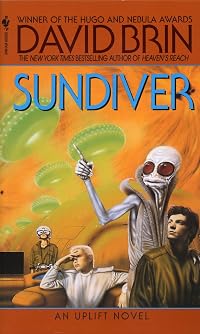
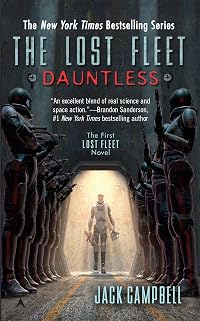
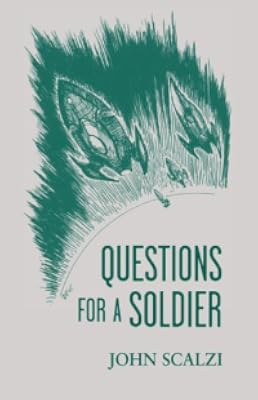
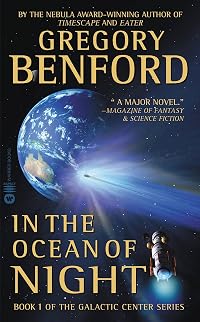
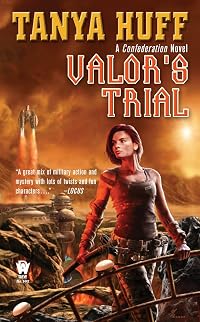

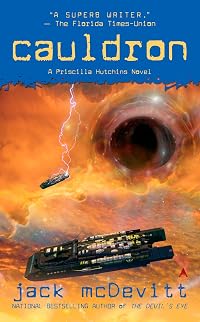
Member Recommendations
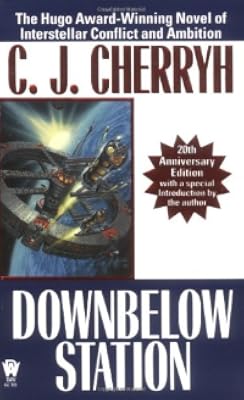
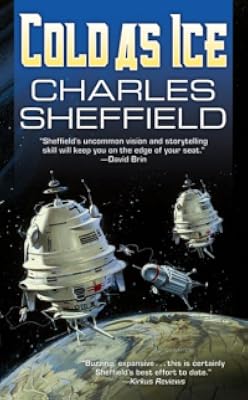
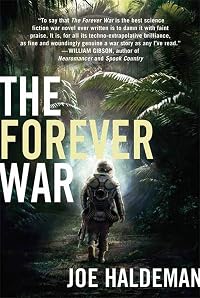
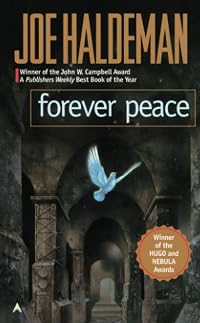
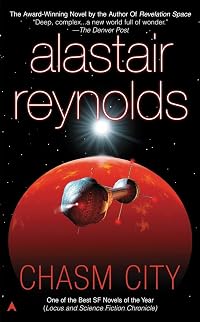
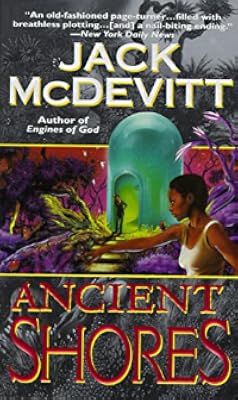
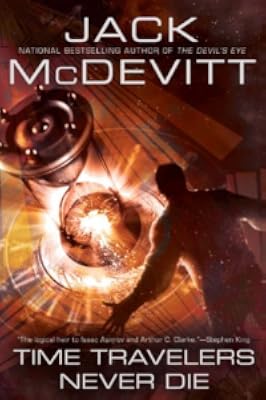
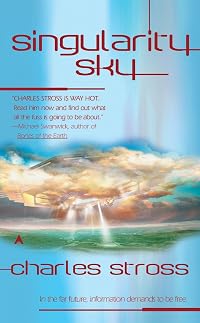
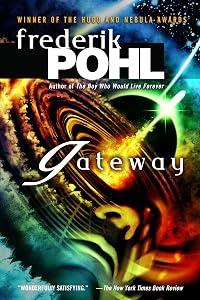
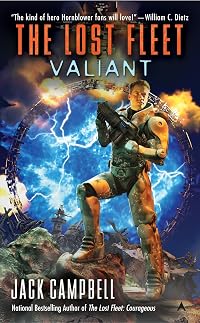
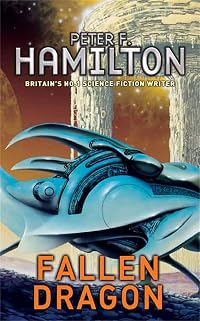
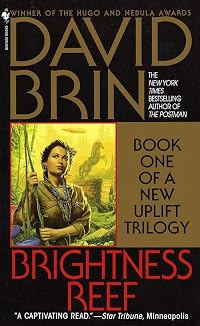
kerravonsen If you like SF, adventure and archaeology, you could like this book too. The Ship Who Searched is more character-driven than A Talent For War, and the archaeology is less central to the plot, but it is still there.
Member Reviews
Now this one really engaged my Sense of Wonder!
The story is OK: interstellar artefact collector unearths the uncomfortable truth about a 200-year dead military hero. If that was all there was to it, then that would be a dry read and not necessarily very exciting. But somehow, in his very direct and visual story-telling style, McDevitt conveys an incredible sense of the far-flung human society he has set the story in. There have been very few sf novels I have read where the ordinary reality of the extent of the human civilization depicted has come home to the reader; but in this novel, I WAS THERE. I felt a part of that society, and I grasped the size and extent of it, a society where Earth, the planet of origin, was very, very distant show more and not really all that important; and it didn't matter that that was so.
I have no idea how McDevitt did that, and in his later novels, whilst I have been struck by the televisual style he employs, I haven't been so transported to a different place. For me, this was real mind-expanding stuff, the sort of thing I started reading sf to find. show less
The story is OK: interstellar artefact collector unearths the uncomfortable truth about a 200-year dead military hero. If that was all there was to it, then that would be a dry read and not necessarily very exciting. But somehow, in his very direct and visual story-telling style, McDevitt conveys an incredible sense of the far-flung human society he has set the story in. There have been very few sf novels I have read where the ordinary reality of the extent of the human civilization depicted has come home to the reader; but in this novel, I WAS THERE. I felt a part of that society, and I grasped the size and extent of it, a society where Earth, the planet of origin, was very, very distant show more and not really all that important; and it didn't matter that that was so.
I have no idea how McDevitt did that, and in his later novels, whilst I have been struck by the televisual style he employs, I haven't been so transported to a different place. For me, this was real mind-expanding stuff, the sort of thing I started reading sf to find. show less
I first came across this story in the late 80's through Alef magazine (issue #6)'s short story "Dutchman".
It was great and very epic. Man who sacrificed a lot to defeat humankind's enemies gets enraged because it seems that his own side is willing to kill off his entire force without even attempting to help him. Soon he finds himself stranded on the deserted planet by his own people because they cannot let him retreat [since he is a symbol of the resistance]. Due to the twist of fate (although I hardly believe faith of that man would be any different if things went the other way) his whereabouts get lost and he is considered dead for all means and purposes and in death he becomes a central point of organized resistance, mythical person show more who finally manages to unite the humankind to push back at the aggressor.
After a while I came across this novel and story seemed very familiar but I did not read the book before. Apparently [a: Jack Mcdevitt|73812|Jack McDevitt|https://images.gr-assets.com/authors/1225722326p2/73812.jpg] took the short story as a basis and wrote a whole novel about it. Not being able to find the Alef magazine issue in question I quickly dived into this one.
Novel is great, I especially liked how historical elements got incorporated into the story. It shows how certain elements that are accepted as historical truths don't necessarily have anything to do with the truth. Well-tailored post-action stories that appeal to the people are the ones that got written down and remembered (hence the notion that history is not very precise science). Truth gets veiled by false stories to achieve the "greater good" (what would today be known as spinning the story) whatever greater good is for authors of these false stories.
Excellent book, that did not lose anything when compared to the short story. Message is more than clear - don't take anything at the face value, be aware that victors write the history but even they do not tell everything. Many a revolution devours its own children.
Highly recommended. show less
It was great and very epic. Man who sacrificed a lot to defeat humankind's enemies gets enraged because it seems that his own side is willing to kill off his entire force without even attempting to help him. Soon he finds himself stranded on the deserted planet by his own people because they cannot let him retreat [since he is a symbol of the resistance]. Due to the twist of fate (although I hardly believe faith of that man would be any different if things went the other way) his whereabouts get lost and he is considered dead for all means and purposes and in death he becomes a central point of organized resistance, mythical person show more who finally manages to unite the humankind to push back at the aggressor.
After a while I came across this novel and story seemed very familiar but I did not read the book before. Apparently [a: Jack Mcdevitt|73812|Jack McDevitt|https://images.gr-assets.com/authors/1225722326p2/73812.jpg] took the short story as a basis and wrote a whole novel about it. Not being able to find the Alef magazine issue in question I quickly dived into this one.
Novel is great, I especially liked how historical elements got incorporated into the story. It shows how certain elements that are accepted as historical truths don't necessarily have anything to do with the truth. Well-tailored post-action stories that appeal to the people are the ones that got written down and remembered (hence the notion that history is not very precise science). Truth gets veiled by false stories to achieve the "greater good" (what would today be known as spinning the story) whatever greater good is for authors of these false stories.
Excellent book, that did not lose anything when compared to the short story. Message is more than clear - don't take anything at the face value, be aware that victors write the history but even they do not tell everything. Many a revolution devours its own children.
Highly recommended. show less
This was totally not what I expected. The title suggested some sort of space opera full of battle scenes and heroic commanders battling ruthless and powerful genocidal alien invaders. Actually, it's about the *historiography* of such an invasion, not the invasion itself. That may sound academic and pretentious, but it's not at all. It's about the protagonist discovering what really happened long ago.
There's a well-known history of what happened in the great alien invasion, like the stories we tell about the founding of our own nation. Every schoolkid knows the story, and dramatists have spun the tales a thousand different ways. But the protagonist's uncle, a space archaeologist, has been investigating a few anomalies. Then the uncle show more dies in a tragic accident, leaving our protagonist Alex Benedict to inherit an estate and a few intriguing facts that don't quite add up. Sadly, the uncle's notes are entirely missing; all Alex Benedict knows is that his uncle was on the trail of something big. Surely there *must* have been more going on two hundred years ago, or else those people would not have done what they did.
I usually don't have to pay close attention to the story to follow it, but I found I could not read this novel in short segments just before I fell asleep, because I missed too much and couldn't keep the multitude of names straight. This story may not make much sense unless you concentrate, at least in the first few chapters. But the history was intriguing enough that I wanted to understand it; I actually wound up rereading the first few chapters several times, something I don't think I've done for many years.
The characters in the novel's present themselves are not particularly interesting. Frankly, they're kind of flat, and I didn't care about them or particularly want to make their acquaintance. And like so much fiction, it has the obligatory love interest(s) in the present which basically have almost zero to do with the story. Mercifully, this is only peripheral to the investigation, which kept it from being too annoying.
But if the characters in the story's present are flat, the characters whose history they are investigating are anything but. They are inspiring. They have by far the most memorable and best lines in the book. They are the ones who are flamboyantly larger than life. And the past is where most of the mystery lies, too.
Basically, this is an ok thriller in the novel's present, bolted on to a really, really intriguing investigation of the past. What kept me reading was not that I cared what happened to Alex Benedict in the present; I wanted him to get through his difficulties in the present to learn what really happened to those people in the past.
The mystery's solution at the end is quite satisfying; all the anomalies suddenly fall into place, and it makes sense in a way that I never would have predicted. And if the war heroes are deconstructed into something less impossibly heroic, they are not merely deconstructed; they are reconstructed as something more human, and more real, and maybe more solid. Those characters come alive in a way that all the dramatists with their not-quite-true stories could never bring out.
All in all, this was totally not what I was expecting, and I was very pleasantly surprised. show less
There's a well-known history of what happened in the great alien invasion, like the stories we tell about the founding of our own nation. Every schoolkid knows the story, and dramatists have spun the tales a thousand different ways. But the protagonist's uncle, a space archaeologist, has been investigating a few anomalies. Then the uncle show more dies in a tragic accident, leaving our protagonist Alex Benedict to inherit an estate and a few intriguing facts that don't quite add up. Sadly, the uncle's notes are entirely missing; all Alex Benedict knows is that his uncle was on the trail of something big. Surely there *must* have been more going on two hundred years ago, or else those people would not have done what they did.
I usually don't have to pay close attention to the story to follow it, but I found I could not read this novel in short segments just before I fell asleep, because I missed too much and couldn't keep the multitude of names straight. This story may not make much sense unless you concentrate, at least in the first few chapters. But the history was intriguing enough that I wanted to understand it; I actually wound up rereading the first few chapters several times, something I don't think I've done for many years.
The characters in the novel's present themselves are not particularly interesting. Frankly, they're kind of flat, and I didn't care about them or particularly want to make their acquaintance. And like so much fiction, it has the obligatory love interest(s) in the present which basically have almost zero to do with the story. Mercifully, this is only peripheral to the investigation, which kept it from being too annoying.
But if the characters in the story's present are flat, the characters whose history they are investigating are anything but. They are inspiring. They have by far the most memorable and best lines in the book. They are the ones who are flamboyantly larger than life. And the past is where most of the mystery lies, too.
Basically, this is an ok thriller in the novel's present, bolted on to a really, really intriguing investigation of the past. What kept me reading was not that I cared what happened to Alex Benedict in the present; I wanted him to get through his difficulties in the present to learn what really happened to those people in the past.
The mystery's solution at the end is quite satisfying; all the anomalies suddenly fall into place, and it makes sense in a way that I never would have predicted. And if the war heroes are deconstructed into something less impossibly heroic, they are not merely deconstructed; they are reconstructed as something more human, and more real, and maybe more solid. Those characters come alive in a way that all the dramatists with their not-quite-true stories could never bring out.
All in all, this was totally not what I was expecting, and I was very pleasantly surprised. show less
4.5 stars. This may not be everyone's cup of tea, but it's certainly mine. It had all my favorite things: evocative descriptions of alien planets, space archaeology, mysteries, library research, ancient space battles, intelligent analysis of how public opinion is swayed and changes, and characters I cared about.
It sometimes got a bit too muddled and complicated for my taste (had to rewind the audio and keep track of all names and places mentioned in order not to get lost), and sometimes it felt very "80s", but I didn't really mind that.
Its particular strengths (for me) were the sleuthing, the labyrinthine mystery being uncovered, and how smart it was when thinking about war, history-writing and public opinion.
I'm rounding down from show more 4.5 because you need to be the kind of person who both enjoys reading kind of slow, character-focused mysteries that involve a lot of library research and trying to make sense of and connect various old documents and witness accounts, *and* the kind of person who likes tense action scenes to really enjoy this. In addition, this was very smart and the author's thoughts on wars and culture clashes (here with an alien species) were really insightful, so it grated a little bit when occasionally, it seemed as if the secondary character was being particularly dense. I've heard this improves in future books, so I'm really looking forward to them. show less
It sometimes got a bit too muddled and complicated for my taste (had to rewind the audio and keep track of all names and places mentioned in order not to get lost), and sometimes it felt very "80s", but I didn't really mind that.
Its particular strengths (for me) were the sleuthing, the labyrinthine mystery being uncovered, and how smart it was when thinking about war, history-writing and public opinion.
I'm rounding down from show more 4.5 because you need to be the kind of person who both enjoys reading kind of slow, character-focused mysteries that involve a lot of library research and trying to make sense of and connect various old documents and witness accounts, *and* the kind of person who likes tense action scenes to really enjoy this. In addition, this was very smart and the author's thoughts on wars and culture clashes (here with an alien species) were really insightful, so it grated a little bit when occasionally, it seemed as if the secondary character was being particularly dense. I've heard this improves in future books, so I'm really looking forward to them. show less
This just might be some of the most creative Space Opera You've Never Heard Of. Or maybe you follow the Nebulas, the best SF nominated by other SF/F authors, and you recognize that this is fan service for and by the professionals of the field, and so praise from these people usually means that the writer has Talent.
Talent for War, or not, I have to agree in pretty much all particulars. What struck me right off the bat was the heavy elements of Mystery lit. It's solid as hell, in fact.
It's merely a strange coincidence that there's models for human minds in VR environments, FTL travel, space battles, and quite alien aliens. It doesn't change the fact that this is a good mystery. Murder is only a part of it. It has a much larger scope show more when it becomes a post-mortem of an old heroic battle full of buried secrets, espionage, and a complete rewriting of our future history. (Or will it be?)
We get to relive the past thanks to the future tech, but both portions of the story, whether it's with Alex, our MC, or Sim, the man who would be an iconoclast traitor. Both were fascinating.
But what made this space opera really special? The details. There are so many little quirks of the universe thrown in, from classic (and nonexistent) paintings to truly delightful worlds full of hidden mysteries. As an adventure, there's so much to get lost in and wonder about. As a mystery, the details drag you right into the tale and make you believe. :)
At least, that's what it did for me. I'm not a huge fan of space opera in general, but I ALWAYS appreciate a smart tale written smartly, and this falls under that category. It isn't overfull with overused tropes, thank the universe, but it may seem slightly slow to some fans of a certain sub-genre of the SF field because it *mostly* reads as a post-mortem on old battles, from tactics to strategy, with all the reversals of fate and the surprising revelations that the "official" records have squashed. I clicked with it because I like to dig under the surface of things, too, but in this, it's doubly fascinating because of the sheer amount of layers we get to uncover.
It's a work of Imagination and care, and that's no joke.
I was warned that I might find this slow, but thankfully, it turned out to be just my speed. :) I'll take depth AND breadth any day. :) show less
Talent for War, or not, I have to agree in pretty much all particulars. What struck me right off the bat was the heavy elements of Mystery lit. It's solid as hell, in fact.
It's merely a strange coincidence that there's models for human minds in VR environments, FTL travel, space battles, and quite alien aliens. It doesn't change the fact that this is a good mystery. Murder is only a part of it. It has a much larger scope show more when it becomes a post-mortem of an old heroic battle full of buried secrets, espionage, and a complete rewriting of our future history. (Or will it be?)
We get to relive the past thanks to the future tech, but both portions of the story, whether it's with Alex, our MC, or Sim, the man who would be an iconoclast traitor. Both were fascinating.
But what made this space opera really special? The details. There are so many little quirks of the universe thrown in, from classic (and nonexistent) paintings to truly delightful worlds full of hidden mysteries. As an adventure, there's so much to get lost in and wonder about. As a mystery, the details drag you right into the tale and make you believe. :)
At least, that's what it did for me. I'm not a huge fan of space opera in general, but I ALWAYS appreciate a smart tale written smartly, and this falls under that category. It isn't overfull with overused tropes, thank the universe, but it may seem slightly slow to some fans of a certain sub-genre of the SF field because it *mostly* reads as a post-mortem on old battles, from tactics to strategy, with all the reversals of fate and the surprising revelations that the "official" records have squashed. I clicked with it because I like to dig under the surface of things, too, but in this, it's doubly fascinating because of the sheer amount of layers we get to uncover.
It's a work of Imagination and care, and that's no joke.
I was warned that I might find this slow, but thankfully, it turned out to be just my speed. :) I'll take depth AND breadth any day. :) show less
Too many characters, too many drawn out plot twists, too many temporal jumps, and way too much repetitive backstory makes this first instalment in the "Alex Benedict" series a real snoozer. In fact I couldn't remember what I had read from one paragraph to the next as my mind wandered and my eyelids grew heavier. I finally gave up around page 200 and just read the synopsis on Wikipedia....turns out I didn't miss much. I do like McDevitt's writing style however, at least when he's actually propelling the plot forward, so I may take a chance on the next book in the series.
Alex Benedict had made his career in trading archeological objects. Until one day he learns that his uncle is dead - the ship he was on never came back from Armstrong space. And before he got on the ship, he left a will that asks Alex to go back to his birth planet and try to close a case. Gabe Benedict had been an archeologists - going after the planets where civilization had disappeared long enough to make them archeologically old.
Welcome to the Confederacy - the organization of the human worlds some time in the future. It as forged in the shadow of a war with a race of telepaths that brought humanity together for the first time by giving them a common enemy. And whatever Gabe had been looking for seems to be pointing to that era, show more 200 years earlier, when the war was in full swing and humanity was struggling - most planets were not even part of the war effort and it was a group of rebels that ensured that humanity will continue to exist.
Before Alex even leaves for Rimway (his birth planet), someone breaks into the house. And things go downhill from there - Gabe seems to have been after a 200 years old story that seems to be oddly relevant in the current times.
McDevitt finds a way to tell us the back story of the world without spending half the book in the past - he makes Alex read (well... actually experience) the past - after all not everyone knows the history in details and Alex does not. Add to this AIs, the aliens and a few dead bodies and the story starts pointing to a mystery that noone wants to be discovered.
The novel is a blend between mystery and science fiction. For such a short novel it packs a lot of world building. It's the brevity that is a bit of a problem - it takes 200 pages to get the story going and then it needs to be wrapped up fast. Not that it is not done well - but I wish we had spent some more time in the story itself and not in the past - Alex is just a sketch, his pilot is developed even worse. But the world building is exquisite.
The story starts with a Prologue that does not make any sense or shows any connection to the novel until the Epilogue. Then it snaps back into focus to make the story almost tragic.
I really enjoyed this novel - I really like the world building and the story telling - even if I am missing the characters development.
PS: The guy that is writing the back cover blurbs in Ace needs to find another job - if you have a 310 pages novel, you do not put on the back cover a surprising development that happens around page 200 and a fact that takes another 50 pages to actually happen. show less
Welcome to the Confederacy - the organization of the human worlds some time in the future. It as forged in the shadow of a war with a race of telepaths that brought humanity together for the first time by giving them a common enemy. And whatever Gabe had been looking for seems to be pointing to that era, show more 200 years earlier, when the war was in full swing and humanity was struggling - most planets were not even part of the war effort and it was a group of rebels that ensured that humanity will continue to exist.
Before Alex even leaves for Rimway (his birth planet), someone breaks into the house. And things go downhill from there - Gabe seems to have been after a 200 years old story that seems to be oddly relevant in the current times.
McDevitt finds a way to tell us the back story of the world without spending half the book in the past - he makes Alex read (well... actually experience) the past - after all not everyone knows the history in details and Alex does not. Add to this AIs, the aliens and a few dead bodies and the story starts pointing to a mystery that noone wants to be discovered.
The novel is a blend between mystery and science fiction. For such a short novel it packs a lot of world building. It's the brevity that is a bit of a problem - it takes 200 pages to get the story going and then it needs to be wrapped up fast. Not that it is not done well - but I wish we had spent some more time in the story itself and not in the past - Alex is just a sketch, his pilot is developed even worse. But the world building is exquisite.
The story starts with a Prologue that does not make any sense or shows any connection to the novel until the Epilogue. Then it snaps back into focus to make the story almost tragic.
I really enjoyed this novel - I really like the world building and the story telling - even if I am missing the characters development.
PS: The guy that is writing the back cover blurbs in Ace needs to find another job - if you have a 310 pages novel, you do not put on the back cover a surprising development that happens around page 200 and a fact that takes another 50 pages to actually happen. show less
Members
- Recently Added By
Lists

Best Military Science Fiction
57 works; 26 members

hypatian_kat to-read
429 works; 3 members
Author Information

124+ Works 20,935 Members
Jack McDevitt (born 1935) is an American science fiction author whose novels frequently deal with attempts to make contact with alien races, and with archaeology or xenoarchaeology. He attended La Salle University, where a short story of his won the annual Freshman Short Story Contest and was published in the school's literary magazine, Four show more Quarters. He received a Master's degree in literature from Wesleyan University in 1971. Before becoming a full-time author, he was an English teacher, naval officer, Philadelphia taxi driver, customs officer and motivational trainer. His first published story was The Emerson Effect in The Twilight Zone Magazine in 1981. Two years later, he published his first novel, The Hercules Text, which won the Philip K. Dick Special Award. He won the 2006 Nebula Award for Best Novel for Seeker, the UPC International Prize for his novella Ships in the Night in 1991, and the John W. Campbell Memorial Award for best SF novel for Omega in 2003. (Bowker Author Biography) show less
Some Editions
Series

Belongs to Publisher Series
Work Relationships
Common Knowledge
- Canonical title
- A Talent for War
- Original publication date
- 1989-02
- People/Characters
- Alex Benedict; Christopher Sim; Chase Kolpath; Quinda Arin; Gabriel 'Gabe' Benedict; Tarien Sim (show all 12); Leisha Tanner; Walford Candles; S'Kalian; Rashim Machesney; Matt Olander; Hugh Scott
- Important places
- Rimway; Toxicon; Dellaconda
- Dedication
- For Joseph H. Parroff, Rev. L. Richard Casavant, m.s., and Rev. Robert E. Carson, O. Praem., to mark debts I can never pay.
- First words
- The Air was heavy with incense and the sweet odor of hot wax.
- Last words
- (Click to show. Warning: May contain spoilers.)"And, yes, I'd be interested in seeing what he has to say."
- Blurbers
- Benford, Gregory
Classifications
Statistics
- Members
- 1,449
- Popularity
- 16,257
- Reviews
- 45
- Rating
- (3.66)
- Languages
- 7 — English, Estonian, German, Hebrew, Hungarian, Polish, Spanish
- Media
- Paper, Audiobook, Ebook
- ISBNs
- 15
- UPCs
- 1
- ASINs
- 11