
Blood and Guts in High School
by Kathy Acker
On This Page
Description
"Kathy Acker's writing is virtuoso, maddening, crazy, so sexy, so painful, and beaten out of a wild heart that nothing can tame. Acker is a landmark writer." -Jeanette Winterson, New York Times-bestselling author A masterpiece of surrealist fiction, steeped in controversy upon its first publication in 1984, Blood and Guts in High School is the book that established Kathy Acker as the preeminent voice of post-punk feminism. With 2017 marking the 70th anniversary of her birth, as well as the show more 10th year since her death this transgressive work of philosophical, political, and sexual insight-with a new introduction by Chris Kraus-continues to become more relevant than ever before. In the Mexican city of Merida, ten-year-old Janey lives with Johnny-her "boyfriend, brother, sister, money, amusement, and father" -until he leaves her for another woman. Bereft, Janey travels to New York City, plunging into an underworld of gangs and prostitution. After escaping imprisonment, she flees to Tangiers where she meets Jean Genet, and they begin a torrid affair that will lead Janey to her demise. Fantastical, sensual, and fearlessly radical, this hallucinatory collage is both a comic and tragic portrait of erotic awakening. "The girl in this story had more agency and voice than any girl I'd ever read or would read in my entire life." -Lydia Yuknavitch, national bestselling author of Thrust "No writer I know is more audacious than Kathy Acker, whose anarchic wit drives a thoroughgoing attack on conventions and complacencies of all sorts. Not unlike Gertrude Stein in her day, Acker gives us a different way to look at the uses to which language is put." -Lynne Tillman, author of Men and Apparitions. show lessTags
Recommendations

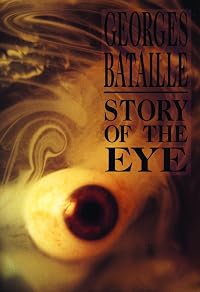

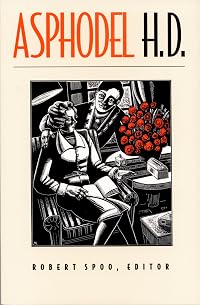
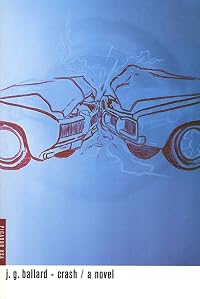
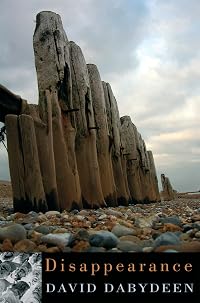




























Member Recommendations
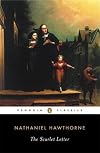
tootstorm You probably won't enjoy this. Maybe if you're reading it on your own time. BAGIHS has a scathing commentary on our masculine western canon, including focused attention on Hawthorne's the Scarlet Letter. BAGIHS actually got me to go pick up this nightmare of high school kids everywhere, and it...can be enjoyable.
It's certainly nice to understand Acker's arguments more.
20
ursula More transgressive fiction.

poetontheone Different formal expressions of the queer post-punk aesthetic as novel.
Member Reviews
I enjoyed revisiting Kathy Acker now in 2025 because it helped me remember the nihilistic 1980s, which now seem a million miles away from current feminisms and queer discourse. Short, well-written, and provocative; If you can take the prose, you'll find a worldview embedded in this novel which is intelligent and sophisticated... get ready to read the word 'cunt' a lot!
Blood and guts in high school is quite a little, disgusting novel, but still recognizable as outstanding. It irritates and shocks like the novels of William Burroughs.
Kathy Acker (1947 - 1997) is not exactly a new kid on the block, and while she did not belong to the Beat Generation, she was influenced by them. Her style is raucious, she writes about incest, drugs and free sexuality. Blood and guts in high school is an experimental novel that includes maps, pornographic drawings, a handwritten Persian dictionary, and irregular typography and layout.
Taken at face value, Blood and guts in high school (1984) is a novel about a girl's life at high school. Whether the novel is realistic or visionary, there are plenty of movies, books and show more music, such as Pink Floyd's 1979 rock opera The Wall, that depict the ugly inside of schools, and while Janey may not be the average high school kid, regretfully, there probably are kids like her, or worse. The fact that "bourgeois" readers may not like it, does not mean that Janey is a quite possible, not even very extraordinary student. Although fring, or unusual, her interests, obsessions and irritations (with teachers) is just the stuff of adolescence and life at high school. We just barely miss a white rat on her shoulder.
Although the mid-1980s are now nearly half a century behind us, no clear recognizable literary movement has been identified as typical for that period. Generally, much writing of that period is characterised as "postmodern", and so is the work of Kathy Acker.
Blood and guts in high school was banned in Germany. show less
Kathy Acker (1947 - 1997) is not exactly a new kid on the block, and while she did not belong to the Beat Generation, she was influenced by them. Her style is raucious, she writes about incest, drugs and free sexuality. Blood and guts in high school is an experimental novel that includes maps, pornographic drawings, a handwritten Persian dictionary, and irregular typography and layout.
Taken at face value, Blood and guts in high school (1984) is a novel about a girl's life at high school. Whether the novel is realistic or visionary, there are plenty of movies, books and show more music, such as Pink Floyd's 1979 rock opera The Wall, that depict the ugly inside of schools, and while Janey may not be the average high school kid, regretfully, there probably are kids like her, or worse. The fact that "bourgeois" readers may not like it, does not mean that Janey is a quite possible, not even very extraordinary student. Although fring, or unusual, her interests, obsessions and irritations (with teachers) is just the stuff of adolescence and life at high school. We just barely miss a white rat on her shoulder.
Although the mid-1980s are now nearly half a century behind us, no clear recognizable literary movement has been identified as typical for that period. Generally, much writing of that period is characterised as "postmodern", and so is the work of Kathy Acker.
Blood and guts in high school was banned in Germany. show less
## How do you feel about yourself when every human being you hear and see and smell every day of your being thinks you're worse than garbage? Your conception of who you are has always, at least partially, depended on how the people around you behaved towards you. You sense the people around you aren't right: what you did, your need, you weren't defying them to defy them, it was your need, was OK. You don't know. How can you know anything? How can you know anything? You begin to go crazy.
[N.B. This review includes images, and was formatted for my site, dendrobibliography -- located here.]
What a wonderfully angry book.
Blood & Guts in High School's (BAGIHS: 1978) narrative is a collage of drama, rough pornographic illustrations, dream show more geographies, angst- and art-fueled journal entries, a book report reinterpreting the shit out of the Scarlet Letter, language-learning exercises, poetry, &c. Whatever the format -- whatever the readability -- BAGIHS seems to follow young Janey's short-lived maturation and self-education in a world that offers her and her sort nothing but condescending, appreciative inequality.
I tend to have trouble with transgressive fiction, but Acker's work is something special. She was brilliant -- really had a knack for both tearing apart literary canon and social injustices; she was delightfully odd; and she was really, really, justifiably grumpy.
Her work's often built on her own feelings of oppression -- of being treated like she was incapable of, e.g., Jean Genet's greatness because she's not a man; of being told all the year after year men like Hawthorne, Dickens, de Cervantes, Faulkner, and Stevenson are responsible for western canon; of reading a western canon, like with the Scarlet Letter, that tries to tell women's stories for them because their place is not to be intellectually-influential. It's the kind of anger I see as increasingly relevant and necessary in an age of proud anti-intellectualism[*] that says women can't get angry about inequality and injustices because it negates any rationality underlying their arguments.
## Genet doesn't know how to be a woman. He thinks all he has to do to be a woman is slobber. He has to do more. He has to get down on his knees and crawl mentally every minute of the day. If he wants a lover, if he doesn't want to be alone every single goddamn minute of the day and horny so bad he feels the tip of his clit stuck in a porcupine's quill, he has to perfectly read his lover's mind, silently, unobtrusively, like a corpse, and figure out at every changing second what his lover wants. He can't be a slave. Women aren't just slaves. They are whatever their men want them to be. They are made, created by men. They are nothing without men.
If there's anything in Acker's writing that doesn't gel with me, it's her decision to include narrative structure in the list of masculine canon's influence. I get that rebelling against quest structure contributes to the message, but, much like the non-fiction chapters of Moby-Dick, it detracts from the readability. Similarly, spending so much time rewriting that canon using proudly-stolen and original language (inspired by hyper-masculine postmodern writers like Ronald Sukenick and Raymond Federman) contributes to the message, but not the readability.
Most of Acker's work becomes more about the experiencing a delirious mindset rather than following an escapist plot. Whether we're trapped with Janey's incestuous father, a Persian slave trader's closet, or in a Moroccan jail with Jean Genet, the cohesion is brought about by the message rather than character growth (because how much growth could a woman have?). Like submerging yourself in a dense academic journal of sociology with graphic depictions of genitalia every 10 pages, BAGIHS gives the reader the best of all possible worlds.
## Sahih: All she does is weep. You should get rid of her. We might be animals, but at least we know to keep our feelings locked in us. Women are worse than animals. They don't understand what's happening as we do.
## Janey: For 2,000 years you've had the nerve to tell women who we are. We use your words; we eat your food. Every way we get money has to be a crime. We are plagiarists, liars, and criminals.
## [..] Sahih (to Janey): You have to understand that you're stupid. And you'll never be able to make enough money to get away by working.
## Boss: Unless she spreads her legs.
------------------------------------------------------------------------------------
[*]For example, the rise of Men's Rights Activism (or hegemonic masculinity: Coston & Kimmel 2013; Kahl 2014); GamerGate (Chess & Shaw 2015); increasing xenophobia in response to globalization; Donald Drumpf's presidential campaign; or, most relevant to my work, the manufactured debate over climate change research (Oreskes & Conway 2014). show less
[N.B. This review includes images, and was formatted for my site, dendrobibliography -- located here.]
What a wonderfully angry book.
Blood & Guts in High School's (BAGIHS: 1978) narrative is a collage of drama, rough pornographic illustrations, dream show more geographies, angst- and art-fueled journal entries, a book report reinterpreting the shit out of the Scarlet Letter, language-learning exercises, poetry, &c. Whatever the format -- whatever the readability -- BAGIHS seems to follow young Janey's short-lived maturation and self-education in a world that offers her and her sort nothing but condescending, appreciative inequality.
I tend to have trouble with transgressive fiction, but Acker's work is something special. She was brilliant -- really had a knack for both tearing apart literary canon and social injustices; she was delightfully odd; and she was really, really, justifiably grumpy.
Her work's often built on her own feelings of oppression -- of being treated like she was incapable of, e.g., Jean Genet's greatness because she's not a man; of being told all the year after year men like Hawthorne, Dickens, de Cervantes, Faulkner, and Stevenson are responsible for western canon; of reading a western canon, like with the Scarlet Letter, that tries to tell women's stories for them because their place is not to be intellectually-influential. It's the kind of anger I see as increasingly relevant and necessary in an age of proud anti-intellectualism[*] that says women can't get angry about inequality and injustices because it negates any rationality underlying their arguments.
## Genet doesn't know how to be a woman. He thinks all he has to do to be a woman is slobber. He has to do more. He has to get down on his knees and crawl mentally every minute of the day. If he wants a lover, if he doesn't want to be alone every single goddamn minute of the day and horny so bad he feels the tip of his clit stuck in a porcupine's quill, he has to perfectly read his lover's mind, silently, unobtrusively, like a corpse, and figure out at every changing second what his lover wants. He can't be a slave. Women aren't just slaves. They are whatever their men want them to be. They are made, created by men. They are nothing without men.
If there's anything in Acker's writing that doesn't gel with me, it's her decision to include narrative structure in the list of masculine canon's influence. I get that rebelling against quest structure contributes to the message, but, much like the non-fiction chapters of Moby-Dick, it detracts from the readability. Similarly, spending so much time rewriting that canon using proudly-stolen and original language (inspired by hyper-masculine postmodern writers like Ronald Sukenick and Raymond Federman) contributes to the message, but not the readability.
Most of Acker's work becomes more about the experiencing a delirious mindset rather than following an escapist plot. Whether we're trapped with Janey's incestuous father, a Persian slave trader's closet, or in a Moroccan jail with Jean Genet, the cohesion is brought about by the message rather than character growth (because how much growth could a woman have?). Like submerging yourself in a dense academic journal of sociology with graphic depictions of genitalia every 10 pages, BAGIHS gives the reader the best of all possible worlds.
## Sahih: All she does is weep. You should get rid of her. We might be animals, but at least we know to keep our feelings locked in us. Women are worse than animals. They don't understand what's happening as we do.
## Janey: For 2,000 years you've had the nerve to tell women who we are. We use your words; we eat your food. Every way we get money has to be a crime. We are plagiarists, liars, and criminals.
## [..] Sahih (to Janey): You have to understand that you're stupid. And you'll never be able to make enough money to get away by working.
## Boss: Unless she spreads her legs.
------------------------------------------------------------------------------------
[*]For example, the rise of Men's Rights Activism (or hegemonic masculinity: Coston & Kimmel 2013; Kahl 2014); GamerGate (Chess & Shaw 2015); increasing xenophobia in response to globalization; Donald Drumpf's presidential campaign; or, most relevant to my work, the manufactured debate over climate change research (Oreskes & Conway 2014). show less
Sometimes I wonder if there's something wrong with my brain, or at least with my memory/reading comprehension/retention abilities. This happens when I read multiple works by the same author in a short period of time; I go on a spree, devouring everything I can find by a particular writer, and at some point, I'll find myself unable to tell one book from another. It doesn't seem to be related to the quality of the author's work--I've experienced this sensation with feline-centric mystery novels penned by elderly women, and with Updike's WASPy fables, and even with the masterworks of Saint Nabokov. I'm beginning to think that it's not them, it's me.
So I'm hitting that point with Kathy Acker now, and I don't know who's to blame for my show more overwhelming feeling of hey-that-tree-looks-familiar. Have I gotten The Gist of her work now? Am I just sticking around for a few cool phrases here and there, but no longer able to differentiate between characters, narratives, etc.? Should I have taken a break between readings? Should I have read her works chronologically? Did I do something wrong?
I don't know. The first book of hers that I read (Don Quixote) was perfect for the mood I was in; the second (In Memoriam to Identity) makes use of a text (The Sound and the Fury) that's practically tattooed on my heart. It was dumb luck that I started with those two, and I can see how my interest in Acker could have been altered if I hadn't stumbled upon the most specific-to-me books at that time, in that order, under those circumstances.
It's hard to write a review of Blood and Guts in High School because a.) it's all mixed up in my mind with Acker's other stuff, and b.) I'm so far into Ackerland right now that I can't be objective about it.
I mean, the writing is sharp, of course. Every page seems to have something that's brutal, some knife-twist of words or emotion or intellect. The concerns that I recognize as Acker's are also there--sex, politics, identity, illness--as are the engagements with literature and philosophy. And, hell, she made me almost consider re-reading The Scarlet Letter, so that's impressive.
But this book does test my limits as a reader. It's like...Burroughs. In high school, I loved William S. Burroughs, and I did the same thing with him then that I'm doing with Kathy Acker now, just slashing and burning through everything I can get my hands on. But I found that some of his more self-consciously experimental stuff began to try my patience; the cut-up method quickly lost its novelty and my interest started to wane. And now, with Blood and Guts..., the illustrations and poetic fragments just...began to wear on me, a bit. This probably makes me a bad postmodernist, but I'll admit it anyway!
So all of this is to say that I think I would have written a different review of this book had I read it before falling for the Acker Mystique. Of course, in the same way that Wile E. Coyote can only run through the air when he doesn't realize he's darted off a cliff, if I start thinking stuff like "There's no way to be objective when reviewing a book (or anything)," GoodReads may very well cease to exist. Hmm. show less
So I'm hitting that point with Kathy Acker now, and I don't know who's to blame for my show more overwhelming feeling of hey-that-tree-looks-familiar. Have I gotten The Gist of her work now? Am I just sticking around for a few cool phrases here and there, but no longer able to differentiate between characters, narratives, etc.? Should I have taken a break between readings? Should I have read her works chronologically? Did I do something wrong?
I don't know. The first book of hers that I read (Don Quixote) was perfect for the mood I was in; the second (In Memoriam to Identity) makes use of a text (The Sound and the Fury) that's practically tattooed on my heart. It was dumb luck that I started with those two, and I can see how my interest in Acker could have been altered if I hadn't stumbled upon the most specific-to-me books at that time, in that order, under those circumstances.
It's hard to write a review of Blood and Guts in High School because a.) it's all mixed up in my mind with Acker's other stuff, and b.) I'm so far into Ackerland right now that I can't be objective about it.
I mean, the writing is sharp, of course. Every page seems to have something that's brutal, some knife-twist of words or emotion or intellect. The concerns that I recognize as Acker's are also there--sex, politics, identity, illness--as are the engagements with literature and philosophy. And, hell, she made me almost consider re-reading The Scarlet Letter, so that's impressive.
But this book does test my limits as a reader. It's like...Burroughs. In high school, I loved William S. Burroughs, and I did the same thing with him then that I'm doing with Kathy Acker now, just slashing and burning through everything I can get my hands on. But I found that some of his more self-consciously experimental stuff began to try my patience; the cut-up method quickly lost its novelty and my interest started to wane. And now, with Blood and Guts..., the illustrations and poetic fragments just...began to wear on me, a bit. This probably makes me a bad postmodernist, but I'll admit it anyway!
So all of this is to say that I think I would have written a different review of this book had I read it before falling for the Acker Mystique. Of course, in the same way that Wile E. Coyote can only run through the air when he doesn't realize he's darted off a cliff, if I start thinking stuff like "There's no way to be objective when reviewing a book (or anything)," GoodReads may very well cease to exist. Hmm. show less
Often disgusting, often desolate. I appreciate just how defiant of convention this book is. Defiance is perhaps its deepest, most pervasive quality—the fast curtness and defiance of the narration, contrasted with Janey’s hopeless straits, her captivity.
Just what is this book out to prove? What do we gain from having read it? A disfiguring, faithless vision of society, men and women. There is some reality in it, something chimes with recognition despite the crazed intensity and bleakness of the plot. We gain the edge of daring insight, is it, the edge of an insight that does not look away.
The pictorial sections are refreshing and creative. I am grateful for them.
Just what is this book out to prove? What do we gain from having read it? A disfiguring, faithless vision of society, men and women. There is some reality in it, something chimes with recognition despite the crazed intensity and bleakness of the plot. We gain the edge of daring insight, is it, the edge of an insight that does not look away.
The pictorial sections are refreshing and creative. I am grateful for them.
No doubt, blood and guts. A disembowelment as well as a reconstruction of the novel; reading suitable only for frothing mad apes. A battle cry demanding pornography become art, that order become chaos and thus become full. A morphing beast of prose, poetry, drama, pen drawings, and Persian lessons. An eyebrow raising, humorous, harrowing, obscene satirical supernova of degradation. So many people will hate this book outright, but I don't talk to you as it is.
#8 in my chronological journey through space and time with kathy acker as my virgil. in terms of form this book is an antecedent of House of Leaves. But in content its much more like Sade, with protagonist Janey acting as both Juliette and Justine.
the dream maps are exquisite and worth the price of admission alone.
the dream maps are exquisite and worth the price of admission alone.
Members
- Recently Added By
Lists

1001 Books You Must Read Before You Die
1,448 works; 1,134 members

Significant works of postmodern fiction
86 works; 25 members

50 Books by Women Authors
50 works; 10 members

1,001 BYMRBYD Concensus
723 works; 27 members

Dreaming
39 works; 1 member

My TBR
371 works; 3 members

Books With Body Parts in the Title
153 works; 8 members
Author Information

53+ Works 5,127 Members
Some Editions
Awards and Honors
Work Relationships
Is contained in
Has the adaptation
Common Knowledge
- Canonical title
- Blood and Guts in High School
- Original title
- Blood and Guts in High School
- Original publication date
- 1978
- People/Characters
- Janey Smith; Hester Prynne; Erica Jong; Jean Genet; Bill; President Carter (show all 17); Reverend Dimwit; Fat Lady; Fritzy; Johnny; Mr. Knockwurst; Mr. Linker; Lousy Mindless Salesgirl; Persian slave trader; Sahib; Sally; Wispy Blonde Hippy Girl
- Important places
- Merida, Yucatán, Mexico; East Village, Manhattan, New York, New York, USA; Tangier, Morocco; Egypt
- Original language
- English
- Disambiguation notice
- Don't combine with the Picador edition Blood and Guts in High School Plus Two, which contains two additional works.
Classifications
Statistics
- Members
- 1,089
- Popularity
- 23,418
- Reviews
- 26
- Rating
- (3.28)
- Languages
- 7 — Dutch, English, French, German, Italian, Spanish, Swedish
- Media
- Paper, Ebook
- ISBNs
- 18
- ASINs
- 5