On This Page
Description
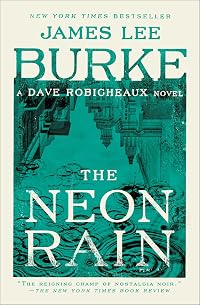
Fiction. Mystery. Suspense. Thriller. New York Times best-selling author James Lee Burke's Dave Robicheaux novels began with this first hard-hitting entry in the series. In The Neon Rain, Detective Robicheaux fishes a prostitute's corpse from a New Orleans bayou and finds that no one, not even the law, cares about a dead hooker. "One of Burke's best."-New York Times Book Review.Tags
Recommendations









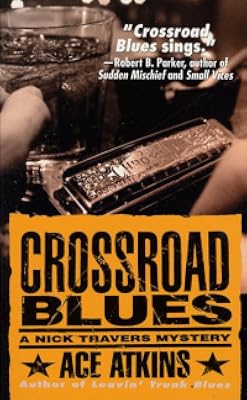
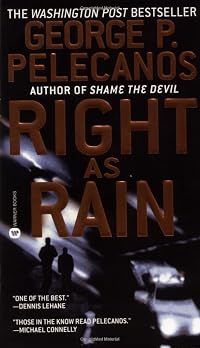
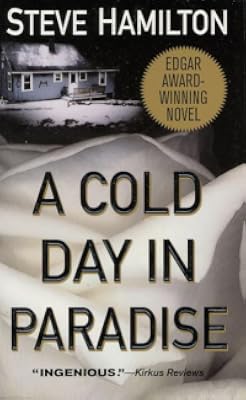
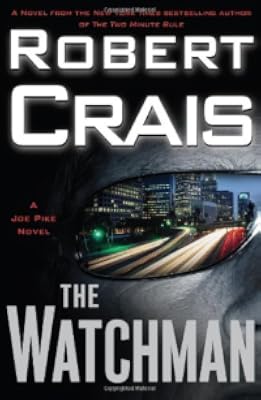
Member Reviews
The novel that brings us Dave Robicheaux. This is my third time reading this book. James Lee Burke once said that his English teacher in high school told him that his use of the English language was atrocious, or something to that effect. Well, if that was the case, he got over it. Some of his prose is so poetic, I read it aloud just to hear the beauty. The way he describes a simple rain storm or an early morning is enough for me to delve into one of his novels. No one writes a better love scene. Robicheaux philosophizes from time to time, getting me to think more about the human condition and our place in the world.
"...I reflected upon the ambiguous importance of the past in our lives. In order to free ourselves from it, I thought, we show more treat it as a decaying memory. At the same time, it's the only measure of identity we have. There is no mystery to the self; we are what we do and where we have been. So we have to resurrect the past constantly, erect monuments to it, and keep it alive in order to remember who we are." p. 150 show less
"...I reflected upon the ambiguous importance of the past in our lives. In order to free ourselves from it, I thought, we show more treat it as a decaying memory. At the same time, it's the only measure of identity we have. There is no mystery to the self; we are what we do and where we have been. So we have to resurrect the past constantly, erect monuments to it, and keep it alive in order to remember who we are." p. 150 show less
I have been long overdue for reading (or listening to in this case) one of James Lee Burke's books. After my brother recommended him, I jumped in at the start of the Dave Robicheaux series and was amply rewarded by a book whose plot may ramble a bit, but that rewards the reader from start to finish with some of the best characters and dialogue you'll come across. When you add the incmoparable Will Patton as the audiobook narrator, how can it miss? The story, part of which involves shadowy figures supporting the Nicaraguan Contras, is a bit dated, but the action scenes, the character of Robicheaux, and the satisfaction of some of the outcomes is not. There is even humor here and there, such as the scene with the porno theater owner. I'm show more moving straight on into Book 2; however, Patton doesn't narrate that one. I do see he comes back here and there as the series moves on, though. show less
The film “Heaven’s Prisoners” introduced me to Dave Robicheaux, or Streak. Alec Baldwin played Streak sweaty, as though the very act of breathing was a burden, and on a slow-burn that promises an extremely high yield upon explosion. Hiding in the nearly opaque swamps of Louisiana, Baldwin’s Robicheaux oozes the tension of a person expecting the next fall from the wagon or the next onslaught of violence. The movie was not particularly successful and was not particularly popular with the critics, but I was captivated by a unique character living out a perilous life in a riot of culture. I waited nearly twenty years before visiting Streak again, this time through the source material, James Lee Burke’s [The Neon Rain].
I don’t show more know whether Baldwin read any of the Robicheaux novels, but his portrayal of the character was definitely tapped into Burke’s vision. Deeply conflicted and self-destructive, Burke’s Streak is capable of almost anything. Take for instance his beating of a morbidly obese crook with a sack of ball bearings and wrenches. But his choices, even the violent ones, are always motivated by a puritanical, almost primitive since of right and wrong, and they are usually accompanied by a sense of guilt that would choke a horse.
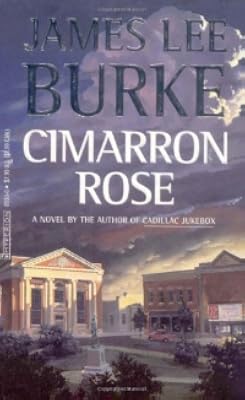
[The Neon Rain] was Burke’s first Robicheaux novel, and just his fifth published work of fiction, a fact that is evident in the book’s rawness. There are sections of the book that seem undercooked, shrimp pulled from the fryer too early. And Burke relies too heavily on stereotypes, sprinkling hot sauce onto the po’ boy sandwich to cover the absence of good seafood. But the atmosphere of the book drips so with the heavily with the smell and texture of Louisiana that you forget all of that. Burke has published nineteen Robicheaux novels since [The Neon Rain], winning an Edgar Award for [Black Cherry Blues] in 1990, and created two other fiction series, winning a second Edgar Award for [Cimarron Rose] in 1998, all a testament to his ability. [The Neon Rain] might be a little raw, but I’m comin’ back for seconds because Burke created such an interesting character in Streak and is so adept at drawing me into the swamps and dark alleys where Streak hides.
Bottom Line: The first in a series, and a little raw, but grounded with a deeply interesting main character and an evocative sense of place.
Highly Recommended
5 bones!!!!! show less
I don’t show more know whether Baldwin read any of the Robicheaux novels, but his portrayal of the character was definitely tapped into Burke’s vision. Deeply conflicted and self-destructive, Burke’s Streak is capable of almost anything. Take for instance his beating of a morbidly obese crook with a sack of ball bearings and wrenches. But his choices, even the violent ones, are always motivated by a puritanical, almost primitive since of right and wrong, and they are usually accompanied by a sense of guilt that would choke a horse.
[The Neon Rain] was Burke’s first Robicheaux novel, and just his fifth published work of fiction, a fact that is evident in the book’s rawness. There are sections of the book that seem undercooked, shrimp pulled from the fryer too early. And Burke relies too heavily on stereotypes, sprinkling hot sauce onto the po’ boy sandwich to cover the absence of good seafood. But the atmosphere of the book drips so with the heavily with the smell and texture of Louisiana that you forget all of that. Burke has published nineteen Robicheaux novels since [The Neon Rain], winning an Edgar Award for [Black Cherry Blues] in 1990, and created two other fiction series, winning a second Edgar Award for [Cimarron Rose] in 1998, all a testament to his ability. [The Neon Rain] might be a little raw, but I’m comin’ back for seconds because Burke created such an interesting character in Streak and is so adept at drawing me into the swamps and dark alleys where Streak hides.
Bottom Line: The first in a series, and a little raw, but grounded with a deeply interesting main character and an evocative sense of place.
Highly Recommended
5 bones!!!!! show less
If I could only pick one series to read it would probably be the Robicheaux series which I would head to although Inspector Gamache and Commissario Brunetti would not be far behind. I picked up The Neon Rain in the library on a whim, not remembering that I had already read it. This is one of the books that I can read again and again so that doesn't matter.
Burke's books are quite hard to review as the themes are present in all his books right from the very beginning: the presence of evil in some people and in some of the sytems and structures of the police and government, the depiction of the area that he lives in and the place of power and its use to name but a few. These are all in this book. So for this review, I am going to focus on show more the descriptions of the place as well as the plot otherwise you will get the same review for each book.
Robicheaux is called to meet a prisoner who is due to die in the next few hours. This prisoner, Massina, wants to warn him of a hit that has been taken out on him - a man with many evil acts behind him trying to make good at the last moment. Burke describes the walk into the jail in one long, twisty sentence showing us the never-endingness of the place.
I parked the car and we entered the Block, passed through the first lockdown area where both the snitches and the dangerous ones stayed, walked down the long, brilliantly lit breezeway between the recreation yards into the next dormitory, passed through another set of hydraulic locks and a dead space where two hacks sat at a table playing cards and where a sign overhead read NO GUNS BEYOND THIS POINT, into the rec and dining halls where the black trustys were running electric waxers on the gleaming floors, and finally walked up the spiral iron steps to a small maximum-security corner where Johnny Massina was spending the last three hours of his life.
p3
In one sentence that is a paragraph we move from the car park, through the prison and up to the character we want to listen to. It might be a long sentence but it does get us quite quickly from A to B and creates the atmosphere. There is a sense of running through the motions, doing things that don't need doing or saying; boredom. There isn't really a wasted word although there are a lot of wasted lives living in that sentence.
Twisted into the story of who is out to get Robicheaux is the lost life of a young black woman that he found drifting in the bayou. And here, the calm provided by fishing is reflected in the description of the water and land.
The shore was thickly lined with cypress trees, and it was cool and quiet in the green-gold morning light that fell through the canopy of limbs overhead. The lily pads were abloom with purple flowers, and I could smell the trees, the moss, the wet green lichen on the bark, the spray of crimson and yellow four o'clocks that were stil open in the shade.
p11
I can picture this place where not only do we have the plants but the colours and the smells. Trees are often referred to has having limbs but in this book, the limbs are mirrored in the horror that lurks in the water in the same paragraph. Robicheaux spots an alligator floating in the water looking like 'a brown rock' and when another boat passes and disturbs the water he sees 'a bare leg, a band, . . .'.
This being a young black woman, her missing has not been investigated and nor is her death. Injustice being a theme running through all of the books means that Robicheaux will investigate and of course these two stories merge together with a lot of violence and not all the right people captured and tried.
It would not be true to say that throughout the series the men are the evil and women good or in the light but in this book it is. When we come across Annie, the weather changes
The sky had cleared and the air was suddenly blue and gold when the sun broke through the clouds, but the wind was still loud in the oak trees along the lane, and torn leaves were scattered across the lawns.
p258
It is clear that not everything is right, we still have the after effect of the storm and when Robicheaux meets Annie he tries to get her to stop wanting to see him as he attracts too much evil and drags a lot along with him. She is decribed as wearing
. . . white Levi's, a pink pullover blouse, and gold hoop earrings that made her look like a flower child of the sixties.
p258
Sweet, innocent colours and a smbol of peace in complete contrast to the men who have been chasing him.
Death was a rodent that ate its way inch by inch through your entrails, chewed at your liver and stomach, severed tendon from organ, until finally, when you were along in the dark, it sat gorged and sleek next to your head, its eyes resting, its wet muzzled like a kiss, a promise whispered in the air.
p301
There is something about a series of books: we know and probably like the main characters, the themes appeal to us and in this series the place. We know what we are going to get as an outline of a story and there is a great comfort in that. This is especially true of the Robicheaux series for me but what we also get is good writing and that makes all the difference. show less
Burke's books are quite hard to review as the themes are present in all his books right from the very beginning: the presence of evil in some people and in some of the sytems and structures of the police and government, the depiction of the area that he lives in and the place of power and its use to name but a few. These are all in this book. So for this review, I am going to focus on show more the descriptions of the place as well as the plot otherwise you will get the same review for each book.
Robicheaux is called to meet a prisoner who is due to die in the next few hours. This prisoner, Massina, wants to warn him of a hit that has been taken out on him - a man with many evil acts behind him trying to make good at the last moment. Burke describes the walk into the jail in one long, twisty sentence showing us the never-endingness of the place.
I parked the car and we entered the Block, passed through the first lockdown area where both the snitches and the dangerous ones stayed, walked down the long, brilliantly lit breezeway between the recreation yards into the next dormitory, passed through another set of hydraulic locks and a dead space where two hacks sat at a table playing cards and where a sign overhead read NO GUNS BEYOND THIS POINT, into the rec and dining halls where the black trustys were running electric waxers on the gleaming floors, and finally walked up the spiral iron steps to a small maximum-security corner where Johnny Massina was spending the last three hours of his life.
p3
In one sentence that is a paragraph we move from the car park, through the prison and up to the character we want to listen to. It might be a long sentence but it does get us quite quickly from A to B and creates the atmosphere. There is a sense of running through the motions, doing things that don't need doing or saying; boredom. There isn't really a wasted word although there are a lot of wasted lives living in that sentence.
Twisted into the story of who is out to get Robicheaux is the lost life of a young black woman that he found drifting in the bayou. And here, the calm provided by fishing is reflected in the description of the water and land.
The shore was thickly lined with cypress trees, and it was cool and quiet in the green-gold morning light that fell through the canopy of limbs overhead. The lily pads were abloom with purple flowers, and I could smell the trees, the moss, the wet green lichen on the bark, the spray of crimson and yellow four o'clocks that were stil open in the shade.
p11
I can picture this place where not only do we have the plants but the colours and the smells. Trees are often referred to has having limbs but in this book, the limbs are mirrored in the horror that lurks in the water in the same paragraph. Robicheaux spots an alligator floating in the water looking like 'a brown rock' and when another boat passes and disturbs the water he sees 'a bare leg, a band, . . .'.
This being a young black woman, her missing has not been investigated and nor is her death. Injustice being a theme running through all of the books means that Robicheaux will investigate and of course these two stories merge together with a lot of violence and not all the right people captured and tried.
It would not be true to say that throughout the series the men are the evil and women good or in the light but in this book it is. When we come across Annie, the weather changes
The sky had cleared and the air was suddenly blue and gold when the sun broke through the clouds, but the wind was still loud in the oak trees along the lane, and torn leaves were scattered across the lawns.
p258
It is clear that not everything is right, we still have the after effect of the storm and when Robicheaux meets Annie he tries to get her to stop wanting to see him as he attracts too much evil and drags a lot along with him. She is decribed as wearing
. . . white Levi's, a pink pullover blouse, and gold hoop earrings that made her look like a flower child of the sixties.
p258
Sweet, innocent colours and a smbol of peace in complete contrast to the men who have been chasing him.
Death was a rodent that ate its way inch by inch through your entrails, chewed at your liver and stomach, severed tendon from organ, until finally, when you were along in the dark, it sat gorged and sleek next to your head, its eyes resting, its wet muzzled like a kiss, a promise whispered in the air.
p301
There is something about a series of books: we know and probably like the main characters, the themes appeal to us and in this series the place. We know what we are going to get as an outline of a story and there is a great comfort in that. This is especially true of the Robicheaux series for me but what we also get is good writing and that makes all the difference. show less
A solid variant of the hard-boiled detective story published in 1987 and introducing troubled former Vietnam Vet, recovering alcoholic and police lieutenant (at least in this first novel) Dave Robicheaux in a story series set in southern Louisiana (New Orleans and its bayou country).
All the ingredients of the Chandler School are here. Fans of the genre will get their comfort food and Burke is a good writer, especially at evoking place even if non-Southerners might like a dictionary to hand occasionally to get the best of it.
Overall, I enjoyed it even if Robicheaux's self-destructive stupidity sometimes stretches one's patience ... but, then, where would we be with the story if he was not impulsive and sometimes just a bit dim? And it show more is always fun to see Catholic moral questioning rear its head in a crime novel.
The story owes a great deal to the then-current scandal of the Iran-Contra affair. The politics here are not exactly sophisticated (standard liberal torment) but that is not to be taken as a criticism. Books like this need a hook and they are entertainments, not designed to be analytical. show less
All the ingredients of the Chandler School are here. Fans of the genre will get their comfort food and Burke is a good writer, especially at evoking place even if non-Southerners might like a dictionary to hand occasionally to get the best of it.
Overall, I enjoyed it even if Robicheaux's self-destructive stupidity sometimes stretches one's patience ... but, then, where would we be with the story if he was not impulsive and sometimes just a bit dim? And it show more is always fun to see Catholic moral questioning rear its head in a crime novel.
The story owes a great deal to the then-current scandal of the Iran-Contra affair. The politics here are not exactly sophisticated (standard liberal torment) but that is not to be taken as a criticism. Books like this need a hook and they are entertainments, not designed to be analytical. show less
Hardboiled Poetry
A review of the Pocket Books Kindle edition (July 9, 2010) of the Simon & Schuster hardcover original (1987)
[4.5 rounded up]
When I saw GR friend Berengaria was reading the German translation [book:Neonregen|32197984] of The Neon Rain I show more couldn't resist my own re-read of Burke's first Dave Robicheaux novel. A Kindle deal for $1.99 made for quick access and a chance to highlight some favourite quotes and passages which you can read here.
I read this back in the day in its first paperback edition and I was immediately hooked on Burke's writing for a few dozen books or so. Eventually they did become predictable and I phased out of them, but this re-read brought back my initial thrill of the discovery of Burke's hardboiled poetic writing, the crazed expressions of violence, the old-time Cajun axioms and such.
See cover at https://pics.cdn.librarything.com/picsizes/11/66/11663365-b-h0-w400-pv25_5967583...
The front cover of my original 1987 Pocket Books paperback, an edition not listed on Goodreads. Image sourced from Library Thing.
As Berengaria's review and updates mention, this is from a certain era with parts that will read with some cringe in the present day. The stereotypical ex-alcoholic cop ready to fall off the wagon, the reckless detective & the even more reckless partner, the fantasy fulfillment of the saintly beautiful woman falling for the down-on-his-luck male hero, the villains straight out of central casting almost dripping venom from their jaws, etc. But the poetry of it still grabbed me and the similes and metaphors are worthy of being dubbed the Cajun equivalent of Raymond Chandler. Admittedly this will not be for everyone.
Soundtrack
In a quirky misstep, Burke describes Robicheaux at one point listening to Cajun music icon Iry LeJeune's "original" version of La Jolie Blonde on repeat. No such recording exists. There is however a recording as Jolie Blon by Iry's son Eddie LeJeune which you can hear on YouTube here or on Spotify here.
For a more contemporary rock'n'roll version as Jolé Blon you can listen to the Gary U.S. Bonds/Bruce Springsteen collaboration on YouTube here or on Spotify here.
The complete original recordings of Iry LeJeune are available on a compilation Viens Me Chercher which you can listen to on YouTube here or on Spotify here.
Trivia and Links
At 88 years-of-age, author James Lee Burke (1936-) is still going strong, with [book:Clete|197525334] (#24 - 2024) the latest published in the Dave Robicheaux / Cletus Purcell series. [book:Don't Forget Me, Little Bessie|219300993], the latest in the Holland family series was published June 3, 2025. [book:The Hadacol Boogie: A Dave Robicheaux Novel|234101121] (#25) is expected to be published on February 10, 2026. show less
A review of the Pocket Books Kindle edition (July 9, 2010) of the Simon & Schuster hardcover original (1987)
My stomach was empty and it licked through me like canned heat, settled heavily into my testicles and phallus, roared darkly into my brain, filled my heart with the rancid, primordial juices of a Viking reveling in his own mortal wound. ... I had heard the klitch under my foot in the dark on the jungle trail; then, as though I were a spectator rather than a participant, I saw myself covered with cobalt light, my body crawl with electricity, my soul light the trees like an enormous candle.
[4.5 rounded up]
When I saw GR friend Berengaria was reading the German translation [book:Neonregen|32197984] of The Neon Rain I show more couldn't resist my own re-read of Burke's first Dave Robicheaux novel. A Kindle deal for $1.99 made for quick access and a chance to highlight some favourite quotes and passages which you can read here.
I read this back in the day in its first paperback edition and I was immediately hooked on Burke's writing for a few dozen books or so. Eventually they did become predictable and I phased out of them, but this re-read brought back my initial thrill of the discovery of Burke's hardboiled poetic writing, the crazed expressions of violence, the old-time Cajun axioms and such.
See cover at https://pics.cdn.librarything.com/picsizes/11/66/11663365-b-h0-w400-pv25_5967583...
The front cover of my original 1987 Pocket Books paperback, an edition not listed on Goodreads. Image sourced from Library Thing.
As Berengaria's review and updates mention, this is from a certain era with parts that will read with some cringe in the present day. The stereotypical ex-alcoholic cop ready to fall off the wagon, the reckless detective & the even more reckless partner, the fantasy fulfillment of the saintly beautiful woman falling for the down-on-his-luck male hero, the villains straight out of central casting almost dripping venom from their jaws, etc. But the poetry of it still grabbed me and the similes and metaphors are worthy of being dubbed the Cajun equivalent of Raymond Chandler. Admittedly this will not be for everyone.
It was the Louisiana I had grown up in, a place that never seemed to change, where it was never a treason to go with the cycle of things and let the season have its way. The fall sky was such a hard blue you could have struck a match against it, the yellow light so soft it might have been aged inside oak.
Soundtrack
In a quirky misstep, Burke describes Robicheaux at one point listening to Cajun music icon Iry LeJeune's "original" version of La Jolie Blonde on repeat. No such recording exists. There is however a recording as Jolie Blon by Iry's son Eddie LeJeune which you can hear on YouTube here or on Spotify here.
For a more contemporary rock'n'roll version as Jolé Blon you can listen to the Gary U.S. Bonds/Bruce Springsteen collaboration on YouTube here or on Spotify here.
The complete original recordings of Iry LeJeune are available on a compilation Viens Me Chercher which you can listen to on YouTube here or on Spotify here.
Trivia and Links
At 88 years-of-age, author James Lee Burke (1936-) is still going strong, with [book:Clete|197525334] (#24 - 2024) the latest published in the Dave Robicheaux / Cletus Purcell series. [book:Don't Forget Me, Little Bessie|219300993], the latest in the Holland family series was published June 3, 2025. [book:The Hadacol Boogie: A Dave Robicheaux Novel|234101121] (#25) is expected to be published on February 10, 2026. show less
This is the involving thriller I was hoping for when I picked up Michael Connelly’s latest earlier this month. Well-drawn supporting characters that even a visually unimaginitive guy like me can see in his head, each with his or her own way of talking. A lead character who is able to maintain at least some supportive relationships with other people, despite his damaged psyche. No distracting, fetishized descriptions of police procedure, equipment, and jargon. Beautiful, descriptive passages that demonstrate an awareness of the world outside the characters’ heads: “Oak, cypress, and willow trees lined the two-lane road; the mist still clung like torn cotton to the half-submerged dead tree trunks back in the marsh; the canebrakes show more were thick and green, shining in the light, and the lily pads clustered along the bayou’s banks were bursting with flowers, audibly popping, their leaves covered with drops of quicksilver.”
I’d read a relatively recent Burke thriller a few years ago and thought I’d start at the beginning of his famous Dave Robicheaux series. Burke’s portrayal of Robichaeaux plays it close to the chest: for the first hundred pages, I wasn’t sure I admired the guy. But by the end, his character is revealed and he becomes visible as a new twist on the archetype that started with Chandler: the man with a code. That he appears not even to realize that he has a code is beside the point. There are lines to cross that he will not cross, regardless of cost, and there are things he will not fail to do, though they may cost all he has. show less
I’d read a relatively recent Burke thriller a few years ago and thought I’d start at the beginning of his famous Dave Robicheaux series. Burke’s portrayal of Robichaeaux plays it close to the chest: for the first hundred pages, I wasn’t sure I admired the guy. But by the end, his character is revealed and he becomes visible as a new twist on the archetype that started with Chandler: the man with a code. That he appears not even to realize that he has a code is beside the point. There are lines to cross that he will not cross, regardless of cost, and there are things he will not fail to do, though they may cost all he has. show less
Members
- Recently Added By
Lists

The Guardian's 1000 Novels Everyone Must Read
1,005 works; 550 members

Best Crime Fiction
262 works; 39 members

100 Mysteries and Thrillers to Read in a Lifetime
99 works; 22 members

Books Read in 2013
1,630 works; 51 members

Southern Fiction
212 works; 52 members

Books Read in 2022
5,168 works; 111 members

Florida
366 works; 3 members
Author Information

123+ Works 38,560 Members
James Lee Burke, winner of two Edgar awards, is the author of nineteen previous novels, many of them "New York Times" bestsellers, including "Cimmaron Rose", Cadillac Jukebox", & "Sunset Limited". He & his wife divide their time between Missoula, Montana, & New Iberia, Louisiana. (Publisher Provided)
Some Editions
Awards and Honors
Series

Work Relationships
Common Knowledge
- Canonical title
- The Neon Rain
- Original publication date
- 1987
- People/Characters
- Johnny Massina; Clete Purcel; Annie Ballard; Dave Robicheaux; Captain Guidry; Jimmie "the Gent" Robicheaux (show all 7); Didoni "Didi Gee" Giacono
- Important places
- Bayou Teche, Louisiana, USA; New Iberia, Louisiana, USA (referenced); New Orleans, Louisiana, USA
- Dedication
- To the family of Walter J. Burke of New Iberia, Louisiana, with great affection for their gentle spirit and kind ways.
- First words
- The evening sky was streaked with purple, the color of torn plums, and a light rain had started to fall when I came to the end of the blacktop road that cut through twenty miles of thick, almost impenetrable scrub oak and pin... (show all)e and stopped at the front gate of Angola penitentiary.
- Last words
- (Click to show. Warning: May contain spoilers.)The fall sky was such a hard blue you could have struck a match against it, the yellow light so soft it might have been aged inside oak.
- Blurbers
- Crumley, James; Kittredge, William
- Original language
- English
Classifications
Statistics
- Members
- 2,041
- Popularity
- 10,204
- Reviews
- 81
- Rating
- (3.74)
- Languages
- 9 — Danish, Dutch, English, French, German, Italian, Japanese, Spanish, Swedish
- Media
- Paper, Audiobook, Ebook
- ISBNs
- 52
- ASINs
- 18