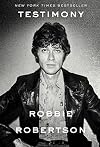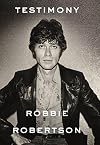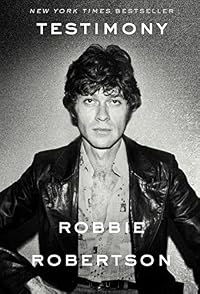
Testimony: A Memoir
by Robbie Robertson
On This Page
Description
In this captivating memoir, Robbie Robertson shares the journey that led him to some of the most pivotal events in music history. Robertson and his partners in The Band fashioned a music that has endured for decades, influencing countless musicians. One of the most beloved songwriters and guitarists of his time, now he employs his storyteller's voice to weave together the journey that led him to some of the most pivotal events in music history. It's the story of a time when rock 'n' roll show more became life, when music legends moved through the same streets and hotel rooms, and above all, the profound friendship among five young men who together created a new kind of popular music. "Robbie Robertson's singular contributions to popular music have made him one of the most beloved songwriters and guitarists of his time. With songs like 'The Weight,' 'The Night They Drove Old Dixie Down,' and 'Up on Cripple Creek,' he and his partners in the Band fashioned music that has endured for decades, influencing countless musicians. In this captivating memoir, written over five years of reflection, Robbie Robertson employs his unique storyteller's voice to weave together the journey that led him to some of the most pivotal events in music history. He recounts the adventures of his half-Jewish, half-Mohawk upbringing on the Six Nations Indian Reserve and on the gritty streets of Toronto; his odyssey at sixteen to the Mississippi Delta, the fountainhead of American music; the wild early years on the road with rockabilly legend Ronnie Hawkins and the Hawks; his unexpected ties to the Cosa Nostra underworld; the trial by fire of 'going electric' with Bob Dylan on his 1966 world tour, and their ensuing celebrated collaborations; and the formation of the Band and the forging of their unique sound, culminating with history's most famous farewell concert, brought to life for all time in Martin Scorsese's great movie The Last Waltz. This is the story of a time and place--the moment when rock 'n' roll became life, when legends like Buddy Holly and Bo Diddley crisscrossed the circuit of clubs and roadhouses from Texas to Toronto, when the Beatles, Hendrix, the Stones, and Warhol moved through the same streets and hotel rooms. It's the story of exciting change as the world tumbled through the '60s and early '70s, and a generation came of age, built on music, love, and freedom. Above all, it's the moving story of the profound friendship among five young men who together created a new kind of popular music. Testimony is Robbie Robertson's story, lyrical and true, as only he could tell it."--Dust jacket. show lessTags
Recommendations







Member Recommendations
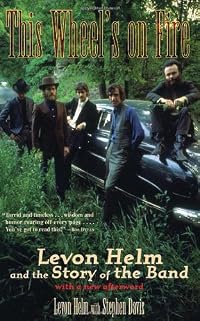
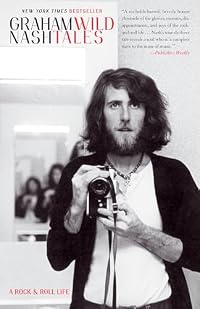
Scotland Wheel's On Fire fills in many of the cracks left by Testimony even if it was written well before.
Member Reviews
I’m not sure what to make of Robbie Robertson’s memoir, Testimony.
Jaime Royal Robertson, who died in 2023, was lead guitarist for The Band from its 1959 beginning as The Hawks backing Canadian singer Ronnie Hawkins in Canada, through their time as Bob Dylan’s backing band (when they became The Band), followed by six albums of their own, and until their breakup in 1976.
In that year, Martin Scorsese filmed their farewell concert, The Last Waltz, and that closes the book.
Robertson is generally acknowledged as the primary songwriter for the band, but this is not without some controversy. For example, he gets sole credit for one of their most enduring, popular, and influential songs, The Weight but this was later disputed by several show more band members, most notably drummer Levon Helm, who claimed in his memoir that Robertson either finagled or outright stole the credit from other band members.
In Testimony, Robertson does not address this even though Helm died in 2012, some four years before Robertson’s book came out. It’s possible Robertson doesn’t discuss because his book only goes up to the 1976 post-The Last Waltz breakup and most of the acrimony by his band mates was expressed in ensuing years. Maybe.
In fact, Robertson doesn’t talk about the well known problems within The Band much at all, other than to say he was concerned about the heavy drug use by some members. The impression Robertson gives is that he didn’t have a drug problem, but this is contradicted by the recent TV series Mr Scorsese, in which the director talks candidly about his excessive cocaine use for several years, mostly in the company of the equally indulgent Robbie Robertson.
What Robertson projects in Testimony is that The Band was a close knit “band of brothers”, with whom he took great pains to ensure songwriting credits, and whose drug use concerned him greatly. He talks of Helm as his closest “brother”, even though Helm and several other band members expressed their dissatisfaction with Robertson’s overbearing manner and claiming of too much credit for the group’s success.
Aside from that, Testimony is really easy to read, well structured (it bounces between his childhood and the band’s early history), and on the whole very well written.
I was a bit disappointed that it stopped before Robertson’s solo career as I’m as much a fan of his solo albums as that of The Band.
I was also a bit nagged that such an articulate writer, consummate songwriter and extremely gifted country / blues / rock guitarist has very little to say about the songs and music, other than in very broad, exalted terms. When he describes his exposure to musical greats, he writes of ecstatic, sometimes slightly hysterical experiences, but without much technical detail.
He doesn’t even explain how he crafted the lyrics to some of his classic songs, just “the words came to me”. It’s a relief when Jimi Hendrix shows him how to string a guitar so it’ll stay in tune even through excessive use of the tremolo bar. OK, maybe that’s not the content that everyone reads books like this for, but I do.
Robertson is also a terrible (or perhaps, to be fair, an excellent) name dropper. And yes, that is also what I read music bios for, but he does go a bit over the top.
Still, 500 pages passes very quickly, and Testimony is mostly very enjoyable. I just felt it was not the whole story and a bit too self-aggrandising. My impression of one of my rock heroes was left a little tarnished. show less
Jaime Royal Robertson, who died in 2023, was lead guitarist for The Band from its 1959 beginning as The Hawks backing Canadian singer Ronnie Hawkins in Canada, through their time as Bob Dylan’s backing band (when they became The Band), followed by six albums of their own, and until their breakup in 1976.
In that year, Martin Scorsese filmed their farewell concert, The Last Waltz, and that closes the book.
Robertson is generally acknowledged as the primary songwriter for the band, but this is not without some controversy. For example, he gets sole credit for one of their most enduring, popular, and influential songs, The Weight but this was later disputed by several show more band members, most notably drummer Levon Helm, who claimed in his memoir that Robertson either finagled or outright stole the credit from other band members.
In Testimony, Robertson does not address this even though Helm died in 2012, some four years before Robertson’s book came out. It’s possible Robertson doesn’t discuss because his book only goes up to the 1976 post-The Last Waltz breakup and most of the acrimony by his band mates was expressed in ensuing years. Maybe.
In fact, Robertson doesn’t talk about the well known problems within The Band much at all, other than to say he was concerned about the heavy drug use by some members. The impression Robertson gives is that he didn’t have a drug problem, but this is contradicted by the recent TV series Mr Scorsese, in which the director talks candidly about his excessive cocaine use for several years, mostly in the company of the equally indulgent Robbie Robertson.
What Robertson projects in Testimony is that The Band was a close knit “band of brothers”, with whom he took great pains to ensure songwriting credits, and whose drug use concerned him greatly. He talks of Helm as his closest “brother”, even though Helm and several other band members expressed their dissatisfaction with Robertson’s overbearing manner and claiming of too much credit for the group’s success.
Aside from that, Testimony is really easy to read, well structured (it bounces between his childhood and the band’s early history), and on the whole very well written.
I was a bit disappointed that it stopped before Robertson’s solo career as I’m as much a fan of his solo albums as that of The Band.
I was also a bit nagged that such an articulate writer, consummate songwriter and extremely gifted country / blues / rock guitarist has very little to say about the songs and music, other than in very broad, exalted terms. When he describes his exposure to musical greats, he writes of ecstatic, sometimes slightly hysterical experiences, but without much technical detail.
He doesn’t even explain how he crafted the lyrics to some of his classic songs, just “the words came to me”. It’s a relief when Jimi Hendrix shows him how to string a guitar so it’ll stay in tune even through excessive use of the tremolo bar. OK, maybe that’s not the content that everyone reads books like this for, but I do.
Robertson is also a terrible (or perhaps, to be fair, an excellent) name dropper. And yes, that is also what I read music bios for, but he does go a bit over the top.
Still, 500 pages passes very quickly, and Testimony is mostly very enjoyable. I just felt it was not the whole story and a bit too self-aggrandising. My impression of one of my rock heroes was left a little tarnished. show less
A caveat concerning this review is that I read Robertson's Testimony just after reading Helm's This Wheel's On Fire, and it is safe to say that the two accounts do not mesh well in certain areas. To name a few, would be the treatment of Muddy Waters at the Last Waltz, how the other band members felt about the Last Waltz to begin with, why Richard Manual stopped writing, and the biggie, the publishing.
The way the publishing was handled was the primary cause of animosity between Robertson and Helm; Robertson barely touches upon it, and quite frankly, his account is not very believable. Helm addresses it throughout his book, and while he does sound like a musician scorned, he consistently sticks up for his band mates, and history seems to show more bear him out.
Testimony itself is very well written, extremely entertaining, and most insightful. Even though it is close to 500 pages, it is still a fast read. But if you are looking for a history of The Band, this may leave you wanting a bit. This book is mostly about Robertson, and while he is an incredible musician and song writer, who lived through one of the most transcendent eras in Rock 'N' Roll, this book often crosses the line from a Who's Who of the period to an exercise in name dropping.
Mostly, if you want to get to better know the members who comprised The Band, I would advise you to get Helm's book; Helm does a great job of developing each member's character throughout his narrative. Robertson too often refers to his band mates as 'the guys' and sometimes gives an obligatory one line description of each, but that is it. They remain cardboard characters.
Finally, at the very end of the book, Robertson describes the day after the Last Waltz when the group was to meet in a recording studio and no one shows up. That's how he ends the book. It is infuriating. If you read Helm's book, well you would know where everyone was on that day. Robertson too often demonstrates his distance from his band mates, which was the complaint about him in the first place.
To summarize, this is the lowest rating that I ever gave a book that I so enjoyed reading. I guess the reason being was that I was a bit frustrated with it. Oh, and Helm's book goes beyond the Last Waltz, he painfully describes both Manuel's and Danko's deaths. Testimony was far better written than Wheel's On Fire, but it is not as satisfying. show less
The way the publishing was handled was the primary cause of animosity between Robertson and Helm; Robertson barely touches upon it, and quite frankly, his account is not very believable. Helm addresses it throughout his book, and while he does sound like a musician scorned, he consistently sticks up for his band mates, and history seems to show more bear him out.
Testimony itself is very well written, extremely entertaining, and most insightful. Even though it is close to 500 pages, it is still a fast read. But if you are looking for a history of The Band, this may leave you wanting a bit. This book is mostly about Robertson, and while he is an incredible musician and song writer, who lived through one of the most transcendent eras in Rock 'N' Roll, this book often crosses the line from a Who's Who of the period to an exercise in name dropping.
Mostly, if you want to get to better know the members who comprised The Band, I would advise you to get Helm's book; Helm does a great job of developing each member's character throughout his narrative. Robertson too often refers to his band mates as 'the guys' and sometimes gives an obligatory one line description of each, but that is it. They remain cardboard characters.
Finally, at the very end of the book, Robertson describes the day after the Last Waltz when the group was to meet in a recording studio and no one shows up. That's how he ends the book. It is infuriating. If you read Helm's book, well you would know where everyone was on that day. Robertson too often demonstrates his distance from his band mates, which was the complaint about him in the first place.
To summarize, this is the lowest rating that I ever gave a book that I so enjoyed reading. I guess the reason being was that I was a bit frustrated with it. Oh, and Helm's book goes beyond the Last Waltz, he painfully describes both Manuel's and Danko's deaths. Testimony was far better written than Wheel's On Fire, but it is not as satisfying. show less
Boy...I got to the end of this thinking, "I don't think I really wanted to know that much about Robbie Robertson." There were entertaining parts (like the whole mafia family thing), and I did (mostly) get what I came for in learning more about the creative process within The Band, a group whose output makes me highly nostalgic, which is why I'm bumping this to 3 stars...though not without feeling highly suspect about it all. It's a memoir, so to say that it felt one-sided is perhaps moot, but it definitely felt a bit too self-aggrandizing, especially in light of what other band members had reported over the years. It was also silly of me to not remember, going into this, how anything connected to Bob Dylan is just one big Boys' Club, show more and it really wore me down to hear Robertson talk about women. That's great he has a photographic memory, but I don't really need to hear about all the special women he bagged while on tour with The Hawks. It's rock'n'roll; I get it...I know it's happening regardless of what you say. But to reveal as much as he did also lets on to the misogyny and abuse going on. He couldn't even talk about women artists as peers--in nearly every instance, he talks about their appearance before their talent. It really bummed me out.
So...I guess I got a lot from this memoir, but it wasn't quite what I was expecting, and it wasn't flattering. show less
So...I guess I got a lot from this memoir, but it wasn't quite what I was expecting, and it wasn't flattering. show less
I enjoyed this book a a lot more than I thought I would. I kind of expected Robbie to include a lot of myth making (as he did in the interview segments of The Last Waltz) and maybe more name-dropping; I also thought he would be getting even with some of the things that other Band members, notably Helm, said about him over the years.
I was wrong. Robertson's prose is lean and descriptive, and he's good at capturing characterizations. His characterizations of Band members are warm and seem, from listening to them over the decades, accurate as to their talents and shortcomings. He doesn't try to counter some charges as the others, or not explicitly, but presents the story as he sees it without arguing.
In the end, it's an engaging book. show more Oftentimes funny, and he doesn't shy away from his own problems (notably, drugs, though not as bad as some of his Bandmates, and womanizing). I very much enjoyed his descriptions of how the Band worked in its early days. His characterization of Body Dylan was interesting, mostly because Bob was more of a bandmate and collaborator to him than a hero figure.
Towards the end, before The Last Waltz, the book feels a bit name-droopy, he talks about his friendships (and sometimes affairs) with such as Joni Mitchell, Carly Simon, David Geffen, Martin Scorsese, Jimi Hendrix, etc. etc. It feels a bit tiresome at the time, but on the other hand, this is Robbie Robertson, and if you had the likes of Michaelango Antioni visiting you, wouldn't you make sure to mention that in your memoirs? And also, his characterizations of many of these people are fascinating.
Finally, it's interesting and likely that he ends the book after The Last Waltz. His life became a lot less, what, groundbreaking after that. It seems this may have been a late decision, as many things he mentions, notably his wife's nascent drinking problem, are left unfinished.
All in all, a good book. Not up to the heights of the recent Springsteen, but if you care about The Band, a must read. show less
I was wrong. Robertson's prose is lean and descriptive, and he's good at capturing characterizations. His characterizations of Band members are warm and seem, from listening to them over the decades, accurate as to their talents and shortcomings. He doesn't try to counter some charges as the others, or not explicitly, but presents the story as he sees it without arguing.
In the end, it's an engaging book. show more Oftentimes funny, and he doesn't shy away from his own problems (notably, drugs, though not as bad as some of his Bandmates, and womanizing). I very much enjoyed his descriptions of how the Band worked in its early days. His characterization of Body Dylan was interesting, mostly because Bob was more of a bandmate and collaborator to him than a hero figure.
Towards the end, before The Last Waltz, the book feels a bit name-droopy, he talks about his friendships (and sometimes affairs) with such as Joni Mitchell, Carly Simon, David Geffen, Martin Scorsese, Jimi Hendrix, etc. etc. It feels a bit tiresome at the time, but on the other hand, this is Robbie Robertson, and if you had the likes of Michaelango Antioni visiting you, wouldn't you make sure to mention that in your memoirs? And also, his characterizations of many of these people are fascinating.
Finally, it's interesting and likely that he ends the book after The Last Waltz. His life became a lot less, what, groundbreaking after that. It seems this may have been a late decision, as many things he mentions, notably his wife's nascent drinking problem, are left unfinished.
All in all, a good book. Not up to the heights of the recent Springsteen, but if you care about The Band, a must read. show less
In Testimony, this wheel's not quite on fire, and the cup's only half full. The Band is in my top 5 of all time, but I was more a Levon woman than Robbie. He had the reputation of being "it's all about me" which now I see, if his memoir is to be believed, is more that Robbie had more ambition for them than any other single member. He's a good writer as well as being a great songwriter and musician.
One quarter of the book is about The Hawks, one quarter about Dylan, one quarter about The Band. There are some truly outstanding moments. Musicians such as Jimi Hendrix, Van Morrison, and the Beatles (sans Paul) just seem to meander in and out to jam. There's also a great deal of humor and funny stories. My favorite is when Robbie's show more girlfriend Dominique tells Joni Mitchell to put down her guitar and stop singing so they could all talk!
The Last Waltz, the Band's final concert, ends the book. What? Rick, Richard, and Levon have all died. No mention of that at all. Surprising and I can see no reason. show less
One quarter of the book is about The Hawks, one quarter about Dylan, one quarter about The Band. There are some truly outstanding moments. Musicians such as Jimi Hendrix, Van Morrison, and the Beatles (sans Paul) just seem to meander in and out to jam. There's also a great deal of humor and funny stories. My favorite is when Robbie's show more girlfriend Dominique tells Joni Mitchell to put down her guitar and stop singing so they could all talk!
The Last Waltz, the Band's final concert, ends the book. What? Rick, Richard, and Levon have all died. No mention of that at all. Surprising and I can see no reason. show less
This was a thrilling ride for the whole way through. Robertson manages to weave clocks of story together to form a coherent, persuasive, defining, and momentous whole. There are so many anecdotes and short snippets here to savour and take solace in. Being a huge member of The Band, I also found that (since the work revolved around its inception and duration) that this effectually served as both a prime piece for Robertson's life as well as The Band's career. Overall, it was a great ride and I loved every minute of it.
5 stars.
5 stars.
caveat: i am a giant 'band' fan and also played his solo debut robbie robertson (1987) on repeat through most of 87/88 (and which has a track called testimony on it). which is to say, i was a bit stupid-excited for this book.
robertson is a storyteller as a songwriter, and that transfers well to his memoir. there wasn't a huge amount of new information for me in testimony, yet it was still very enjoyable and engaging. while, of course, this is only robertson's perspective on the years spanning his time with ronnie hawkins, the hawks, and the band (this memoir really only covers this specific era, with a bit of robertson's early life starting things off), it feels sensitive and respectful towards the other players, even when robertson is show more writing about the harder times they endured personally, and professionally. (and it's telling what was left out, given the ink that has previously been spilled in the media over animosities.) i hope that is the case, anyway... the sensitivity. i love all of the guys in the band. there is no 'favourite beatle' for me -- though if forced (forced) to choose, hello rick danko! robertson somehow manages to convey both a focused yet zen personality, which i am not sure if i am totally buying into. (heh! sorry.) but it sure does help with the flow of the story.
a couple of 'yeah.... but?' moments cropped up for me during the read, where i was left with the feeling of wanting more: a) robertson references photographs and photo shoots quite a bit, yet the 2 sections containing images - thought wonderful to see - felt sparse. i would have loved a bit more photographic support, though recognize that rights may have been tricky to negotiate/acquire. b) some things i thought he might write about just weren't covered. one example, you know how in the last waltz interviews with the guys are interspersed with the musical performances? i would have really dug reading about that aspect of the production. but these are pretty minor quibbles on my part.
overall, i keep thinking this book is a lovely reflection on a pretty extraordinary time in the music world. also, #GoCanada show less
robertson is a storyteller as a songwriter, and that transfers well to his memoir. there wasn't a huge amount of new information for me in testimony, yet it was still very enjoyable and engaging. while, of course, this is only robertson's perspective on the years spanning his time with ronnie hawkins, the hawks, and the band (this memoir really only covers this specific era, with a bit of robertson's early life starting things off), it feels sensitive and respectful towards the other players, even when robertson is show more writing about the harder times they endured personally, and professionally. (and it's telling what was left out, given the ink that has previously been spilled in the media over animosities.) i hope that is the case, anyway... the sensitivity. i love all of the guys in the band. there is no 'favourite beatle' for me -- though if forced (forced) to choose, hello rick danko! robertson somehow manages to convey both a focused yet zen personality, which i am not sure if i am totally buying into. (heh! sorry.) but it sure does help with the flow of the story.
a couple of 'yeah.... but?' moments cropped up for me during the read, where i was left with the feeling of wanting more: a) robertson references photographs and photo shoots quite a bit, yet the 2 sections containing images - thought wonderful to see - felt sparse. i would have loved a bit more photographic support, though recognize that rights may have been tricky to negotiate/acquire. b) some things i thought he might write about just weren't covered. one example, you know how in the last waltz interviews with the guys are interspersed with the musical performances? i would have really dug reading about that aspect of the production. but these are pretty minor quibbles on my part.
overall, i keep thinking this book is a lovely reflection on a pretty extraordinary time in the music world. also, #GoCanada show less
Members
- Recently Added By
Lists

Best Biographies, Autobiographies and Memoirs
464 works; 156 members

Books Read in 2016
4,666 works; 197 members
Author Information

20+ Works 907 Members
Robbie Robertson was born on July 5, 1943 in Toronto, Canada. He is most known for his work as lead guitarist for the music group "The Band", which began the Americana music genre. As a songwriter, Robertson wrote "The Night They Drove Old Dixie Down" and "Broken Arrow" among many others. His talent was recognized when he was inducted into the show more Rock and Roll Hall of Fame and the Canadian Music Hall of Fame. He also worked as a soundtrack producer and composer when he teamed up with Martin Scorsese on the fims: The Last Waltz, Raging Bull and Casino. He also became an author with his titles Testimony and Hiawatha and the Peacemaker. (Bowker Author Biography) show less
Awards and Honors
Awards
Distinctions
The Guardian Book of the Day (2016-12-08)
Common Knowledge
- Canonical title
- Testimony: A Memoir
- People/Characters
- Robbie Robertson; Bob Dylan; Albert Grossman; Levon Helm; Rick Danko; Richard Manuel (show all 9); Garth Hudson; Van Morrison; Ronnie Hawkins
- Important places
- Woodstock, New York, USA; Toronto, Ontario, Canada
- Important events
- The Last Waltz (1976-11-25)
- Blurbers
- Scorcese, Martin; Wenner, Jann S.; Geffen, David
Classifications
Statistics
- Members
- 278
- Popularity
- 115,136
- Reviews
- 15
- Rating
- (4.02)
- Languages
- English, Spanish
- Media
- Paper, Audiobook, Ebook
- ISBNs
- 17
- UPCs
- 1
- ASINs
- 4