On This Page
Description
Gaius Petrius Ruso is a divorced and down-on-his-luck army doctor who has made the rash decision to seek his fortune in an inclement outpost of the Roman Empire, namely Britannia. His arrival in Deva (more commonly known as Chester, England) does little to improve his mood, and after a straight thirty-six-hour shift at the army hospital, he succumbs to a moment of weakness and rescues an injured slave girl, Tilla, from the hands of her abusive owner.Now he has a new problem: a slave who show more won't talk, can't cook, and drags trouble in her wake. Before he knows it, Ruso is caught in the middle of an investigation into the deaths of prostitutes working out of the local bar. A few years earlier, after he rescued Emperor Trajan from an earthquake in Antioch, Ruso seemed headed for glory; now he's living among heathens in a vermin-infested bachelor pad and must summon all his forensic knowledge to find a killer who may be after him next. Who are the true barbarians, the conquered or the conquerors? It's up to Ruso-certainly the most likeable sleuth to come out of the Roman Empire-to discover the truth. With a gift for comic timing and historic detail, Ruth Downie has conjured an ancient world as raucous and real as our own. show lessTags
Recommendations



Member Recommendations
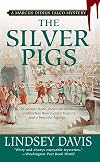
ianturton If you like roman detective stories like this one you'll love this one too.
20
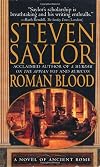
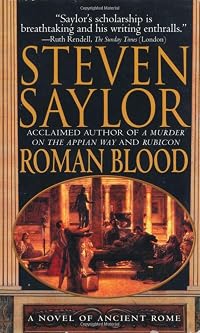
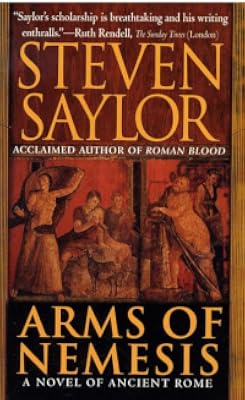
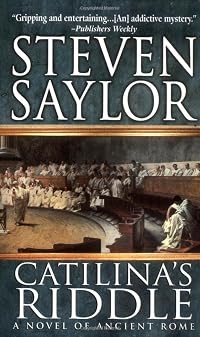
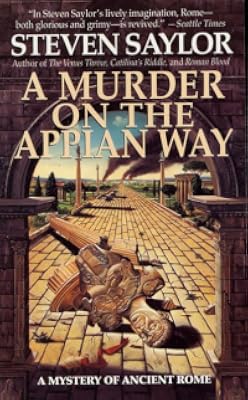
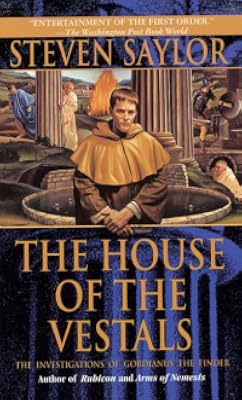
bookfitz Readers of books by Ruth Downie may also enjoy Steven Saylor's Roman Blood, which is another historical novel that takes place in Ancient Rome. Roman Blood and the subsequent novels in the Sub Rosa series are set in Rome during the final days of the Roman Republic and follow the character Gordianus the Finder as he solves politically charged mysteries. Saylor's novels have been critically acclaimed for their historical details.
32
Member Reviews
Beyond all the stand out things about this first novel in the Medicus series (the engaging history, characters and plot) the thing that most impressed me was that this was a first novel, that grew out of a very short story submitted in a competition. Downie has a gift for story telling that comes across effortlessly (although she describes the process very much otherwise). Kudos also to her for not glossing over the things that we'd rightly find abhorrent in Roman Britain. Medicus isn't a man out of his time, but Downie makes his character sympathetic enough not to repel the modern reader. There's also hints of his potential for enlightenment over time through self reflection, under the constant bombardment of the slings and arrows of show more outrageous misfortune; and through the agency of Downie's other great creation, Tilla the British women. To say too much about her character - which is slowly revealed throughout this story would give too much away, but I can't think of a stronger more interesting female lead since Elisabeth Salander in Stieg Larsson's novels. show less
Gaius Petreius Ruso serves as a military doctor during the Roman occupation of Britannia, dealing with his over-meticulous hospital administrator, his wounded and mangled patients, and an unclaimed dead body washed to shore. And not just a dead body but a murdered body. During a moment of sleep-deprived vulnerability, he manages to pick up a half-dead slave girl who won't talk and can't cook, and winds up investigating the mysterious deaths of several prostitutes.
Ruso is a grumpy, tactless and utterly likeable sleuth. The banter between he and his roommate/rival/fellow doctor is funny, as are his encounters with the hospital administrator, who believes that protocol must be followed even when it makes no sense whatsoever. (Anyone who show more has dealt with these types of officials will understand Ruso's desire to throttle the man.) I often found myself laughing aloud. Not the usual sort of murder mystery fare. Fans of historical mysteries will enjoy this. show less
Ruso is a grumpy, tactless and utterly likeable sleuth. The banter between he and his roommate/rival/fellow doctor is funny, as are his encounters with the hospital administrator, who believes that protocol must be followed even when it makes no sense whatsoever. (Anyone who show more has dealt with these types of officials will understand Ruso's desire to throttle the man.) I often found myself laughing aloud. Not the usual sort of murder mystery fare. Fans of historical mysteries will enjoy this. show less
Gaius Petrius Ruso is doctor serving with a Roman legion in Britain. Not very long ago, he was married, a hero (he had saved the Emperor Trajan's life), and the elder son of a prosperous family in southern Gaul. Now he's divorced, his father has died leaving behind a mountain of debt, his brief notoriety is forgotten, and Trajan is dead. He's struggling to pay off his father's debts, with his brother at home in Gaul working to keep the real state of their finances quiet so that their efforts have time to work.
In the meantime, he's sharing a mouse-infested with another army doctor and the previous owner's former dog, who has produced a litter of puppies. They have no servant to clean and cook for them, and their lodgings show it. Ruso show more has spent an unpleasant night examining the body of a dead woman fished out of the harbor, and then a long day on medical rounds. He doesn't need to buy an injured slave girl to rescue her from her sadistic owner, especially when she's too injured to work, won't talk, and will cost more to feed than she's worth.
So of course he does.
While he's treating the girl and coaxing her to talk, he becomes not so much interested in as worried about the deaths of two bar girls, and the lack of any investigation into their deaths. He keeps hearing more than he wants to because, to get her out of the military hospital, he rents a room for the slave girl, who finally speaks enough to decide to go by the name Tilla, upstairs in the bar. Ruso starts asking questions, and things start to happen--a burning brand through the window of his house, a trowel dropped from a rooftop and missing him only because Tilla saw it and pushed him out of the way--and his financial situation gets more and more complicated. His life is further enlivened when the hospital administrator, who has been away, returns, and demands that Tilla be pledged as collateral for the large loan he's taken out from the thanksgiving fund, to help stave of bankruptcy at home.
Ruso is cranky, impatient, and kind and generous despite himself and despite his circumstances. He keeps asking questions even when it's hurting his chances for promotion and making his working life more difficult. Tilla is proud, independent, and has every intention of killing herself rather than working as a whore in a bar (her previous owner's plan for her). As they slowly learn to trust each other, Ruso learns more about the workings of this Roman British town than he wants to know, or is safe to know.
This is a fascinating look at Roman Britain, with engaging characters and a good mystery at the core of it. The solution manages to be both fair and unexpected. This is the first of a series, and I'll be reading more of them.
Recommended.
I borrowed this book from a friend. show less
In the meantime, he's sharing a mouse-infested with another army doctor and the previous owner's former dog, who has produced a litter of puppies. They have no servant to clean and cook for them, and their lodgings show it. Ruso show more has spent an unpleasant night examining the body of a dead woman fished out of the harbor, and then a long day on medical rounds. He doesn't need to buy an injured slave girl to rescue her from her sadistic owner, especially when she's too injured to work, won't talk, and will cost more to feed than she's worth.
So of course he does.
While he's treating the girl and coaxing her to talk, he becomes not so much interested in as worried about the deaths of two bar girls, and the lack of any investigation into their deaths. He keeps hearing more than he wants to because, to get her out of the military hospital, he rents a room for the slave girl, who finally speaks enough to decide to go by the name Tilla, upstairs in the bar. Ruso starts asking questions, and things start to happen--a burning brand through the window of his house, a trowel dropped from a rooftop and missing him only because Tilla saw it and pushed him out of the way--and his financial situation gets more and more complicated. His life is further enlivened when the hospital administrator, who has been away, returns, and demands that Tilla be pledged as collateral for the large loan he's taken out from the thanksgiving fund, to help stave of bankruptcy at home.
Ruso is cranky, impatient, and kind and generous despite himself and despite his circumstances. He keeps asking questions even when it's hurting his chances for promotion and making his working life more difficult. Tilla is proud, independent, and has every intention of killing herself rather than working as a whore in a bar (her previous owner's plan for her). As they slowly learn to trust each other, Ruso learns more about the workings of this Roman British town than he wants to know, or is safe to know.
This is a fascinating look at Roman Britain, with engaging characters and a good mystery at the core of it. The solution manages to be both fair and unexpected. This is the first of a series, and I'll be reading more of them.
Recommended.
I borrowed this book from a friend. show less
Gaius Petreius Ruso is an army medic with XX Legion in Deva, newly arrived from his last posting in Africa and very much aware that this is the empire's remotest outpost and therefore very far from civilisation. After a young woman's body is brought to the hospital, he reluctantly starts to ask questions; his life is further complicated by the fact that he bought on impulse, when sleep-deprived and slightly drunk, a female native slave who was being abused by her owner in the street.
This was surprisingly fun and engaging, with an understated comedic element to the narrative, which works very well in this fish-out-of-water variation. In addition to the interesting historical setting and insight into medical procedures 2,000 years ago, I show more particularly enjoyed the characterisation, which sheds some light on the ambivalent relationship between the Roman army, and its accompanying service personnel and traders, and the native population; there is a definite sense of simmering tensions between the natives and the incomers (the Romans view themselves as superior and regard the natives as uncivilised, whereas the native Britons resent the presence of the Romans who they rightly see as invaders; the resentment is even extended to those Britons who they see as fraternising with the Romans), including all the mutual mistrust that brings with it. Despite reminding Tilla every so often that he is her master and she his property, which makes their relationship all the more realistic, it is clear that Ruso is kind and generous at heart, so that readers are still able to root for and engage with him, and the novel shows how Ruso and Tilla develop a mutual respect for each other.
The mystery, such as it is, therefore necessarily takes a back seat, and it's obvious quite quickly who the perpetrator is, even though the motive is not revealed till the closing stages of the novel. Finally, the author's note draws the reader's attention to the situation of the working girls at Merula's bar, and draws parallels to modern slavery and people trafficking, even though they supposedly no longer have a place in our society. Recommended. show less
This was surprisingly fun and engaging, with an understated comedic element to the narrative, which works very well in this fish-out-of-water variation. In addition to the interesting historical setting and insight into medical procedures 2,000 years ago, I show more particularly enjoyed the characterisation, which sheds some light on the ambivalent relationship between the Roman army, and its accompanying service personnel and traders, and the native population; there is a definite sense of simmering tensions between the natives and the incomers (the Romans view themselves as superior and regard the natives as uncivilised, whereas the native Britons resent the presence of the Romans who they rightly see as invaders; the resentment is even extended to those Britons who they see as fraternising with the Romans), including all the mutual mistrust that brings with it. Despite reminding Tilla every so often that he is her master and she his property, which makes their relationship all the more realistic, it is clear that Ruso is kind and generous at heart, so that readers are still able to root for and engage with him, and the novel shows how Ruso and Tilla develop a mutual respect for each other.
The mystery, such as it is, therefore necessarily takes a back seat, and it's obvious quite quickly who the perpetrator is, even though the motive is not revealed till the closing stages of the novel. Finally, the author's note draws the reader's attention to the situation of the working girls at Merula's bar, and draws parallels to modern slavery and people trafficking, even though they supposedly no longer have a place in our society. Recommended. show less
The salacious underside of Roman-occupied Britain comes to life in Britisher Downie's debut. Gaius Petrius Ruso, a military medicus (or doctor), transfers to the 20th Legion in the remote Britannia port of Deva (now Chester) to start over after a ruinous divorce and his father's death. Things go downhill from there. His quarters are filthy and vermin-filled, and his superior at the hospital is a petty tyrant. Gaius rescues and buys an injured slave girl, Tilla, from her abusive master, but she refuses to talk, can't cook and costs more to keep than he can afford. Meanwhile, young women from the local bordello keep turning up dead, and nobody is interested in investigating. Gaius becomes a reluctant detective, but his sleuthing threatens show more to get him killed and leaves him scant time to work on the first-aid guide he's writing to help salvage his finances. Tilla plots her escape as she recovers from her injuries, and just when Ruso becomes attached to her, she runs away, complicating his personal life and his investigation. Through it all, Ruso wonders what has become of his life. Celebrated as a hero a few years before for rescuing Emperor Trajan from an earthquake, he's now sharing a residence with a doctor of questionable morals and a flurry of seemingly indestructible mice. This is an enjoyable book with nice mixes of dark humor, historical references, and mystery. While the dialogue and parts of the story can feel anachronistic, that also serves to make the story more accessible and there is a strong enough base of historical research to offset this. The major critique would be the slowness of the development. Parts of the book can get mired in minutiae. The story plods along to the ½ way point, picks up to a jog and get truly entertaining, and thing suddenly sprints to the end for a limpid finish. A strong effort and reason for seeking out more by Downie. show less
I was looking for a new historical crime fiction series and was pleased to discover this one set in the Ancient Roman Empire. Roman Army medic Gaius Petreius Ruso has just been stationed in Deva in Britannia and immediately finds himself involved, albeit very reluctantly, with investigating the matter of some young girls who have been murdered.
Deva historically was a legionary fortress and town in the Roman province of Britannia on the site of the modern city of Chester. It was built as part of the Roman army’s advance north against the Brigantes, Celtic Britons who in pre-Roman times controlled the largest section of what would become Northern England.
Ruso ends up taking on one of these Brigantes (or “natives” as the Romans show more call them) as a housemaid after he impulsively buys her. She was a slave who was injured, and it was clear her owner had no intent of getting her healed. As a doctor and a humanist he couldn't let that stand. The girl speaks only some Latin, and won’t give Ruso her name, so he ends up calling her Tilla. Far from being grateful, Tilla is way more assertive than a slave should be, and vexing to no end. But Ruso, who tries to civilize her in a “My Fair Lady” way, also grows accustomed to her face . . . .
Meanwhile, Ruso manages to solve the murders, locate (sort of by accident) the culprit, and figure out what to do about Tilla.
An Afterword by the author explains that she didn’t have much historical data to go on, but availed herself of what research she could, and applied her imagination for the rest of it. What she ascertained about ancient medical practices was especially illuminating and rewarding to learn.
Evaluation: I didn’t like the curmudgeonly Ruso much at first, but found, like Tilla did, that he kind of grows on you after awhile. Altogether, I assessed the book as “delightful” and immediately checked out the next installment. show less
Deva historically was a legionary fortress and town in the Roman province of Britannia on the site of the modern city of Chester. It was built as part of the Roman army’s advance north against the Brigantes, Celtic Britons who in pre-Roman times controlled the largest section of what would become Northern England.
Ruso ends up taking on one of these Brigantes (or “natives” as the Romans show more call them) as a housemaid after he impulsively buys her. She was a slave who was injured, and it was clear her owner had no intent of getting her healed. As a doctor and a humanist he couldn't let that stand. The girl speaks only some Latin, and won’t give Ruso her name, so he ends up calling her Tilla. Far from being grateful, Tilla is way more assertive than a slave should be, and vexing to no end. But Ruso, who tries to civilize her in a “My Fair Lady” way, also grows accustomed to her face . . . .
Meanwhile, Ruso manages to solve the murders, locate (sort of by accident) the culprit, and figure out what to do about Tilla.
An Afterword by the author explains that she didn’t have much historical data to go on, but availed herself of what research she could, and applied her imagination for the rest of it. What she ascertained about ancient medical practices was especially illuminating and rewarding to learn.
Evaluation: I didn’t like the curmudgeonly Ruso much at first, but found, like Tilla did, that he kind of grows on you after awhile. Altogether, I assessed the book as “delightful” and immediately checked out the next installment. show less
Gaius Peteius Ruso is a sad-sack doctor with a heart bigger than is convenient in this historical mystery that takes place in the Roman colony of Brittania. Burdened with family obligations he tries to make do with as little as possible to survive. He eats leftovers from his hospital, he shares a room in a building slated for demolition with another doctor, he has sold all of his good furniture, and has to forward advances on his salary back home to his brother to cover debts left by his deceased father in order to keep the farm in Gaul in his family's name. The last thing he needed was to buy a young slave with a broken arm and no housekeeping skills. Poking his nose into the death of a woman who was found in the river probably wasn't show more good for him either.
There is a wry sense of humor in this book as we follow him through his days and learn about the life of a doctor in a Roman military outpost.
The doorman was, as Priscus had claimed, quite dead. He lifted the man's shoulders, then lowered him onto the counter again and stepped away. There appeared to be more than one wound, and all were in the back. It did not look like self-defense.
There were a few scenes that seemed to be anachronistic but then I realized that they just showed that some things never changed. One scene reminded me of when I was undergoing surgery with local anesthesia and a little annoyed that the staff was discussing their plans for Christmas parties while I was awake and listening. In this story, Ruso and his friend are discussing the new emperor while setting Tilla's broken arm.
I liked this protagonist and will try to find more of this series. show less
There is a wry sense of humor in this book as we follow him through his days and learn about the life of a doctor in a Roman military outpost.
The doorman was, as Priscus had claimed, quite dead. He lifted the man's shoulders, then lowered him onto the counter again and stepped away. There appeared to be more than one wound, and all were in the back. It did not look like self-defense.
There were a few scenes that seemed to be anachronistic but then I realized that they just showed that some things never changed. One scene reminded me of when I was undergoing surgery with local anesthesia and a little annoyed that the staff was discussing their plans for Christmas parties while I was awake and listening. In this story, Ruso and his friend are discussing the new emperor while setting Tilla's broken arm.
I liked this protagonist and will try to find more of this series. show less
Members
- Recently Added By
Lists

Historical Fiction
889 works; 91 members

Best historical fiction set in the ancient world
126 works; 40 members

Best medical fiction
26 works; 17 members

Historical Fiction Lovers
88 works; 4 members

Roman Britain
42 works; 12 members

Authors from England
147 works; 4 members

Best Mysteries With a Historical Setting
292 works; 160 members
Author Information

14+ Works 3,842 Members
Some Editions
Awards and Honors
Awards
Distinctions
Series

Common Knowledge
- Canonical title
- Medicus
- Original title
- Medicus and the Disappearing Dancing Girls (2006) (2006)
- Alternate titles
- Ruso and the Disappearing Dancing Girls (2007) (2007)
- Original publication date
- 2006-08-03
- People/Characters
- Gaius Petreius Ruso (medicus, XX Legion Valeria Victrix); Tilla (slave); Valens (colleague of Ruso and medicus, XX Legion Valeria Victrix); Merula (bar owner and madam); Chloe (one of Merula's girls); Daphne (another of Merula's girls) (show all 13); Bassus (one of Merula's guards); Stichus (another of Merula's guards); Saufeia (deceased, one of Merula's girls); Asellina (deceased, another of Merula's girls); Priscus (hospital administrative officer); Albanus (clerk); Claudius Innocens (businessman, slaver-trader)
- Important places
- Deva, Britannia, Roman Empire (Chester | full name: Deva Victrix); Chester, Cheshire, England, UK (Deva); Britannia, Roman Empire
- Important events
- Death of Trajan & accession of Hadrian (117 AD/CE)
- Epigraph
- O diva ... / serves iturum Caesarem in ultimos / orbis Britannos // Oh, Goddess, / safeguard Caesar as he sets off for the remotest / regions of the Earth--Britain. -- Horace
- Dedication
- To Andy, with love
- First words
- Someone had washed the mud off the body, but as Gaius Petreius Ruso unwrapped the sheet, there was still a distinct smell of river water.
- Last words
- (Click to show. Warning: May contain spoilers.)Unfortunately.
- Publisher's editor
- Evans, Mari; Blake, Gillian
- Blurbers
- Simon, Scott
- Disambiguation notice
- Published under the names Medicus (US) and Medicus and the Disappearing Dancing Girls and Ruso and the Disappearing Dancing Girls (UK)
Classifications
Statistics
- Members
- 1,357
- Popularity
- 17,598
- Reviews
- 72
- Rating
- (3.59)
- Languages
- English, German
- Media
- Paper, Audiobook, Ebook
- ISBNs
- 27
- ASINs
- 10