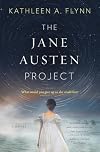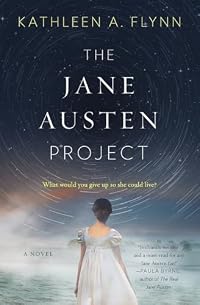
The Jane Austen Project
by Kathleen A. Flynn
On This Page
Description
Perfect for fans of Jane Austen, this engrossing debut novel offers an unusual twist on the legacy of one of the world's most celebrated and beloved authors: two researchers from the future are sent back in time to meet Jane and recover a suspected unpublished novel.London, 1815: Two travelers—Rachel Katzman and Liam Finucane—arrive in a field in rural England, disheveled and weighed down with hidden money. Turned away at a nearby inn, they are forced to travel by coach all night to show more London. They are not what they seem, but rather colleagues who have come back in time from a technologically advanced future, posing as wealthy West Indies planters—a doctor and his spinster sister. While Rachel and Liam aren't the first team from the future to "go back," their mission is by far the most audacious: meet, befriend, and steal from Jane Austen herself.
Carefully selected and rigorously trained by The Royal Institute for Special Topics in Physics, disaster-relief doctor Rachel and actor-turned-scholar Liam have little in common besides the extraordinary circumstances they find themselves in. Circumstances that call for Rachel to stifle her independent nature and let Liam take the lead as they infiltrate Austen's circle via her favorite brother, Henry.
But diagnosing Jane's fatal illness and obtaining an unpublished novel hinted at in her letters pose enough of a challenge without the continuous convolutions of living a lie. While her friendship with Jane deepens and her relationship with Liam grows complicated, Rachel fights to reconcile the woman she is with the proper lady nineteenth-century society expects her to be. As their portal to the future prepares to close, Rachel and Liam struggle with their directive to leave history intact and exactly as they found it...however heartbreaking that may prove.
. show less
Tags
Recommendations





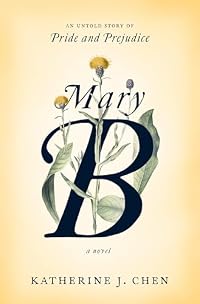
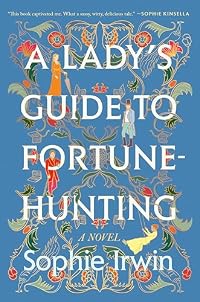
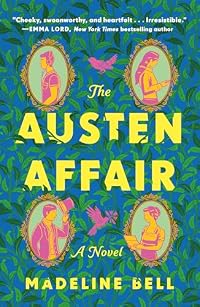
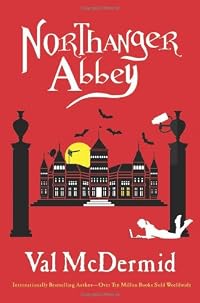
Member Recommendations

Member Reviews
I found the premise of "The Jane Austen Project", time travelers from our future being sent back to 1815 to inveigle their way into an intimate acquaintance with Jane Austen with a view of diagnosing the disease that would kill her in 1817 and retrieving a copy of her unpublished novel "The Watsons", irresistible
I was pleasantly surprised to find that this was much more than a good idea written up over a few hundred pages. "The Jane Austen Project" is well written, engaging and original.
The story is told from the point of view of Rachel, a physician with a history of working in disaster zones in her own time, who is passionate about meeting Jane and deeply curious about the disease that will end Jane's life.
Placing a strong, competent show more woman with a broad experience of the world and an expectation of being in charge of her own life into England in 1815 is a very effective way of highlighting the constraints placed on women at that time and the frustration and waste that they caused.
Rachel is a deeply imagined character that it is easy to become attached to. The future she comes from is tantalizingly different from today. That I wanted to know more about it and her life before the Jane Austen Project, is a sign of skill of the story teller. I was tantalized and intrigued. I came to realise that Rachel's past was as alien as the 1815 present the action takes place in.
I was surprised at how much tension I felt reading the book. I wanted to know what happened next. This wasn't an academic exercise or a passive homage to Jane Austen. It started as a difficult mission where failure could have disastrous consequences and became a personal and emotional journey for Rachel and those who's lives she touches.
Seeing the world of Jane Austen through the eyes of a woman from an unknown future but who has a detailed knowledge of Jane's life and works produced a kind of refraction of ideas and expectations that kept the novel fresh and made me think again about what I thought I knew of Jane Austen and her times.
Fans of Jane Austen will be fascinated by this book. People who only know Jane through various Mr Darcy movies will not feel left out but may find themselves intrigued. My interest in Jane Austen's books was revived to the extent that my next read will be "Persuasion", a Jane Austen novel that I've never read before.
Saskia Maarleveld did a competent job as a narrator but I was distracted by her inability to pronounce place names like "Berkley Square" and "Basingstoke" correctly.
This is Kathleen Flynn's debut novel, She's a copy editor at the New York Times. In this interview she discusses how the novel came about and what it was like for an editor to be edited.
I hope I see more work from her soon. show less
I was pleasantly surprised to find that this was much more than a good idea written up over a few hundred pages. "The Jane Austen Project" is well written, engaging and original.
The story is told from the point of view of Rachel, a physician with a history of working in disaster zones in her own time, who is passionate about meeting Jane and deeply curious about the disease that will end Jane's life.
Placing a strong, competent show more woman with a broad experience of the world and an expectation of being in charge of her own life into England in 1815 is a very effective way of highlighting the constraints placed on women at that time and the frustration and waste that they caused.
Rachel is a deeply imagined character that it is easy to become attached to. The future she comes from is tantalizingly different from today. That I wanted to know more about it and her life before the Jane Austen Project, is a sign of skill of the story teller. I was tantalized and intrigued. I came to realise that Rachel's past was as alien as the 1815 present the action takes place in.
I was surprised at how much tension I felt reading the book. I wanted to know what happened next. This wasn't an academic exercise or a passive homage to Jane Austen. It started as a difficult mission where failure could have disastrous consequences and became a personal and emotional journey for Rachel and those who's lives she touches.
Seeing the world of Jane Austen through the eyes of a woman from an unknown future but who has a detailed knowledge of Jane's life and works produced a kind of refraction of ideas and expectations that kept the novel fresh and made me think again about what I thought I knew of Jane Austen and her times.
Fans of Jane Austen will be fascinated by this book. People who only know Jane through various Mr Darcy movies will not feel left out but may find themselves intrigued. My interest in Jane Austen's books was revived to the extent that my next read will be "Persuasion", a Jane Austen novel that I've never read before.
Saskia Maarleveld did a competent job as a narrator but I was distracted by her inability to pronounce place names like "Berkley Square" and "Basingstoke" correctly.
This is Kathleen Flynn's debut novel, She's a copy editor at the New York Times. In this interview she discusses how the novel came about and what it was like for an editor to be edited.
I hope I see more work from her soon. show less
The Jane Austen Project is the perfect mix of sci-fi, Austen tribute and historical fiction. It’s unique in that I’ve never come across an Austen sci-fi (if there are others out there, point me in their direction!) – I’ve read modern adaptations and paranormal ones, but nothing that comes close to this!
In a future where meat is non-existent after some sort of disaster referred to as The Collapse, most things are 3-d printed, and time travel is a fairly common occurrence, there’s a group of people who are desperate to get Austen’s letters to her sister Cassandra (most of which were actually burned after Austen’s death) and her last, unfinished manuscript, The Watsons. At first I was highly confused as to why this mission show more was a priority – don’t get me wrong, I love Austen and would love to read anything and everything by her, yet this seemed a bit frivolous. However, towards the end of the book and after some wibbly-wobbly, timey-wimey happenings, it makes sense. Actually, maybe it makes sense before then and I just missed it.
All the characters are well done. Liam and Rachel have been extensively trained in order to successfully blend in during 1815, yet, understandably there are some tough times. No amount of acting classes and training scenarios can compare you for spontaneous human interaction. They are both doing their best to complete their mission while also internally fan-girling (or guy-ing) at being surrounded by Austen and her family. There’s also the added layer of their personalities being subtly similar to those of Lizzy and Darcy.
Jane Austen herself is just what I’d imagine she’d be like, from my limited readings about her life. Her brother Henry was my favorite of the Austen clan, however. He’s a gentleman, but unlike those in Austen’s novels, we get to see his more, realistic…er, manly side. Basically, he’s horny and flirty, ok? I was loving it! He falls somewhere in between the practiced manners of Bingley (or maybe even Tilney because of his sense of humor) and the saucy, flirtatiousness of Wickham and Willoughby.
Speaking of flirtatiousness, this book had more steamy scenes than I expected. In fact, I didn’t expect any steamy scenes! Henry isn’t the only one trying to heat things up. I was pleasantly surprised to find a few sexy times thrown in. You guys might be familiar with how I always harp on about Austen not letting her characters kiss. Little did I know how satisfying scenes that go beyond that would be! Scandalous!
The plot had me guessing what would happen up until the actual last page of the book. I was practically jumping out of my skin because the ending was going to decide whether I was going to give the book five stars or toss it out the window while swearing. Granted, I still would have recommended the book, had the ending gone differently, but it really would have dampened my satisfaction with the story up until that point.
If you like Austen adaptations, historical fiction and time travel then I highly recommend The Jane Austen Project! It gives off low key Austenland vibes (except way more intense because the characters are living the real damn deal) with a hint of Dark Matter (multiple realities) and I’m now declaring historical sci-fi to be my new favorite totally made up genre. I sincerely hope Flynn puts out another book soon (and I hope it’s in the same universe – I have ideas!) show less
In a future where meat is non-existent after some sort of disaster referred to as The Collapse, most things are 3-d printed, and time travel is a fairly common occurrence, there’s a group of people who are desperate to get Austen’s letters to her sister Cassandra (most of which were actually burned after Austen’s death) and her last, unfinished manuscript, The Watsons. At first I was highly confused as to why this mission show more was a priority – don’t get me wrong, I love Austen and would love to read anything and everything by her, yet this seemed a bit frivolous. However, towards the end of the book and after some wibbly-wobbly, timey-wimey happenings, it makes sense. Actually, maybe it makes sense before then and I just missed it.
All the characters are well done. Liam and Rachel have been extensively trained in order to successfully blend in during 1815, yet, understandably there are some tough times. No amount of acting classes and training scenarios can compare you for spontaneous human interaction. They are both doing their best to complete their mission while also internally fan-girling (or guy-ing) at being surrounded by Austen and her family. There’s also the added layer of their personalities being subtly similar to those of Lizzy and Darcy.
Jane Austen herself is just what I’d imagine she’d be like, from my limited readings about her life. Her brother Henry was my favorite of the Austen clan, however. He’s a gentleman, but unlike those in Austen’s novels, we get to see his more, realistic…er, manly side. Basically, he’s horny and flirty, ok? I was loving it! He falls somewhere in between the practiced manners of Bingley (or maybe even Tilney because of his sense of humor) and the saucy, flirtatiousness of Wickham and Willoughby.
Speaking of flirtatiousness, this book had more steamy scenes than I expected. In fact, I didn’t expect any steamy scenes! Henry isn’t the only one trying to heat things up. I was pleasantly surprised to find a few sexy times thrown in. You guys might be familiar with how I always harp on about Austen not letting her characters kiss. Little did I know how satisfying scenes that go beyond that would be! Scandalous!
The plot had me guessing what would happen up until the actual last page of the book. I was practically jumping out of my skin because the ending was going to decide whether I was going to give the book five stars or toss it out the window while swearing. Granted, I still would have recommended the book, had the ending gone differently, but it really would have dampened my satisfaction with the story up until that point.
If you like Austen adaptations, historical fiction and time travel then I highly recommend The Jane Austen Project! It gives off low key Austenland vibes (except way more intense because the characters are living the real damn deal) with a hint of Dark Matter (multiple realities) and I’m now declaring historical sci-fi to be my new favorite totally made up genre. I sincerely hope Flynn puts out another book soon (and I hope it’s in the same universe – I have ideas!) show less
This is a mash-up of different genres that shouldn't work together at all, but debut novelist Kathleen A. Flynn manages to make it all work. Rachel is a doctor working in the crisis zones of a world where things have gone badly wrong. There's been a "die-off" of species and each new environmental disaster brings new hardships. She's an avid reader of Austen's novels, so when she hears about a project to time travel back and obtain a novel that Austen never published, she applies and is accepted to be part of the team traveling to Regency England. Rachel is an entirely modern woman, who has created an independent life for herself. It's an adjustment learning how a woman in the nineteenth conducts herself and it isn't helped by pairing show more her with a stand-offish British actor. They pose as a brother and sister newly arrived in London after selling their plantation in Jamaica, and intend to become friends with Jane Austen's favorite brother, as a way of being introduced to Jane and from there to steal her manuscript.
Somehow this mix of modern chick-lit, dystopian time travel speculative fiction, historical novel about the life of Jane Austen and gentle romance all work wonderfully together. Flynn has done her research, on what life was like in early nineteenth century England, on Jane Austen's life and in thoroughly thinking through the time travel aspect of the tale. This isn't a story that hand-waves away the logistics and consequences of time travel, but wrestles with all of that in a very satisfying way. Rachel is an engaging narrator, being entirely modern and out-spoken in her thoughts, but careful to behave appropriately. My only minor quibble is the reverence with which Jane Austen is treated. I'm not sure any human being could be as relentlessly perfect as this version of Austen. show less
Somehow this mix of modern chick-lit, dystopian time travel speculative fiction, historical novel about the life of Jane Austen and gentle romance all work wonderfully together. Flynn has done her research, on what life was like in early nineteenth century England, on Jane Austen's life and in thoroughly thinking through the time travel aspect of the tale. This isn't a story that hand-waves away the logistics and consequences of time travel, but wrestles with all of that in a very satisfying way. Rachel is an engaging narrator, being entirely modern and out-spoken in her thoughts, but careful to behave appropriately. My only minor quibble is the reverence with which Jane Austen is treated. I'm not sure any human being could be as relentlessly perfect as this version of Austen. show less
Rachel and Liam, a doctor and an actor-turned-academic, are sent back in time to 1815. Their mission is to befriend Jane Austen’s family and uncover, amongst other things, an unpublished novel. This book impressed me even though -- or perhaps because -- it wasn’t always comfortable or to my taste. It had the potential to be a book I adored, if things had been slightly different, yet it is nevertheless a gripping and thought-provoking piece of storytelling, and I respect that.
Time travel allows for portraying Austen’s world with historical accuracy from the perspective of a woman with contemporary attitudes, who can comment on details that an Austen heroine wouldn’t mention or even be aware of. Time travel also creates show more interesting challenges and anxieties (beyond the easily-researched-and-anticipated physical discomforts of 19th century daily life): the pressures of maintaining a cover identity, of having to follow old-fashioned cultural norms to avoid suspicion; the need for Rachel to hide her medical expertise; the weirdness of befriending people knowing much about them that one must not betray -- personal details they wouldn’t readily share and information about their future; the uncertainty stemming from the possibility that Rachel and Liam will unintentionally change the future, and the risk that they will be stuck in the past.
But the biggest challenge is Rachel’s mission itself. Because the information we want, and can feel justified in having, about long-dead historical figures is not information we can demand from an acquaintance. Rachel needs to seem like a perfectly respectable 19th century woman so that she has the opportunity to develop a closer acquaintance with the Austen family -- but what Rachel is seeking is not the sort of things she feels entitled to from a friend.
On one hand, there is a high degree of wish fulfilment -- Rachel gets to meet Jane Austen! And Jane is so lively, observant and intelligent, the sort of person one would want to befriend even if she weren’t an important literary figure! But on the other hand, by revealing Jane Austen to be a real person, she becomes someone with a right to privacy. I liked that. And I liked that there were realistic consequences to what Rachel does. Good consequences as well as uncomfortable ones.
[...] and I was left with Jane Austen and my own sense of disbelief. How long had I anticipated this day, worked toward it, longed for it? And what I mostly felt was fear; I would have given anything to be at home reading one of her books instead. How can you possibly impress Jane Austen?
Also interesting: Rachel isn’t a stereotypical Austen fan. She’s content being single and confident with casual relationships -- she doesn’t “do tender feelings”. Yet even though she’s not much of a romantic, she obviously has a deep admiration for Austen and her work. (And because Rachel is used to working in remote and dangerous places, when she does develop unexpectedly romantic inclinations, it’s clear that it is more than physical attraction or a reaction to their intense situation.) Liam seems more of a romantic, and is as much a fan of Austen as Rachel is. show less
Time travel allows for portraying Austen’s world with historical accuracy from the perspective of a woman with contemporary attitudes, who can comment on details that an Austen heroine wouldn’t mention or even be aware of. Time travel also creates show more interesting challenges and anxieties (beyond the easily-researched-and-anticipated physical discomforts of 19th century daily life): the pressures of maintaining a cover identity, of having to follow old-fashioned cultural norms to avoid suspicion; the need for Rachel to hide her medical expertise; the weirdness of befriending people knowing much about them that one must not betray -- personal details they wouldn’t readily share and information about their future; the uncertainty stemming from the possibility that Rachel and Liam will unintentionally change the future, and the risk that they will be stuck in the past.
But the biggest challenge is Rachel’s mission itself. Because the information we want, and can feel justified in having, about long-dead historical figures is not information we can demand from an acquaintance. Rachel needs to seem like a perfectly respectable 19th century woman so that she has the opportunity to develop a closer acquaintance with the Austen family -- but what Rachel is seeking is not the sort of things she feels entitled to from a friend.
On one hand, there is a high degree of wish fulfilment -- Rachel gets to meet Jane Austen! And Jane is so lively, observant and intelligent, the sort of person one would want to befriend even if she weren’t an important literary figure! But on the other hand, by revealing Jane Austen to be a real person, she becomes someone with a right to privacy. I liked that. And I liked that there were realistic consequences to what Rachel does. Good consequences as well as uncomfortable ones.
[...] and I was left with Jane Austen and my own sense of disbelief. How long had I anticipated this day, worked toward it, longed for it? And what I mostly felt was fear; I would have given anything to be at home reading one of her books instead. How can you possibly impress Jane Austen?
Also interesting: Rachel isn’t a stereotypical Austen fan. She’s content being single and confident with casual relationships -- she doesn’t “do tender feelings”. Yet even though she’s not much of a romantic, she obviously has a deep admiration for Austen and her work. (And because Rachel is used to working in remote and dangerous places, when she does develop unexpectedly romantic inclinations, it’s clear that it is more than physical attraction or a reaction to their intense situation.) Liam seems more of a romantic, and is as much a fan of Austen as Rachel is. show less
From a future that follows a "Die-off," and when time travel is newly possible, Rachel and Liam are sent back to England in the year 1815 in order to obtain the manuscript of a lost novel by Jane Austen. While they are both Austen fans and scholars, their personalities are quite different, so as they struggle to live in a different world their approaches are quite different. The descriptions of 19th century London and English country living are vivid and fascinating. As Liam and Rachel assume their new identities and connive to get close to the Austen family, readers will be eager to see if their impersonation can work. The time travel conundrum of how and whether history can or should be altered by time travelers is hinted at show more throughout the novel, and then ultimately dominates the climax. A sequel would surely be welcome. show less
Colleagues Rachel Katzman and Liam Finucane have been sent on the most ambitious mission of their time travel institute since its inception: travel back to 1815 and enmesh themselves in the lives of the Austens in order to rescue a copy of "The Watsons," which due to a recently discovered letter has been proven to be completed rather than a fragment. However, while working their way into the lives of the family they must grapple with the question of whether there are other things they could change and what the repercussions would be.
I really enjoyed this historical science fiction novel. Flynn does an excellent job of creating a believable Jane Austen that is in line with the historical record we have. She also creates really compelling show more characters in Rachel and Liam althoughI found Liam too much of a Darcy-esque enigma and the ending a bit to quick, even if it is an homage to Austen's works . This is definitely light on the science fiction element - there isn't a lot of detail about the logistics of time travel but everything makes sense within the world. High appeal for Janeites, of course, but also for fans of historical fiction or time travel novels. show less
I really enjoyed this historical science fiction novel. Flynn does an excellent job of creating a believable Jane Austen that is in line with the historical record we have. She also creates really compelling show more characters in Rachel and Liam although
This book is like the little girl who had a little curl, right in the middle of her forehead... When it's good, it's really good---but when it's bad, it's horrid.
I absolutely LOVE the idea of this story. The time-travel element, (always so hokey but so, so appealing!) Jane, England, excellent imagery; not to mention immediate kudos to the publishing team for a period-correct Regency style dress on the cover. The story made me think about the fact that we really have no right to be delving into the private lives of famous people just because they're now dead...it made me wonder if I should read the book on Jane Austen's letters that I just received in the mail. It also gave a really interesting take on Cassandra. I always saw her as much show more more kind than this story makes her to be, but her abruptness and coldness fits well with the notion that she was Jane's defender in many ways. In fact, besides getting the ending everyone wanted in the most anticlimactic way possible, the only thing that super bugged me about this story was Raunchy Rachel.
I think this was supposed to be the story of a woman who finally discovers the difference between lust and love? Rachel's views on sex really took away from a brilliant story---it seemed weirdly out of place and immature in an otherwise excellently written book. Too bad the author didn't take a lesson from Austen and write something romantic with a character who had self-respect and allowed us to respect her too. Rachel is so forward and gross that one wonders why decent and respectable men are declaring their "unworthiness" in her presence. I feel like she should be clomping around in manure-coated cowboy boots and spitting tobacco. Nothing is "lovely" or "dear" about this woman.
The ending dialogue was badly written. Please, I need an alternate reality where the last 10 pages of this novel are rewritten with the same quality as the first 370ish. show less
I absolutely LOVE the idea of this story. The time-travel element, (always so hokey but so, so appealing!) Jane, England, excellent imagery; not to mention immediate kudos to the publishing team for a period-correct Regency style dress on the cover. The story made me think about the fact that we really have no right to be delving into the private lives of famous people just because they're now dead...it made me wonder if I should read the book on Jane Austen's letters that I just received in the mail. It also gave a really interesting take on Cassandra. I always saw her as much show more more kind than this story makes her to be, but her abruptness and coldness fits well with the notion that she was Jane's defender in many ways. In fact, besides getting the ending everyone wanted in the most anticlimactic way possible, the only thing that super bugged me about this story was Raunchy Rachel.
I think this was supposed to be the story of a woman who finally discovers the difference between lust and love? Rachel's views on sex really took away from a brilliant story---it seemed weirdly out of place and immature in an otherwise excellently written book. Too bad the author didn't take a lesson from Austen and write something romantic with a character who had self-respect and allowed us to respect her too. Rachel is so forward and gross that one wonders why decent and respectable men are declaring their "unworthiness" in her presence. I feel like she should be clomping around in manure-coated cowboy boots and spitting tobacco. Nothing is "lovely" or "dear" about this woman.
The ending dialogue was badly written. Please, I need an alternate reality where the last 10 pages of this novel are rewritten with the same quality as the first 370ish. show less
Members
- Recently Added By
Lists

Top Five Books of 2020
982 works; 349 members

KayStJ's to-read list
1,616 works; 11 members

Books Read in 2020
4,379 works; 124 members

2023 Update: The Best Twenty Books You've Read in the Past Five Years
40 works; 3 members

Books Read in 2024
4,623 works; 126 members
Author Information

1 Work 553 Members
Some Editions
Common Knowledge
- Canonical title
- The Jane Austen Project
- Original publication date
- 2017-05-02
- People/Characters
- Jane Austen; Rachel Katzman a.k.a. Mary Ravenswood; Liam Finucane a.k.a. Dr. William Ravenswood; Henry Austen; Cassandra Austen; Edward Austen Knight (show all 7); Eva Farmer
- Important places
- Chawton, Hampshire, England, UK; London, England, UK; Leatherhead, Surrey, England, UK
- Epigraph
- Go, go, go said the bird: human kind
Cannot bear very much reality.
Time past and time future
What might have been and what has been
Point to one end, which is always present.
-- T. S. ELIOT, "BURNT NORTON... (show all)" - Dedication
- To Jarek
- First words
- What kind of maniac travels in time?
- Last words
- (Click to show. Warning: May contain spoilers.)"We'll think of something."
- Blurbers
- Belfer, Lauren; James, Syrie; Byrne, Paula
Classifications
Statistics
- Members
- 553
- Popularity
- 53,320
- Reviews
- 51
- Rating
- (3.86)
- Languages
- English, Hungarian, Portuguese
- Media
- Paper, Audiobook, Ebook
- ISBNs
- 12
- ASINs
- 3