On This Page
Description
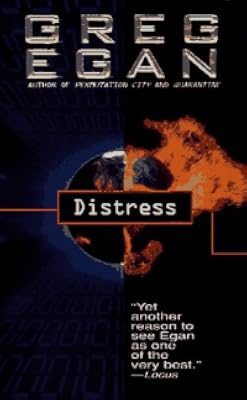
From the author of Quarantine and Axiomatic, this is the story of journalist Andrew Worth, who uncovers a violent battle to control the biggest question science will ever ask whilst investigating a Nobel Prize-winning quantum physicist.Tags
Recommendations
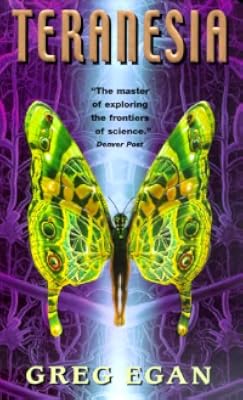
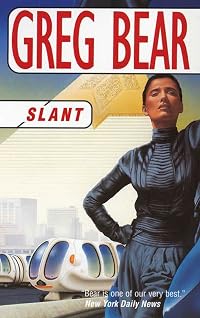
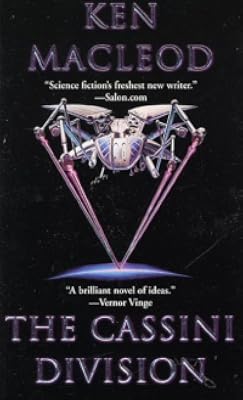
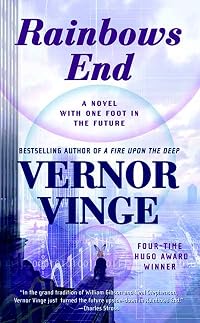
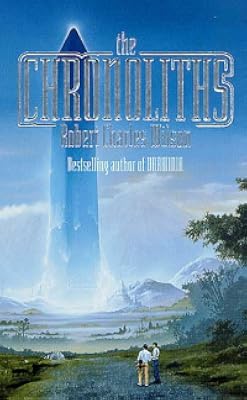
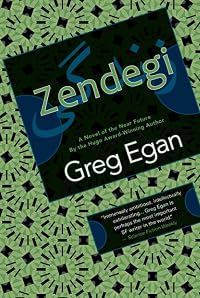
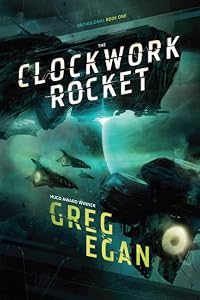

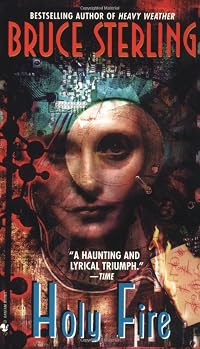
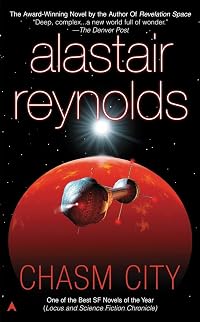
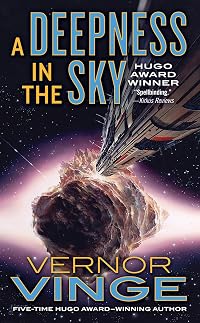
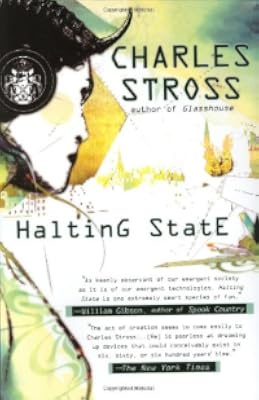
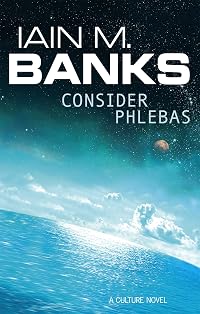

Member Recommendations
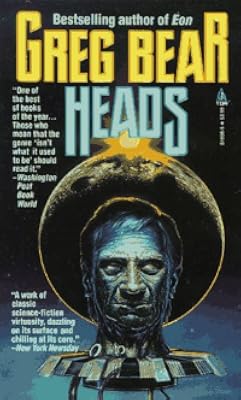
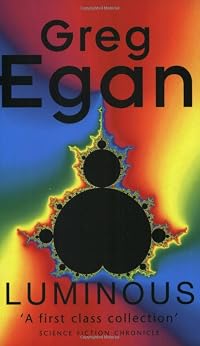
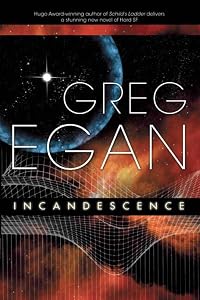
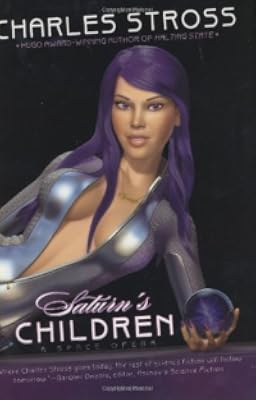
aulsmith These books share isolated anarchist communities and discoveries in physics that change everything.
Member Reviews
If this book was made into a movie (and it will not be), the tagline could be: "We're theoretical cosmologists. We get it right or universes die." Because that's what this is: a suspenseful thriller based on physics, metaphysics, philosophy, and cosmology. Admit it, you're impressed.
So. In Distress, a disaffected science/pseudoscience journalist goes off for what should be a peaceful, easy assignment: a documentary on a physicist who is about to announce her Theory of Everything. Except, well, shit gets weird.
For the first quarter of the book, I didn't think I'd be giving it four stars. The opening scene is dynamite, but -- not really indicative of the kind of book it's going to be. And I found the relationship stuff (the narrator and show more his girlfriend) honestly repelling. And the discussion of autism -- that is a WHOLE other bucket of issues, and while the ending made me get why he thought he needed to include it, I think that was, at best, a bad idea.
But. BUT. Then the book started to gain momentum. Partly it was that the worldbuilding started to take hold. I loved the detailed near-future world; the science advances, the biology changes, the sex and gender stuff. (I'm reading so much hard SF with great, interesting, thoughtful takes on gender these days, like, what even HAPPENED to this genre? If two genders ("normal" and "sex object/plot device") were good enough for the grandmasters, they are surely good enough for you, Greg Egan and Kim Stanley Robinson and Chris Moriarty.) And then, while I was wallowing in the glee of the worldbuilding, the actual main plot kicked in and started accelerating and every neuron in my brain shrieked "YES! MORE!" in unison.
As it happens, I've read a number of books lately about singularities. This is the best portrayal I've seen of one. It was great and I enjoyed the hell out of it. This story is too much the kind of thing I like for me to recommend it to anyone else, but I can say this: if this is your kind of thing, this is REALLY REALLY your kind of thing. show less
So. In Distress, a disaffected science/pseudoscience journalist goes off for what should be a peaceful, easy assignment: a documentary on a physicist who is about to announce her Theory of Everything. Except, well, shit gets weird.
For the first quarter of the book, I didn't think I'd be giving it four stars. The opening scene is dynamite, but -- not really indicative of the kind of book it's going to be. And I found the relationship stuff (the narrator and show more his girlfriend) honestly repelling. And the discussion of autism -- that is a WHOLE other bucket of issues, and while the ending made me get why he thought he needed to include it, I think that was, at best, a bad idea.
But. BUT. Then the book started to gain momentum. Partly it was that the worldbuilding started to take hold. I loved the detailed near-future world; the science advances, the biology changes, the sex and gender stuff. (I'm reading so much hard SF with great, interesting, thoughtful takes on gender these days, like, what even HAPPENED to this genre? If two genders ("normal" and "sex object/plot device") were good enough for the grandmasters, they are surely good enough for you, Greg Egan and Kim Stanley Robinson and Chris Moriarty.) And then, while I was wallowing in the glee of the worldbuilding, the actual main plot kicked in and started accelerating and every neuron in my brain shrieked "YES! MORE!" in unison.
As it happens, I've read a number of books lately about singularities. This is the best portrayal I've seen of one. It was great and I enjoyed the hell out of it. This story is too much the kind of thing I like for me to recommend it to anyone else, but I can say this: if this is your kind of thing, this is REALLY REALLY your kind of thing. show less
In a lot of ways, this is exactly what I hunt for in SF in general. Give me hard science, slather me in a hundred beautiful hard-science ideas, blow me away with high-tech biotech, computer science... and especially the hardcore physics geekery.
Mind you, this isn't any kind of soft cookie full of throwaway made-up terms. Egan goes for the jugular and explores as much science and possible science and fully-realized future societies changed by total control. Or somewhat total control. Lots of magic bullets for diseases and gene-editing and living by photosynthesis and hardware augments of all kinds including built-in video recording... such as that our MC uses as a reporter.
And all this is just a sweet setup for the beginning of the novel show more before he switches tracks from biotech to pure physics.
But wait, isn't that a bit too much for readers to digest? Concept after concept?
Oh, sure, probably, but I'm one of those readers who LOVE to be slathered in concepts and be blown away by smarts. :)
Once the novel switches from bio to physics and the hunt for the Theory Of Everything, things get wacky. The part of the world he's sent to is all kinds of Anarcho-syndicalism and what seems to be cults springing up around these leading scientists who are hot on the trail for not just the Grand Unified Theory, but the math model that encompasses everything. They're treating these theoreticians like gods. Or prophets. Or saints.
...And for a rather interesting reason.
This is a novel of Consensual Reality. :) They believe that whoever reaches the most popular model of reality will thereby CREATE that reality. It's a cool-as-hell idea supported by none other than REAL QUANTUM THEORIES. :)
And so we're thrown into a thriller that leads to chaos and warfare, political intrigue, religious nuttery, and no little exploration of sex in the rest of the pot.
I had a great time! I think this was my favorite of Greg Egan's Subjective Cosmology trilogy. Now, I should mention that the trilogy isn't a true trilogy in normal terms. They're a trilogy in theme only. They are very much standalone novels that don't intersect except in the Grand Idea and how much can be delved.
Honestly, I'm kinda blown away here. I expected him to be a rather decent author, but not one who is this adept at so many different fields of study and doesn't mind going wild (or brave) with the Big Ideas.
I've just gone from fan to fanboy. It took a few novels, but once I discovered how much depth and breadth he's willing to go across these few books, I'm honestly amazed. :)
So yeah. I think I'm going to go wild reading everything he's got. show less
Mind you, this isn't any kind of soft cookie full of throwaway made-up terms. Egan goes for the jugular and explores as much science and possible science and fully-realized future societies changed by total control. Or somewhat total control. Lots of magic bullets for diseases and gene-editing and living by photosynthesis and hardware augments of all kinds including built-in video recording... such as that our MC uses as a reporter.
And all this is just a sweet setup for the beginning of the novel show more before he switches tracks from biotech to pure physics.
But wait, isn't that a bit too much for readers to digest? Concept after concept?
Oh, sure, probably, but I'm one of those readers who LOVE to be slathered in concepts and be blown away by smarts. :)
Once the novel switches from bio to physics and the hunt for the Theory Of Everything, things get wacky. The part of the world he's sent to is all kinds of Anarcho-syndicalism and what seems to be cults springing up around these leading scientists who are hot on the trail for not just the Grand Unified Theory, but the math model that encompasses everything. They're treating these theoreticians like gods. Or prophets. Or saints.
...And for a rather interesting reason.
This is a novel of Consensual Reality. :) They believe that whoever reaches the most popular model of reality will thereby CREATE that reality. It's a cool-as-hell idea supported by none other than REAL QUANTUM THEORIES. :)
And so we're thrown into a thriller that leads to chaos and warfare, political intrigue, religious nuttery, and no little exploration of sex in the rest of the pot.
I had a great time! I think this was my favorite of Greg Egan's Subjective Cosmology trilogy. Now, I should mention that the trilogy isn't a true trilogy in normal terms. They're a trilogy in theme only. They are very much standalone novels that don't intersect except in the Grand Idea and how much can be delved.
Honestly, I'm kinda blown away here. I expected him to be a rather decent author, but not one who is this adept at so many different fields of study and doesn't mind going wild (or brave) with the Big Ideas.
I've just gone from fan to fanboy. It took a few novels, but once I discovered how much depth and breadth he's willing to go across these few books, I'm honestly amazed. :)
So yeah. I think I'm going to go wild reading everything he's got. show less
From the very first sentence, ‘Distress’ is an arresting and thought-provoking novel. The point of view character, Andrew, is a documentary film-maker. This very useful conceit allows for lengthy explanations of technologies and discussion of their implications, often in a pleasant interview format. The setting is 2055, while the novel was first published in 1995, twenty years ago now. I think it has aged remarkably well, predicting total ubiquity of the internet, handheld computer/phones (‘notebooks’), Siri (‘Sisiphus’), and email as the main form of communication (‘Hermes’ - coincidentally the actual name of the University of Cambridge email system). Egan doesn’t quite predict social media, however, other than show more ‘netzines’ which seem similar to blogs.
That’s neither here nor there, though. ‘Distress’ has much bigger ideas to play with. It is concerned with the implications of several areas of science and technology which, as one character neatly states, bring about ‘the whole battle for the H words’. To wit, what is Health when biotech can cure all disease? And what is Humanity, when people can radically modify their minds and bodies? Who defines each H word? And in addition, what is gender? These questions are asked early on, yet they pervade the entire book and are discussed from a number of angles by different characters with various agendas. Egan is impressively good at exploring such massive, complex issues without resorting to easy, pat answers. As if that level of philosophical enquiry was not sufficient, events on the artificial island of Stateless raise questions of political economy - can an anarchist state function? What preconditions assist in its survival? How can it defend itself? The core issue of the narrative, however, is the search for a Theory of Everything and its metaphysical consequences. Thus many of the characters exist in and around academia, whilst a great deal of the action concerns what must be the most dramatic academic conference ever held.
When describing the scope of the novel in retrospect, it’s hard to convincingly explain how Egan does all of these topics justice. Yet somehow it all hangs together very well. Andrew is an effective narrator because he doesn’t take up a lot of space in the narrative; it is least interesting when concerned with his domestic life. I was also pleased that, Andrew aside, no other main character was male. The dialogue manages not to be trite, mannered, or boring, which can be a real risk when, essentially, centring your novel on intellectual debates. Moreover, it was nuanced, with each person’s argued perspective carrying conviction. A memorable example:
My main criticism of the novel, however, is that I found the lengthy and vivid description of having cholera unpleasant. I realise that these were intended to emphasise the theme of mind and body being indissoluble, as human consciousness can only exist in a bag of living flesh, but it seemed an unnecessarily revolting way of doing so. Still, if you can handle the opening scene with the corpse, I’m sure you will cope. It is fair enough, I suppose, to avoid the convenient abstraction of technologies that can upload minds or otherwise allow humanity to transcend the inconveniences of our bodies. Egan is more interested in how we reconcile biology, society, and metaphysics. It’s been a long time since I’ve read sci-fi that covered such ground so well. ‘Distress’ will definitely linger in my mind. show less
That’s neither here nor there, though. ‘Distress’ has much bigger ideas to play with. It is concerned with the implications of several areas of science and technology which, as one character neatly states, bring about ‘the whole battle for the H words’. To wit, what is Health when biotech can cure all disease? And what is Humanity, when people can radically modify their minds and bodies? Who defines each H word? And in addition, what is gender? These questions are asked early on, yet they pervade the entire book and are discussed from a number of angles by different characters with various agendas. Egan is impressively good at exploring such massive, complex issues without resorting to easy, pat answers. As if that level of philosophical enquiry was not sufficient, events on the artificial island of Stateless raise questions of political economy - can an anarchist state function? What preconditions assist in its survival? How can it defend itself? The core issue of the narrative, however, is the search for a Theory of Everything and its metaphysical consequences. Thus many of the characters exist in and around academia, whilst a great deal of the action concerns what must be the most dramatic academic conference ever held.
When describing the scope of the novel in retrospect, it’s hard to convincingly explain how Egan does all of these topics justice. Yet somehow it all hangs together very well. Andrew is an effective narrator because he doesn’t take up a lot of space in the narrative; it is least interesting when concerned with his domestic life. I was also pleased that, Andrew aside, no other main character was male. The dialogue manages not to be trite, mannered, or boring, which can be a real risk when, essentially, centring your novel on intellectual debates. Moreover, it was nuanced, with each person’s argued perspective carrying conviction. A memorable example:
”No-one can deal with an unknown chance of the end of the universe. How many people can you kill, for a cause like that? One? A hundred? A million? It’s like… trying to manipulate an infinitely heavy weight, on the end of an infinitely long lever. However fine your judgement is, you know it can’t be good enough. All you can do is admit that...”
My main criticism of the novel, however, is that I found the lengthy and vivid description of having cholera unpleasant. I realise that these were intended to emphasise the theme of mind and body being indissoluble, as human consciousness can only exist in a bag of living flesh, but it seemed an unnecessarily revolting way of doing so. Still, if you can handle the opening scene with the corpse, I’m sure you will cope. It is fair enough, I suppose, to avoid the convenient abstraction of technologies that can upload minds or otherwise allow humanity to transcend the inconveniences of our bodies. Egan is more interested in how we reconcile biology, society, and metaphysics. It’s been a long time since I’ve read sci-fi that covered such ground so well. ‘Distress’ will definitely linger in my mind. show less
Ok ... technically that 5 star rating isn't exactly deserved. Yes, i liked the book, but it's no egan's best. It had some weaknesses.
So, why 5 stars? When I started reading this I thought that Egan was riding a bit on some of the more recent trends with the gender pronouns, genders in general, the dystopian news stuff and the general zeigeist he expressed, especially in the first third. So I was more than a little surprised when I went to check reviews and noticed that this bookwas published in 1995. I guess Egan was ahead on this one, but this time in the sociological sense as well as the sf sense.
starting from the middle, the book turned more into a relatively standard cyberpunk-ish techno-thriller, with a few nice mindfuck aspects. show more The science was ok, but I thought some of Egan's other books were quite a bit better on that front. show less
So, why 5 stars? When I started reading this I thought that Egan was riding a bit on some of the more recent trends with the gender pronouns, genders in general, the dystopian news stuff and the general zeigeist he expressed, especially in the first third. So I was more than a little surprised when I went to check reviews and noticed that this bookwas published in 1995. I guess Egan was ahead on this one, but this time in the sociological sense as well as the sf sense.
starting from the middle, the book turned more into a relatively standard cyberpunk-ish techno-thriller, with a few nice mindfuck aspects. show more The science was ok, but I thought some of Egan's other books were quite a bit better on that front. show less
(...)
To end, an existential musing on science fiction. It is clear our science and technology has had lots of benefits, but it has also led to ecological overshoot. Many people think we will somehow engineer our way out of the several catastrophes that are looming, and do not realize that engineering is what caused the predatory consumption and pollution of our habitat in the first place. I’m not a Luddite, but it’s pretty clear that our social systems aren’t up to the task of regulating ourselves in such a way that we keep our biosphere safe from our use of technology.
While it has produced dystopic warnings, science fiction as a whole has generally supported this mythos of unbridled technological progress, and also Egan has show more contributed to it with his transhumanist en techno-liberation fantasies. One could frame them as an iteration of the idea that optimism is a moral duty, but in the end, these fantasies seem a form of hubris – energy blind and blind to the realities of material production. Technology will not save us, it will be our species downfall.
30 years after the publication of Distress, and halfway on the road from 1995 to 2055, its predictions seem off – even though it has “greenhouse storms”. Greg Egan is a smart guy. My guess is that nowadays he knows we are heading for societal and ecosystem collapse, possibly even extinction. 2019’s Perihelion Summer is indicative of that: while not without hope, it was bleak and apocalyptic.
After 2010’s Zendegi Egan appears to have thrown out his techno-optimism, and instead doubled down on the intellectual puzzles. Judging by the blurbs, his recent books have become more and more abstract – thought experiments that generate world building. I have no interest in those. Instead, I would love to see a data-driven Egan take his best shot at near-future fiction, plotting the next 5 decades, in the tradition of Kim Stanley Robinson and Stephen Markley. The keen insights in human sociobiology that he displays in Distress indicate that he would be more than apt to take up that gauntlet.
full review on Weighing A Pig show less
To end, an existential musing on science fiction. It is clear our science and technology has had lots of benefits, but it has also led to ecological overshoot. Many people think we will somehow engineer our way out of the several catastrophes that are looming, and do not realize that engineering is what caused the predatory consumption and pollution of our habitat in the first place. I’m not a Luddite, but it’s pretty clear that our social systems aren’t up to the task of regulating ourselves in such a way that we keep our biosphere safe from our use of technology.
While it has produced dystopic warnings, science fiction as a whole has generally supported this mythos of unbridled technological progress, and also Egan has show more contributed to it with his transhumanist en techno-liberation fantasies. One could frame them as an iteration of the idea that optimism is a moral duty, but in the end, these fantasies seem a form of hubris – energy blind and blind to the realities of material production. Technology will not save us, it will be our species downfall.
30 years after the publication of Distress, and halfway on the road from 1995 to 2055, its predictions seem off – even though it has “greenhouse storms”. Greg Egan is a smart guy. My guess is that nowadays he knows we are heading for societal and ecosystem collapse, possibly even extinction. 2019’s Perihelion Summer is indicative of that: while not without hope, it was bleak and apocalyptic.
After 2010’s Zendegi Egan appears to have thrown out his techno-optimism, and instead doubled down on the intellectual puzzles. Judging by the blurbs, his recent books have become more and more abstract – thought experiments that generate world building. I have no interest in those. Instead, I would love to see a data-driven Egan take his best shot at near-future fiction, plotting the next 5 decades, in the tradition of Kim Stanley Robinson and Stephen Markley. The keen insights in human sociobiology that he displays in Distress indicate that he would be more than apt to take up that gauntlet.
full review on Weighing A Pig show less
This book made my brain hurt. Probably more due to the socialogical language and idea than the physics ones (I was, after all, a physicist myself). I can see that the scientific ideas would be hard for many to follow, but the author did well to explain them via various clarifying conversations between characters. Great ideas about what will be standard items in the near future. I think I may return to Egan after a rest, but Ill be careful about which one I pick!
My reaction to reading this novel in 1997. Spoilers follow.
I had heard glowing things about Egan’s works. This work certainly proves he’s capable of producing works with some heady ideas and hard science.
The main scientific notion, anthrocosmology, has a somewhat tenuous connection to science but, while speculative, is subscribed to by enough physicists to call it hard science of the speculative sort. Distress is a mental disease – a “21 century AIDS of the mind” -- with no cure and growing. Its victims seem to exhibit strangely purposeful but incomprehensible behaviors. It also serves as a metaphor for the central theme of this novel – the consequences, in the political, personal, biological, and cosmic realms – of a show more clear-eyed vision of the universe. To be sure this is an old – perhaps the oldest – theme in science fiction, the Dr. Faust and Dr. Frankenstein stories. But Egan’s examples are disturbing and plausible in both a scientific and social sense (in other words, I can see people behaving the way Egan describes).
The book opens with the interrogation of a murder victim, briefly resurrected to gain clues to his killer. Many people have gone beyond traditional sex changes to become “asexs” (Egan creates a new class of pronouns for these people). The asexs have the need for sexual intimacy and the biochemical need for orgasm removed from their brains. There are “voluntary autists” who refuse to become cured by a brain graft. The view autism as liberating them from the delusion of intimacy, a product of evolution and biochemistry. (One character remarks that he doesn’t need delusions to stay sane and that is the ultimate verdict of the book.) Then there is the creepy, rich American Ned Landers who is the ultimate survivalist, made by himself to become a “new kingdom” of life by having the four bases of DNA replaced in his body with substitutes making him immune to new diseases and a suite of symbionts that make it possible for him to exist without oxygen, to eat grass, paper, and old tires (he has maps of North American tire dumps in case of an apocalypse.) He and his wife plan to pass on these modifications to his children. Later on, it is revealed he has more sinister plans to engineer viruses to kill normal humanity and replace it. (The ultimate refutation, as the reporter-narrator remarks, to the claim that no man is an island.)
This is all little more than background detail but shows the disturbing possibilities of “frankenscience”. Egan could have expanded this idea into a novel or novellas but had bigger things in mind. It is suggested that Landers may be the visible part of a much larger group with similar designs. There are the anarchists of the floating island of Stateless. They are all aware of the complex, engineered processes (using stolen genetic engineering techniques) that keep their island of coral afloat. They study not political philosophy but biology and sociobiology to understand the fundamentals of human nature which their diverse political experiments try to account for. But the main plot involves the intrigue and politics and murder surrounding Violet Mosala, an African woman and brilliant physicist who may just have completed a TOE – Theory of Everything. This not only annoys the Mystical Renaissance (a group who wrongly thinks their mystical ideas can be logically reconciled with science) and Ignorance Cults (who think that science can’t or, at least, shouldn’t explain certain things).
Egan, speaking primarily through his narrator and Mosala, spends a great deal of time attacking these notions and that science is simply a culturally biased procedure of relative truth used primarily by white male, Westerners. Egan clearly sees science as the only tool for producing truth. (Truth, says one character is what you can’t escape.) Egan attacks the notion that religion is necessary for morality. One character remarks that you can lead a moral life because you see it’s good. However, I’m unconvinced that religion can be excised – even if it is a delusion – from society without great harm. Egan’s view is morality as almost an aesthetic choice and certainly not a compelled choice. Egan attacks the notion that happiness is a substitute for understanding. I thought, upon rereading these sections, of all the modern proponents of religious faith. They chastise people for following their emotions and pursuing a course of emotional satisfaction but are they any better when they say accept religion on faith (a possible delusion) and for its emotional benefits? The unscientific aren’t the only ones who fear Mosala’s TOE. While some anthrocosmologists try to protect her because she is the keystone, the mind that will explain everything past and future and present, into being, others fear the possible consequences of her specific TOE (why I don’t fully understand) enough to kill her.
The end of the novel is anticlimactic, perhaps deliberately so, as the narrator becomes the keystone. His revelations aren’t as epic as expected. He fully realizes he’s a “dying machine of cells”, there are no absolutes, there is no real intimacy with other minds, no purpose to life beyond what we make, that everyone is a keystone (this isn’t explained well). It’s a cold, sterile, rather unhopeful ending, but you have to give credit to Egan for unflinchingly valuing truth above all else. (This story is in direct counterpoint to George R. R. Martin’s “The Way of Cross and Dragon”. The idea of observer created reality is also in Charles Harness’ “A Newer Reality”.) show less
I had heard glowing things about Egan’s works. This work certainly proves he’s capable of producing works with some heady ideas and hard science.
The main scientific notion, anthrocosmology, has a somewhat tenuous connection to science but, while speculative, is subscribed to by enough physicists to call it hard science of the speculative sort. Distress is a mental disease – a “21 century AIDS of the mind” -- with no cure and growing. Its victims seem to exhibit strangely purposeful but incomprehensible behaviors. It also serves as a metaphor for the central theme of this novel – the consequences, in the political, personal, biological, and cosmic realms – of a show more clear-eyed vision of the universe. To be sure this is an old – perhaps the oldest – theme in science fiction, the Dr. Faust and Dr. Frankenstein stories. But Egan’s examples are disturbing and plausible in both a scientific and social sense (in other words, I can see people behaving the way Egan describes).
The book opens with the interrogation of a murder victim, briefly resurrected to gain clues to his killer. Many people have gone beyond traditional sex changes to become “asexs” (Egan creates a new class of pronouns for these people). The asexs have the need for sexual intimacy and the biochemical need for orgasm removed from their brains. There are “voluntary autists” who refuse to become cured by a brain graft. The view autism as liberating them from the delusion of intimacy, a product of evolution and biochemistry. (One character remarks that he doesn’t need delusions to stay sane and that is the ultimate verdict of the book.) Then there is the creepy, rich American Ned Landers who is the ultimate survivalist, made by himself to become a “new kingdom” of life by having the four bases of DNA replaced in his body with substitutes making him immune to new diseases and a suite of symbionts that make it possible for him to exist without oxygen, to eat grass, paper, and old tires (he has maps of North American tire dumps in case of an apocalypse.) He and his wife plan to pass on these modifications to his children. Later on, it is revealed he has more sinister plans to engineer viruses to kill normal humanity and replace it. (The ultimate refutation, as the reporter-narrator remarks, to the claim that no man is an island.)
This is all little more than background detail but shows the disturbing possibilities of “frankenscience”. Egan could have expanded this idea into a novel or novellas but had bigger things in mind. It is suggested that Landers may be the visible part of a much larger group with similar designs. There are the anarchists of the floating island of Stateless. They are all aware of the complex, engineered processes (using stolen genetic engineering techniques) that keep their island of coral afloat. They study not political philosophy but biology and sociobiology to understand the fundamentals of human nature which their diverse political experiments try to account for. But the main plot involves the intrigue and politics and murder surrounding Violet Mosala, an African woman and brilliant physicist who may just have completed a TOE – Theory of Everything. This not only annoys the Mystical Renaissance (a group who wrongly thinks their mystical ideas can be logically reconciled with science) and Ignorance Cults (who think that science can’t or, at least, shouldn’t explain certain things).
Egan, speaking primarily through his narrator and Mosala, spends a great deal of time attacking these notions and that science is simply a culturally biased procedure of relative truth used primarily by white male, Westerners. Egan clearly sees science as the only tool for producing truth. (Truth, says one character is what you can’t escape.) Egan attacks the notion that religion is necessary for morality. One character remarks that you can lead a moral life because you see it’s good. However, I’m unconvinced that religion can be excised – even if it is a delusion – from society without great harm. Egan’s view is morality as almost an aesthetic choice and certainly not a compelled choice. Egan attacks the notion that happiness is a substitute for understanding. I thought, upon rereading these sections, of all the modern proponents of religious faith. They chastise people for following their emotions and pursuing a course of emotional satisfaction but are they any better when they say accept religion on faith (a possible delusion) and for its emotional benefits? The unscientific aren’t the only ones who fear Mosala’s TOE. While some anthrocosmologists try to protect her because she is the keystone, the mind that will explain everything past and future and present, into being, others fear the possible consequences of her specific TOE (why I don’t fully understand) enough to kill her.
The end of the novel is anticlimactic, perhaps deliberately so, as the narrator becomes the keystone. His revelations aren’t as epic as expected. He fully realizes he’s a “dying machine of cells”, there are no absolutes, there is no real intimacy with other minds, no purpose to life beyond what we make, that everyone is a keystone (this isn’t explained well). It’s a cold, sterile, rather unhopeful ending, but you have to give credit to Egan for unflinchingly valuing truth above all else. (This story is in direct counterpoint to George R. R. Martin’s “The Way of Cross and Dragon”. The idea of observer created reality is also in Charles Harness’ “A Newer Reality”.) show less
Members
- Recently Added By
Lists

Best Science Fiction Novels
816 works; 430 members

Most thought-provoking novels
30 works; 26 members

Top Five Books of 2020
982 works; 348 members

Fiction Set During a Revolution
55 works; 24 members

Books to Recommend to My Niece/Nephew (The late teenage years)
29 works; 3 members

METAfiction
21 works; 4 members

Five star books
1,767 works; 109 members
Books With Our Favorite First Lines
168 works; 104 members

2025 Reading List
51 works; 2 members

Best Cyberpunk
41 works; 7 members
Author Information

129+ Works 13,953 Members
Some Editions
Awards and Honors
Awards
Series

Belongs to Publisher Series
Heyne Science Fiction & Fantasy (06/6319)
Common Knowledge
- Canonical title
- Distress
- Original title
- Distress
- Original publication date
- 1995
- People/Characters
- Andrew Worth; Violet Mosala
- First words
- 'All right. He's dead. Go ahead and talk to him.'
- Last words
- (Click to show. Warning: May contain spoilers.)They already knew that, of course.
Classifications
Statistics
- Members
- 930
- Popularity
- 28,839
- Reviews
- 24
- Rating
- (3.76)
- Languages
- 7 — Czech, English, French, German, Japanese, Polish, Spanish
- Media
- Paper, Audiobook, Ebook
- ISBNs
- 19
- ASINs
- 11