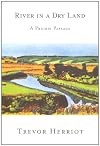
River in a Dry Land: A Prairie Passage
by Trevor Herriot
On This Page
Description
Trevor Herriot's memoir and history of the Qu'Appelle River Valley has won the CBA Libris Award for First-Time Author, the Writers' Trust Drainie-Taylor Biography Prize, the Saskatchewan Book of the Year Award, and the Regina Book Award, and was shortlisted for the Governor General's Award for Non-fiction.Tags
Recommendations
















Member Reviews
Trevor Herriot is passionate about the natural world and it comes through loud and clear in this book. Part history, part field guide, part memoir and part community exploration it follows the Qu'appelle River of Saskatchewan from its Western source to the eastern edge of the province. Herriot's roots are firmly dug into the soil of the Qu'appelle Valley. He only lived there a brief time but both his parents grew up there and he spent many weekends and summer holidays with aunts and uncles in the Valley. Now he has a cabin in the Valley that he "spends as much time as possible at" according to the author notes at the back of the book.
Before reading this book I had no idea how extensive the Qu'appelle River was. I've travelled through show more what I now realize was just a small portion of the Valley and I thought it was beautiful. Now that I've read this book I want to explore more of it.
I imagine this book created something of a stir when it was first published. Herriot has decided views about how people should live on the prairies and it has nothing to do with agribusiness. In fact, he would be happy if people still lived as the natives did, moving with the seasons and the game. He sees how the land has been abandoned by the immigrant settlers and how modern farmers are losing touch with the earth.
I too have witnessed that. My father managed to feed a family on a half section of land, leaving river bottoms to be pasture for the cows and letting land lie fallow every few years. We had milk cows and horses and pigs and sheep and chickens so that there was always something to do even when there were no crops in the field. My mother kept a huge garden and sold eggs in town. We kids did farm chores from the time we were young. But my mother was also one of the first farm women I knew who took a job off the farm after a dry spell destroyed the crops. Three of the four children went off to university and never returned to the farm except for visits. The home I grew up in is owned by someone else although the land is still farmed by my nephews. But in order to make ends meet they have jobs off the farm, they no longer keep cattle except to sell and most of the river bottom land has been cleared for crops.
Reading this book made me long for those simpler days of my youth. When Herriot got to talking about his relatives he could have been describing mine. "Listening and taking pleasure in the cadence of their descriptives, rising and falling in talk of last night's storm, this fall's deer hunt, or the prospects for a wedding. An oozing sore was 'mattery,' calm was pronounced cam, the Palmers were the Pammers, and deer were always 'jumpers'." show less
Before reading this book I had no idea how extensive the Qu'appelle River was. I've travelled through show more what I now realize was just a small portion of the Valley and I thought it was beautiful. Now that I've read this book I want to explore more of it.
I imagine this book created something of a stir when it was first published. Herriot has decided views about how people should live on the prairies and it has nothing to do with agribusiness. In fact, he would be happy if people still lived as the natives did, moving with the seasons and the game. He sees how the land has been abandoned by the immigrant settlers and how modern farmers are losing touch with the earth.
I too have witnessed that. My father managed to feed a family on a half section of land, leaving river bottoms to be pasture for the cows and letting land lie fallow every few years. We had milk cows and horses and pigs and sheep and chickens so that there was always something to do even when there were no crops in the field. My mother kept a huge garden and sold eggs in town. We kids did farm chores from the time we were young. But my mother was also one of the first farm women I knew who took a job off the farm after a dry spell destroyed the crops. Three of the four children went off to university and never returned to the farm except for visits. The home I grew up in is owned by someone else although the land is still farmed by my nephews. But in order to make ends meet they have jobs off the farm, they no longer keep cattle except to sell and most of the river bottom land has been cleared for crops.
Reading this book made me long for those simpler days of my youth. When Herriot got to talking about his relatives he could have been describing mine. "Listening and taking pleasure in the cadence of their descriptives, rising and falling in talk of last night's storm, this fall's deer hunt, or the prospects for a wedding. An oozing sore was 'mattery,' calm was pronounced cam, the Palmers were the Pammers, and deer were always 'jumpers'." show less
Ratings
Members
- Recently Added By
Lists

Best Books set in Manitoba
85 works; 2 members
Author Information
8 Works 177 Members
Awards and Honors
Common Knowledge
- Original publication date
- 2000
- Important places
- Manitoba, Canada; Saskatchewan, Canada
Classifications
- Genres
- Nonfiction, Biography & Memoir, History, Travel, Anthropology, Science & Nature, General Nonfiction, Literature Studies and Criticism
- DDC/MDS
- 971.24 — History & geography History of North America Canada Prairie Provinces, Western Canada Saskatchewan
- LCC
- FC3545 .Q36 .Z49 — Local History of the United States, Canada and Latin America Canadian History (LCC Extension)
- BISAC
Statistics
- Members
- 53
- Popularity
- 573,800
- Reviews
- 1
- Rating
- (3.83)
- Languages
- English
- Media
- Paper, Ebook
- ISBNs
- 6
- ASINs
- 1