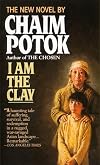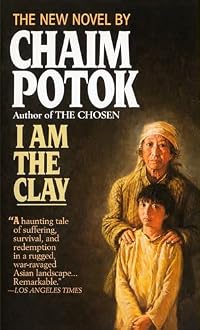
I Am the Clay
by Chaim Potok
On This Page
Description
"[Chaim] Potok writes powerfully about the suffering of innocent people caught in the cross-fire of a war they cannot begin to understand. . . . Humanity and compassion for his characters leap from every page."—San Francisco ChronicleAs the Chinese and the army of the North sweep south during the Korean War, an old peasant farmer and his wife flee their village across the bleak, bombed-out landscape. They soon come upon a boy in a ditch who is wounded and unconscious. Stirred by show more possessiveness and caring the woman refuses to leave the boy behind. The man thinks she is crazy to nurse this boy, to risk their lives for some dying stranger. Angry and bewildered, he waits for the boy to die. And when the boy does not die, the old man begins to believe that the boy possesss a magic upon which all their lives depend. . . . show less
Tags
Recommendations















Member Reviews
An old woman and an old man flee from their village outside of Seoul (south of the river Han) when the Chinese join the North Korean People’s Army and invade Seoul for the second time. In the early days of their journey they find a boy, bleeding with a shrapnel wound, in a ditch. Having lost a son in childbirth, she rescues him more than once from the brink of death, her prayers to the spirits constant, while the old man resists helping this stranger. They struggle to survive crossing the mountains and the wretched last winter of the Korean War. In the old man's opinion the boy has special powers that have brought them meat and relative health. While the old woman finds peace in the belief that this is a son sent to her.
This intense show more character study of two simple people whose lives are utterly altered by war is deeply felt and written with power and grace, without attempting to soften the gruesome brutality of war. It is also an excellent point of view on the Korean War from peasants’ lives. show less
This intense show more character study of two simple people whose lives are utterly altered by war is deeply felt and written with power and grace, without attempting to soften the gruesome brutality of war. It is also an excellent point of view on the Korean War from peasants’ lives. show less
I have absolutely loved all of Potok's books I've read before; and this one was covered with critical praise on the back of the book... but I found it tedious, monotonous, and dull. There are essentially only three characters, and their names are never given. They are just the old man, the old woman, and the boy. The book opens with the man and woman, an elderly, childless Korean couple, fleeing the fighting of the Korean War. On they way, they find an injured boy, and the woman insists on helping him, against the wishes of her husband. After that, the first 180 pages of a 210 page book are spent seemingly saying the same thing over and over. The man hates the boy. The boy is afraid of the man. The woman wants to help the boy. They're show more all hungry, tired, and suffering terribly. Then, in the last 20 pages, a little bit actually happens, but it's too late. These nameless characters have not been developed in a way that made me care about them. I'm just glad the book was short.
Skip this one and read "My Name is Asher Lev" or "The Gift of Asher Lev" instead. show less
Skip this one and read "My Name is Asher Lev" or "The Gift of Asher Lev" instead. show less
As the Chinese invade South Korea from the North and the civilian population evacuates ahead of the advancing forces, I Am the Clay follows one elderly couple. This childless couple stumbles across a wounded and unconscious eleven year old boy in a ditch, and much to the old man’s disapproval the old woman takes the boy along with them. The story follows their harrowing escape from the invaders and the hardships and horrors of their journey, including the often at best indifferent treatment at the hands of their own defending soldiers.
It is a very moving story told in a unique prose style which keeps the reader on his toes as the thoughts of the three characters are often interwoven in the same sentences. It is very much narrative show more drive, with minimal dialogue certainly until towards the end, and even then there is not a lot; but through the narrative we learn the thinking and motives of the characters. The old woman, caring and very much taken with the boy; the old man torn between his fear of what the boy will cost them and the good fortune he seems to bring them; and the boy, dependant, trusting yet intelligent and resourceful, a boy with integrity. It is also through the thoughts and dreams of the characters that we learn much of their individual and very different backgrounds.
A compelling and beautifully told story, very different in style from some of Chaim Potok’s novels, with three very different yet appealing characters, even the seemingly bitter old man has his redeeming points. The horror and futility of war inevitably come across, indirectly for there is no propaganda here, no hidden agenda. My only reservation is that the conclusion seems somewhat abrupt; and I would really like to know the eventual prospects for the young boy especially. It is a very good story, but perhaps not quite as good as The Chosen and its sequel, or the Asher Lev books. show less
It is a very moving story told in a unique prose style which keeps the reader on his toes as the thoughts of the three characters are often interwoven in the same sentences. It is very much narrative show more drive, with minimal dialogue certainly until towards the end, and even then there is not a lot; but through the narrative we learn the thinking and motives of the characters. The old woman, caring and very much taken with the boy; the old man torn between his fear of what the boy will cost them and the good fortune he seems to bring them; and the boy, dependant, trusting yet intelligent and resourceful, a boy with integrity. It is also through the thoughts and dreams of the characters that we learn much of their individual and very different backgrounds.
A compelling and beautifully told story, very different in style from some of Chaim Potok’s novels, with three very different yet appealing characters, even the seemingly bitter old man has his redeeming points. The horror and futility of war inevitably come across, indirectly for there is no propaganda here, no hidden agenda. My only reservation is that the conclusion seems somewhat abrupt; and I would really like to know the eventual prospects for the young boy especially. It is a very good story, but perhaps not quite as good as The Chosen and its sequel, or the Asher Lev books. show less
As the Chinese invade South Korea from the North and the civilian population evacuates ahead of the advancing forces, I Am the Clay follows one elderly couple. This childless couple stumbles across a wounded and unconscious eleven year old boy in a ditch, and much to the old man’s disapproval the old woman takes the boy along with them. The story follows their harrowing escape from the invaders and the hardships and horrors of their journey, including the often at best indifferent treatment at the hands of their own defending soldiers.
It is a very moving story told in a unique prose style which keeps the reader on his toes as the thoughts of the three characters are often interwoven in the same sentences. It is very much narrative show more drive, with minimal dialogue certainly until towards the end, and even then there is not a lot; but through the narrative we learn the thinking and motives of the characters. The old woman, caring and very much taken with the boy; the old man torn between his fear of what the boy will cost them and the good fortune he seems to bring them; and the boy, dependant, trusting yet intelligent and resourceful, a boy with integrity. It is also through the thoughts and dreams of the characters that we learn much of their individual and very different backgrounds.
A compelling and beautifully told story, very different in style from some of Chaim Potok’s novels, with three very different yet appealing characters, even the seemingly bitter old man has his redeeming points. The horror and futility of war inevitably come across, indirectly for there is no propaganda here, no hidden agenda. My only reservation is that the conclusion seems somewhat abrupt; and I would really like to know the eventual prospects for the young boy especially. It is a very good story, but perhaps not quite as good as The Chosen and its sequel, or the Asher Lev books. show less
It is a very moving story told in a unique prose style which keeps the reader on his toes as the thoughts of the three characters are often interwoven in the same sentences. It is very much narrative show more drive, with minimal dialogue certainly until towards the end, and even then there is not a lot; but through the narrative we learn the thinking and motives of the characters. The old woman, caring and very much taken with the boy; the old man torn between his fear of what the boy will cost them and the good fortune he seems to bring them; and the boy, dependant, trusting yet intelligent and resourceful, a boy with integrity. It is also through the thoughts and dreams of the characters that we learn much of their individual and very different backgrounds.
A compelling and beautifully told story, very different in style from some of Chaim Potok’s novels, with three very different yet appealing characters, even the seemingly bitter old man has his redeeming points. The horror and futility of war inevitably come across, indirectly for there is no propaganda here, no hidden agenda. My only reservation is that the conclusion seems somewhat abrupt; and I would really like to know the eventual prospects for the young boy especially. It is a very good story, but perhaps not quite as good as The Chosen and its sequel, or the Asher Lev books. show less
This wasn't my favorite Potok. But I think I'm partial to Asher Lev. :-) Although an interesting story of community and humanity, it's still a fairly bleak book.
But, as always, I did enjoy Potok's writing. He manages to be very descriptive and intelligent in a concise way. And, as with his other writings, I walked away feeling like I'd learned a bit about another culture, which is worth reading in itself.
But, as always, I did enjoy Potok's writing. He manages to be very descriptive and intelligent in a concise way. And, as with his other writings, I walked away feeling like I'd learned a bit about another culture, which is worth reading in itself.
Different from every other Potok I've read, the author draws on his experience during the Korean War in this very interesting tale.
Great book, but I don't recommend reading it while depressed.
Members
- Recently Added By
Lists

Jewish Books
367 works; 24 members
Author Information

35+ Works 23,152 Members
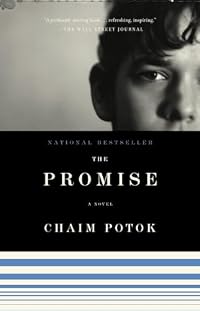
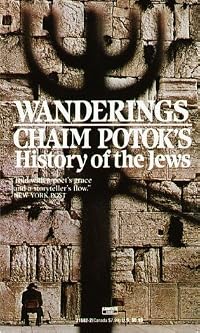
Chaim Potok was born in New York City in 1929. He graduated summa cum laude (with highest honors) from Yeshiva University in 1950, and received an advanced degree from Jewish Theological Seminary in 1954, when he also became an ordained Conservative rabbi. After two years of military service as a chaplain in Korea, Potok married Adena Sarah show more Mosevitsky in 1958. The couple had three children. Eventually Potok returned to school and received his Ph.D. from the University of Pennsylvania in 1965. Potok has held a variety of positions within the Jewish community, including directing a camp in Los Angeles, teaching at the University of Judaism in Los Angeles at a Jewish Theological Seminary in New York, and working as an editor on various religious publications, Potok's first novel, The Chosen, was published in 1967, and he quickly won acclaim for this best-selling book about tensions within the Orthodox and Hasidic Jewish communities. This and later books have been both critically and popularly successful. Many of them explore the meaning of Judaism in the modern era, focusing on the conflict between traditional teachings and the pressures of modern life. The Chosen was nominated for a National Book Award in 1967 and made into a successful film in 1982. Its sequel, The Promise (1969) was the winner of an Athenaeum Award. Potok is also the author of a nonfiction volume, Wanderings: Chaim Potok's History of the Jews (1978), as well as several short stories and articles that have been published in both religious and secular magazines. (Bowker Author Biography) show less
Common Knowledge
- Original publication date
- 1992
- Important places*
- Zuid-Korea
*Some information comes from Common Knowledge in other languages. Click "Edit" for more information.
Classifications
Statistics
- Members
- 572
- Popularity
- 51,303
- Reviews
- 7
- Rating
- (3.23)
- Languages
- Dutch, English, French, Italian
- Media
- Paper, Ebook
- ISBNs
- 20
- ASINs
- 4