The Severed Wing
by Martin J. Gidron
On This Page
Description
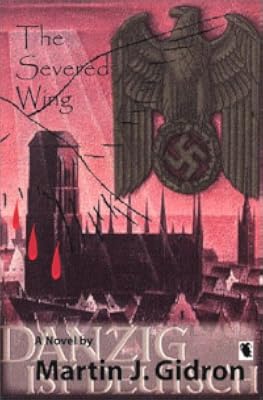
Imagine a world in which Teddy Roosevelt is elected to a third term and leads America directly into World War I.A world in which the consequent terms of the Versailles Treaty propose a much gentler reconciliation between Allied and Central powers. A world in which neither World War II-nor the Holocaust-ever occurs, though European skirmishes abound. It's into this world, present millennium, where Martin Gidron has placed both Janusz, who's fled Poland to avoid a Russian draft, and his lover show more Irena, daughter of a famous composer. When Irena travels to Greece for her father's funeral, things start unravelling for Janusz: people and business establishments having Jewish connections disappear, literally without a trace or even memory, from New York City where Janusz has illegally emigrated. Then the Jewish daily newspaper where Janusz works switches overnight from Yiddish to English. And what are these strange letters that Janusz receives at his apartment, offering a "credit card, " whatever that might be? The discovery that Janusz is cast into by the novel's end is as harrowing in its particularity as it is in its universality. show lessTags
Recommendations














Member Reviews
Alternate history with a message: Janusz Spiegelman has become unstuck in reality. He is the protagonist of Martin Gidron's somewhat Vonnegutian alternate history of a world in which the Holocaust never occurred -- where a shorter First World War and stronger international socialist movement allowed the "long nineteenth century" to continue stumbling along into the twenty-first. So Janusz, a Polish draft dodger and undocumented immigrant, lives in the crowded tenements of Manhattan's Lower East Side, writing for a Yiddish-language daily newspaper. But Janusz has nightmares of mass executions, cattle cars and poison gas, and after every nightmare some piece of his world simply disappears, his reality gradually converging with our show more own.
This inventive concept allows Gidron to put human faces on the enormity of the Holocaust, as well as challenge the idea that it was somehow inevitable (an argument he addresses in a special Author's Note). He is also able to do some inventive worldbuilding, imagining what might have been if the Jewish communities of Europe, and their descendants, had been allowed to survive to the present. Accompanied, of course, by the casual anti-Semitism that the Holocaust made unthinkable, along with the decrepit empires of old Europe, their internecine conflicts, pogroms, and colonial ambitions.
While the setting is promising and the concept captivating, I came away from The Severed Wing feeling that not enough had been done with them. The book has relatively little in the way of plot, and mainly features Janusz wandering aimlessly (and recalling his earlier, equally aimless years in Poland and among the Zionist underground in British Palestine) to give Gidron opportunities to infodump his counterfactual speculations. While those speculations struck me as plausible enough, I didn't see enough of a narrative framework for them to hang on. Gidron just seems to be building his world up enough for it all to fall apart in the increasingly surreal final chapters.
Gidron also makes the alternate history beginner's mistake of having far too many cameos from real-life figures (from Bill Gates to Anne Frank, Paul Simon to Yitzhak Shamir) and clever puns (like the "Marshals' Plan" that kept Czarist Russia from falling to Communism). Having a few jokes of that sort is one of the guilty pleasures of alternate history writing, welcome in moderation. Gidron gives in to temptation and overdoes it, to the detriment of his setting and his story.
I can see why The Severed Wing won a Sidewise Award for Best Long-Form Alternate History, but I can't give it full marks. However, I would be happy to see Gidron return to the genre, in this setting or a different one, and continue to hone his skills. show less
This inventive concept allows Gidron to put human faces on the enormity of the Holocaust, as well as challenge the idea that it was somehow inevitable (an argument he addresses in a special Author's Note). He is also able to do some inventive worldbuilding, imagining what might have been if the Jewish communities of Europe, and their descendants, had been allowed to survive to the present. Accompanied, of course, by the casual anti-Semitism that the Holocaust made unthinkable, along with the decrepit empires of old Europe, their internecine conflicts, pogroms, and colonial ambitions.
While the setting is promising and the concept captivating, I came away from The Severed Wing feeling that not enough had been done with them. The book has relatively little in the way of plot, and mainly features Janusz wandering aimlessly (and recalling his earlier, equally aimless years in Poland and among the Zionist underground in British Palestine) to give Gidron opportunities to infodump his counterfactual speculations. While those speculations struck me as plausible enough, I didn't see enough of a narrative framework for them to hang on. Gidron just seems to be building his world up enough for it all to fall apart in the increasingly surreal final chapters.
Gidron also makes the alternate history beginner's mistake of having far too many cameos from real-life figures (from Bill Gates to Anne Frank, Paul Simon to Yitzhak Shamir) and clever puns (like the "Marshals' Plan" that kept Czarist Russia from falling to Communism). Having a few jokes of that sort is one of the guilty pleasures of alternate history writing, welcome in moderation. Gidron gives in to temptation and overdoes it, to the detriment of his setting and his story.
I can see why The Severed Wing won a Sidewise Award for Best Long-Form Alternate History, but I can't give it full marks. However, I would be happy to see Gidron return to the genre, in this setting or a different one, and continue to hone his skills. show less
Ratings
Members
- Recently Added By
Lists

Best Alternate History
111 works; 60 members
Author Information
1 Work 35 Members
Awards and Honors
Awards
Classifications
Statistics
- Members
- 35
- Popularity
- 817,245
- Reviews
- 1
- Rating
- (4.00)
- Languages
- English
- Media
- Paper, Ebook
- ISBNs
- 2
- ASINs
- 1